
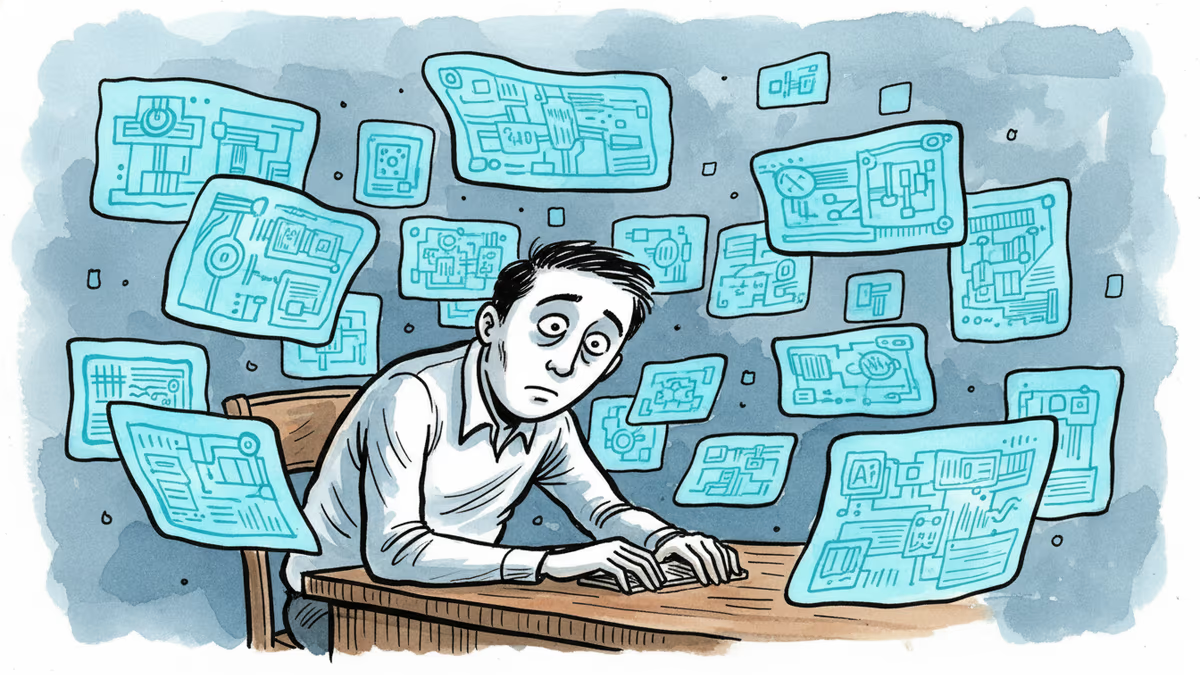
Nobody Knows What AI Is Doing to Us
AI is everywhere now—but is it helping or hurting? MIT Technology Review diagnoses a new mood: not excitement, not panic, just a creeping, uncomfortable uncertainty.
At some point in the last year, AI stopped being something you tried and became something you couldn't avoid.
It's in your search results, your inbox, your customer service queue, your kid's homework app. And yet—what, exactly, is it doing? Is it making things better? Worse? How would you even know?
MIT Technology Review editor-in-chief Mat Honan has a word for what we're collectively feeling right now: malaise. Not excitement. Not dread. Something more like the low-grade unease of a situation you didn't fully choose and can't quite assess.
The Mood Has Shifted—But Where Did It Go?
Two years ago, the AI conversation was electric. ChatGPT crossed 100 million users in two months—the fastest product adoption in history. Pundits split cleanly into utopians and doomsayers. Both camps had energy.
Now? The energy is murkier. MIT Technology Review's newly published list of the 10 Things That Matter in AI Right Now is a useful map of the terrain—and what it reveals is less a breakthrough moment than a sprawling, contested landscape where the effects of AI are real but hard to read.
Take the economy. The Wall Street Journal reports that AI is distorting key economic signals: making growth look stronger than it is, and the labor market look weaker. If the instruments measuring the economy are themselves being bent by AI, then the policymakers using those instruments—setting interest rates, designing safety nets, projecting tax revenues—may be flying partially blind. That's not a hypothetical. That's happening now.
Meanwhile, on the other side of the ledger, AI is quietly enabling things that weren't possible before. Robotics, long stalled by the brittleness of rule-based programming, is being revived by machine learning. Robots are now learning through trial and error, simulation, and real-world data—the same basic approach that made large language models work. Silicon Valley's roboticists are dreaming big again, and for the first time in decades, the dreams have engineering behind them.

Where It's Landing: Schools, Clinics, and Supply Chains
The week's news offered a cross-section of AI's reach that's worth sitting with.
In education, a cyberattack on Canvas—the digital learning platform used across American schools—paralyzed thousands of institutions and exposed data on 275 million people. The attack is a reminder that the more we centralize digital infrastructure, the larger the blast radius when something goes wrong. The convenience of unified platforms comes with a single point of failure.
In medicine, AI and robotics are reshaping IVF. Embryologists can now culture embryos longer, genetic screening has become more precise, and AI-assisted analysis is improving success rates. The technology is expanding who can have children and how—but it's also raising questions about the boundary between medical assistance and something closer to design.
In geopolitics, Bloomberg reports that China's AI models are increasingly alarming Silicon Valley—cheaper, more adaptable, and often open-source in ways that American models aren't. Separately, the US suspects Nvidia chips were smuggled to Alibaba via Thailand, routed through a firm linked to Thailand's national AI initiative. The AI race has become a supply chain war.
The Feeling Problem
Then there's the stranger edge of the conversation. Evolutionary biologist Richard Dawkins recently confessed that when he talks to advanced AI systems, he forgets he's talking to a machine. "I treat them exactly as I would treat a very intelligent friend," he wrote.
The Atlantic pushed back: Dawkins is wrong to think Claude has feelings. But the more interesting point isn't whether AI is conscious—it's that our perception of AI is already shaping our behavior, our trust, our decisions. We are not neutral observers of this technology. We're participants in a relationship we didn't fully negotiate.
And that's the core of the malaise. It's not that AI is clearly good or clearly bad. It's that we lack the frameworks to tell. The tools we'd use to measure AI's impact—economic statistics, social surveys, ethical guidelines—were built before AI existed. We're using pre-AI instruments to measure a post-AI world.
This content is AI-generated based on source articles. While we strive for accuracy, errors may occur. We recommend verifying with the original source.
Related Articles
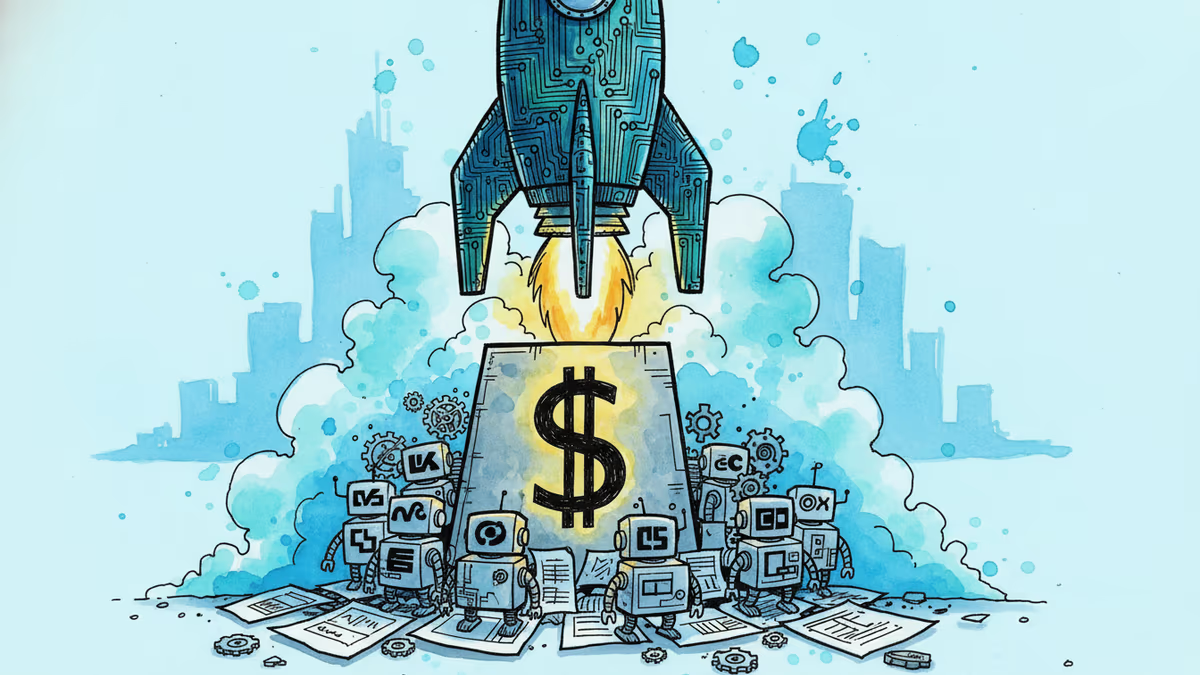
SpaceX's IPO filing puts AI at the center, claiming a $26.5 trillion market opportunity. But can Grok compete with OpenAI and Anthropic for enterprise customers?
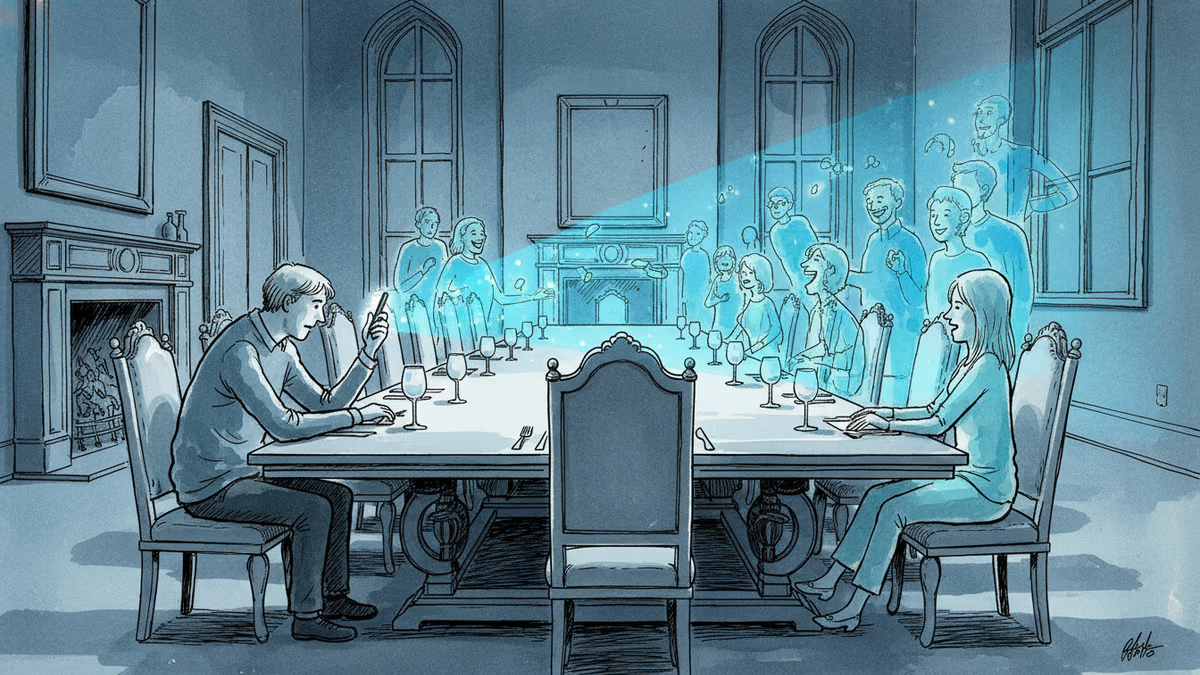
As loneliness hits crisis levels, a new wave of friendship apps is pulling in $16M and 4.3M downloads in the US alone. But can technology actually solve a human problem?
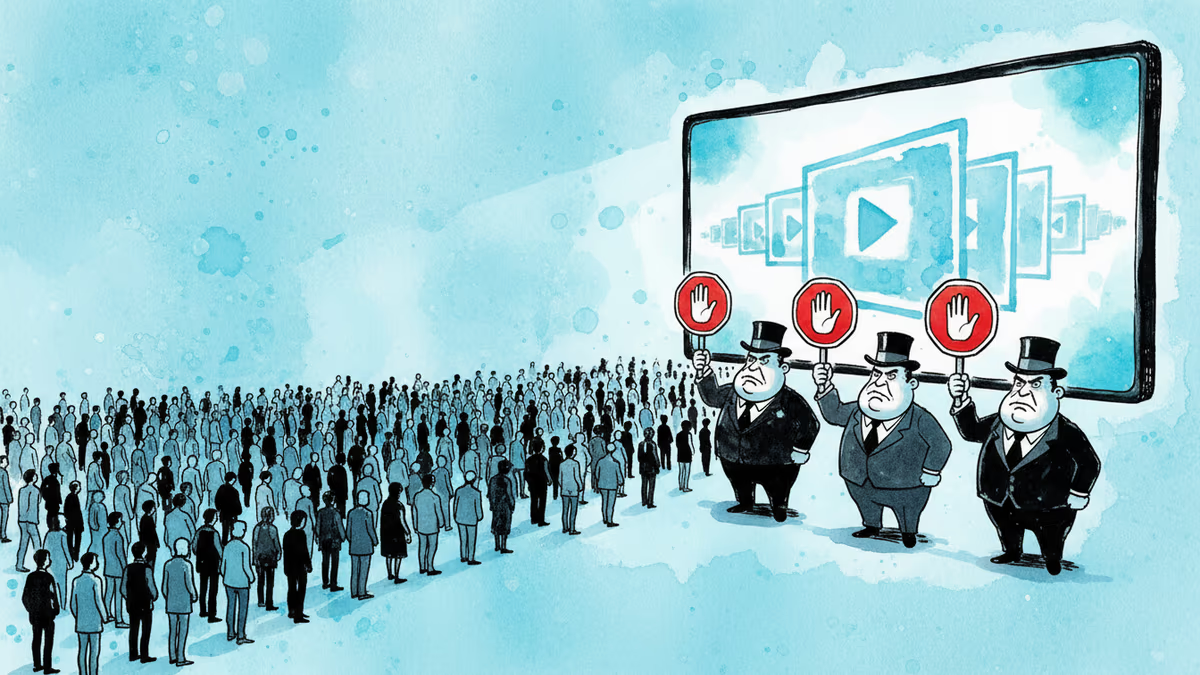
ByteDance's Seedance 2.0 is shocking China's creative industry, but Hollywood studios are fighting back with cease-and-desist letters. What's driving this cultural divide?
Netflix acquired Ben Affleck's AI company InterPositive, signaling a major shift in how streaming giants plan to revolutionize content production and compete in Hollywood.
SpaceX's IPO filing puts AI at the center, claiming a $26.5 trillion market opportunity. But can Grok compete with OpenAI and Anthropic for enterprise customers?
As loneliness hits crisis levels, a new wave of friendship apps is pulling in $16M and 4.3M downloads in the US alone. But can technology actually solve a human problem?
ByteDance's Seedance 2.0 is shocking China's creative industry, but Hollywood studios are fighting back with cease-and-desist letters. What's driving this cultural divide?
Netflix acquired Ben Affleck's AI company InterPositive, signaling a major shift in how streaming giants plan to revolutionize content production and compete in Hollywood.
Thoughts
Share your thoughts on this article
Sign in to join the conversation