
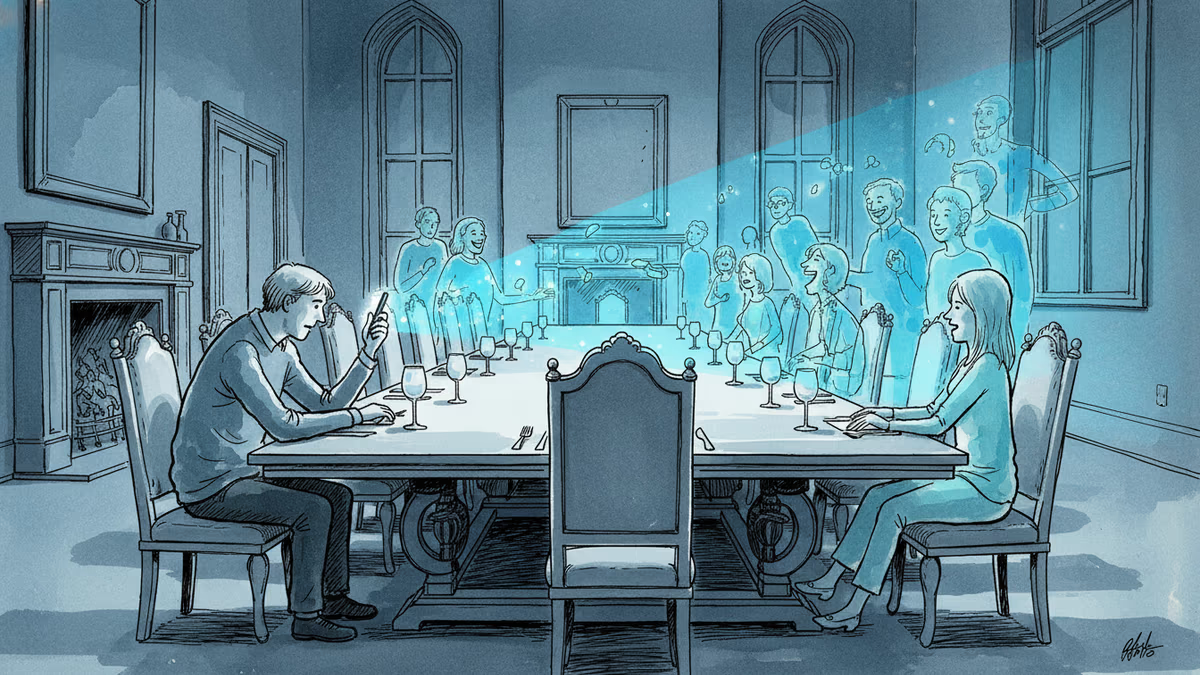
Can an Algorithm Fix Your Social Life?
As loneliness hits crisis levels, a new wave of friendship apps is pulling in $16M and 4.3M downloads in the US alone. But can technology actually solve a human problem?
The U.S. Surgeon General Called It a Crisis. Developers Called It a Market.
In 2023, the U.S. Surgeon General did something unusual: he issued a formal advisory declaring loneliness a public health crisis—placing it alongside smoking and obesity as a threat to national well-being. Within two years, a quiet but measurable response had emerged not from policy, but from the App Store.
According to estimates from Appfigures, friendship and community apps collectively generated roughly $16 million in U.S. consumer spending in 2025, with approximately 4.3 million downloads across the category. That's not Tinder money—yet. But the trajectory is hard to ignore.
What These Apps Actually Do
The premise shared across this new category is deceptively simple: remove the ambiguity. Unlike approaching a stranger at a coffee shop, every person on these platforms has already declared the same intention—friendship, not romance. That single shift dramatically lowers the psychological barrier to initiating contact.
The execution, however, varies widely.
Timeleft organizes weekly Wednesday dinners at 7:00 p.m. for groups of five strangers. Participants learn only their tablemates' occupations and zodiac signs the night before—a deliberate design choice to minimize pre-event anxiety and judgment. 222 uses personality test results to curate group outings to wine bars and comedy clubs, charging a $22.22 monthly subscription. Bumble BFF, which Bumble launched as a feature in 2016 before spinning it into a standalone app in 2023, recently overhauled its interface to prioritize group meetups over one-on-one connections.

For the 40-plus demographic—often overlooked by social apps—Meet5 and Wyzr Friends have carved out specific niches. Meet5, which recently expanded from Europe to the U.S., has already racked up an estimated 777,000 U.S. downloads, suggesting that demand for adult friendship infrastructure isn't limited to Gen Z.
Perhaps the most telling new entrant is Synchrony, launched in March 2026. Founded by a mother of a son on the autism spectrum, the app targets neurodivergent adults with two-step identity verification and an AI tool called Jesse that helps users navigate conversations, draft responses, and set boundaries. At $44.99/month after a 30-day trial, it's betting that underserved communities will pay a premium for safety and accessibility.
Three Ways to Read This Trend
From a consumer standpoint, these apps represent a genuine infrastructure gap being filled. The social scaffolding that previous generations took for granted—neighborhood ties, stable workplaces, religious communities—has eroded faster than any replacement has emerged. Remote work accelerated this. A 2023 McKinsey study found that fully remote workers report significantly lower rates of workplace friendship than in-office counterparts. These apps aren't a luxury; for many users, they're filling a structural void.
From a business standpoint, the monetization models reveal where the real bets are being placed. Subscription fees ranging from $22 to $70 per month suggest founders believe users will pay consistently—not just once—for social connection. That's a fundamentally different revenue logic than advertising-based social media, and it aligns the app's incentives with actually delivering value rather than maximizing screen time.
From a skeptic's standpoint, there's a legitimate question about whether algorithmic matching can replicate the organic chemistry of real friendship. Friendships formed through shared struggle, proximity, and time may resist being engineered. Several of these apps remain geographically limited—Mmotion only in New York City, Washed Up only in Los Angeles, Clyx in Miami and London—which raises questions about scalability and whether the model works outside dense urban environments.
The Deeper Tension
There's something worth sitting with here. The same technological and economic forces that created the loneliness epidemic—remote work platforms, social media that replaced in-person gathering, gig economy structures that eliminated stable social environments—are now being asked to solve it. The apps treating loneliness as a product opportunity are operating within the same ecosystem that helped produce the problem.
That's not an argument against the apps. Meetup, which has been around since 2002, has genuinely helped millions of people find hiking partners, book clubs, and professional networks. But it is an argument for holding the category's claims honestly. These platforms can lower friction and create conditions for connection. Whether actual friendship follows depends on factors no algorithm controls.
Authors
Related Articles
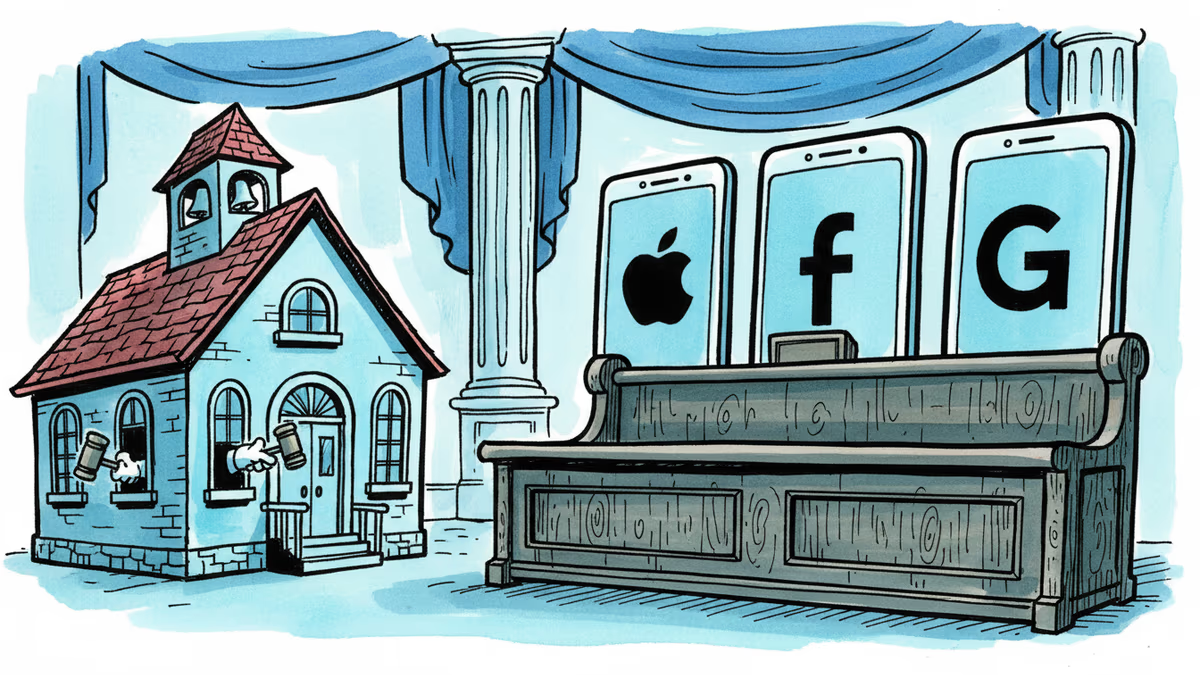
Snap, YouTube, and TikTok settled a landmark school district lawsuit over social media addiction. With 1,000+ similar cases pending, this could reshape Big Tech's liability landscape.
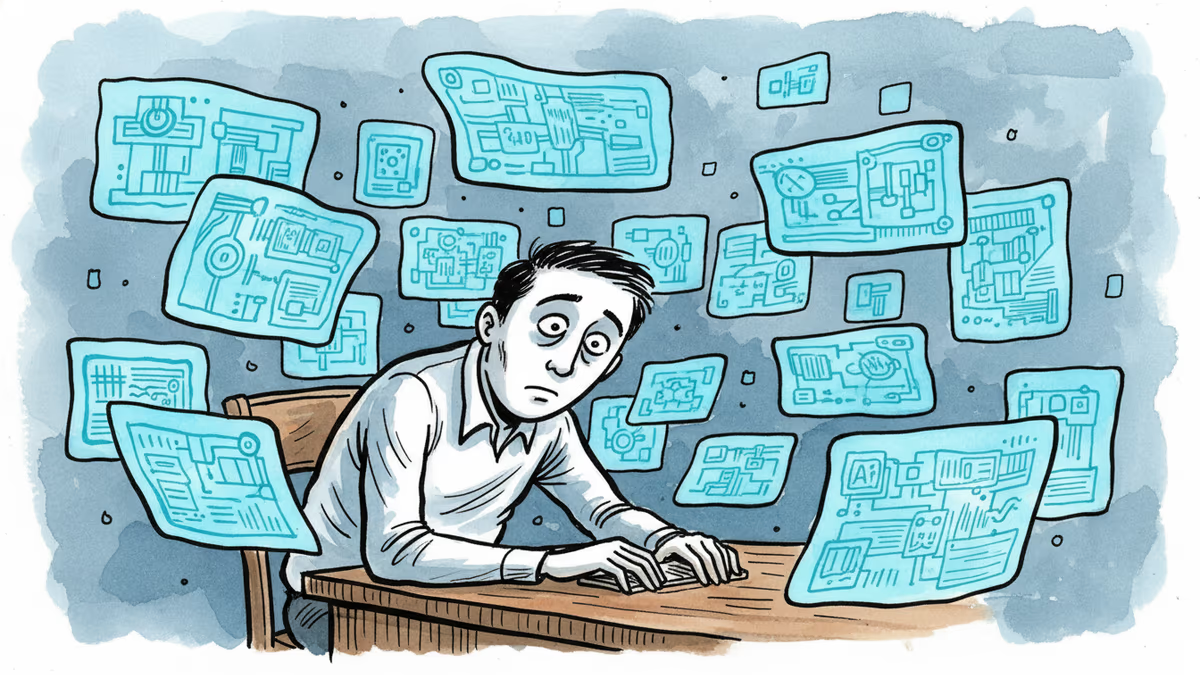
AI is everywhere now—but is it helping or hurting? MIT Technology Review diagnoses a new mood: not excitement, not panic, just a creeping, uncomfortable uncertainty.

Stanford researchers analyzed chatbot transcripts to understand how AI conversations can spiral into dangerous obsessions. But the hardest question remains unanswered.
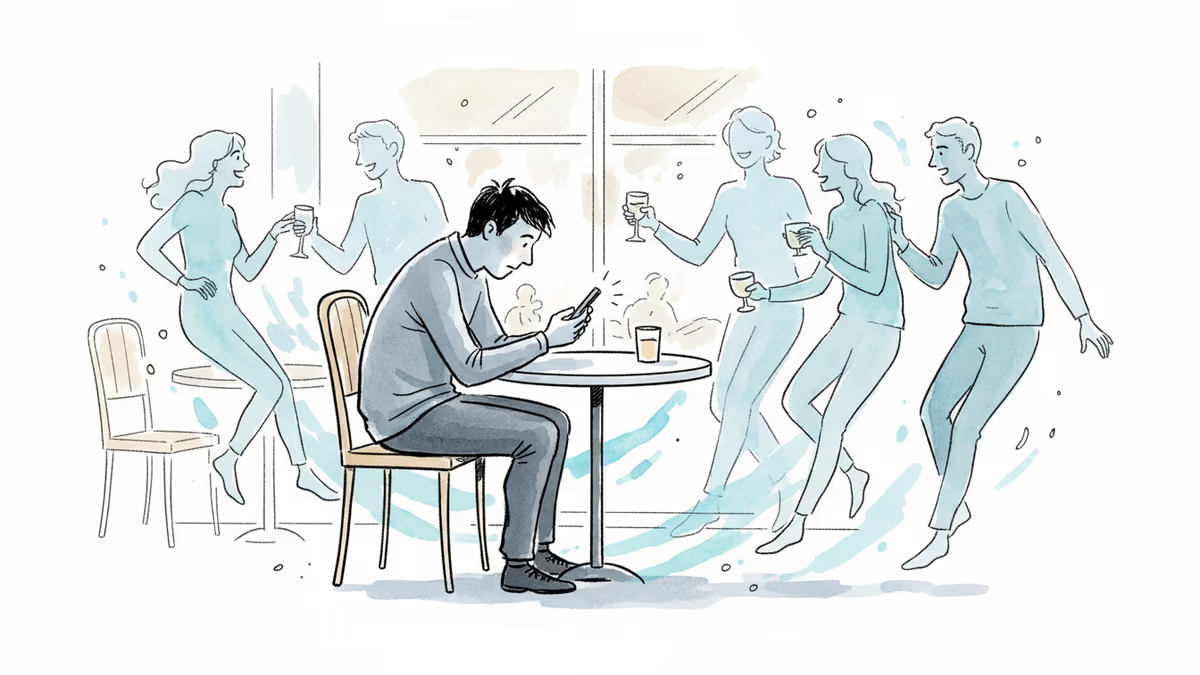
Friendship apps generated $16M and 4.3M downloads in the US in 2025. As loneliness becomes a public health crisis, a new app category is betting that algorithms can do what organic adult life can't.
Snap, YouTube, and TikTok settled a landmark school district lawsuit over social media addiction. With 1,000+ similar cases pending, this could reshape Big Tech's liability landscape.
AI is everywhere now—but is it helping or hurting? MIT Technology Review diagnoses a new mood: not excitement, not panic, just a creeping, uncomfortable uncertainty.
Stanford researchers analyzed chatbot transcripts to understand how AI conversations can spiral into dangerous obsessions. But the hardest question remains unanswered.
Friendship apps generated $16M and 4.3M downloads in the US in 2025. As loneliness becomes a public health crisis, a new app category is betting that algorithms can do what organic adult life can't.
Thoughts
Share your thoughts on this article
Sign in to join the conversation