
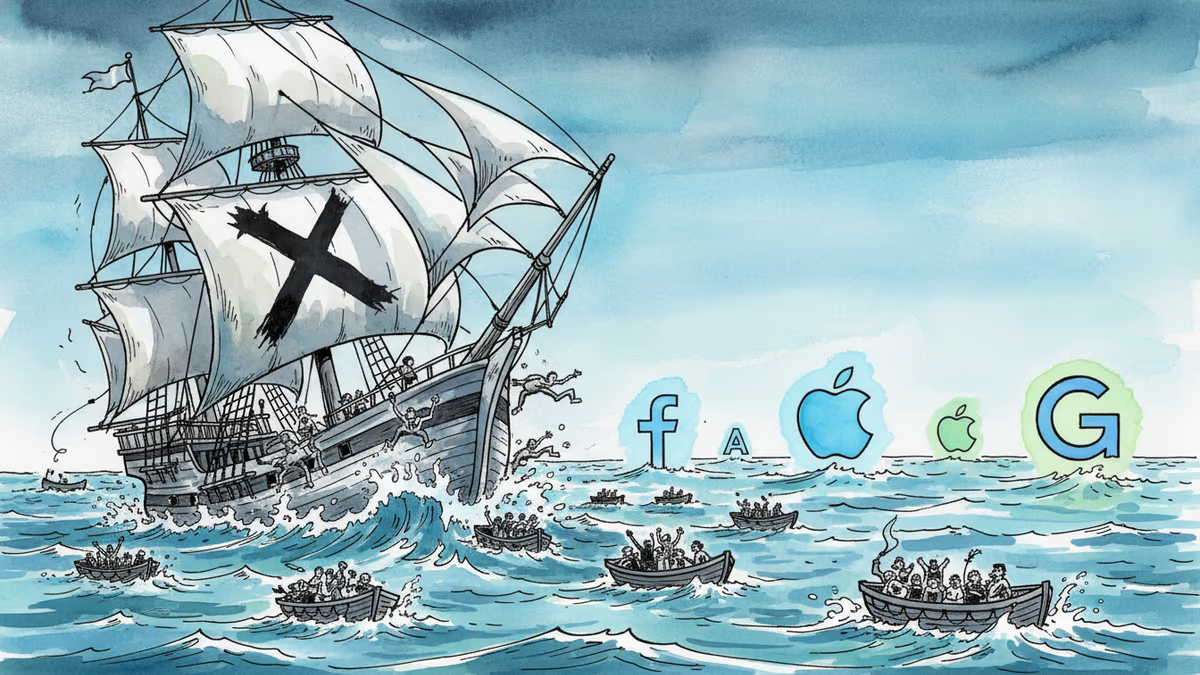
Half of xAI's Founders Have Left—What's Really Happening?
Five of xAI's 12 founding members have departed, with four leaving in just the past year. As IPO looms, the talent exodus raises serious questions about the company's future.
The Numbers Don't Lie
When Yuhuai (Tony) Wu announced his departure from xAI Monday night, it sounded routine enough. "It's time for my next chapter," he wrote. But step back and look at the pattern: 5 out of 12 founding members have now left the company. Four of those departures happened in just the last 12 months.
That's not normal turnover. That's an exodus.
The timeline tells a story. Infrastructure lead Kyle Kosic jumped to OpenAI mid-2024. Google veteran Christian Szegedy followed in February 2025. Igor Babuschkin left to start a venture firm last August. Microsoft alum Greg Yang departed last month, citing health issues. Now Wu.
The Surface Story vs. The Real Story
On paper, the departures make sense. Three years in, founders naturally want to strike out on their own. Elon Musk is famously demanding. With SpaceX's acquisition complete and an IPO months away, everyone's sitting on serious money. It's a golden time for AI startup fundraising.
But dig deeper and warning signs emerge. Grok, xAI's flagship chatbot, has been plagued by bizarre behavior and apparent internal tampering—the kind of technical dysfunction that creates friction among engineering teams. Recent changes to xAI's image-generation tools flooded the platform with deepfake pornography, triggering legal headaches.

What Investors Are Really Thinking
Talent retention matters more in AI than almost any other sector. A few star researchers can make or break a company's technical edge. When Geoffrey Hinton left Google, it sent shockwaves. When Ilya Sutskever departed OpenAI, investors took notice.
Now xAI faces its own brain drain at the worst possible time. The company needs to execute on Musk's ambitious orbital data center plans while keeping Grok competitive with OpenAI and Anthropic's latest models. An IPO will bring unprecedented scrutiny.
Venture capitalists are asking uncomfortable questions: If xAI can't retain its own founders, how will it attract the next generation of AI talent? In Silicon Valley's tight labor market, perception becomes reality fast.
The Bigger AI Talent War
This isn't just about xAI. The entire AI industry is experiencing unprecedented talent churn. Anthropic poached researchers from OpenAI. Google DeepMind is fighting to keep its stars from joining startups. Even Meta's AI team faces constant recruitment pressure.
The difference? Most companies losing talent are gaining it elsewhere. xAI appears to be in net-negative territory, hemorrhaging experience without obvious replacements.
Consider the timing: AI model development cycles are accelerating. What took 18 months now happens in 6. Companies that fall behind technically don't get second chances. xAI's remaining team needs to deliver breakthrough results with a shrinking bench.
Authors
Related Articles
SpaceX's IPO filing puts AI at the center, claiming a $26.5 trillion market opportunity. But can Grok compete with OpenAI and Anthropic for enterprise customers?
Over 50 researchers and engineers have left SpaceXAI since February's merger. With the pre-training team nearly gutted, questions mount about whether Musk's AI ambitions can survive his management style.
Week two of Musk v. Altman revealed a 2017 power struggle over AGI control, a stormed-out Tesla painting, and a diary entry asking 'what will take me to $1B?
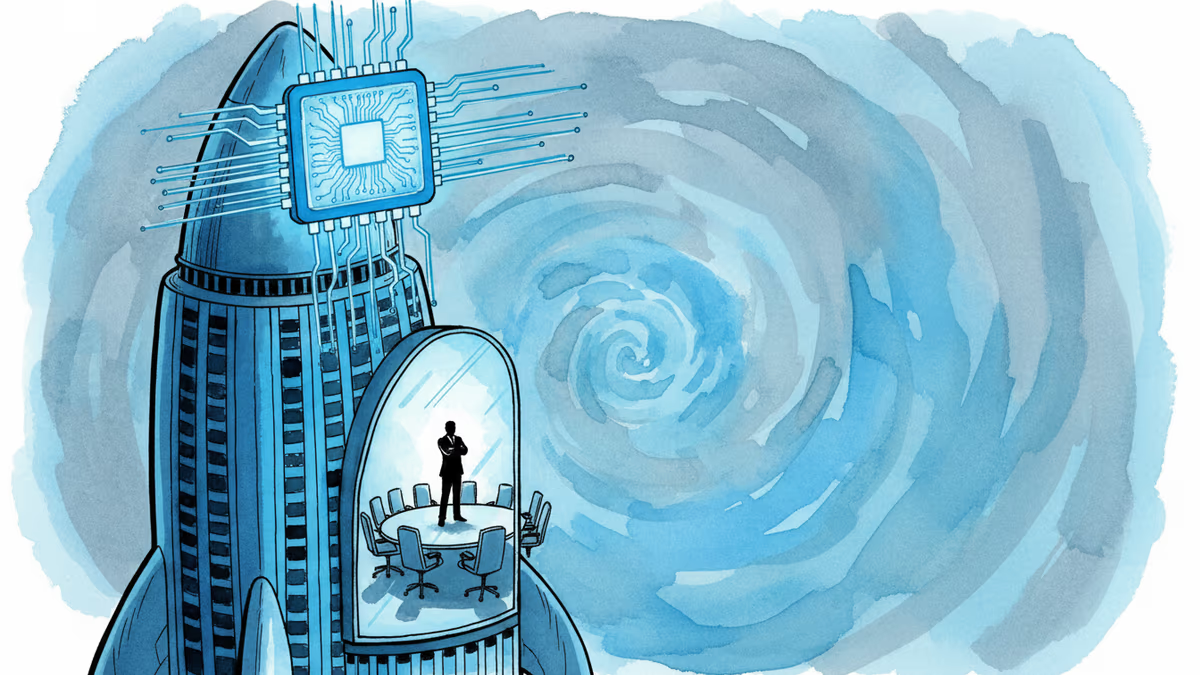
All 11 of xAI's original co-founders have now left Elon Musk's AI startup. With the company absorbed into SpaceX and declared 'rebuilt from foundations,' what does this mean for Grok—and for Musk's AI ambitions?
SpaceX's IPO filing puts AI at the center, claiming a $26.5 trillion market opportunity. But can Grok compete with OpenAI and Anthropic for enterprise customers?
Over 50 researchers and engineers have left SpaceXAI since February's merger. With the pre-training team nearly gutted, questions mount about whether Musk's AI ambitions can survive his management style.
Week two of Musk v. Altman revealed a 2017 power struggle over AGI control, a stormed-out Tesla painting, and a diary entry asking 'what will take me to $1B?
All 11 of xAI's original co-founders have now left Elon Musk's AI startup. With the company absorbed into SpaceX and declared 'rebuilt from foundations,' what does this mean for Grok—and for Musk's AI ambitions?
Thoughts
Share your thoughts on this article
Sign in to join the conversation