
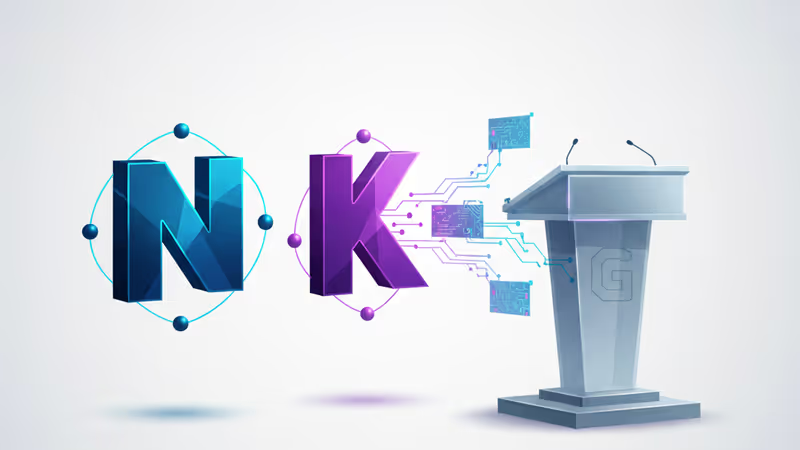
Naver and Kakao Decline Re-entry into South Korea's State AI Foundation Model Race
Naver and Kakao have declined to re-enter South Korea's state-led AI foundation model race despite the Science Ministry's offer for a second chance, opting for independent strategies.
The national AI race just lost its biggest stars. South Korea's tech titans, Naver and Kakao, don't plan to compete in the second round of a government-led competition to develop a homegrown AI foundation model. Industry sources confirmed the decision on Friday, Jan. 16, 2026, marking a significant pivot toward independent corporate strategies over state-guided projects.
Naver and Kakao Exit the State-Led AI Race
On Thursday, the Ministry of Science and ICT announced a shortlist of three teams for the second round of its proprietary AI model development project. Naver Cloud and NC AI failed to make the initial cut, while a consortium led by Kakao was eliminated in a preliminary stage. Despite the ministry offering an unannounced 'extra seat' for dropped teams to re-apply, the industry leaders are staying out.

A Second Chance with No Takers
"We have no plans to reenter the race," a Kakao official stated. Naver's consortium echoed this sentiment, expressing respect for the ministry's decision while declining a renewed bid. Meanwhile, NC AI is reportedly still weighing its options. The government's goal to foster 'homegrown' models is part of an ambitious push to become one of the world's top three AI powerhouses, but it's now facing a lack of participation from its most vital players.
Naver's reluctance may stem from its massive existing investments. The company is currently building South Korea's largest AI cluster, equipped with 4,000Nvidia B200 GPUs. This suggests that for giants with significant capital, the administrative burden of government-led competitions may outweigh the potential benefits of state support.
Authors
Related Articles

Nvidia shipped roughly a billion RISC-V cores in 2024, then announced it would run CUDA on the open standard. We break down how royalty-free instruction sets and open software stacks are trying to route around CUDA's lock-in. Part 2 of the Semiconductor Sovereignty series.
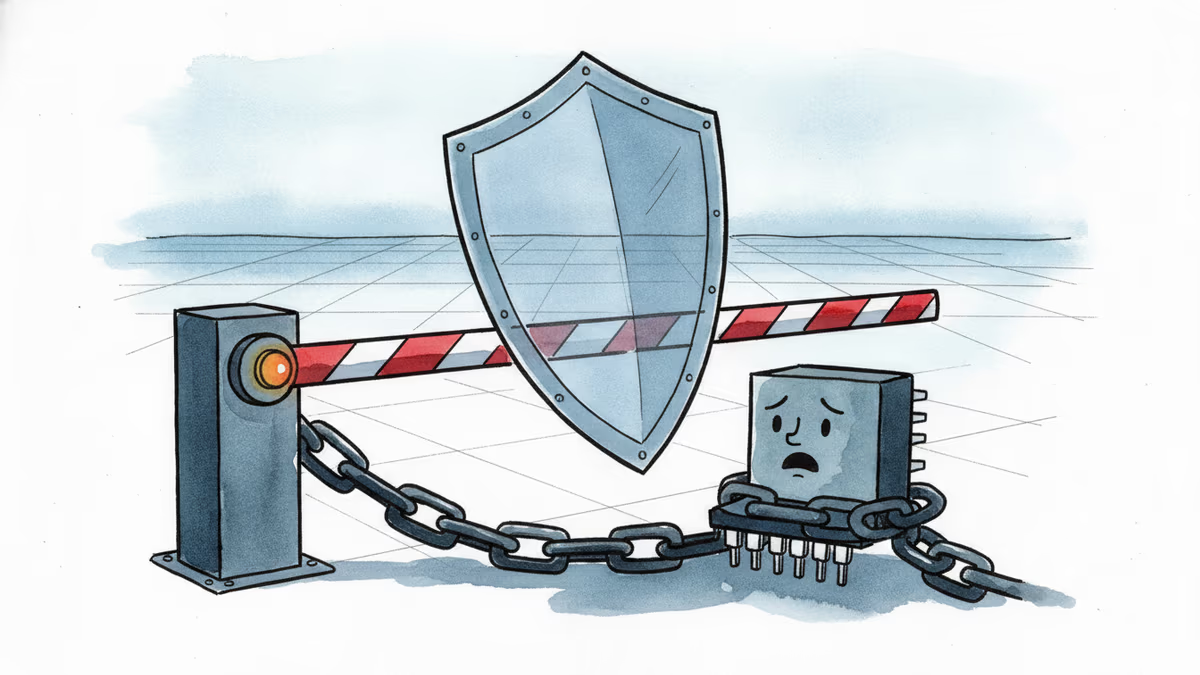
US AI-chip export controls split into three layers in the first half of 2026 — January easing, a May crackdown on circumvention, and a pending bill. Nvidia erased China from its guidance and still posted a record $81.6 billion quarter. A look at the export policy that both shields and cages it.
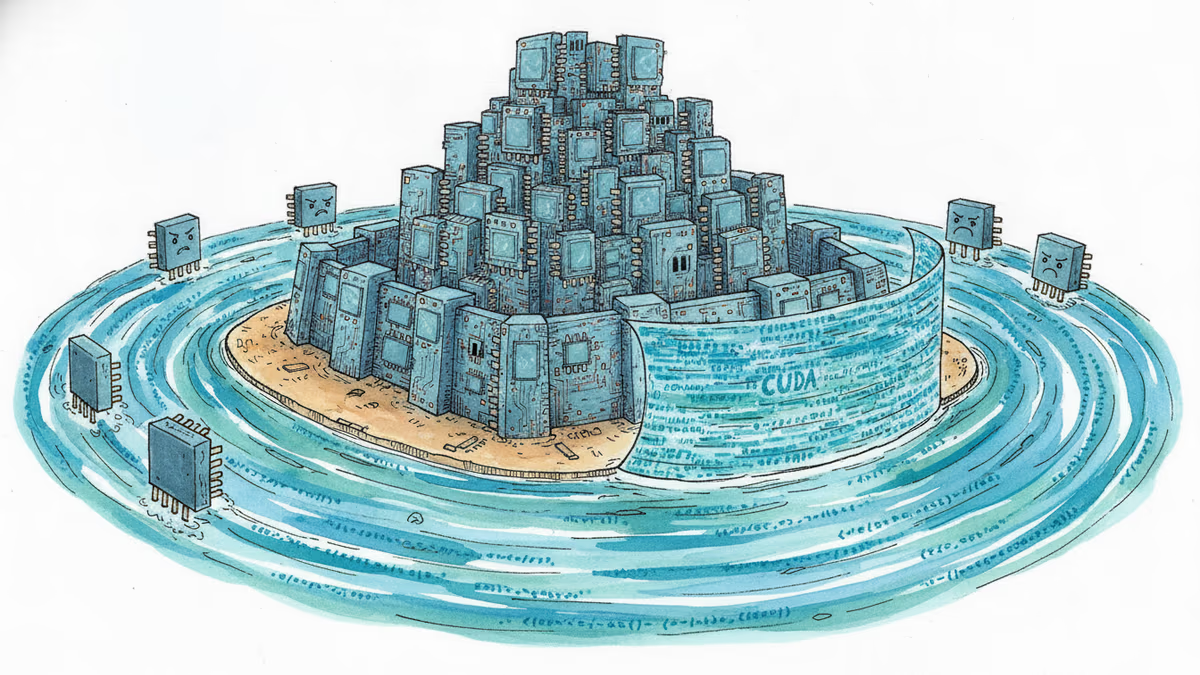
AMD's MI325X matches or beats Nvidia on memory and bandwidth — yet Nvidia's 86-92% share holds. The real moat is CUDA, 20 years in the making. Part 1 of 4.

Snowflake's new $6 billion AWS contract is about more than cloud spending. It signals a shift in AI infrastructure—away from Nvidia GPUs and toward cheaper, homegrown chips for the agent era.
Nvidia shipped roughly a billion RISC-V cores in 2024, then announced it would run CUDA on the open standard. We break down how royalty-free instruction sets and open software stacks are trying to route around CUDA's lock-in. Part 2 of the Semiconductor Sovereignty series.
US AI-chip export controls split into three layers in the first half of 2026 — January easing, a May crackdown on circumvention, and a pending bill. Nvidia erased China from its guidance and still posted a record $81.6 billion quarter. A look at the export policy that both shields and cages it.
AMD's MI325X matches or beats Nvidia on memory and bandwidth — yet Nvidia's 86-92% share holds. The real moat is CUDA, 20 years in the making. Part 1 of 4.
Snowflake's new $6 billion AWS contract is about more than cloud spending. It signals a shift in AI infrastructure—away from Nvidia GPUs and toward cheaper, homegrown chips for the agent era.
Thoughts
Share your thoughts on this article
Sign in to join the conversation