

NASA's New Pilot: Jared Isaacman's Confirmation Cements the Commercial Space Takeover
Billionaire Jared Isaacman's confirmation as NASA chief isn't just a leadership change. It's the final victory for commercial space, reshaping the agency's future.
The Lede: A Paradigm Shift, Not a Personnel Change
The U.S. Senate's confirmation of billionaire entrepreneur Jared Isaacman as the next NASA administrator is far more than a leadership change. It's the ultimate validation of the commercial space revolution, installing a client—and contemporary—of SpaceX at the helm of its most important government partner. For tech leaders and investors, this isn't just space news; it's a fundamental realignment of public-private partnership, signaling a new era of risk, speed, and commercialization for one of humanity's most ambitious endeavors.
Why It Matters: The New Rules of the Final Frontier
Isaacman’s appointment will have immediate and profound second-order effects across the aerospace and technology sectors. This is the official end of the “Old Space” playbook.
- The SpaceX-NASA Axis is Solidified: The political turbulence, which saw acting administrator Sean Duffy threaten SpaceX’s lunar contract and court rival Blue Origin, is over. Isaacman, who has flown on and purchased multiple SpaceX missions, brings a deep, operational understanding of the company's capabilities. This effectively ends the vendor wars at the highest level, cementing SpaceX's role as NASA's prime partner for its most critical missions, including the return to the moon.
- A Commercial-First Mandate: Expect a radical acceleration of NASA's shift from a developer of its own hardware to a customer of commercial services. Isaacman’s entire career is built on private enterprise and execution. This philosophy will now permeate NASA's culture, prioritizing fixed-price contracts, milestone-based payments, and a higher tolerance for the 'fail fast' ethos of Silicon Valley over traditional cost-plus contracting.
- The Pace Accelerates: With a leader who has personally experienced the velocity of the new space industry, bureaucratic inertia will be a prime target. The Artemis program, tasked with a lunar return, will likely see streamlined decision-making and a renewed sense of urgency, driven by a desire to show tangible results quickly.

The Analysis: From Government Agency to Platform Provider
For decades, NASA administrators were former astronauts from the old guard, career civil servants, or politicians. Isaacman is a new archetype entirely: the customer-turned-steward. He is the first private astronaut and tech founder to lead the agency, representing the culmination of a policy shift that began with the Commercial Crew and Cargo programs over a decade ago. Those programs saved NASA from a post-Shuttle slump and proved the public-private model could work.
The contentious confirmation battle was a proxy war for the soul of the American space program. On one side was the legacy defense-contractor model, represented by lobbyists and politicians favoring incumbents like Blue Origin. On the other was the disruptive, vertically integrated model of SpaceX, championed by Elon Musk. Isaacman's confirmation is the decisive victory for the disruptors. Competitors who relied on political influence to counter SpaceX's technological and cost advantages have now lost their leverage at the top.
PRISM's Take: High-Risk, High-Reward for America's Space Future
Placing a commercial space evangelist in charge of NASA is a bold, high-stakes gamble. The upside is immense: Isaacman's private-sector urgency could shatter decades of bureaucratic gridlock, accelerating humanity's return to the moon and beyond at a fraction of the historical cost. He is uniquely positioned to bridge the cultural gap between Washington's risk aversion and Silicon Valley's ambition.
The risk, however, is that an obsessive focus on speed and commercial viability could erode NASA's foundational pillars of scientific inquiry and rigorous, sometimes slow, safety culture. The core challenge for Isaacman will be to inject private-sector velocity without breaking the invaluable public institution he now leads. The trajectory of Western space exploration for the next decade will be determined by whether he can successfully navigate this paradox.
Authors
Related Articles
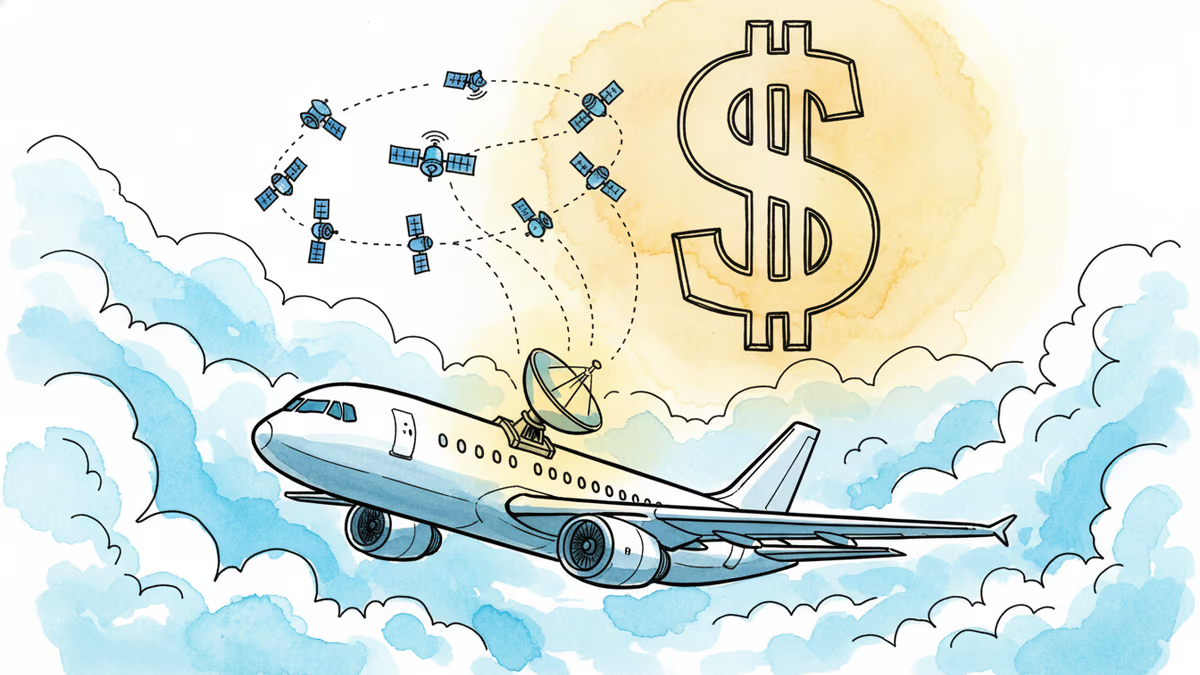
American Airlines just signed Starlink for 500+ aircraft. It's not just about faster inflight internet — it's a calculated move in the run-up to what could be the largest IPO in history.
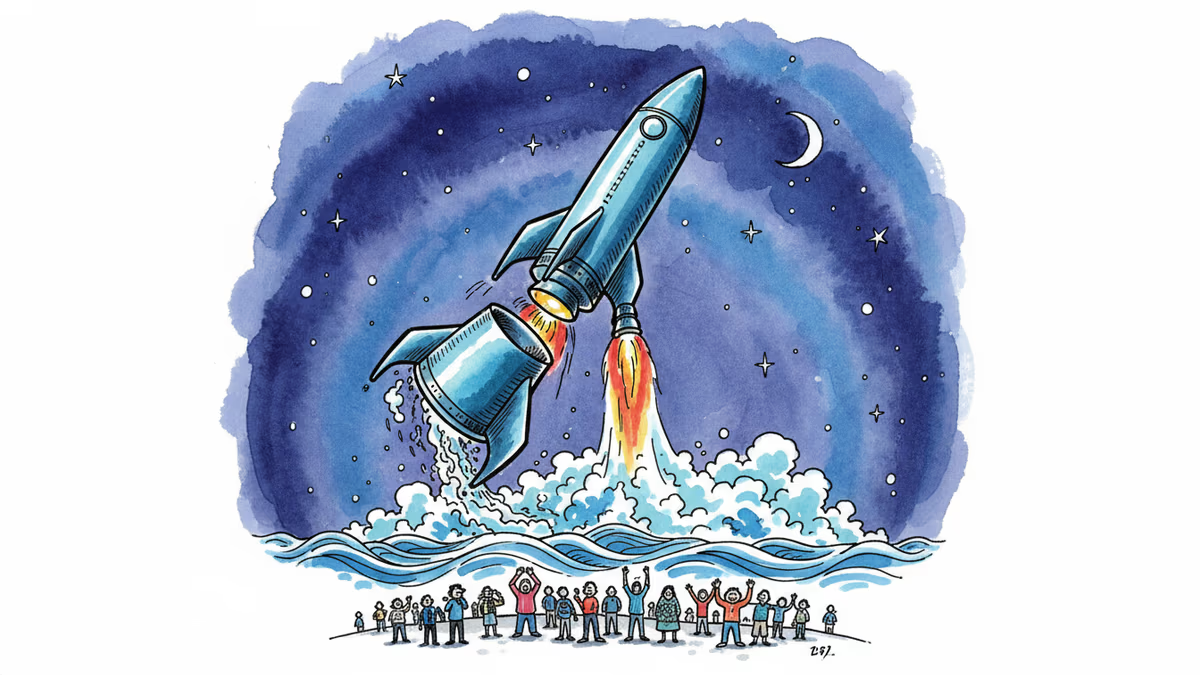
SpaceX's upgraded Starship V3 completed its first test flight, deploying 20 Starlink simulators but losing the Super Heavy booster. With an IPO weeks away, the stakes just got higher.
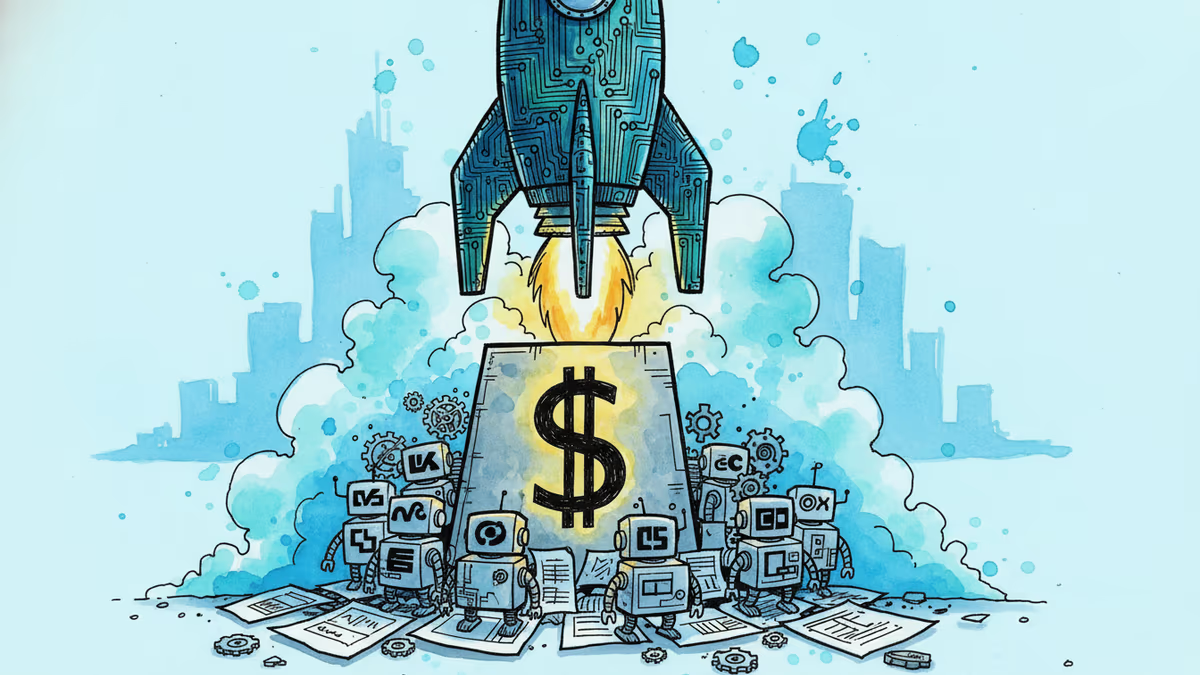
SpaceX's IPO filing puts AI at the center, claiming a $26.5 trillion market opportunity. But can Grok compete with OpenAI and Anthropic for enterprise customers?
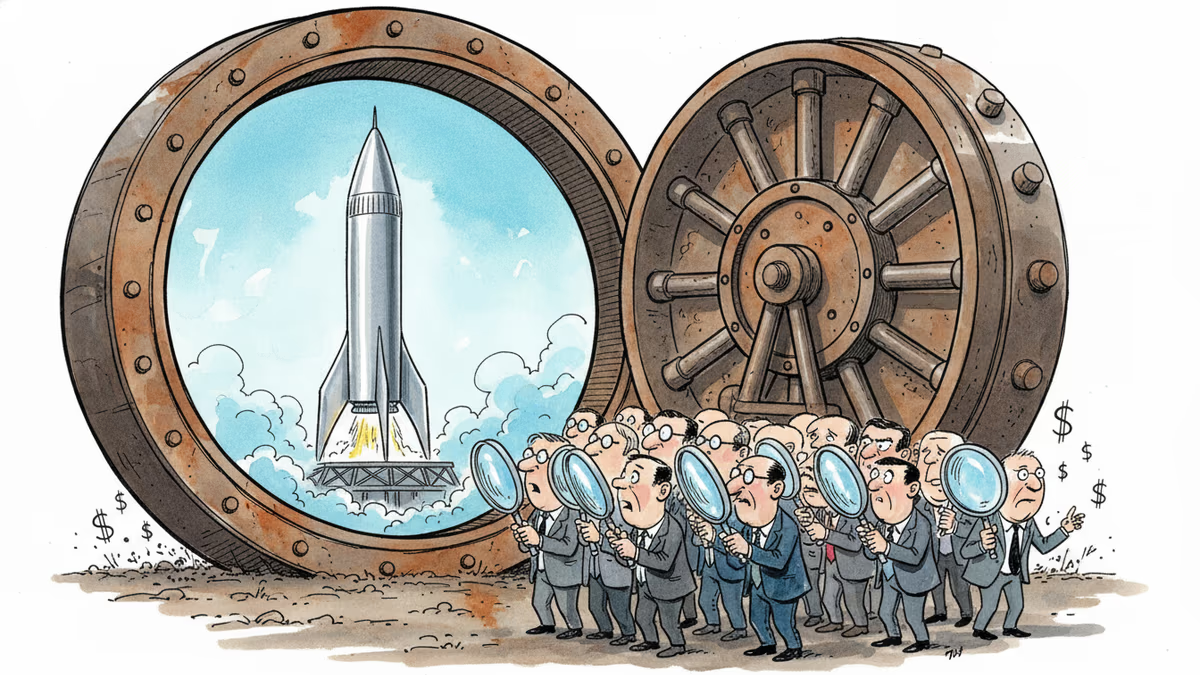
SpaceX filed a nearly 400-page S-1 with the SEC, targeting an IPO as early as June 12. Here's what the filing reveals—and what it doesn't.
American Airlines just signed Starlink for 500+ aircraft. It's not just about faster inflight internet — it's a calculated move in the run-up to what could be the largest IPO in history.
SpaceX's upgraded Starship V3 completed its first test flight, deploying 20 Starlink simulators but losing the Super Heavy booster. With an IPO weeks away, the stakes just got higher.
SpaceX's IPO filing puts AI at the center, claiming a $26.5 trillion market opportunity. But can Grok compete with OpenAI and Anthropic for enterprise customers?
SpaceX filed a nearly 400-page S-1 with the SEC, targeting an IPO as early as June 12. Here's what the filing reveals—and what it doesn't.
Thoughts
Share your thoughts on this article
Sign in to join the conversation