
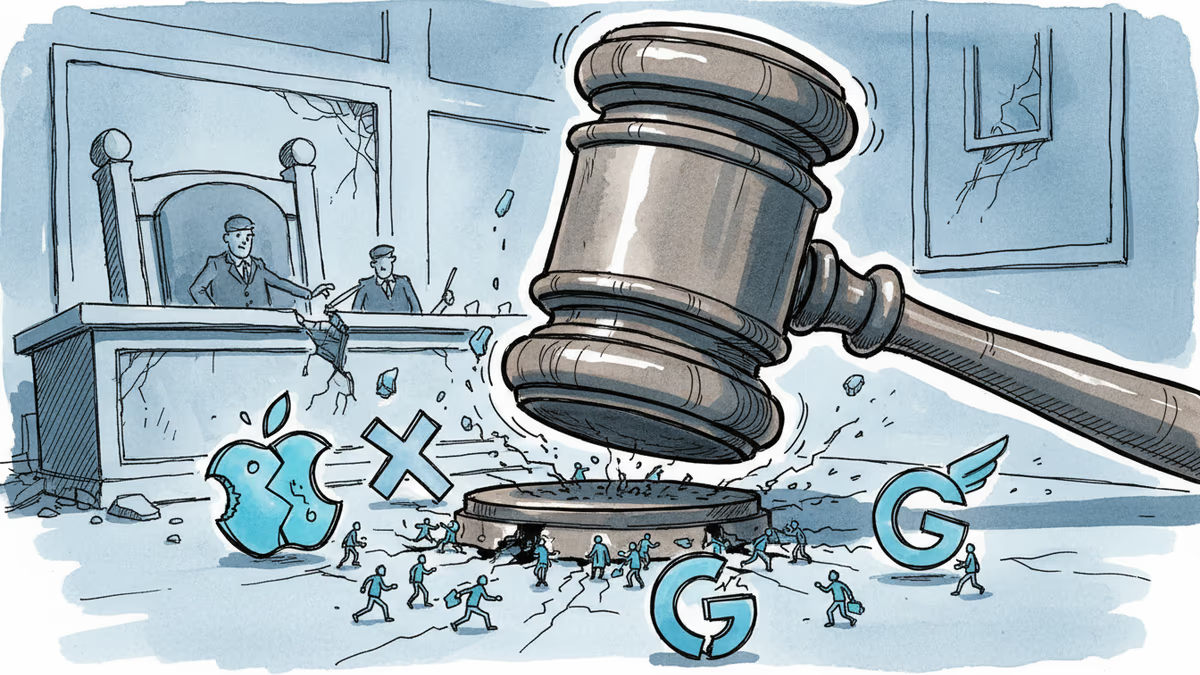
Musk's 'Poaching' Lawsuit Against OpenAI Falls Flat in Court
xAI's lawsuit accusing OpenAI of illegally recruiting eight employees to steal trade secrets was dismissed for lack of evidence, highlighting the fierce talent war in AI.
Eight Employees, Zero Evidence
Elon Musk's xAI just learned a hard lesson about the difference between suspicion and proof. On Tuesday, US District Judge Rita F. Lin dismissed xAI's lawsuit accusing OpenAI of illegally poaching eight employees to access trade secrets related to data centers and the Grok chatbot.
The ruling was blunt: xAI "failed to provide evidence of any misconduct from OpenAI." Instead of concrete proof, the lawsuit seemed to rely on speculation about former employees' behavior. Judge Lin found no evidence that OpenAI induced employees to steal secrets "or that these former xAI employees used any stolen trade secrets once employed by OpenAI."
For Musk, who has been waging a multi-front legal war against OpenAI since last year, this represents another setback in his campaign to challenge the company he helped found.
The Real Story: AI's Talent Arms Race
While Musk's lawsuit may have failed, it illuminates something far more significant: the brutal competition for AI talent that's reshaping Silicon Valley.
Top AI engineers now command salaries exceeding $1 million annually, with some receiving packages worth $10 million or more. Companies like Google, Meta, OpenAI, and Anthropic are engaged in an unprecedented bidding war for experts in large language models, machine learning infrastructure, and AI safety.

The stakes are existential. In AI, a single breakthrough engineer can be worth hundreds of millions in market value. When OpenAI's co-founder Ilya Sutskever left to start his own company, it sent shockwaves through the industry not just because of his reputation, but because of the institutional knowledge walking out the door.
The Gray Zone of Knowledge Transfer
This is where things get legally murky. While employees can't take code or datasets, what about the architectural insights, optimization techniques, and strategic approaches stored in their minds?
Consider a hypothetical: An engineer who spent two years optimizing training efficiency at Company A joins Company B. When Company B suddenly improves its training speed by 40%, is that coincidence or trade secret theft? Proving the latter in court is nearly impossible.
Tech companies are responding with increasingly restrictive non-compete agreements and "garden leave" policies that pay departing employees to stay away from competitors for months. But these measures face growing legal challenges, especially in California where non-competes are largely unenforceable.
The Startup Dilemma
For AI startups, this talent war creates an existential paradox. They need top-tier talent to compete, but they can't match the compensation packages offered by tech giants. Even worse, any breakthrough that makes their engineers more valuable also makes them bigger targets for poaching.
Some startups are experimenting with novel retention strategies: equity packages that vest over five years, "golden handcuffs" bonuses, and even profit-sharing agreements that make employees partners rather than just employees.
Yet the fundamental tension remains. In an industry where knowledge is the primary asset and that knowledge lives in people's heads, how do you protect your competitive advantage?
Authors
Related Articles
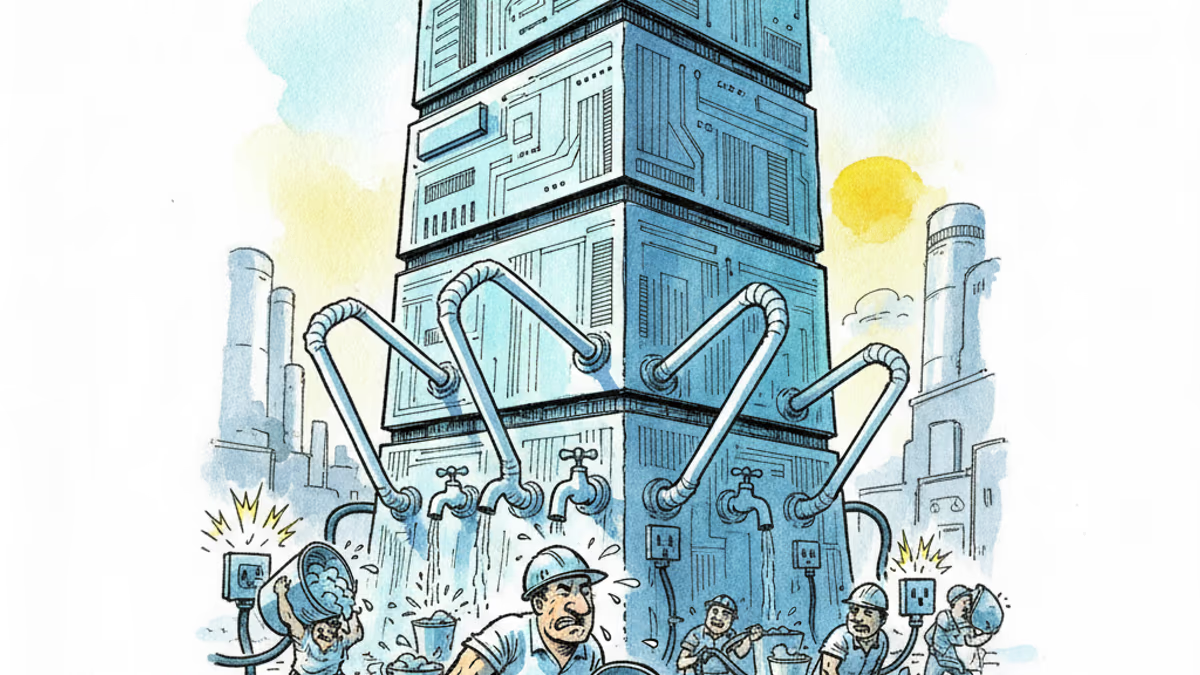
Samsung and SK unveiled a chip and AI investment package worth thousands of trillions of won on June 29. The headline number swings wildly by outlet, but the real contest isn't capital — it's water and power.
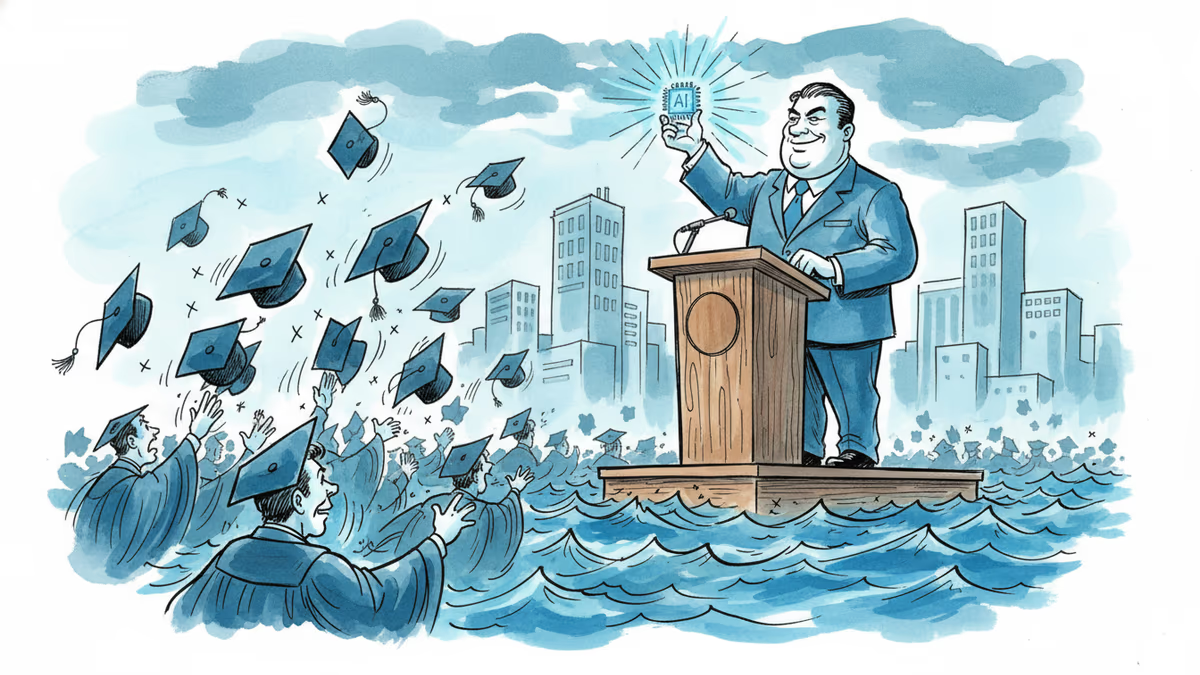
Viral videos show 2026 graduates jeering executives who praise AI at commencement ceremonies. It's not just rudeness — it's a signal about who pays for technological optimism.
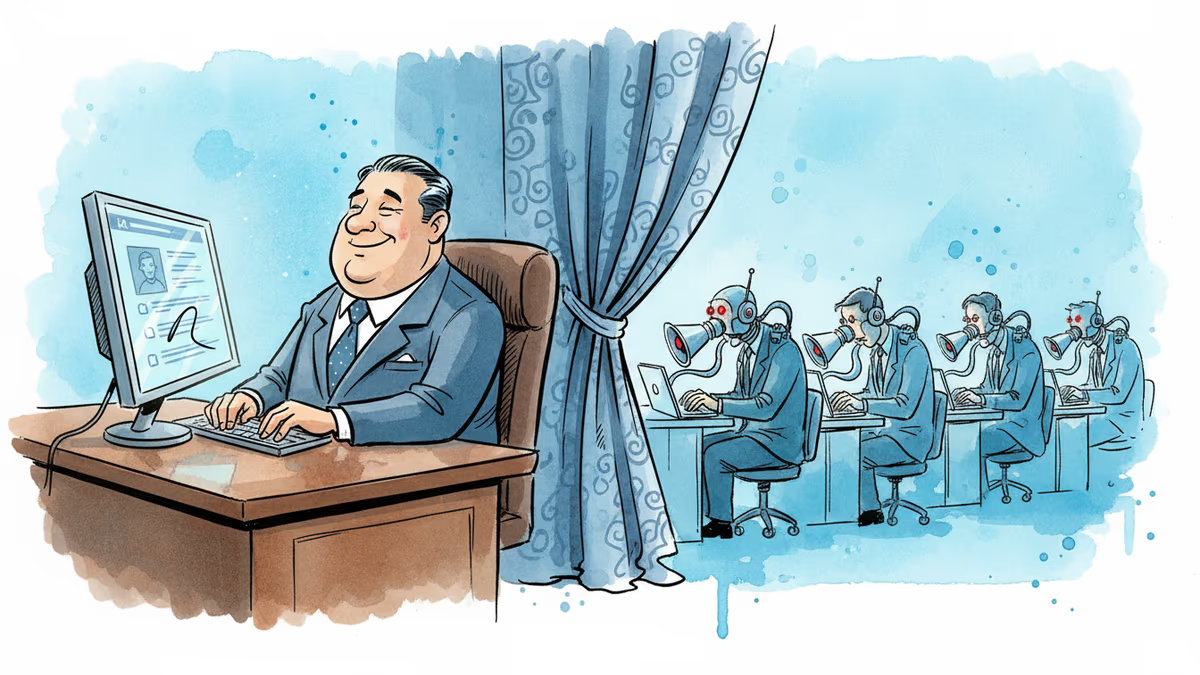
Filipino virtual assistants using AI to ghost-manage LinkedIn profiles for executives is now a structured industry. 30 comments a day, fake engagement rings, and a platform struggling to tell real from fabricated.
Two commencement speakers learned the hard way that AI enthusiasm doesn't land well with today's graduates. The backlash reveals a widening gap between tech optimism and Gen Z's economic reality.
Samsung and SK unveiled a chip and AI investment package worth thousands of trillions of won on June 29. The headline number swings wildly by outlet, but the real contest isn't capital — it's water and power.
Viral videos show 2026 graduates jeering executives who praise AI at commencement ceremonies. It's not just rudeness — it's a signal about who pays for technological optimism.
Filipino virtual assistants using AI to ghost-manage LinkedIn profiles for executives is now a structured industry. 30 comments a day, fake engagement rings, and a platform struggling to tell real from fabricated.
Two commencement speakers learned the hard way that AI enthusiasm doesn't land well with today's graduates. The backlash reveals a widening gap between tech optimism and Gen Z's economic reality.
Thoughts
Share your thoughts on this article
Sign in to join the conversation