
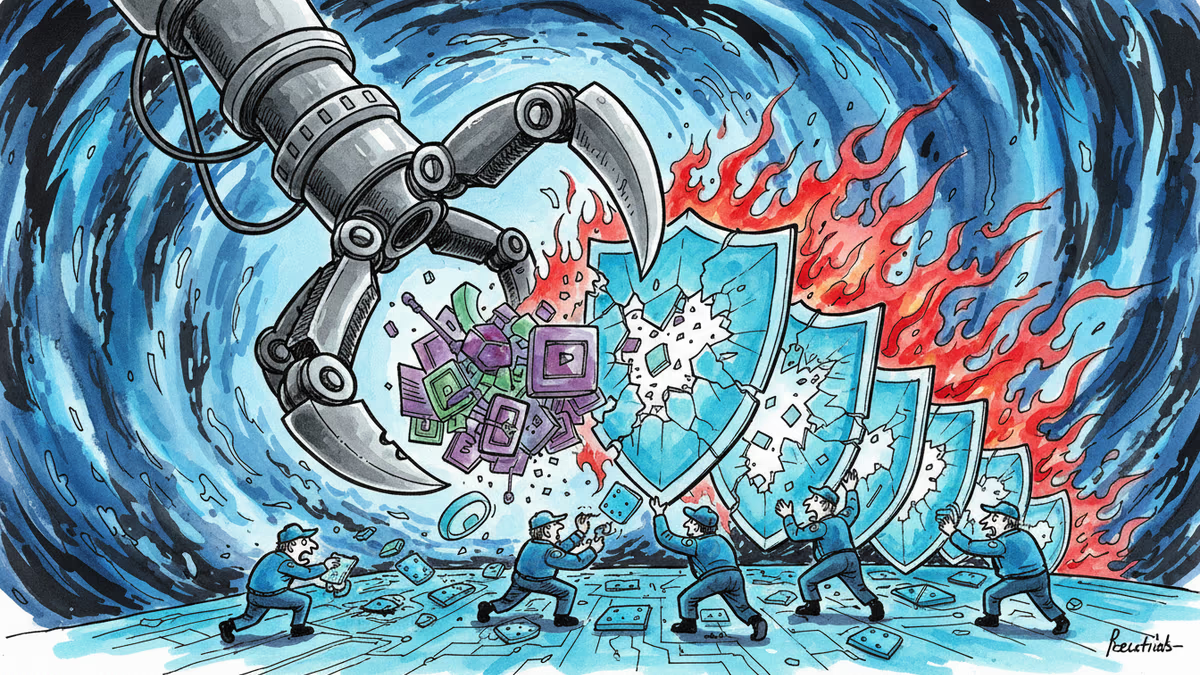
The AI Scraping Wars Have Begun, and Security Shields Are Breaking
OpenClaw users are bypassing website security with Scrapling tool. A cat-and-mouse game between Cloudflare and scraping bots is escalating rapidly.
200,000 Downloads Later, the Gloves Are Off
In San Francisco, OpenClaw feels omnipresent. But now it's showing up where it shouldn't be. Users are pairing this viral AI tool with Scrapling, an open-source program designed to punch through anti-bot defenses like Cloudflare Turnstile.
Since its release, Scrapling has been downloaded over 200,000 times. Monday's viral X posts promoting it weren't subtle: "No bot detection. No selector maintenance. No Cloudflare nightmares." The message was clear—OpenClaw tells Scrapling what to extract, and Scrapling handles the stealth.
Cloudflare Fights Back
Cloudflare isn't amused. The company has already blocked previous versions of Scrapling, but developers keep evolving their bypass methods. "We make changes, and then they make changes," says Dane Knecht, Cloudflare's CTO.
The numbers tell the story of an escalating arms race. In less than a year, Cloudflare claims to have blocked 416 billion unsolicited scraping attempts. That's over 1 billion attacks per day on average.
Knecht believes Cloudflare's vast trove of website data and trend-tracking capabilities give them the upper hand. "We already had a signal that they're starting to get a higher ability to get around us," he says. "The security operations team had already been working on new mitigations."

The Crypto Sideshow Disaster
As Scrapling gained traction, crypto opportunists swooped in. A $Scrapling memecoin launched, with developer Karim Shoair initially endorsing it on X. The price skyrocketed for about five hours before crashing as users sold off their stakes.
"Bunch of fucking scammers," reads one comment on the Pump.Fun hosting site. Shoair later distanced himself: "I didn't know what I was getting into when people made that coin... the money I withdrew will go to charity."
The GitHub Projects Community account, with over 300,000 followers, deleted its Scrapling promotional posts and issued a disclaimer: "We do not support, promote, or engage in crypto assets."
The Philosophical Battleground
Large language models were trained on the entire internet corpus—a process that involved massive scraping. In essence, Scrapling users are following in the footsteps of original model builders, just on an individualized scale.
Website owners have been erecting increasingly sophisticated anti-bot protections, while companies like Cloudflare work overtime to block ever-more-powerful bots. It's become an expensive, never-ending game of digital whack-a-mole.
Authors
Related Articles

Samsung and SK unveiled a chip and AI investment package worth thousands of trillions of won on June 29. The headline number swings wildly by outlet, but the real contest isn't capital — it's water and power.

UK Visa Portal, a private immigration service mistaken for an official government site, has been exposing passport scans and selfies of over 100,000 applicants. The breach remains unpatched.

Viral videos show 2026 graduates jeering executives who praise AI at commencement ceremonies. It's not just rudeness — it's a signal about who pays for technological optimism.

Filipino virtual assistants using AI to ghost-manage LinkedIn profiles for executives is now a structured industry. 30 comments a day, fake engagement rings, and a platform struggling to tell real from fabricated.
Samsung and SK unveiled a chip and AI investment package worth thousands of trillions of won on June 29. The headline number swings wildly by outlet, but the real contest isn't capital — it's water and power.
UK Visa Portal, a private immigration service mistaken for an official government site, has been exposing passport scans and selfies of over 100,000 applicants. The breach remains unpatched.
Viral videos show 2026 graduates jeering executives who praise AI at commencement ceremonies. It's not just rudeness — it's a signal about who pays for technological optimism.
Filipino virtual assistants using AI to ghost-manage LinkedIn profiles for executives is now a structured industry. 30 comments a day, fake engagement rings, and a platform struggling to tell real from fabricated.
Thoughts
Share your thoughts on this article
Sign in to join the conversation