
The Crime-Tech Arms Race: Who's Winning?
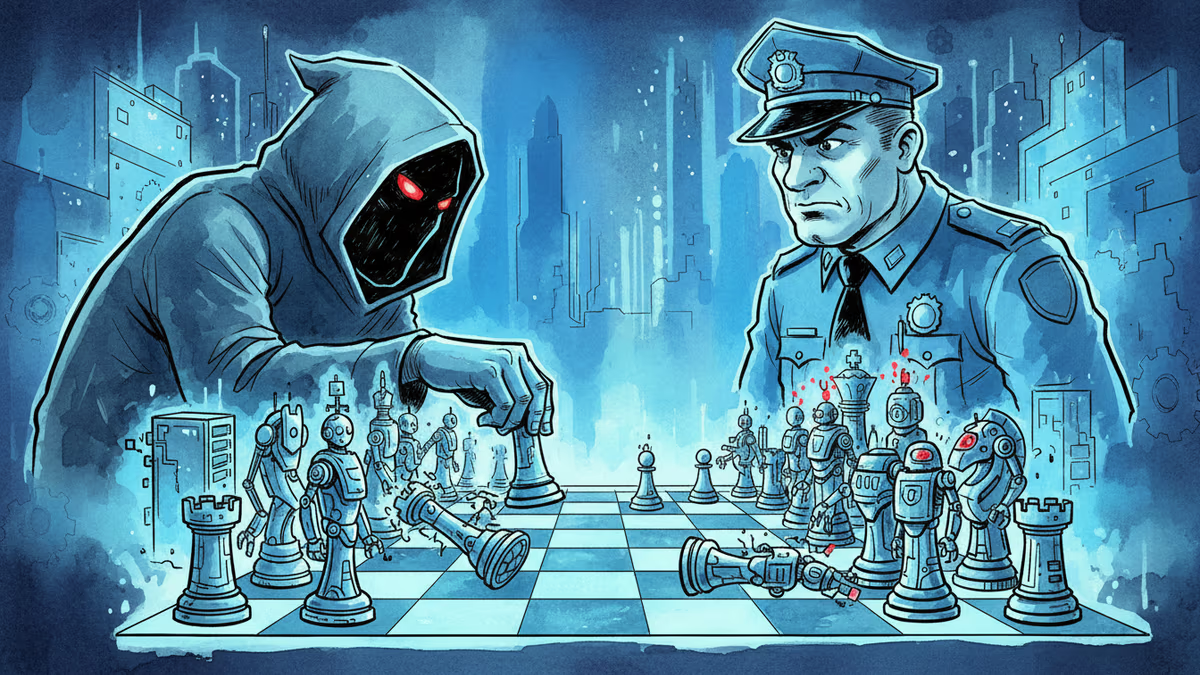
Technology makes crime easier while revolutionizing law enforcement. From crypto to surveillance systems, we explore both sides of this digital double-edged sword.
$1 Trillion in Annual Cybercrime Meets AI
By 2026, global cybercrime damages have crossed the $1 trillion threshold annually. But here's the twist: as crime gets easier, so does catching criminals.
MIT Technology Review's new Crime issue reveals a fascinating paradox. Thanks to cryptocurrency and off-the-shelf autonomous tech, there's never been a better time to commit crimes. But thanks to pervasive surveillance and AI, there's never been a better time to solve them—sometimes at the cost of what we used to call civil liberties.
The Criminal's New Toolkit
Crypto: The Perfect Laundromat?
Cryptocurrency's "permissionless" nature has become a double-edged sword. The utopian dream of financial freedom for all has created a nightmare scenario where anyone can hide money from authorities. The technology that promised to democratize finance has also democratized money laundering.
Drug smugglers are already adapting, using uncrewed narco submarines to evade traditional detection methods. When your submarine doesn't need a crew, it doesn't need life support—making it smaller, cheaper, and harder to detect.
AI Hacking: Overblown or Underestimated?
While AI is making online crimes easier, experts say reports of AI-powered "superhacks" are seriously overblown. The reality is more mundane: AI helps criminals scale existing attacks rather than inventing entirely new ones.
Modern Car Theft
Luxury car thieves have gone high-tech, exploiting the very systems designed to protect vehicles. They're cloning smart key signals and exploiting software vulnerabilities to "legally" unlock cars from manufacturers' own systems.
Law Enforcement Strikes Back
Chicago's Surveillance Panopticon

Chicago has built a vast monitoring system with tens of thousands of surveillance cameras tracking residents. While law enforcement claims it's necessary for public safety, privacy activists compare it to Jeremy Bentham's panopticon—a prison where inmates never know if they're being watched.
Conservation's Extreme Measures
Wildlife conservationists are fighting traffickers with radical tech solutions, including making rhinos radioactive to deter poachers. It's a stark example of how the tech arms race pushes both sides to extremes.
The Pentagon vs. Anthropic Showdown
The recent ultimatum from the Pentagon to Anthropic—provide military access to Claude AI or face consequences—represents more than a corporate-government dispute. Defense Secretary Pete Hegseth threatened to cut ties when Anthropic refused to ease military restrictions.
This standoff highlights a fundamental question: Can AI companies maintain neutrality when their technology becomes central to national security and crime fighting?
The Surveillance Trade-off
Cybersecurity researcher Allison Nixon's story of tracking down online figures who threatened to kill her illustrates the personal stakes. When traditional law enforcement falls short, victims and researchers are forced to become digital vigilantes, using the same tools criminals use.
The Global Response
Different countries are taking vastly different approaches:
- United States: Embracing surveillance capitalism with minimal restrictions
- European Union: Prioritizing privacy with GDPR and AI Act regulations
- China: Full surveillance state with social credit systems
- Smaller nations: Struggling to balance security needs with limited resources
What This Means for You
For Consumers
Your personal data is simultaneously more vulnerable and more protected than ever. While criminals have new tools to exploit your information, companies and governments have new tools to protect it—though sometimes by collecting even more data about you.
For Businesses
The cost of cybersecurity is skyrocketing, but so is the sophistication of available defenses. Companies must now think like both criminals and law enforcement to stay ahead.
For Society
We're witnessing the end of technological neutrality. Every new innovation becomes a weapon in this arms race, forcing us to choose between security and privacy, efficiency and freedom.
Authors
Related Articles
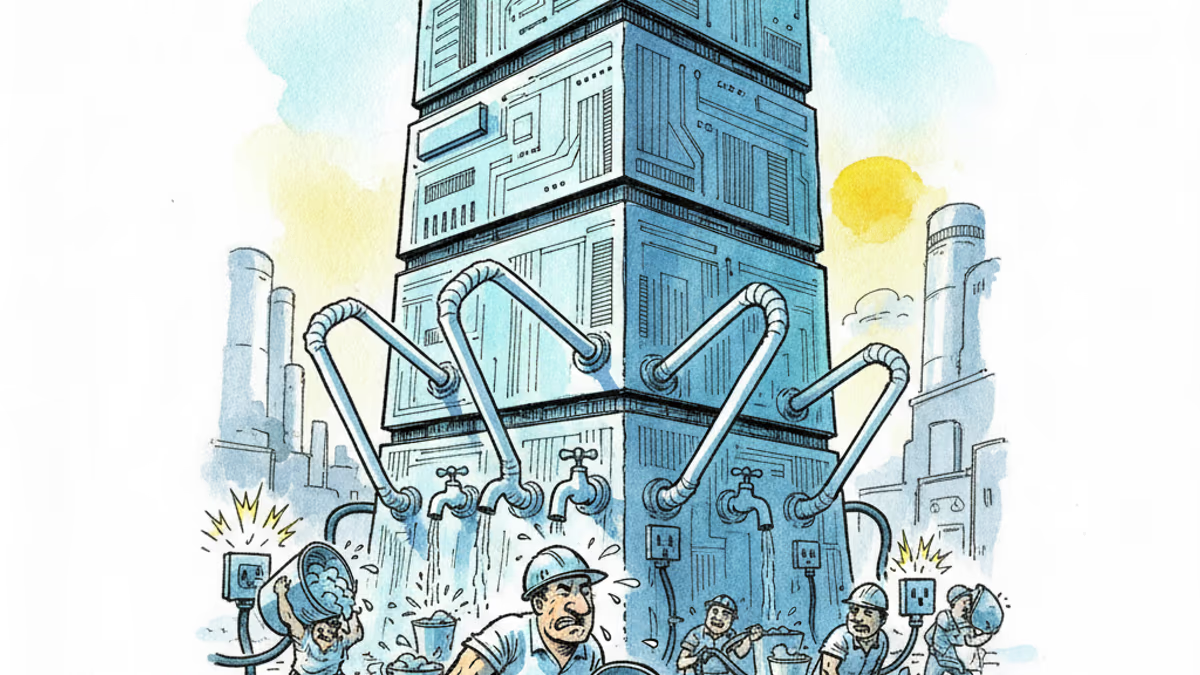
Samsung and SK unveiled a chip and AI investment package worth thousands of trillions of won on June 29. The headline number swings wildly by outlet, but the real contest isn't capital — it's water and power.
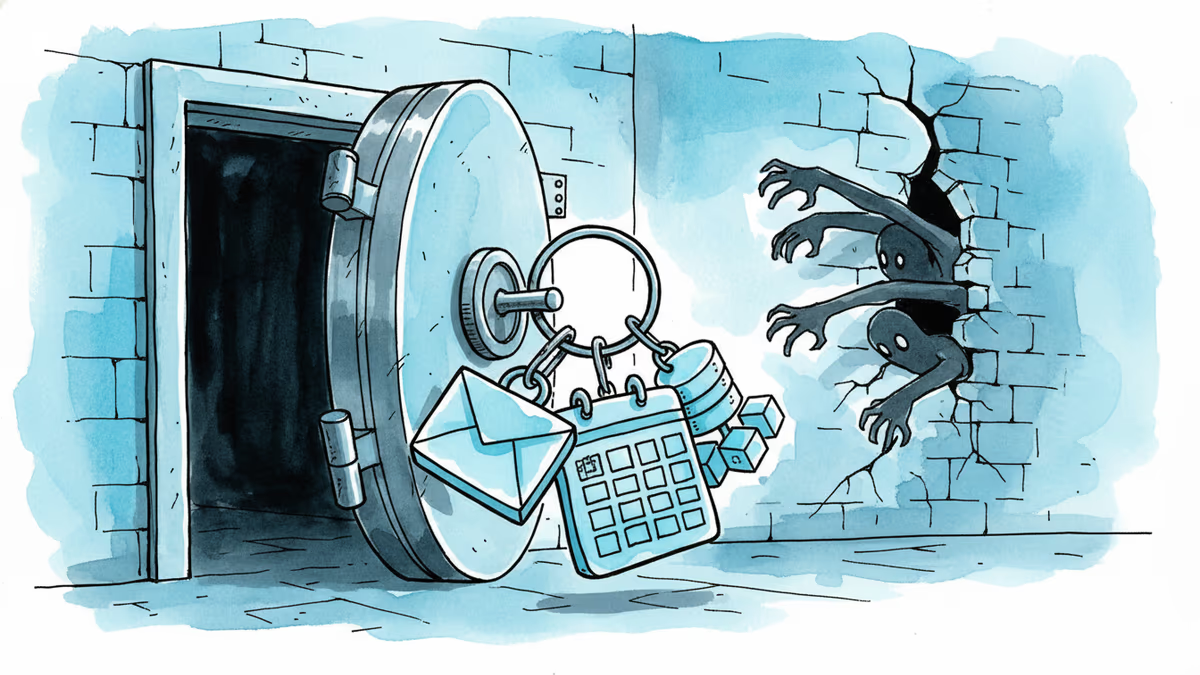
A critical vulnerability in Starlette—downloaded 325 million times per week—puts millions of AI agent servers at risk, exposing stored credentials for email, databases, and third-party services.
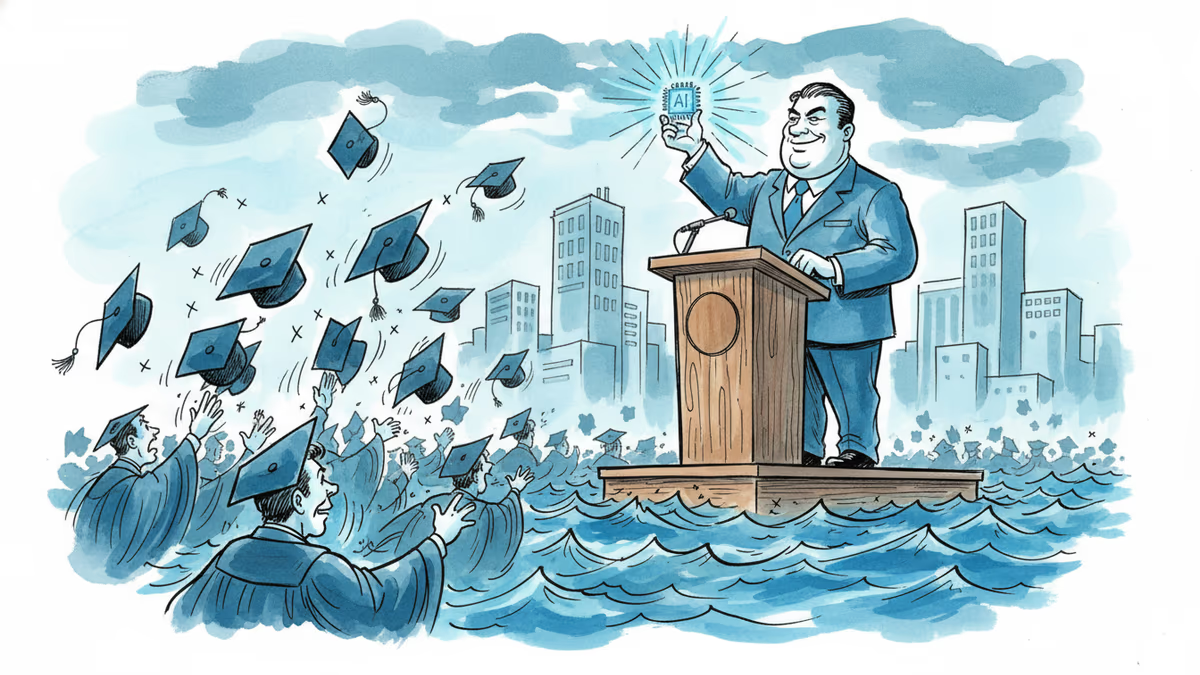
Viral videos show 2026 graduates jeering executives who praise AI at commencement ceremonies. It's not just rudeness — it's a signal about who pays for technological optimism.

GitHub confirmed hackers stole data from 3,800 internal repositories via a poisoned VS Code extension. Here's why developer tools are now the most dangerous attack surface in tech.
Samsung and SK unveiled a chip and AI investment package worth thousands of trillions of won on June 29. The headline number swings wildly by outlet, but the real contest isn't capital — it's water and power.
A critical vulnerability in Starlette—downloaded 325 million times per week—puts millions of AI agent servers at risk, exposing stored credentials for email, databases, and third-party services.
Viral videos show 2026 graduates jeering executives who praise AI at commencement ceremonies. It's not just rudeness — it's a signal about who pays for technological optimism.
GitHub confirmed hackers stole data from 3,800 internal repositories via a poisoned VS Code extension. Here's why developer tools are now the most dangerous attack surface in tech.
Thoughts
Share your thoughts on this article
Sign in to join the conversation