

Why OpenAI Just Hired Silicon Valley's Most Notorious Prankster
Riley Walz, creator of viral web stunts, joins OpenAI to reinvent human-AI interaction. What this hiring reveals about the next phase of AI competition.
800 Million Users Later, OpenAI Still Isn't Satisfied
OpenAI just hired Silicon Valley's most notorious digital prankster. Riley Walz, the software engineer behind viral projects like searching Jeffrey Epstein's emails through a Gmail-like interface and tracking San Francisco parking cops in real-time, is joining the company's secretive OAI Labs team.
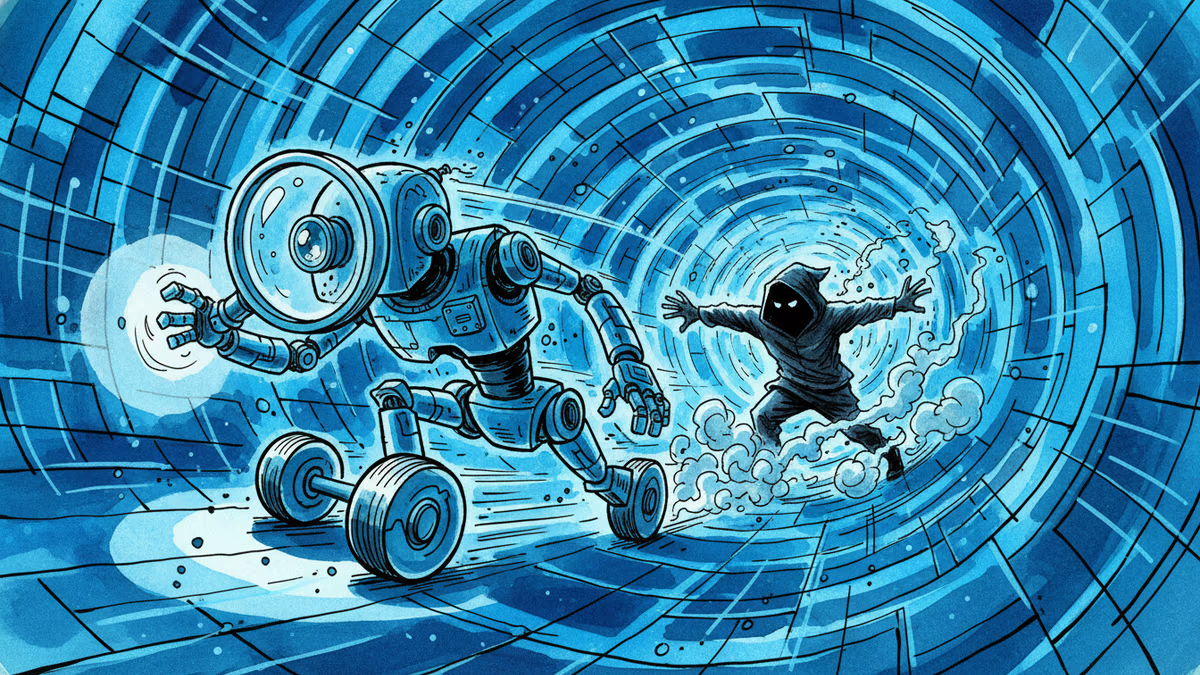
This isn't about adding comic relief to the office. Walz will be "inventing and prototyping new interfaces for how people collaborate with AI," according to research leader Joanne Jang. Translation: OpenAI thinks the future of AI isn't just better models—it's better ways to use them.
The Interface Wars Have Begun
ChatGPT reaches 800 million people weekly, making it one of the most successful consumer products ever launched. So why is OpenAI obsessing over new interfaces?
The answer lies in a shift happening right under their noses. While OpenAI, Google, and Anthropic have been locked in a model performance arms race, millions of developers have quietly started using coding agents like Claude Code as their primary AI interface. The simple chat box that made ChatGPT famous might already be yesterday's news.
Walz's hiring signals OpenAI's recognition of this reality. His superpower isn't just technical skill—it's turning complex data into intuitive experiences that regular people actually want to use. His projects went viral not because they were technically perfect, but because they made the impossible feel natural.

Innovation at the Edge of Controversy
Walz's track record is a study in creative boundary-pushing. His parking cop tracker lasted exactly four hours before San Francisco officials shut it down, citing employee safety concerns. When he tried to help investigate the UnitedHealthcare CEO shooting using CitiBike data he'd previously scraped, online critics called him a "bootlicker" and threatened his safety.
These controversies aren't bugs in his resume—they're features. They demonstrate something OpenAI desperately needs: real-world experience with the social and ethical implications of putting powerful tools in people's hands. While other tech companies hire ethicists to write reports, OpenAI just hired someone who's lived through the messy reality of public backlash.
The Next AI Product Race
This hire reveals OpenAI's broader strategy shift. The company isn't just competing on model capabilities anymore—it's betting on interface innovation as the next competitive moat. Think about it: if every AI model becomes roughly equivalent in capability, the winner will be whoever makes AI easiest and most natural to use.
Walz's background in creating "social commentary through code" could be exactly what AI needs. His projects worked because they made abstract concepts tangible and immediate. Now imagine that same sensibility applied to human-AI collaboration.
What This Means for Everyone Else
For competitors like Google and Anthropic, this hire should be a wake-up call. The next phase of AI competition won't be won in research labs—it'll be won in user experience design. For developers building on AI platforms, it suggests that the current generation of APIs and interfaces might be about to look very outdated.
For the rest of us? It's a signal that how we interact with AI is about to change dramatically. The chat box was just the beginning.
Authors
Related Articles

OpenAI has reorganized for the second time in a month, merging ChatGPT and Codex into a single agentic platform under president Greg Brockman's unified product leadership.

After two weeks of witnesses calling him a liar, OpenAI CEO Sam Altman testified in his own defense, claiming Elon Musk tried to kill the company twice.

Sam Nelson, 19, died after following ChatGPT's advice to mix Kratom and Xanax. His parents are suing OpenAI for wrongful death, raising urgent questions about AI trust, liability, and design.
OpenAI's new Daybreak initiative uses the Codex AI agent to find and patch security vulnerabilities before attackers do—putting it in direct competition with Anthropic's secretive Claude Mythos.
OpenAI has reorganized for the second time in a month, merging ChatGPT and Codex into a single agentic platform under president Greg Brockman's unified product leadership.
After two weeks of witnesses calling him a liar, OpenAI CEO Sam Altman testified in his own defense, claiming Elon Musk tried to kill the company twice.
Sam Nelson, 19, died after following ChatGPT's advice to mix Kratom and Xanax. His parents are suing OpenAI for wrongful death, raising urgent questions about AI trust, liability, and design.
OpenAI's new Daybreak initiative uses the Codex AI agent to find and patch security vulnerabilities before attackers do—putting it in direct competition with Anthropic's secretive Claude Mythos.
Thoughts
Share your thoughts on this article
Sign in to join the conversation