

Musk's Election Law Violation Exposes Tech's Political Power Play
The man who constantly cries voter fraud gets slapped with election law violations. Elon Musk's America PAC sent pre-filled ballot applications in Georgia, raising questions about tech billionaire political influence.
The Fraud Fighter Becomes the Fraudster
It took 48 hours for the irony to become unbearable. Last week, Elon Musk was tweeting about "stopping election fraud." This week, his America PAC got smacked with an election law violation by the Georgia State Election Board.
Residents in five Georgia counties reported receiving absentee ballot applications from America PAC with their personal information already filled in. Under Georgia law, only authorized relatives can send pre-filled ballot applications to voters. Everyone else? That's illegal.
The kicker? These applications also failed to include required disclaimers about who sent them. It's like speeding while texting about road safety.
When $110 Million Meets Legal Reality
Musk's America PAC has already pumped over $110 million into supporting Donald Trump's campaign. But this Georgia violation isn't an isolated incident—it's part of a pattern.
Last October, the PAC ran a $1 million daily giveaway to registered voters in swing states. Federal prosecutors and Pennsylvania's attorney general launched investigations, calling it potential vote buying. Musk's defense? "It's free speech, bro."
But Georgia is different. This isn't about creative interpretations of campaign finance law—it's direct interference with the voting process itself.
The Enforcement Problem

Here's where it gets interesting: Georgia's response was essentially a slap on the wrist. No fines, no criminal charges, just a formal "don't do that again" letter.
This reveals the structural weakness in American election law enforcement. The Federal Election Commission requires four votes out of six commissioners to take action. With three Republicans and three Democrats, partisan deadlock is almost guaranteed on controversial cases.
State-level enforcement isn't much better. Georgia is a Republican-controlled state. Going hard after a Trump supporter with Musk's resources and influence? That's a political calculation, not just a legal one.
The New Rules of Digital Democracy
Musk isn't alone in pushing boundaries. Meta's Mark Zuckerberg spent $400 million on election infrastructure in 2020. Amazon's Jeff Bezos has ramped up political spending. But Musk brings something different to the table: 160 million Twitter followers and ownership of a major information platform.
That's the real game-changer. Traditional campaign finance laws were written for an analog world of TV ads and direct mail. They weren't designed for platform owners who can algorithmically amplify political messages to hundreds of millions of users.
When Musk tweets about election integrity while his PAC violates election laws, he's not just being hypocritical—he's demonstrating how traditional regulatory frameworks are breaking down.
Beyond Left vs. Right
This isn't really about Republican versus Democrat. It's about whether democratic institutions can handle the concentration of wealth and information power in the hands of a few tech billionaires.
Consider the precedent: If pre-filling ballot applications is just a "warning-level" offense for someone with Musk's resources, what's next? If platform owners can shape political discourse while funding campaigns, where are the guardrails?
Authors
Related Articles
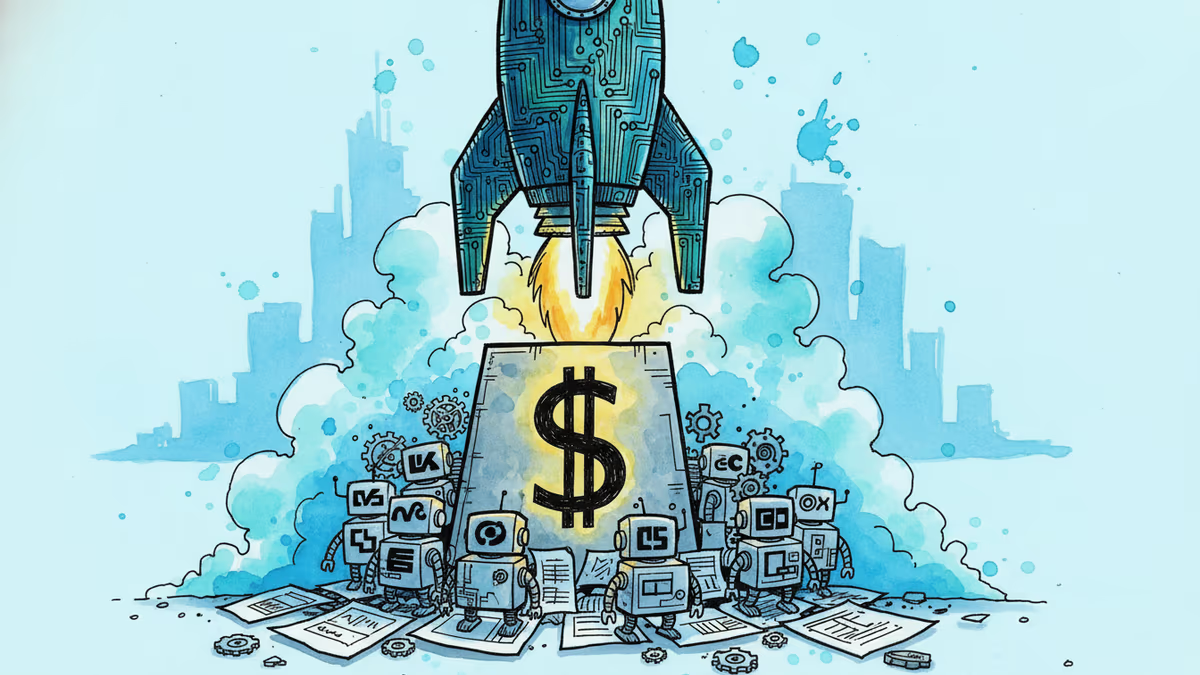
SpaceX's IPO filing puts AI at the center, claiming a $26.5 trillion market opportunity. But can Grok compete with OpenAI and Anthropic for enterprise customers?
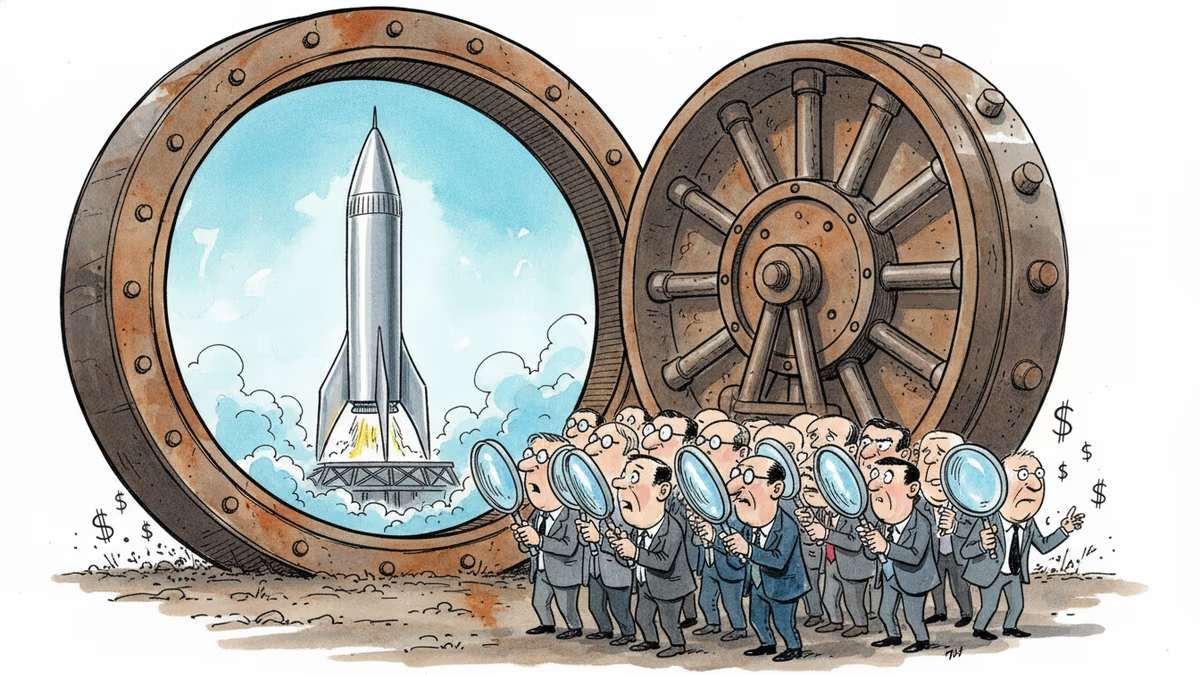
SpaceX filed a nearly 400-page S-1 with the SEC, targeting an IPO as early as June 12. Here's what the filing reveals—and what it doesn't.
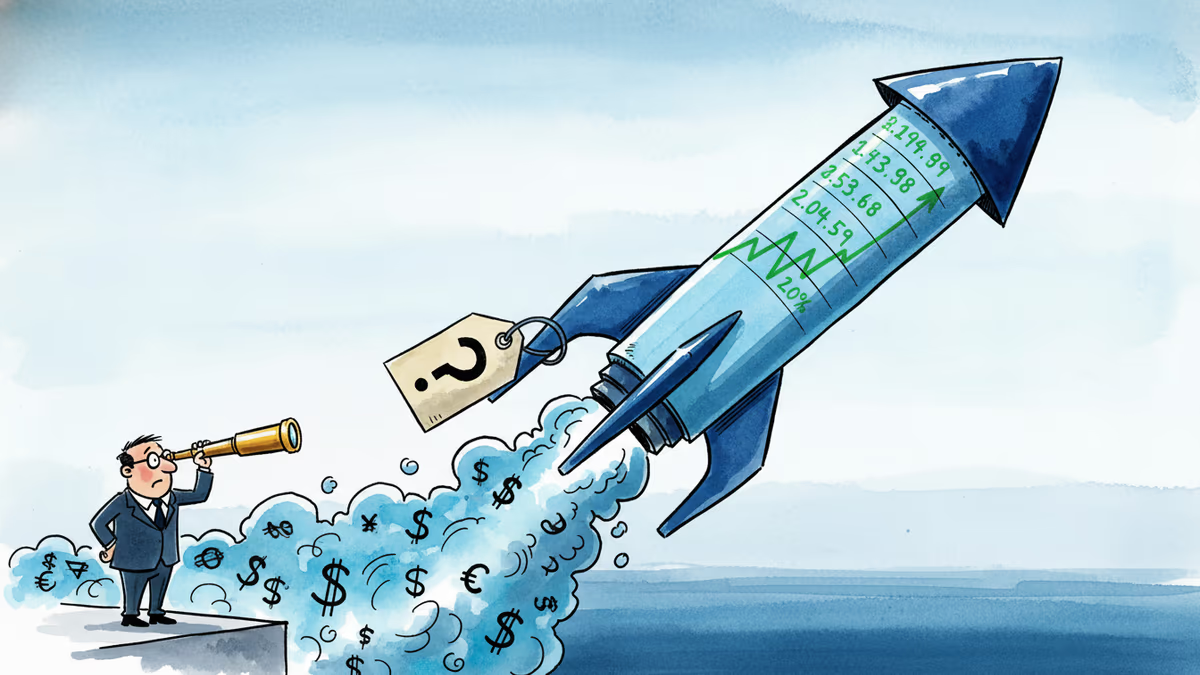
SpaceX has filed its S-1 with the SEC, targeting the Nasdaq under ticker SPCX. With $18.67B in revenue but a $4.9B loss, the IPO forces investors to answer one hard question.
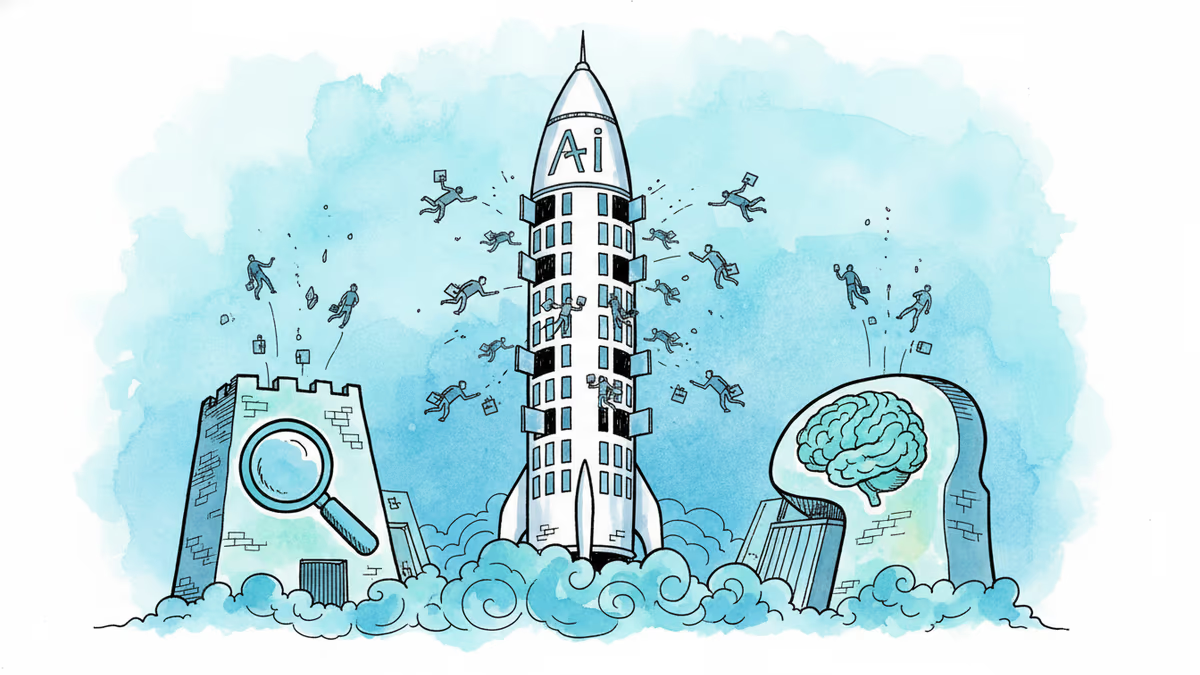
Over 50 researchers and engineers have left SpaceXAI since February's merger. With the pre-training team nearly gutted, questions mount about whether Musk's AI ambitions can survive his management style.
SpaceX's IPO filing puts AI at the center, claiming a $26.5 trillion market opportunity. But can Grok compete with OpenAI and Anthropic for enterprise customers?
SpaceX filed a nearly 400-page S-1 with the SEC, targeting an IPO as early as June 12. Here's what the filing reveals—and what it doesn't.
SpaceX has filed its S-1 with the SEC, targeting the Nasdaq under ticker SPCX. With $18.67B in revenue but a $4.9B loss, the IPO forces investors to answer one hard question.
Over 50 researchers and engineers have left SpaceXAI since February's merger. With the pre-training team nearly gutted, questions mount about whether Musk's AI ambitions can survive his management style.
Thoughts
Share your thoughts on this article
Sign in to join the conversation