
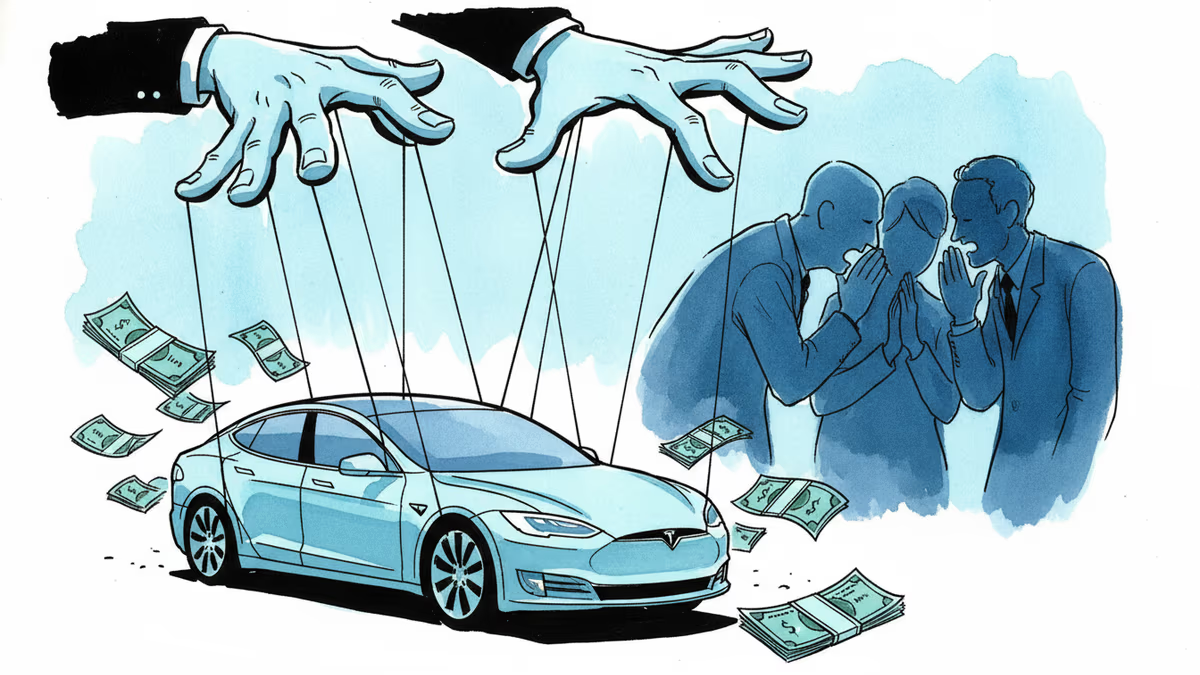
Musk's Shadow Advisor: How Epstein Helped Orchestrate Tesla's $10B Private Deal
Newly released DOJ files reveal Jeffrey Epstein's behind-the-scenes role in Elon Musk's failed 2018 Tesla privatization attempt, from Saudi funding to board recommendations.
The $420 Tweet That Cost $40 Million Had a Secret Architect
When Elon Musk tweeted "considering taking Tesla private at $420" in August 2018, the world assumed he was either lying or delusional. The SEC's $40 million fine suggested the former. But newly released Department of Justice files reveal a more disturbing truth: behind Musk's reckless gamble was Jeffrey Epstein, the convicted sex offender who somehow became Tesla's shadow advisor.
The 3 million documents released last month don't just show casual acquaintance between the two men. They reveal Epstein actively strategizing Tesla's $10 billion privatization deal, recommending board members, and even orchestrating media coverage. This wasn't networking—it was corporate manipulation at the highest level.
When Crisis Managers Turn to Criminals
2018 was Musk's annus horribilis. The "pedo guy" Twitter meltdown during the Thai cave rescue. Erratic behavior on earnings calls. Production hell at Tesla's factories. Stock price volatility that had investors fleeing.
Enter Juleanna Glover, the high-powered Washington lobbyist tasked with damage control. Her solution? Reach out to Jeffrey Epstein for help securing Saudi funding. Why would a seasoned PR professional contact a registered sex offender for business advice?
"I'd heard that Epstein was close to MBS [Saudi Crown Prince Mohammed bin Salman], so I reached out," Glover explained. The Saudi Public Investment Fund was crucial to Musk's privatization dream, and Epstein apparently had the connections to make it happen.
"Stability in All Its Forms" - Epstein's Brutal Assessment
The emails reveal Epstein as surprisingly shrewd about Tesla's prospects. While Glover pitched the company's gross margins and energy business potential, Epstein remained skeptical.
"Bottom line is at the core," he wrote, emphasizing "STABILITY in all its forms." He specifically cited concerns about Musk's "recent strings of outbursts... Thailand. emotional performance."
Even a convicted criminal could see what Tesla's board apparently couldn't: Musk was becoming a liability to his own company.

The Board of the Dead and Powerful
Perhaps the most surreal aspect of the correspondence involves proposed Tesla board members. Glover suggested former Deputy Attorney General Larry Thompson and PepsiCo's general counsel. Epstein's recommendations were more... eclectic.
His list included Margaret Thatcher, who had been dead for five years, alongside living figures like Larry Summers and Bill Richardson. The fact that a dead British Prime Minister made the shortlist suggests either dark humor or complete detachment from reality.
None of these candidates ever joined Tesla's board, raising questions about how seriously anyone took these deliberations.
The Media Manipulation Machine
Epstein's influence extended beyond financing and governance. He played a key role in arranging Musk's crucial August 2018 New York Times interview—the one where Musk discussed his emotional fragility and Ambien use.
"The Elon get was epic. You delivered!" Landon Thomas Jr. texted Epstein after the interview. The financier had successfully positioned himself as an intermediary between one of the world's most watched CEOs and the paper of record.
When rumors emerged about Musk's drug use, Epstein and Glover coordinated their response. "Nothing to it. He barely even drinks," Glover assured Epstein, who offered to help "shape your story" with "no fingerprints."
The $420 Question: What Did Musk Really Know?
Glover insists Musk was "never aware" of her communications with Epstein. But other evidence suggests a longer relationship between the two men. A 2012 email shows Musk directly asking Epstein: "What day/night will be the wildest party on your island?"
This contradicts Musk's repeated claims that he "didn't know Epstein well" and had "always rebuffed his overtures." The timeline suggests at least four years of intermittent contact, raising uncomfortable questions about what Musk knew and when.
The Saudi Connection That Never Was
Ultimately, neither Epstein's connections nor Glover's lobbying could salvage Musk's privatization fantasy. The Saudi Public Investment Fund never committed the necessary funds. The SEC charged Musk with securities fraud. Tesla remained public, and Musk paid $20 million in fines while stepping down as chairman.
But the episode reveals something more troubling than failed dealmaking: the ecosystem of influence that surrounds major corporate decisions. When a CEO's judgment falters, who steps into the void? In Tesla's case, it was a convicted sex offender with mysterious connections to foreign wealth.
Authors
Related Articles
SpaceX's IPO filing puts AI at the center, claiming a $26.5 trillion market opportunity. But can Grok compete with OpenAI and Anthropic for enterprise customers?
SpaceX filed a nearly 400-page S-1 with the SEC, targeting an IPO as early as June 12. Here's what the filing reveals—and what it doesn't.
SpaceX has filed its S-1 with the SEC, targeting the Nasdaq under ticker SPCX. With $18.67B in revenue but a $4.9B loss, the IPO forces investors to answer one hard question.
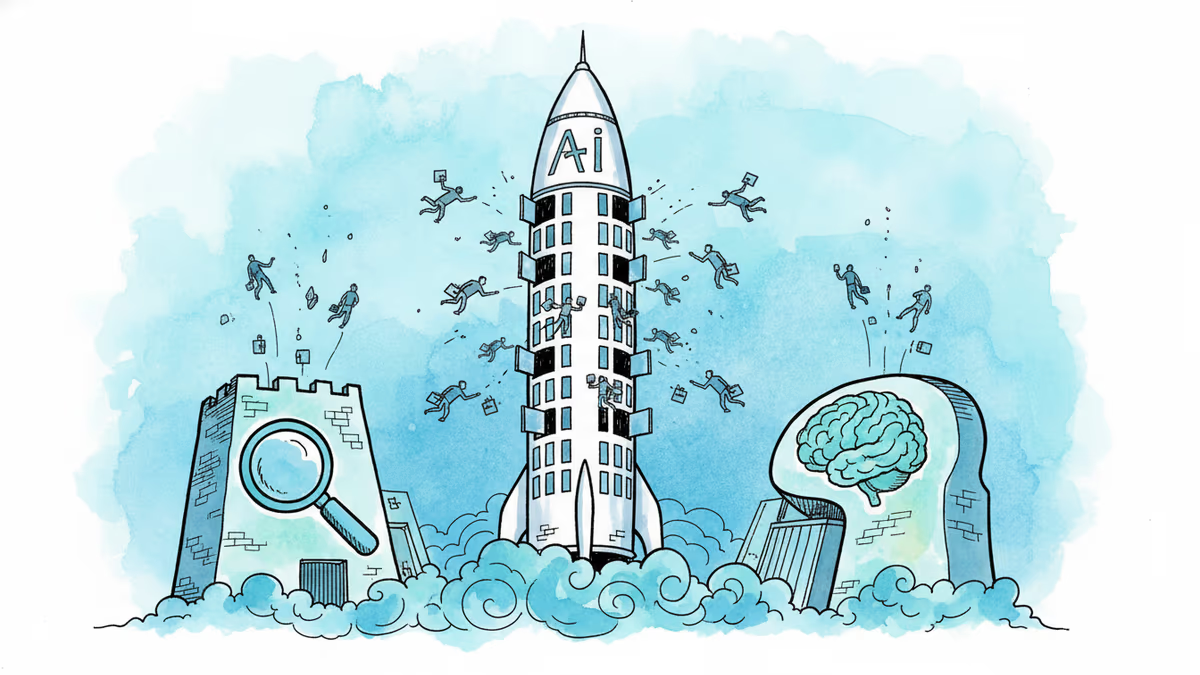
Over 50 researchers and engineers have left SpaceXAI since February's merger. With the pre-training team nearly gutted, questions mount about whether Musk's AI ambitions can survive his management style.
SpaceX's IPO filing puts AI at the center, claiming a $26.5 trillion market opportunity. But can Grok compete with OpenAI and Anthropic for enterprise customers?
SpaceX filed a nearly 400-page S-1 with the SEC, targeting an IPO as early as June 12. Here's what the filing reveals—and what it doesn't.
SpaceX has filed its S-1 with the SEC, targeting the Nasdaq under ticker SPCX. With $18.67B in revenue but a $4.9B loss, the IPO forces investors to answer one hard question.
Over 50 researchers and engineers have left SpaceXAI since February's merger. With the pre-training team nearly gutted, questions mount about whether Musk's AI ambitions can survive his management style.
Thoughts
Share your thoughts on this article
Sign in to join the conversation