
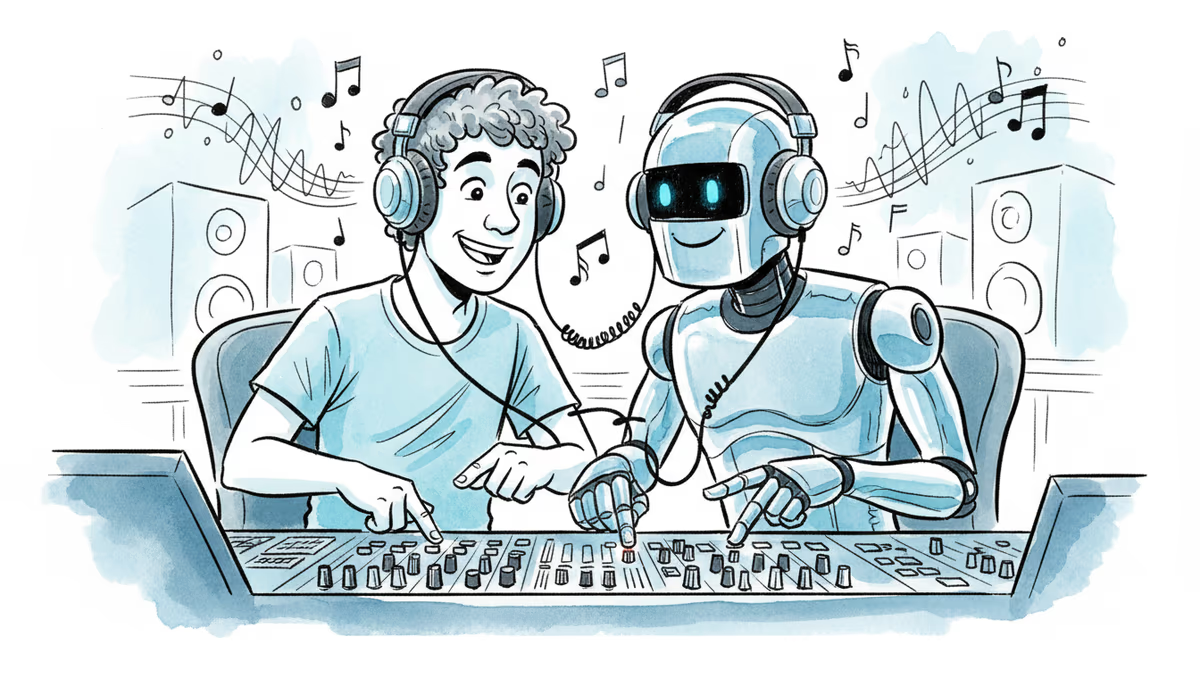
Google Just Made AI Your New Music Collaborator
Google acquires ProducerAI to democratize music creation with AI. The music industry's creative process is being redefined.
"Add a Flute" — And It's Done in Seconds
Wyclef Jean wanted to add a flute sound to a track he was recording. In the old days, that meant booking studio time and hiring a session musician. Instead, he told Google's AI tool: "Add a flute." Seconds later, the sound was perfectly integrated.
Google's Tuesday announcement isn't just another acquisition. By absorbing The Chainsmokers-backed AI music platform ProducerAI into Google Labs, the tech giant is redefining what it means to "collaborate" with artificial intelligence.
When "Make a Lofi Beat" Actually Works
ProducerAI's magic lies in natural language processing. Say "make a lofi beat," and Google DeepMind's Lyria 3 model instantly generates music. It can even turn images into audio outputs — a leap from traditional music software that required technical expertise.
"I've experimented with new genre blends, expressed how I feel with personalized birthday songs for my loved ones, and made custom workout soundtracks," wrote Elias Roman, Google Labs' Senior Director of Product Management.
Three-time Grammy winner Wyclef Jean used the technology on his recent track "Back From Abu Dhabi." "This is not just a machine where you're clicking a button a hundred times," explained Jeff Chang, Director of Product Management at Google DeepMind. "It's a careful kind of curation where you're going through and saying, 'Oh, I think that's something we can use.'"
The Great AI Music Divide
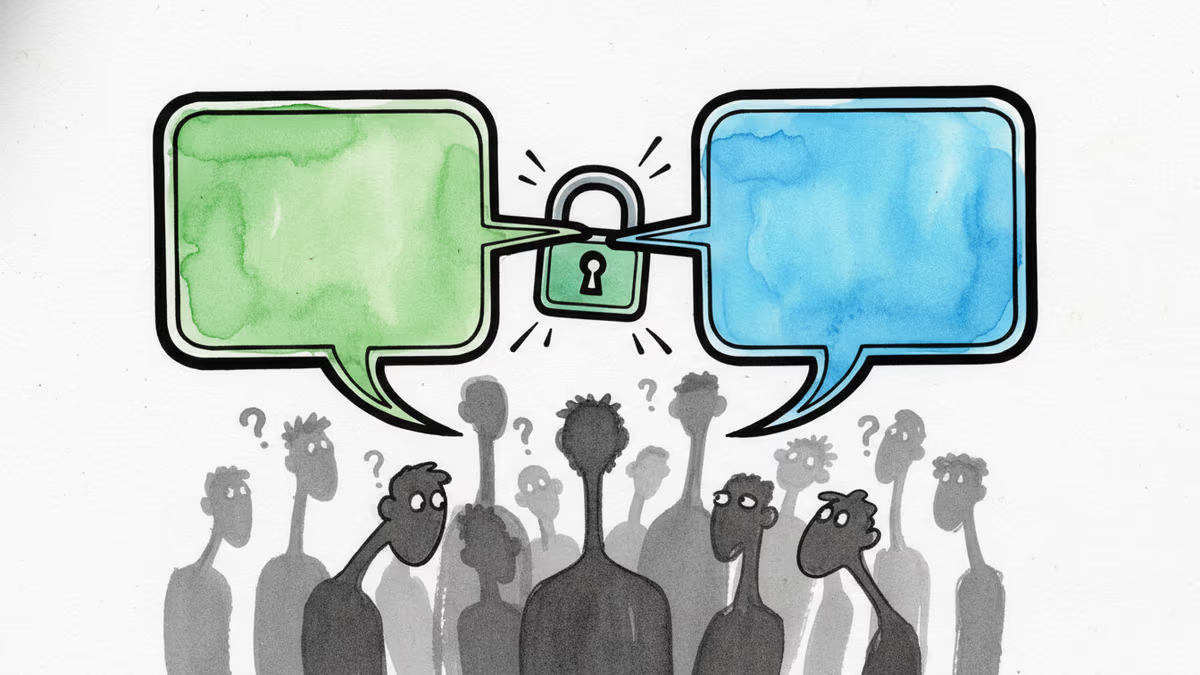
The music industry remains split on AI's role in creativity. Hundreds of musicians, including Billie Eilish, Katy Perry, and Jon Bon Jovi, signed a 2024 open letter urging tech companies not to undermine human creativity with AI music generation tools.

Music publishers recently sued AI company Anthropic for $3 billion, claiming it illegally downloaded over 20,000 copyrighted songs without consent. The legal landscape remains murky — one federal judge ruled that training on copyrighted data is legal, but pirating it isn't.
Yet some artists embrace the technology. Paul McCartney used AI-powered noise reduction to clean up a decades-old John Lennon demo, creating the "new" Beatles track "Now and Then," which won a Grammy in 2025.
Meanwhile, AI-generated music is climbing real charts. Telisha Jones, a 31-year-old from Mississippi, used Suno to transform her poetry into the viral R&B hit "How Was I Supposed To Know," landing a $3 million record deal with Hallwood Media.
What This Means for Music Creation
Google's move signals a shift from AI as a novelty to AI as infrastructure. By integrating ProducerAI into Google Labs — alongside tools that already reach billions — the company is betting that music creation will become as accessible as writing an email.
This democratization could reshape the industry. Independent artists no longer need expensive studio time or technical skills to produce professional-sounding tracks. But it also raises questions about authenticity and the value of human expertise.
The technology particularly benefits creators in regions with limited access to professional studios or session musicians. A bedroom producer in rural America now has the same AI-powered tools as a major label.
The Soul vs. Information Paradox
Wyclef Jean captured the tension perfectly: "There's one thing that you have over the AI: a soul. And there's one thing that AI has over you: the infinite information."
This isn't about replacing musicians — it's about augmenting human creativity with computational power. The question isn't whether AI will change music creation, but how artists will use it to express ideas that were previously impossible to execute.
Authors
Related Articles
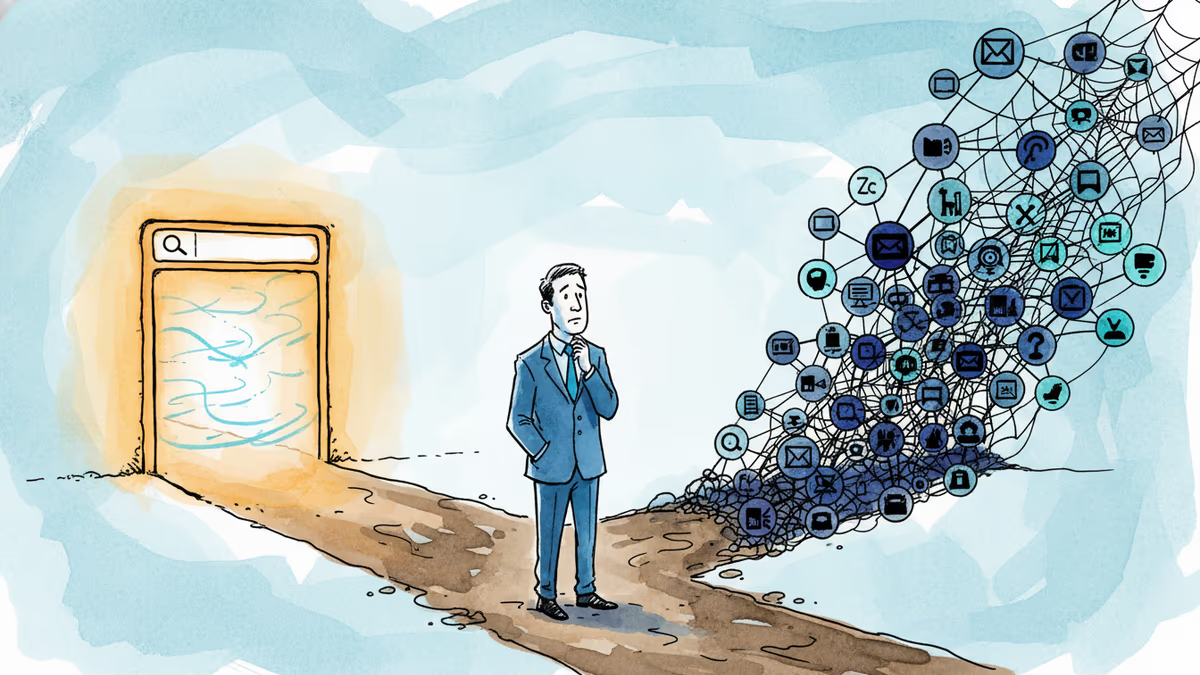
In a post-Google I/O interview, Sundar Pichai acknowledged flawed search results, real AI anxiety, and an AGI timeline that makes the label irrelevant. Here's what he said — and what it means.
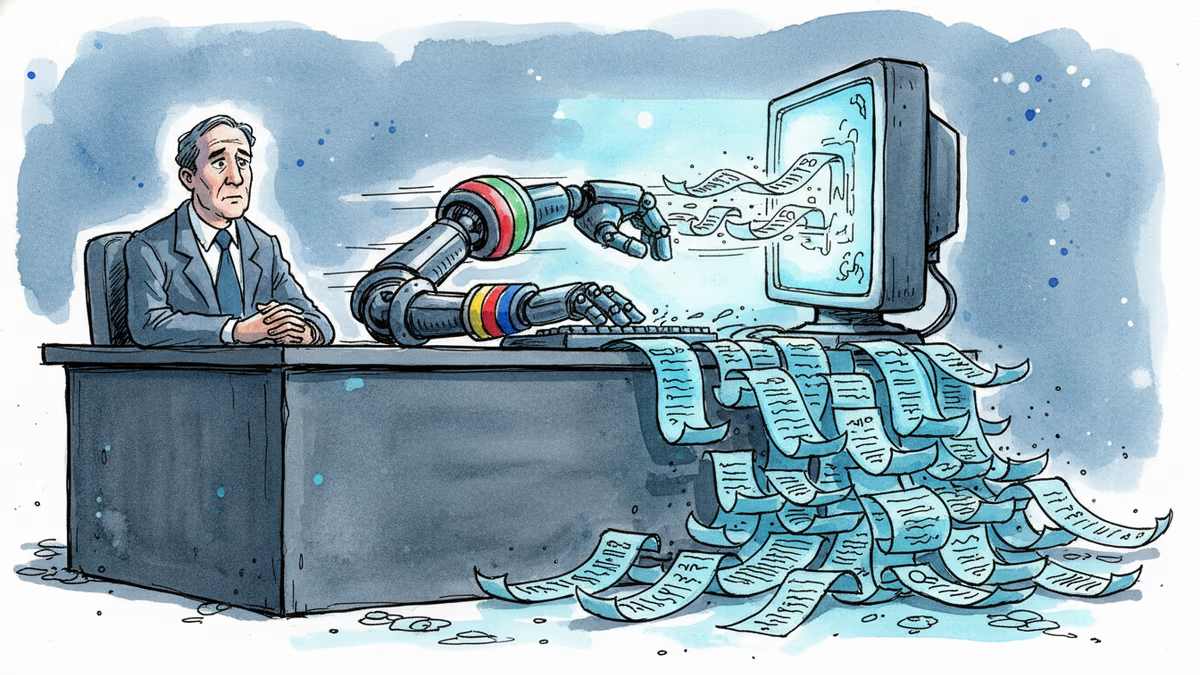
Google is building AI agents that search the web proactively, without user prompting. That's not just a product update — it's a fundamental shift in who controls the information you receive.
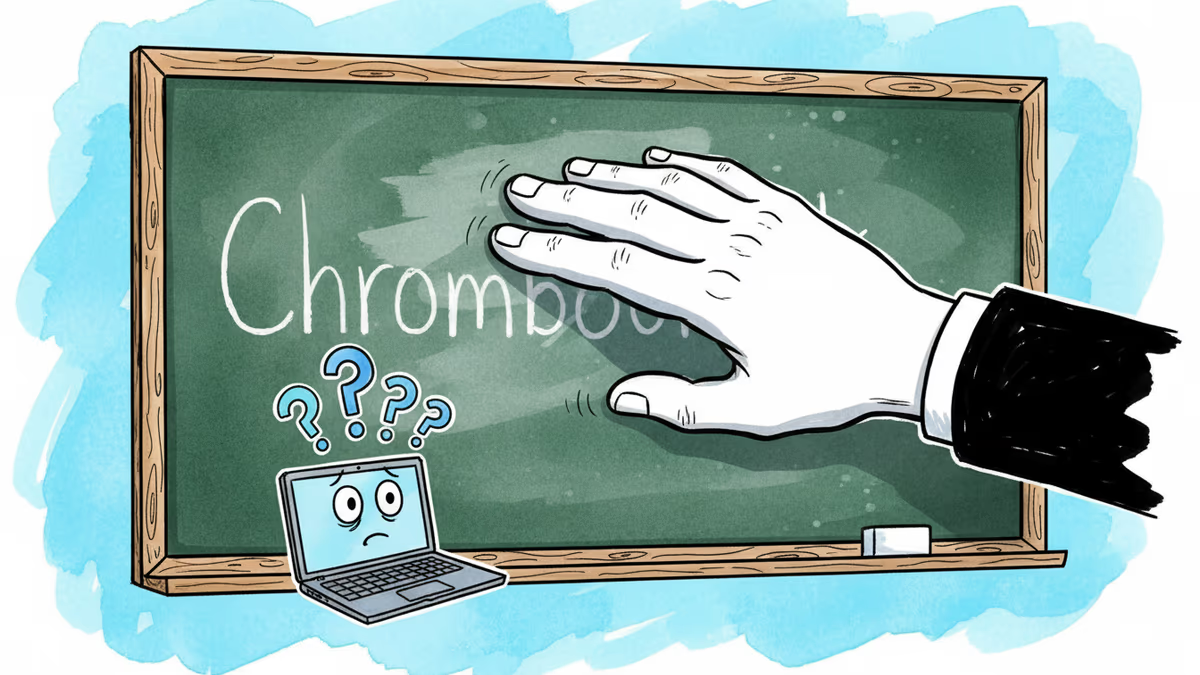
Google unveiled the 'Googlebook' platform to replace Chromebook and ChromeOS—but revealed zero hardware specs. What's the strategy, and what does it mean for users, manufacturers, and the education market?
After 15 years of fragmented mobile messaging, Apple and Google are rolling out end-to-end encrypted RCS messaging between iPhones and Android devices. Here's what changed, why it took so long, and what it means for your privacy.
In a post-Google I/O interview, Sundar Pichai acknowledged flawed search results, real AI anxiety, and an AGI timeline that makes the label irrelevant. Here's what he said — and what it means.
Google is building AI agents that search the web proactively, without user prompting. That's not just a product update — it's a fundamental shift in who controls the information you receive.
Google unveiled the 'Googlebook' platform to replace Chromebook and ChromeOS—but revealed zero hardware specs. What's the strategy, and what does it mean for users, manufacturers, and the education market?
After 15 years of fragmented mobile messaging, Apple and Google are rolling out end-to-end encrypted RCS messaging between iPhones and Android devices. Here's what changed, why it took so long, and what it means for your privacy.
Thoughts
Share your thoughts on this article
Sign in to join the conversation