
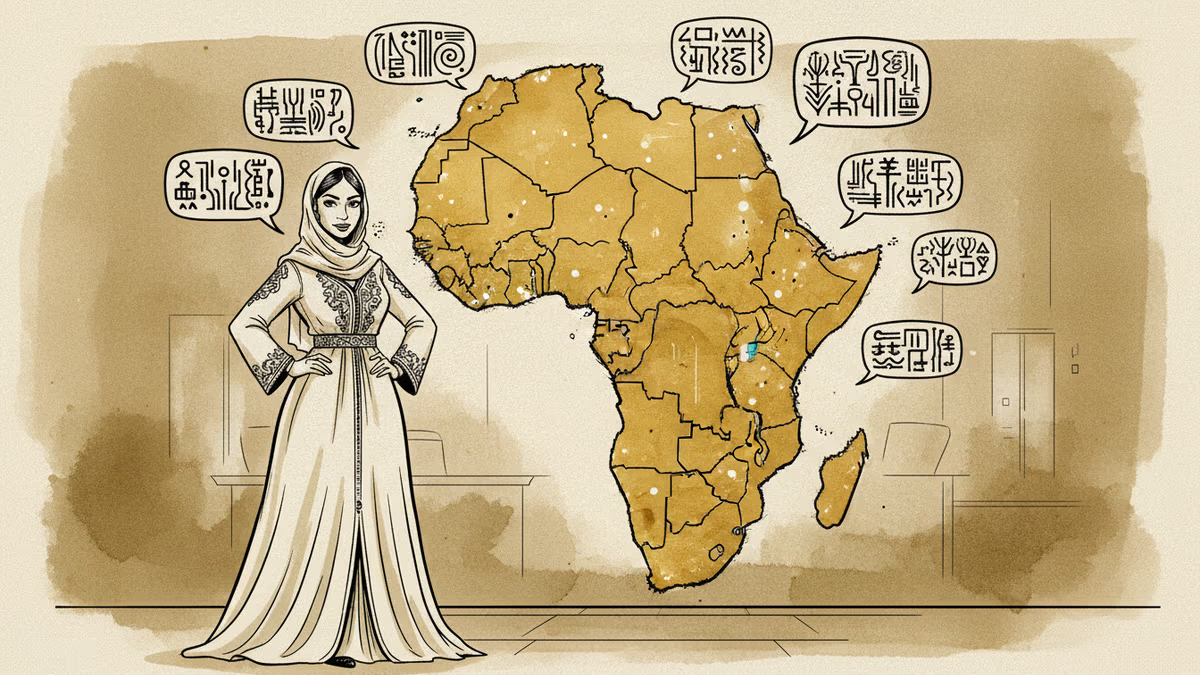
Africa's 80 Ignored Languages Fight Back in the AI Race
Morocco's Digital Minister Amal El Fallah Seghrouchni explains why Africa needs a 'third voice' in AI, separate from US, European, and Chinese approaches.
From AI Builder to AI Regulator
What happens when someone who's spent their career building artificial intelligence suddenly has to regulate it? That's the reality for Amal El Fallah Seghrouchni, who went from publishing 200+ AI research papers to becoming Morocco's Minister of Digital Transition in October 2024.
Her mission isn't just bureaucratic reshuffling. Under her watch, Morocco has consolidated 660 government services into a single portal and deployed chatbots that work for citizens who've never touched a smartphone. The country has partnered with Mistral AI to build language models that understand not just Arabic, but Darija and Amazigh—Morocco's widely spoken but digitally neglected languages.
Seghrouchni's argument is blunt: if nobody else will build AI that speaks to Africa's 80 languages, Morocco will.
The 'Third Voice' Thesis
While the U.S., Europe, and China battle for AI supremacy, Seghrouchni sees an opening for what she calls a "third voice." Not just another player, but a fundamentally different approach: "ethical, responsible, frugal AI" that respects human dignity and serves marginalized populations.
This isn't academic theorizing. Morocco's implementation reveals the gap between AI rhetoric and reality. The hardest part, Seghrouchni admits, wasn't the technology—it was "conducting change" across government departments. Coordinating 660 services taught her that AI governance is ultimately about human coordination, not algorithmic optimization.

The country's e-wallet super-app launch shows this philosophy in action. Instead of forcing digital literacy on citizens, they're building AI that meets people where they are.
Trust vs. Innovation: A False Choice?
"The idea that regulation kills innovation is false," Seghrouchni states flatly. Her evidence? Cybersecurity breaches that put Moroccan personal data on the dark web created demand for trustworthy AI, not unregulated innovation.
This challenges Silicon Valley's traditional narrative. While tech giants argue that regulation stifles progress, Morocco's experience suggests the opposite: trust enables adoption. When citizens see their data compromised, they want confidence, not cutting-edge features.
For international investors and policymakers, this presents a dilemma. If Morocco can prove that regulated AI drives higher adoption rates than unrestricted development, it could reshape global AI governance debates.
Beyond the World Cup: Data Diplomacy
Morocco's 2030 FIFA World Cup preparations include building data centers and rolling out 5G. But Seghrouchni's vision extends beyond sports infrastructure. She's positioning Morocco as a "data embassy" for the Sahel region, offering storage, computation, and AI model development for African nations.
This isn't charity—it's strategic positioning. Through her African Women in Tech and AI program, she's already incubated 350+ women from 28 countries. Last September, Morocco was designated Africa's digital hub for data science and AI.
The question is whether this "third voice" can compete with Big Tech's resources while maintaining its ethical commitments.
Authors
Related Articles
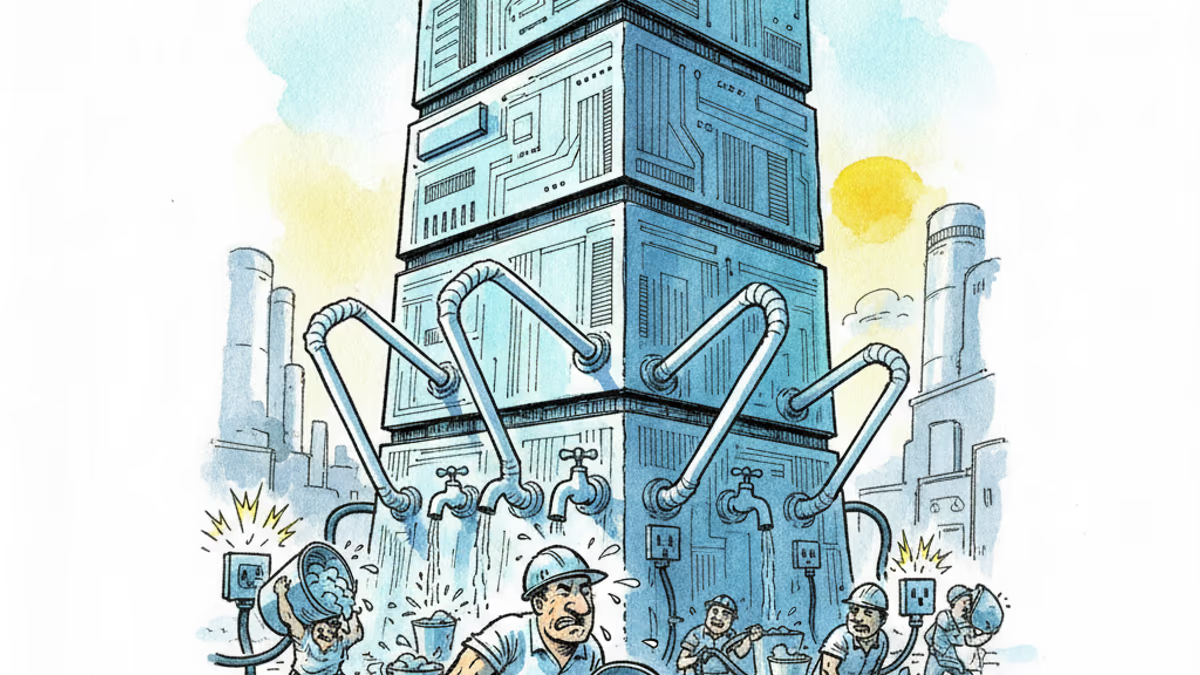
Samsung and SK unveiled a chip and AI investment package worth thousands of trillions of won on June 29. The headline number swings wildly by outlet, but the real contest isn't capital — it's water and power.
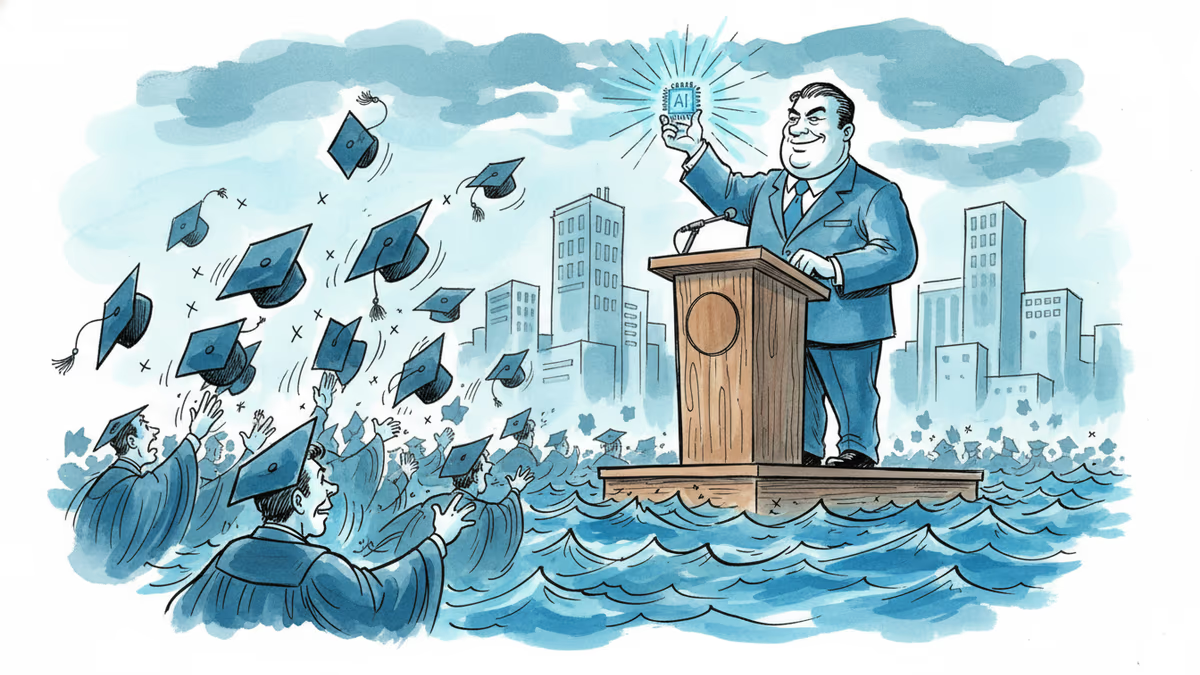
Viral videos show 2026 graduates jeering executives who praise AI at commencement ceremonies. It's not just rudeness — it's a signal about who pays for technological optimism.

Filipino virtual assistants using AI to ghost-manage LinkedIn profiles for executives is now a structured industry. 30 comments a day, fake engagement rings, and a platform struggling to tell real from fabricated.
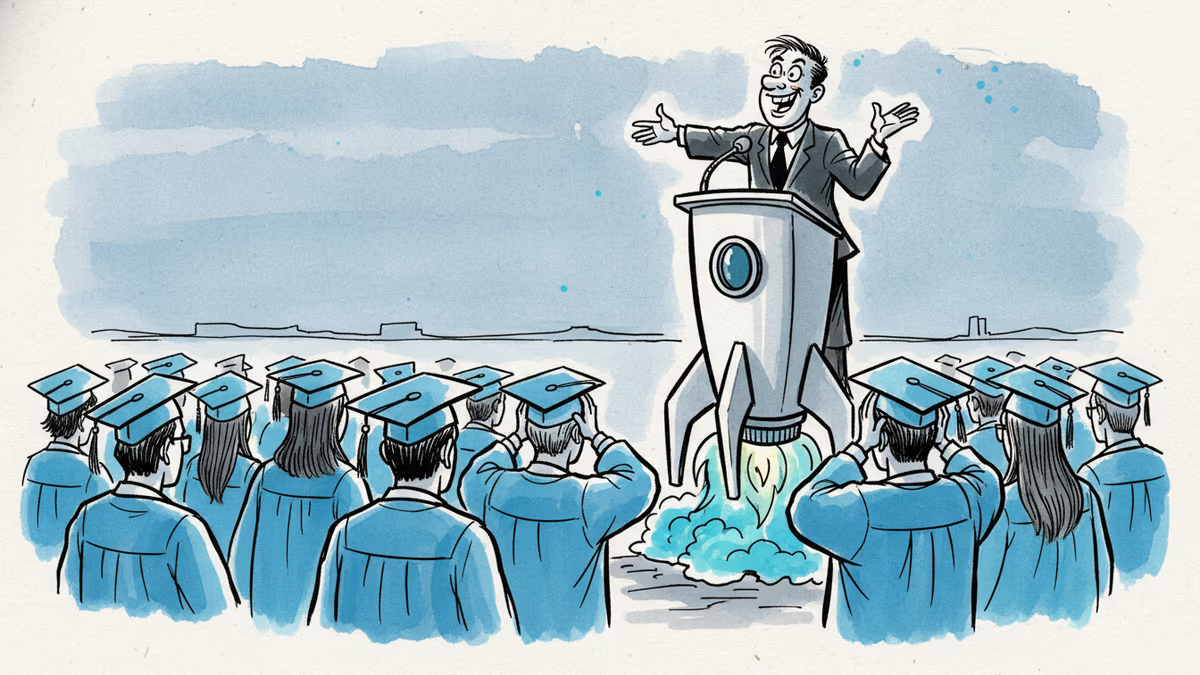
Two commencement speakers learned the hard way that AI enthusiasm doesn't land well with today's graduates. The backlash reveals a widening gap between tech optimism and Gen Z's economic reality.
Samsung and SK unveiled a chip and AI investment package worth thousands of trillions of won on June 29. The headline number swings wildly by outlet, but the real contest isn't capital — it's water and power.
Viral videos show 2026 graduates jeering executives who praise AI at commencement ceremonies. It's not just rudeness — it's a signal about who pays for technological optimism.
Filipino virtual assistants using AI to ghost-manage LinkedIn profiles for executives is now a structured industry. 30 comments a day, fake engagement rings, and a platform struggling to tell real from fabricated.
Two commencement speakers learned the hard way that AI enthusiasm doesn't land well with today's graduates. The backlash reveals a widening gap between tech optimism and Gen Z's economic reality.
Thoughts
Share your thoughts on this article
Sign in to join the conversation