
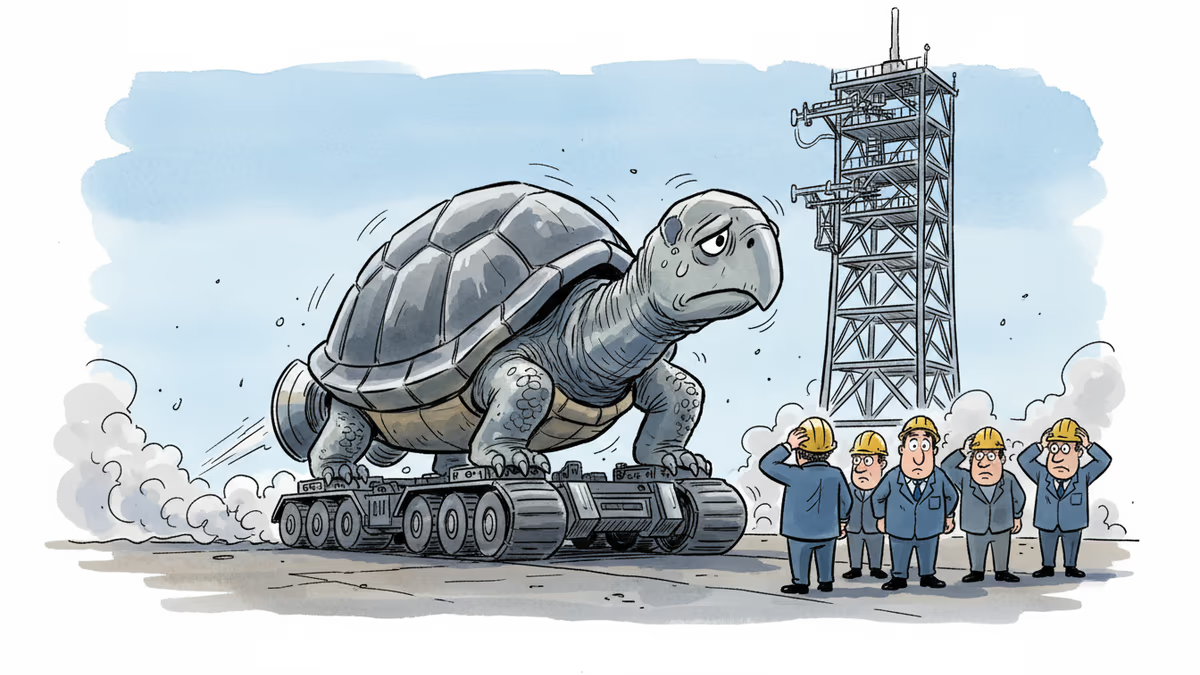
Moon Rocket Returns to Hangar as NASA Faces New Setback
NASA's Artemis II rocket encounters helium flow issue, forcing rollback from launch pad. Analysis of what this means for America's return to lunar exploration.
The $93 Billion Question
A 322-foot rocket is heading back to the garage. Again. NASA's Space Launch System for the Artemis II mission discovered a helium flow interruption just 48 hours after officials expressed confidence about next month's launch readiness.
The problem emerged Friday evening during routine data monitoring. Helium flow to the rocket's upper stage showed an unexpected interruption—a seemingly small issue that requires the massive rocket to make a 4-mile journey back to the Vehicle Assembly Building aboard NASA's crawler-transporter.
Jared Isaacman, NASA's administrator, confirmed Saturday that any fixes must happen inside the VAB. Translation: this isn't a quick roadside repair.
America's 50-Year Wait Continues
Artemis II represents humanity's first crewed lunar mission since Apollo 17 in 1972. Four astronauts were set to orbit the Moon in a 10-day journey that would mark America's return to deep space exploration.
But this delay joins a growing list. Originally scheduled for 2024, the mission has faced heat shield problems, life support system issues, and now helium flow interruptions. Each setback reinforces NASA's "safety first" mantra—but at what cost to America's space leadership?

The crawler-transporter's 1 mph crawl back to the VAB offers a fitting metaphor: methodical, careful, but painfully slow in an era of rapid space innovation.
The New Space Race Reality
While NASA troubleshoots, China advances steadily toward its 2030 crewed lunar landing goal. SpaceX has revolutionized launch capabilities with reusable rockets, completing missions at a fraction of traditional costs. Private companies are increasingly questioning whether government-led programs can compete in today's space economy.
The contrast is stark: SpaceX launches roughly 100 missions annually, while NASA's flagship program faces months-long delays over component issues. Industry observers note that commercial space ventures often accept calculated risks that government agencies cannot.
Engineering Culture vs Innovation Speed
NASA's methodical approach stems from hard-learned lessons. The Challenger and Columbia disasters embedded a "failure is not an option" culture deep within the agency. Every component receives exhaustive testing, every anomaly triggers comprehensive investigation.
Yet this same thoroughness may be NASA's Achilles heel. While the agency perfects systems, competitors advance through iterative improvement and acceptable risk tolerance. Blue Origin, SpaceX, and international space agencies operate under different risk calculations.
Authors
Related Articles

NASA's Artemis III has been redesigned as an Earth-orbit mission. SpaceX and Blue Origin say their landers won't be ready until late 2027. What does this mean for the future of lunar exploration?

Flying to Mars means navigating without trees, wind, or GPS. Here's the surprisingly elegant physics behind how spacecraft measure their own velocity in the void.

Artemis II splashed down successfully in the Pacific, marking humanity's first crewed deep space mission in over 50 years. But the harder question isn't whether we can go back — it's why we should.
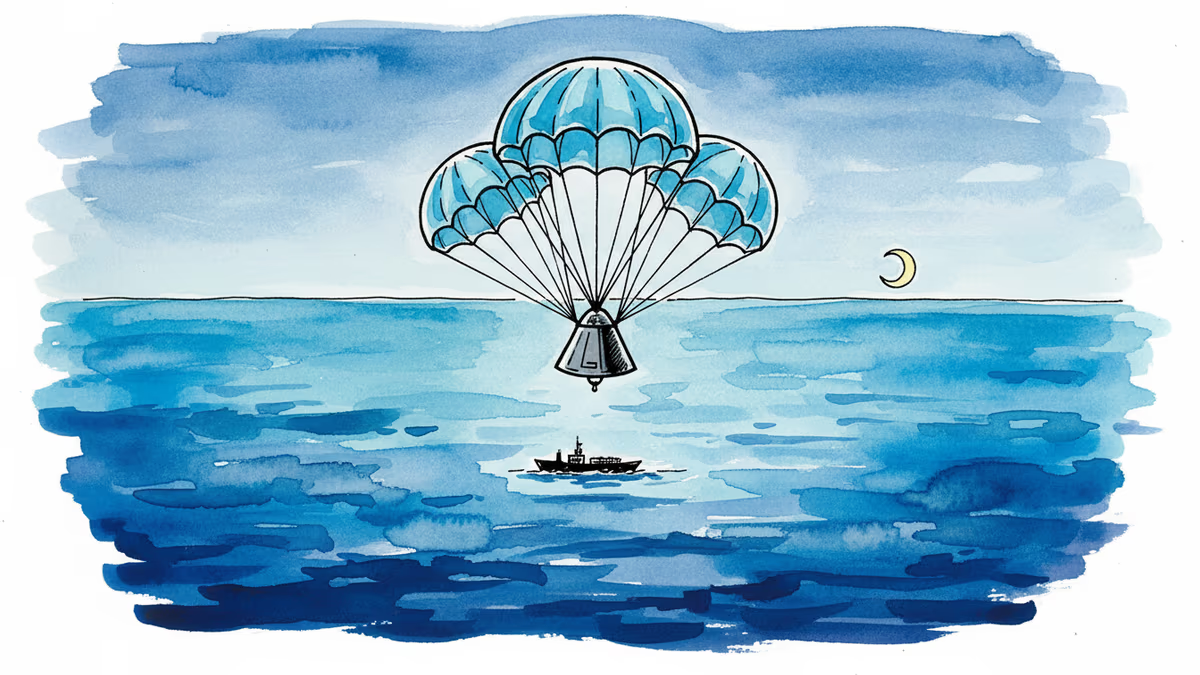
NASA's Orion capsule splashed down safely after humanity's first crewed lunar voyage in 54 years. The mission succeeded. Now the harder questions begin.
NASA's Artemis III has been redesigned as an Earth-orbit mission. SpaceX and Blue Origin say their landers won't be ready until late 2027. What does this mean for the future of lunar exploration?
Flying to Mars means navigating without trees, wind, or GPS. Here's the surprisingly elegant physics behind how spacecraft measure their own velocity in the void.
Artemis II splashed down successfully in the Pacific, marking humanity's first crewed deep space mission in over 50 years. But the harder question isn't whether we can go back — it's why we should.
NASA's Orion capsule splashed down safely after humanity's first crewed lunar voyage in 54 years. The mission succeeded. Now the harder questions begin.
Thoughts
Share your thoughts on this article
Sign in to join the conversation