
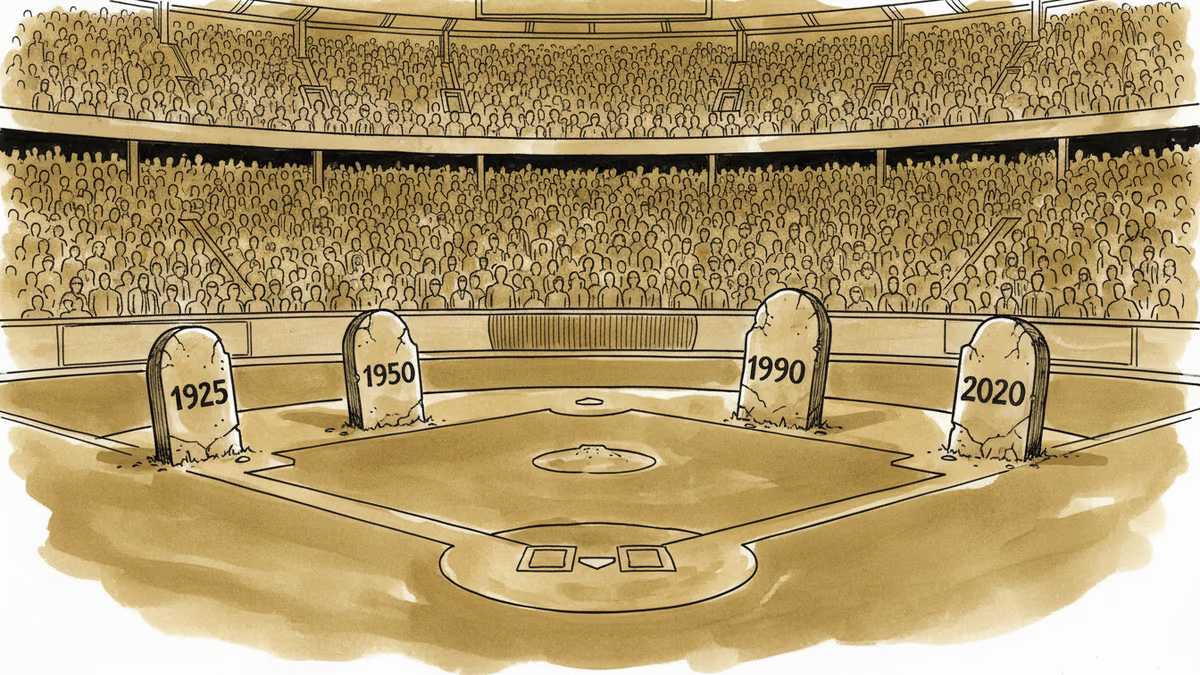
Baseball Is Dying (Again): The 100-Year-Old Story That Never Gets Old
From 1925 to 2026, media has declared baseball's death countless times. Why crisis narratives persist and what they reveal about how sports evolve in the attention economy.
The Headline That Never Dies
"KING BASEBALL, monarch of the American sport world, is sick." That's how The New York Times opened a story about baseball's supposed decline in 1925. Hundreds of thousands packed opening games, star players earned big money in massive stadiums, yet "critics say that his Royal Highness is indisposed."
Sound familiar? A century later, the same narrative persists. Declining TV ratings, young fans abandoning the sport, games too long for modern attention spans—baseball's obituary gets written annually. Here's the twist: if baseball has been "dying" for 100 years, why is it still here?
The Crisis Playbook: Rinse and Repeat
The 1925 "crisis" blamed radio. Why would fans trek to ballparks when they could listen from their living rooms? The 1950s villain was television. The 1990s brought basketball and football as existential threats. The 2000s introduced the internet and video games as baseball killers.
The pattern is unmistakable: every new medium or entertainment option triggers declarations of baseball's demise. Yet the sport adapts, evolves, and endures.
Variety's sports media analyst John O'Reilly explains the mechanics: "Crisis narratives drive clicks. Stories about baseball 'dying' get 5x more engagement than stories about baseball thriving."
Media companies know this. Anxiety sells. Stability doesn't.
What's Really Changing: Consumption, Not Interest

Baseball isn't dying—it's transforming. In 1925, fans moved from ballparks to radios. In the 1950s, from radios to TV sets. Today, from TV to smartphones and streaming platforms.
Consider Gen Z baseball consumption: they're not watching 9-inning games on traditional TV. Instead, they're consuming 3-minute highlight reels on TikTok, following players on Instagram, and engaging with baseball content in ways previous generations never imagined.
MLB recognizes this shift. The league introduced pitch clocks to speed up games, partnered with social platforms for short-form content, and created new fan experiences targeting younger demographics. Revenue hit a record $15.3 billion in 2023.
The Broader Pattern: Industries in Transition
Baseball's "crisis" mirrors broader industry transformations. Newspapers were "dying" when the internet emerged—yet The New York Times now has more digital subscribers than it ever had print readers. Retail was "dead" when e-commerce exploded—yet physical stores evolved into experience centers and fulfillment hubs.
The sports industry faces similar evolution pressure. Traditional broadcasters worry about cord-cutting while streaming platforms bid billions for sports rights. Local newspapers lose sports coverage while podcasters and content creators fill the gap.
ESPN's former president John Skipper notes: "We keep predicting the death of things that are actually just changing form. The demand for sports content has never been higher—it's just distributed differently."
The Attention Economy's Role
Today's "baseball crisis" narrative reflects deeper changes in how we consume entertainment. Average attention spans have shortened, competition for eyeballs has intensified, and content creators must fight for every second of engagement.
This creates a paradox: while individual games may draw smaller TV audiences, overall baseball content consumption has exploded across platforms. YouTube baseball highlights generate millions of views. Fantasy baseball apps engage fans year-round. Social media creates new touchpoints between players and fans.
The question isn't whether baseball is dying—it's whether traditional metrics still measure success accurately.
Next time you see "X is dead" headlines, ask: Is it really dying, or just evolving beyond our current ability to recognize it?
Authors
Related Articles
Paramount-Warner merger creates streaming giant with 200M+ subscribers after Netflix abandoned WBD deal. What this mega-consolidation means for content and competition.
Warner Bros. Discovery and Paramount announce $83B merger after Netflix withdraws from bidding war. Analysis of streaming consolidation and industry implications.
The world's biggest YouTuber lost money on media while his chocolate brand thrived. As AI floods the market with content, creators are scrambling to find new business models.
The Verge's Installer newsletter hits 116 issues, revealing how human curation is beating algorithmic feeds in the attention economy. What does this mean for media and discovery?
Paramount-Warner merger creates streaming giant with 200M+ subscribers after Netflix abandoned WBD deal. What this mega-consolidation means for content and competition.
Warner Bros. Discovery and Paramount announce $83B merger after Netflix withdraws from bidding war. Analysis of streaming consolidation and industry implications.
The world's biggest YouTuber lost money on media while his chocolate brand thrived. As AI floods the market with content, creators are scrambling to find new business models.
The Verge's Installer newsletter hits 116 issues, revealing how human curation is beating algorithmic feeds in the attention economy. What does this mean for media and discovery?
Thoughts
Share your thoughts on this article
Sign in to join the conversation