
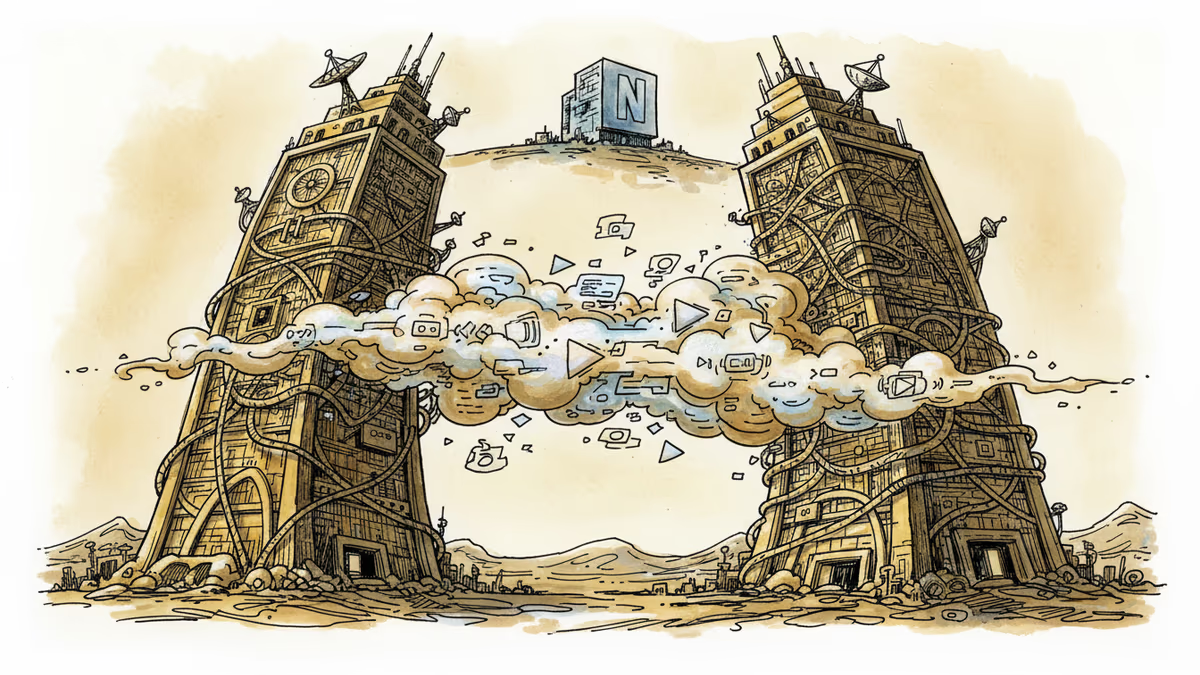
The $83B Media Mega-Merger That Beat Netflix at Its Own Game
Warner Bros. Discovery and Paramount announce $83B merger after Netflix withdraws from bidding war. Analysis of streaming consolidation and industry implications.
When Netflix Blinks First, You Know Something's Changed
$83 billion. That's roughly the GDP of Luxembourg, and it's what Warner Bros. Discovery and Paramount Skydance just committed to in their newly announced merger. But the real story isn't the size—it's who didn't get the deal.
Netflix, the streaming giant that's been gobbling up content and competitors for years, just walked away from a bidding war. On Thursday, the company declined to match Paramount's "best and final" offer, calling it financially unjustifiable. For a company that spent $17 billion on content last year alone, that's saying something.
The sequence of events reads like a corporate thriller. Warner Bros. Discovery initially signed an $83 billion agreement to merge part of Warner Bros. with Netflix. Then Paramount launched what industry insiders called a "hostile takeover bid," followed by a series of increasingly aggressive offers. The persistence paid off—WBD ultimately deemed Paramount's proposal "superior" to Netflix's deal.
The New Math of Streaming Survival
This merger creates a media behemoth that combines WBD's studio operations, linear channels, streaming service, and gaming segment under Paramount's umbrella. It's not just about getting bigger—it's about staying alive in an increasingly brutal market.
The streaming wars have entered a new phase. The days of "growth at any cost" are over, replaced by "profitability or perish." Netflix may have 260 million subscribers globally, but HBO Max and Paramount+ are struggling with 96 million and 68 million respectively. In a market where content costs are skyrocketing and subscriber growth is slowing, scale isn't just an advantage—it's existential.

Consider the math: A single season of a prestige drama now costs upwards of $200 million. Spread that across 68 million subscribers, and you're looking at nearly $3 per subscriber just for one show. Combine two struggling platforms, and suddenly those economics start to make sense.
Content Empire or Corporate Frankenstein?
The merged entity will control an impressive content arsenal: Warner Bros.' DC Universe, HBO's prestige dramas, Paramount's Mission: Impossible franchise, and decades of film libraries. On paper, it's a Netflix competitor with real teeth.
But mergers in media have a mixed track record. Remember AT&T's $85 billion acquisition of Time Warner? That ended with a $43 billion loss and a hasty sale to Discovery. The challenge isn't just combining content libraries—it's integrating different corporate cultures, technology platforms, and distribution strategies without losing what made each company valuable in the first place.
There's also the regulatory question. As media consolidation accelerates, antitrust scrutiny intensifies. The FTC has been increasingly aggressive about blocking large mergers, and an $83 billion deal in the already concentrated media industry will likely face serious review.
The Streaming Endgame
What does this mean for consumers? In the short term, probably not much. Your subscription prices won't change overnight, and your favorite shows won't disappear. But the long-term implications are significant.
We're witnessing the consolidation phase of the streaming revolution. Just as the early internet saw thousands of websites give way to a few dominant platforms, streaming is heading toward a handful of major players. Netflix, Disney+, Amazon Prime, and now this Warner-Paramount giant may represent the final form of the industry.
For investors, the merger signals that standalone streaming services may not be viable long-term. The companies that survive will be those with diversified revenue streams, massive content libraries, and the financial resources to weather the profitability transition.
Authors
Related Articles
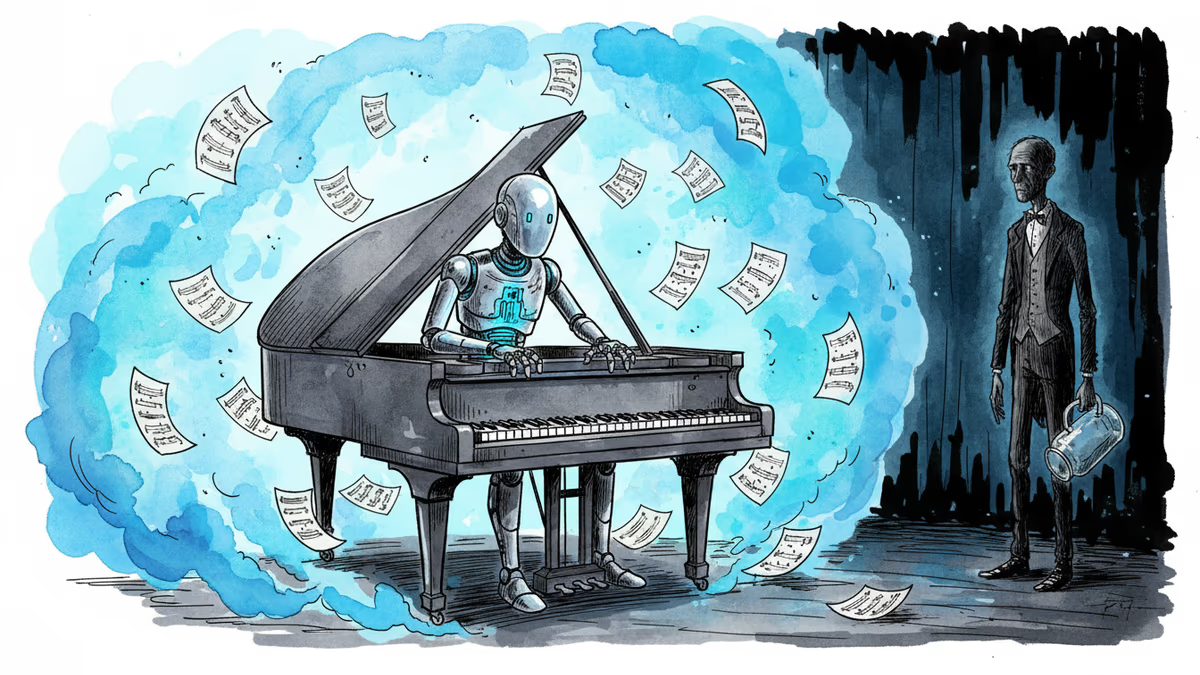
From a niche experiment in 2018 to a mainstream disruption in 2026, AI-generated music is forcing the industry to rethink creativity, copyright, and compensation.
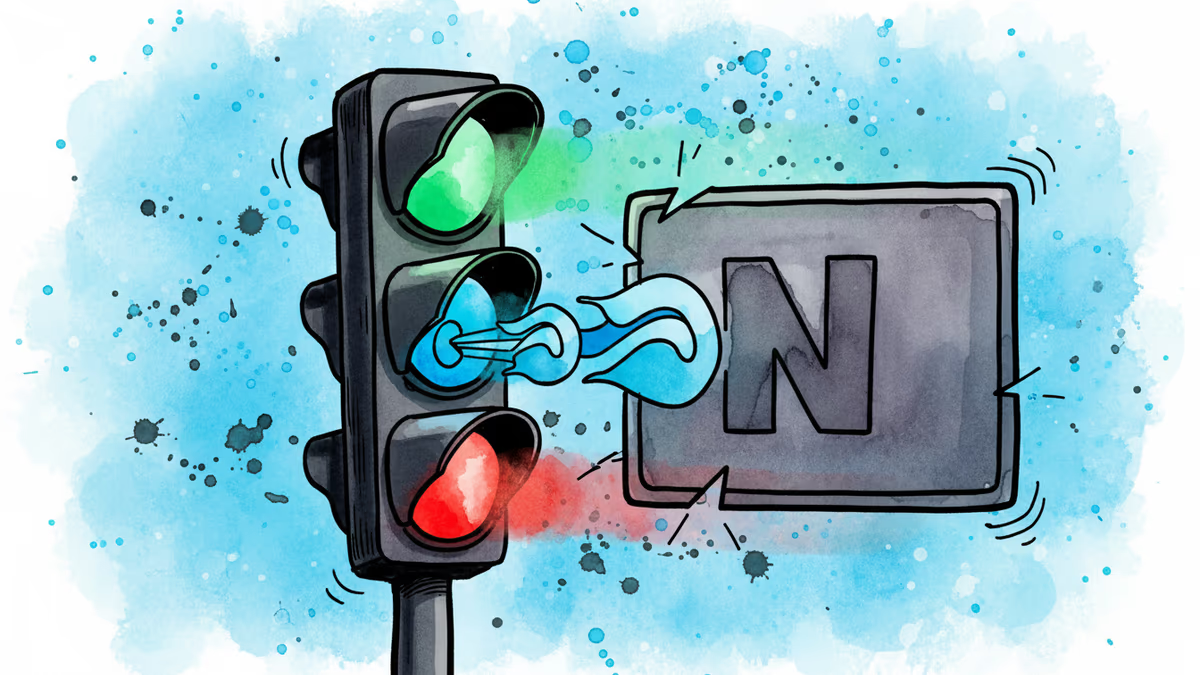
FCC Chairman supports Paramount-WBD merger while Netflix deal faced regulatory hurdles. A new regulatory playbook for streaming consolidation emerges.
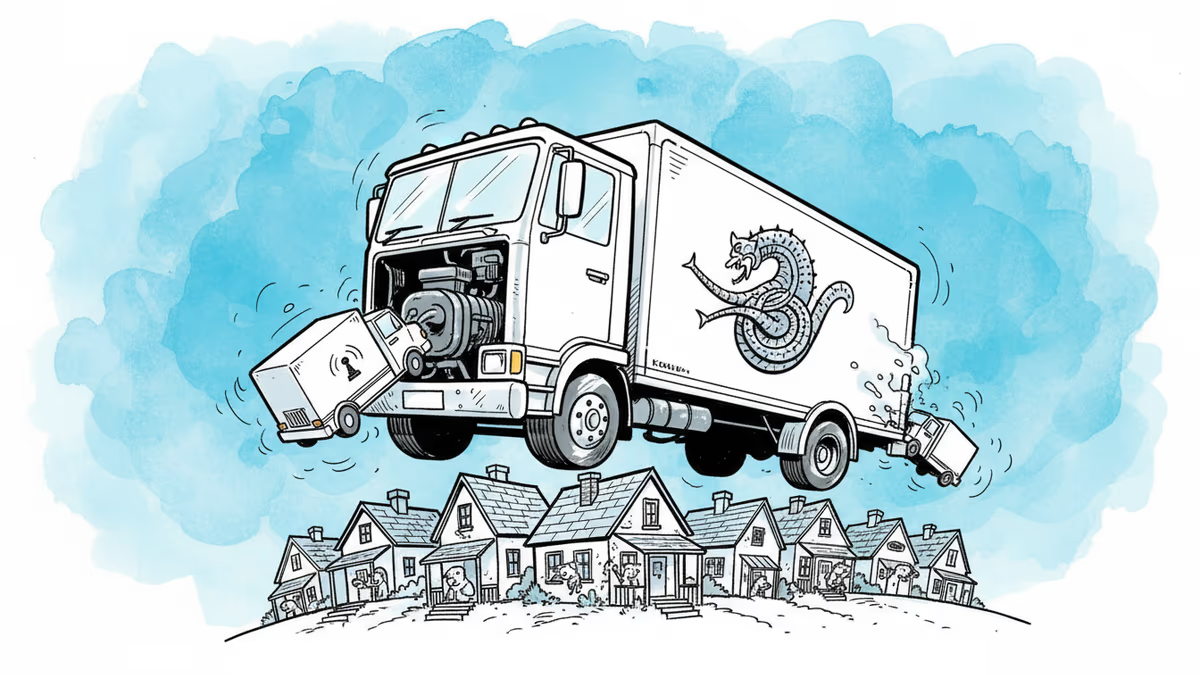
Charter's $34.5B Cox acquisition creates largest US ISP with 35.6M customers, surpassing Comcast. FCC approves despite monopoly concerns over pricing power
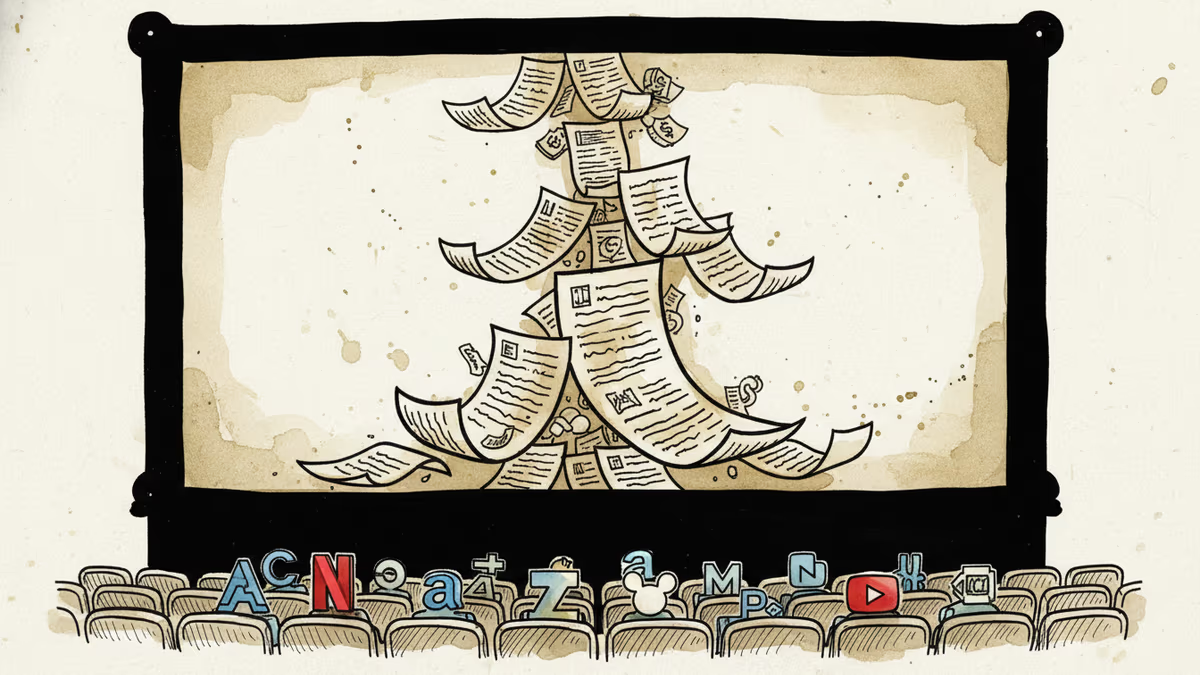
Paramount-Warner merger creates streaming giant with 200M+ subscribers after Netflix abandoned WBD deal. What this mega-consolidation means for content and competition.
From a niche experiment in 2018 to a mainstream disruption in 2026, AI-generated music is forcing the industry to rethink creativity, copyright, and compensation.
FCC Chairman supports Paramount-WBD merger while Netflix deal faced regulatory hurdles. A new regulatory playbook for streaming consolidation emerges.
Charter's $34.5B Cox acquisition creates largest US ISP with 35.6M customers, surpassing Comcast. FCC approves despite monopoly concerns over pricing power
Paramount-Warner merger creates streaming giant with 200M+ subscribers after Netflix abandoned WBD deal. What this mega-consolidation means for content and competition.
Thoughts
Share your thoughts on this article
Sign in to join the conversation