
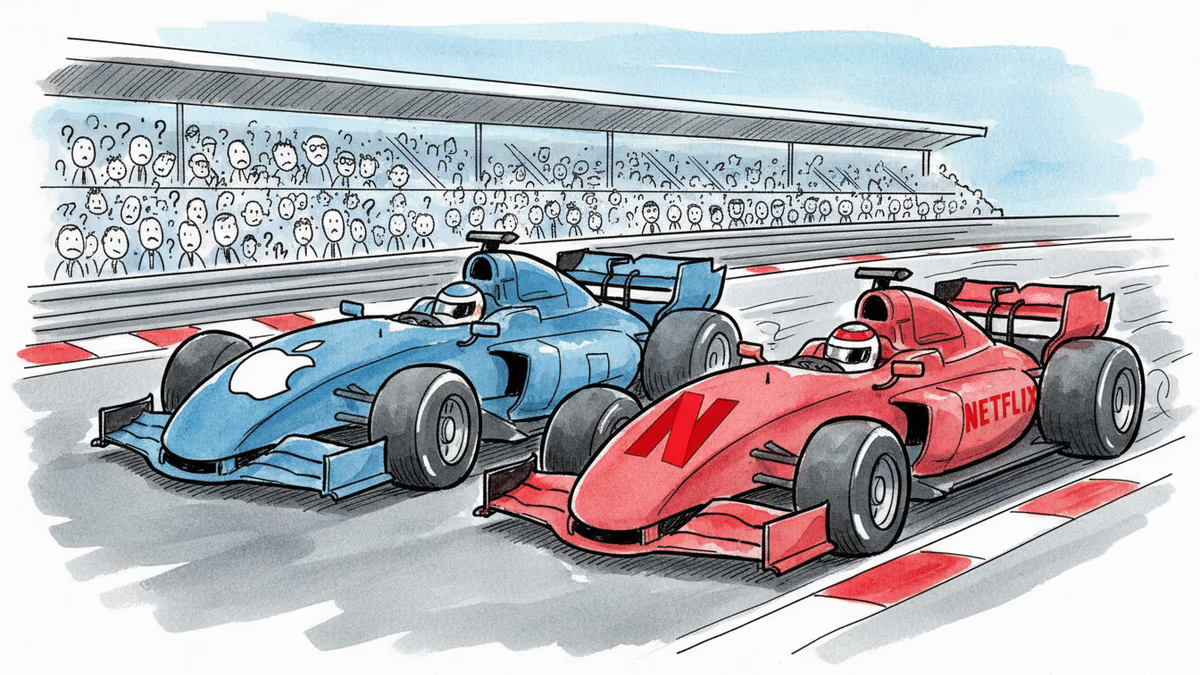
When Rivals Become Partners: Apple and Netflix's F1 Gambit
Apple TV and Netflix announce joint F1 Canadian Grand Prix broadcast, signaling a shift in streaming competition strategy and sports content economics.
$150 million per season. That's what Apple is paying for exclusive U.S. F1 broadcasting rights, nearly double what ESPN used to pay. So why would Apple share its most expensive sports content with its biggest streaming rival?
On Thursday, Apple and Netflix announced something unprecedented: joint coverage of the F1 Canadian Grand Prix on May 24. For the first time, American F1 fans can watch the same live race on both platforms simultaneously.
The Economics of Sharing
The partnership goes beyond just race coverage. Netflix's hit series "Drive to Survive" Season 8, premiering today, will be available to both Netflix subscribers globally and Apple TV subscribers in the U.S. — breaking Netflix's traditional exclusive content model.
This isn't just about being nice to competitors. The numbers tell a different story.
ESPN's final year of F1 coverage averaged 1.3 million viewers across all races. Apple's betting $150 million annually on a sport that, despite growing popularity, still reaches a relatively niche American audience. Meanwhile, Netflix boasts 260 million global subscribers but lacks live sports broadcasting infrastructure.
Each Platform's Play
Apple's perspective: They've secured exclusive rights but need to justify the massive investment. Sharing one race with Netflix's larger user base could drive awareness and potentially convert viewers to Apple TV subscribers for the remaining 23 races.
Netflix's angle: After pivoting from a "no sports" stance to securing NFL Christmas games, WWE Raw, and MLB rights, they're still learning live broadcasting. This partnership offers technical experience while expanding their own content's reach.
Eddy Cue, Apple's senior VP of services, framed it as giving "F1 fans more choices." But industry analysts see strategic necessity disguised as consumer benefit.
The Broader Streaming Shift

This collaboration signals something bigger than F1. The streaming wars' "exclusive content at any cost" strategy is showing cracks. Production budgets have skyrocketed — Netflix spent $17 billion on content in 2023 — while subscriber growth has plateaued in mature markets.
Selective partnerships might be the industry's next evolution. Not full-scale cooperation, but strategic sharing where mutual benefit outweighs competitive disadvantage.
Consider the precedent: Disney and Netflix remain fierce rivals, yet Disney's content appears on Netflix in certain international markets where Disney+ isn't available. It's pragmatic, not friendly.
Sports Content's Unique Value
Sports content operates differently than scripted entertainment. A three-year-old Marvel movie still has value; a three-hour-old football game doesn't. But during those live moments, sports content commands premium attention and pricing.
"Drive to Survive" proved this principle by transforming F1 from niche motorsport to mainstream entertainment. The docuseries attracted millions of new fans through dramatic storytelling, not just race coverage. U.S. F1 viewership tripled after the show's debut.
Brad Pitt's F1 film earning a Best Picture Oscar nomination this year isn't coincidence — it's confirmation that F1 has transcended sports to become cultural content.
What This Means for Consumers
In the short term, F1 fans win. More viewing options, cross-platform content availability, and potentially better production quality through combined resources.
Longer term, the implications are murkier. If streaming platforms increasingly share premium content, what justifies maintaining multiple subscriptions? The industry might be inadvertently training consumers to expect content everywhere, potentially undermining the exclusivity that drives subscription decisions.
The Bigger Question
Apple's broader F1 ambitions extend beyond TV rights. They're integrating F1 content across Apple News, Apple Maps, Apple Music, Apple Fitness+, and retail stores. This isn't just about streaming; it's about ecosystem integration.
Netflix, meanwhile, continues building its live sports portfolio after years of resistance. The company that once dismissed sports as "not our business" now sees it as essential for subscriber retention and global expansion.
Authors
Related Articles
From a niche experiment in 2018 to a mainstream disruption in 2026, AI-generated music is forcing the industry to rethink creativity, copyright, and compensation.
FCC Chairman supports Paramount-WBD merger while Netflix deal faced regulatory hurdles. A new regulatory playbook for streaming consolidation emerges.
Paramount-Warner merger creates streaming giant with 200M+ subscribers after Netflix abandoned WBD deal. What this mega-consolidation means for content and competition.
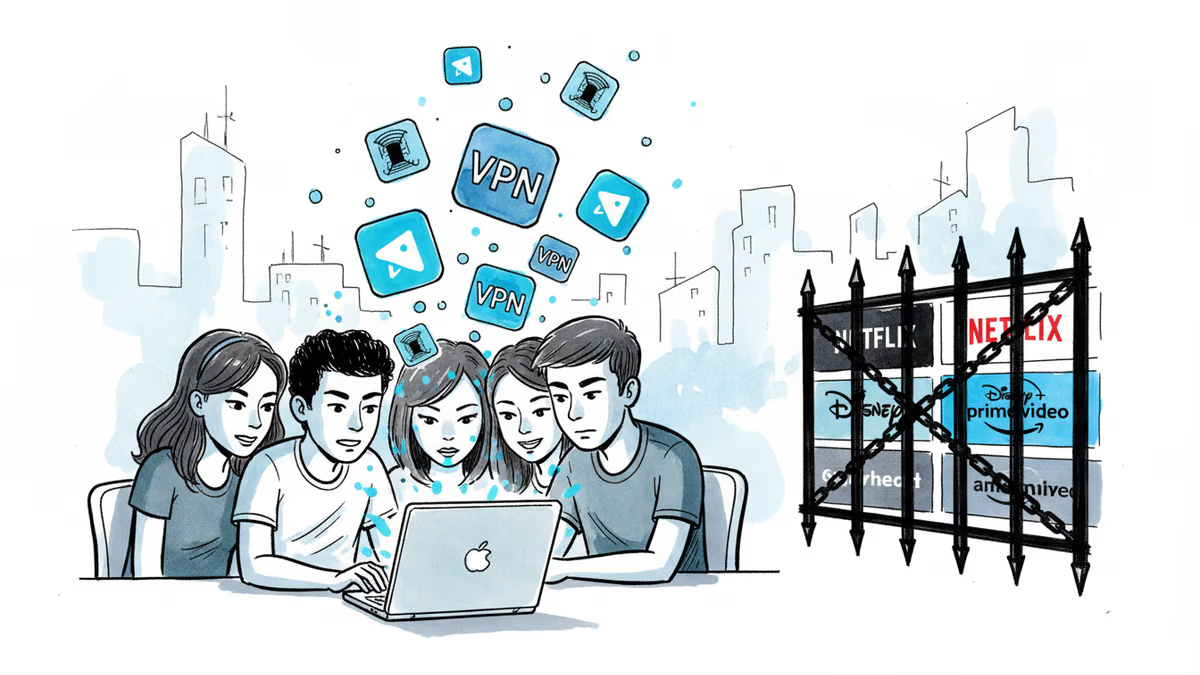
Sanctions and financial crises block streaming access across MENA, making piracy the default for young consumers. 23% rely on illegal IPTV services in a region where legal access often doesn't exist.
From a niche experiment in 2018 to a mainstream disruption in 2026, AI-generated music is forcing the industry to rethink creativity, copyright, and compensation.
FCC Chairman supports Paramount-WBD merger while Netflix deal faced regulatory hurdles. A new regulatory playbook for streaming consolidation emerges.
Paramount-Warner merger creates streaming giant with 200M+ subscribers after Netflix abandoned WBD deal. What this mega-consolidation means for content and competition.
Sanctions and financial crises block streaming access across MENA, making piracy the default for young consumers. 23% rely on illegal IPTV services in a region where legal access often doesn't exist.
Thoughts
Share your thoughts on this article
Sign in to join the conversation