
Love Is Blind's Male Problem Reflects Modern Dating's Crisis
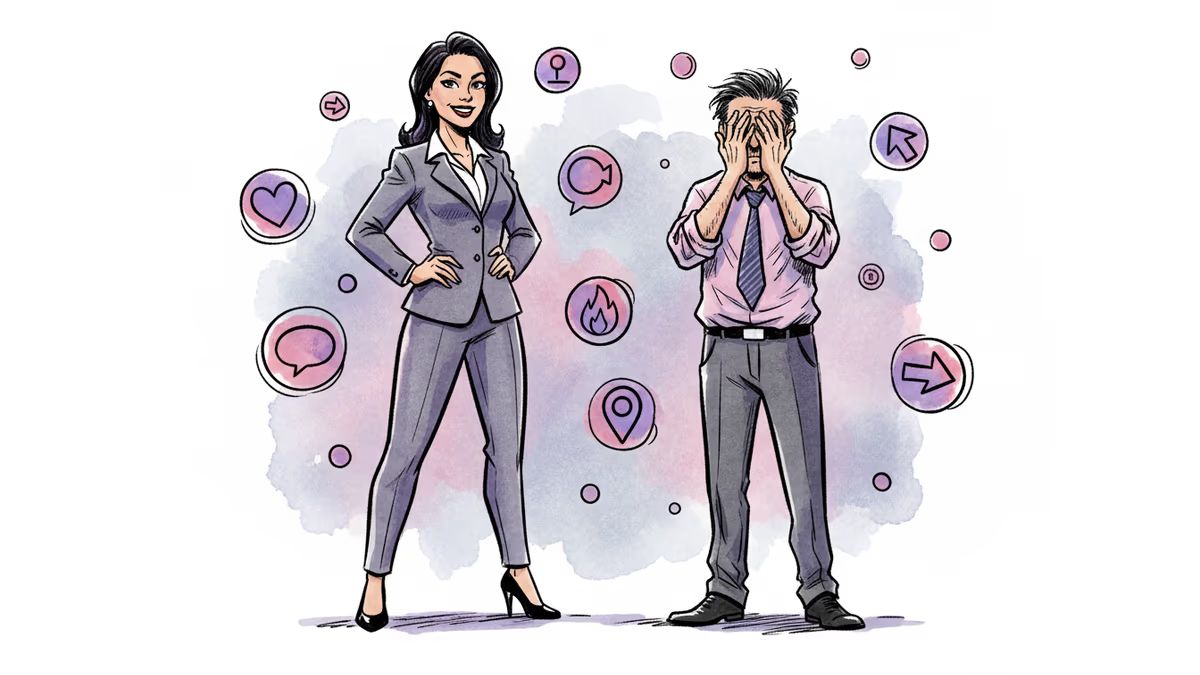
Netflix's Love Is Blind reveals how manosphere culture is infiltrating mainstream dating, as successful women face partners who can't handle their achievements
When Reality TV Becomes Too Real
When Love Is Blind debuted in February 2020, it promised something different: love without the superficial. Couples would get engaged "sight unseen" after conversations through pods, then decide if they wanted to marry after the big reveal. It felt revolutionary—a reality show that might actually let people fall in love without getting bogged down in Instagram-perfect expectations.
Four years and 10 seasons later, the show has become something else entirely: a mirror reflecting modern dating's most uncomfortable truths. And increasingly, those truths center on one glaring issue—the men.
The Manosphere Invasion
This season's male cast reads like a manosphere starter pack. There's Chris Fusco, who voluntarily compares himself to Andrew Tate and calls fellow contestants "submissive." Then there's Alex Henderson, a Trump-supporting crypto trader with an ever-shifting backstory who expects his fiancée to abandon her career promotion to follow him across the country.
These aren't outliers. Season after season, the women face men who make body-shaming comments, struggle with emotional regulation, and seem genuinely uncomfortable with their partners' success. What was supposed to be an experiment in pure connection has become a showcase of toxic masculinity.
The pattern is stark: earnest women buying into the show's premise meet men who seem plucked straight from online communities that view women as adversaries rather than partners.
Success as a Dating Liability

The most telling moments come when high-achieving women encounter male insecurity. Last season's Jordan Keltner couldn't handle fiancée Megan Walerius' wealth, ultimately breaking up because he was too "tired" to keep up with her "rich-person hobbies." This season, Fusco tours his doctor fiancée Jessica Barrett's multi-bedroom home, then demeans her for not doing Pilates daily.
That Pilates comment isn't random. In conservative online spaces, the "Pilates wife" represents a specific ideal: thin, white, and available for domestic duties despite career success. It's the fantasy that women can "have it all" as long as they still prioritize male needs and traditional beauty standards.
Meanwhile, 28-year-old Emma Betsinger discusses her surgical scars with podmate Steven Sunday, only to have him grill her about losing her virginity instead of showing empathy. When she expresses hesitation about having children due to health issues, the men she dates insist she'd make a "great mother"—dismissing her own assessment of her body and future.
The Pandemic's Gender Divide
Relationship strategist Damona Hoffman argues this reflects broader cultural shifts accelerated by the pandemic. "Women spent isolation working on themselves and mental health," she explains. "Men were driven to online communities that amplified misogynistic beliefs and fanned the flames of a budding gender war."
The data supports this divide. While media narratives focus on a "male loneliness epidemic," October 2024 research found that single women are actually happier than single men. Both genders experience similar loneliness rates—the difference lies in how they process and respond to it.
At a time when women are outpacing men in college degrees and narrowing pay gaps in major cities, some men seem to be retreating into ideologies that position female success as a personal threat rather than societal progress.
Beyond the Pods: What This Means for Dating
The show's evolution from hopeful experiment to cautionary tale reflects real-world dating struggles. High-achieving women increasingly report difficulty finding partners who aren't intimidated by their success. Dating apps, meanwhile, have become breeding grounds for the same dynamics playing out on screen—where women's accomplishments become liabilities rather than assets.
This isn't just about reality TV casting. It's about a generation of men who've been told that traditional masculinity is under attack, finding themselves unable to adapt to relationships where they're not automatically the primary earner or decision-maker.
Authors
Related Articles
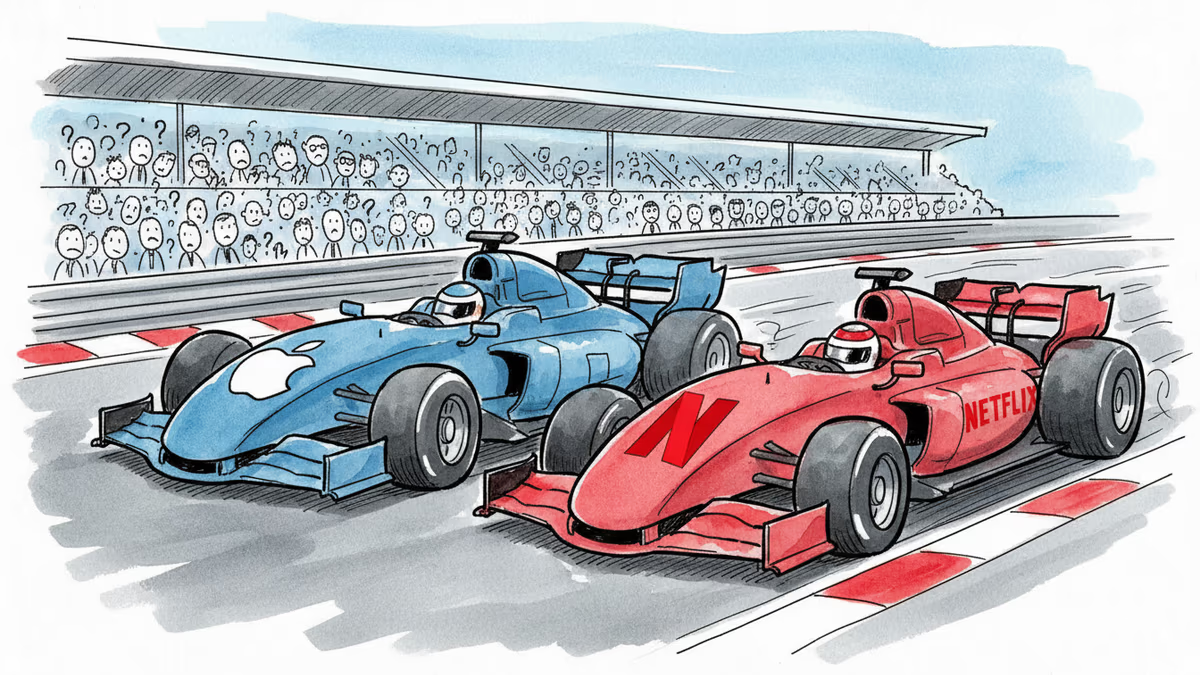
Apple TV and Netflix announce joint F1 Canadian Grand Prix broadcast, signaling a shift in streaming competition strategy and sports content economics.
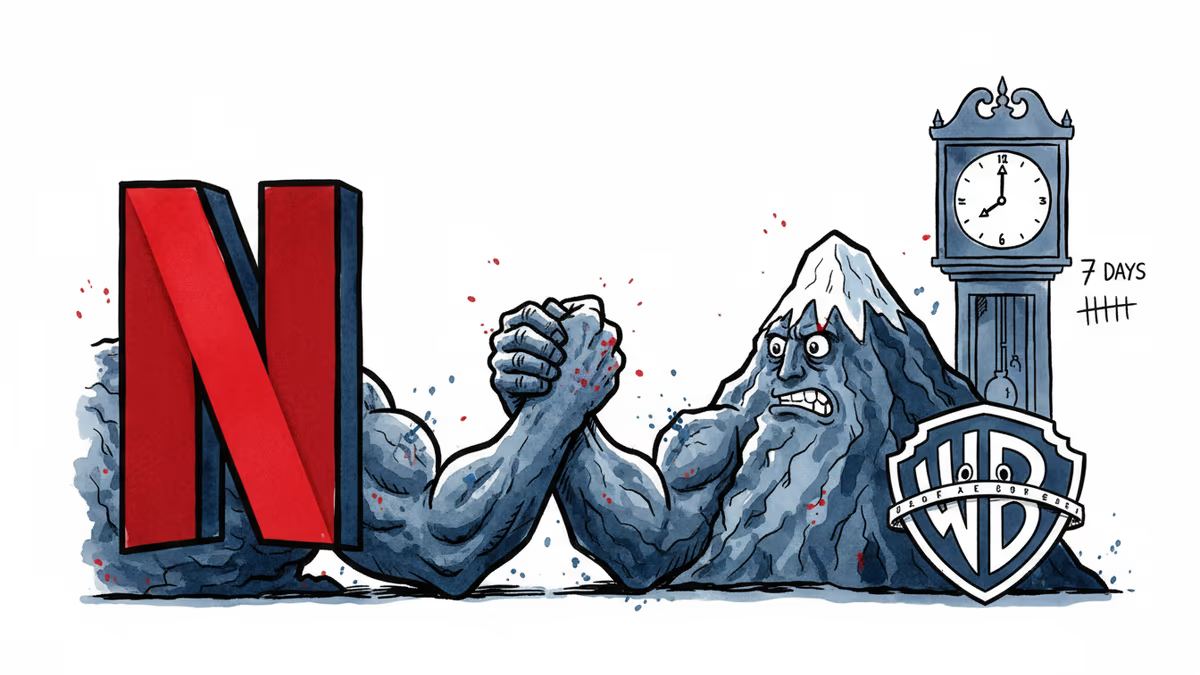
Warner Bros Discovery opens negotiations with Paramount despite Netflix merger recommendation, as streaming giants battle for content supremacy in a $200B deal

A look back at the best TV shows of 2025. Discover how Netflix and Apple TV dominated the streaming landscape and which series, from 'Daredevil: Born Again' to 'Severance,' defined the year.
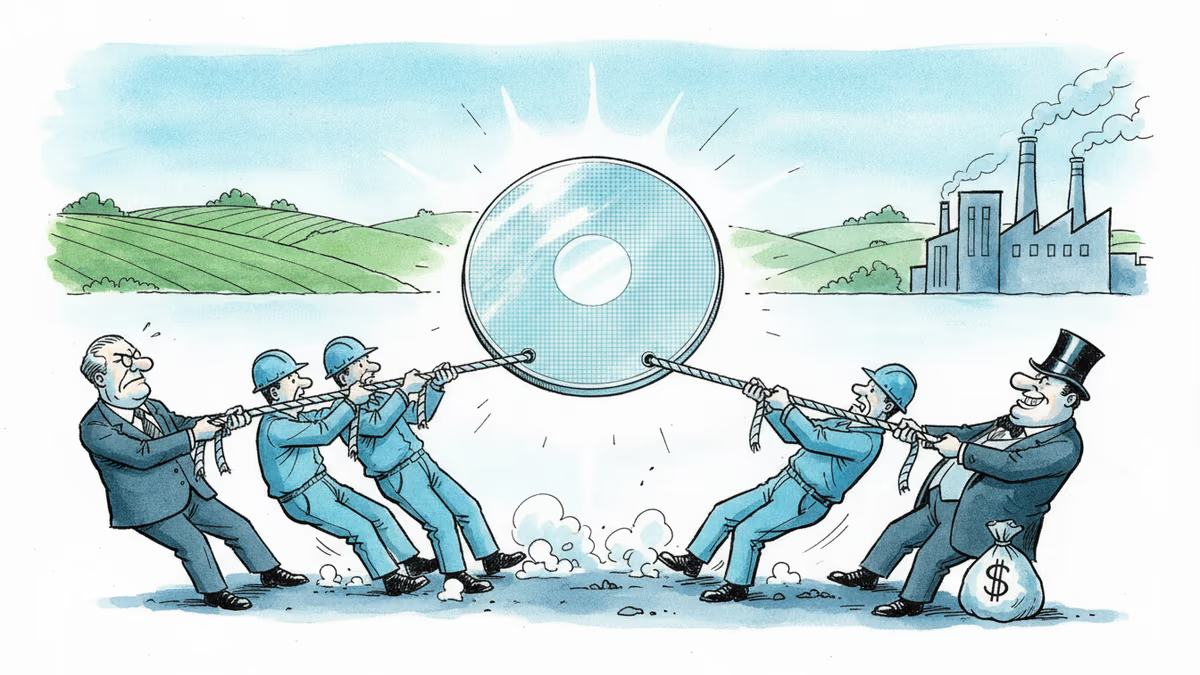
Samsung Electronics' union branch revealed that 84% of survey respondents oppose the government's roughly $290 billion (₩400 trillion) semiconductor megaproject in Gwangju. Government, management, the union and shareholders are all reading the same national project in sharply different ways.
Apple TV and Netflix announce joint F1 Canadian Grand Prix broadcast, signaling a shift in streaming competition strategy and sports content economics.
Warner Bros Discovery opens negotiations with Paramount despite Netflix merger recommendation, as streaming giants battle for content supremacy in a $200B deal
A look back at the best TV shows of 2025. Discover how Netflix and Apple TV dominated the streaming landscape and which series, from 'Daredevil: Born Again' to 'Severance,' defined the year.
Samsung Electronics' union branch revealed that 84% of survey respondents oppose the government's roughly $290 billion (₩400 trillion) semiconductor megaproject in Gwangju. Government, management, the union and shareholders are all reading the same national project in sharply different ways.
Thoughts
Share your thoughts on this article
Sign in to join the conversation