
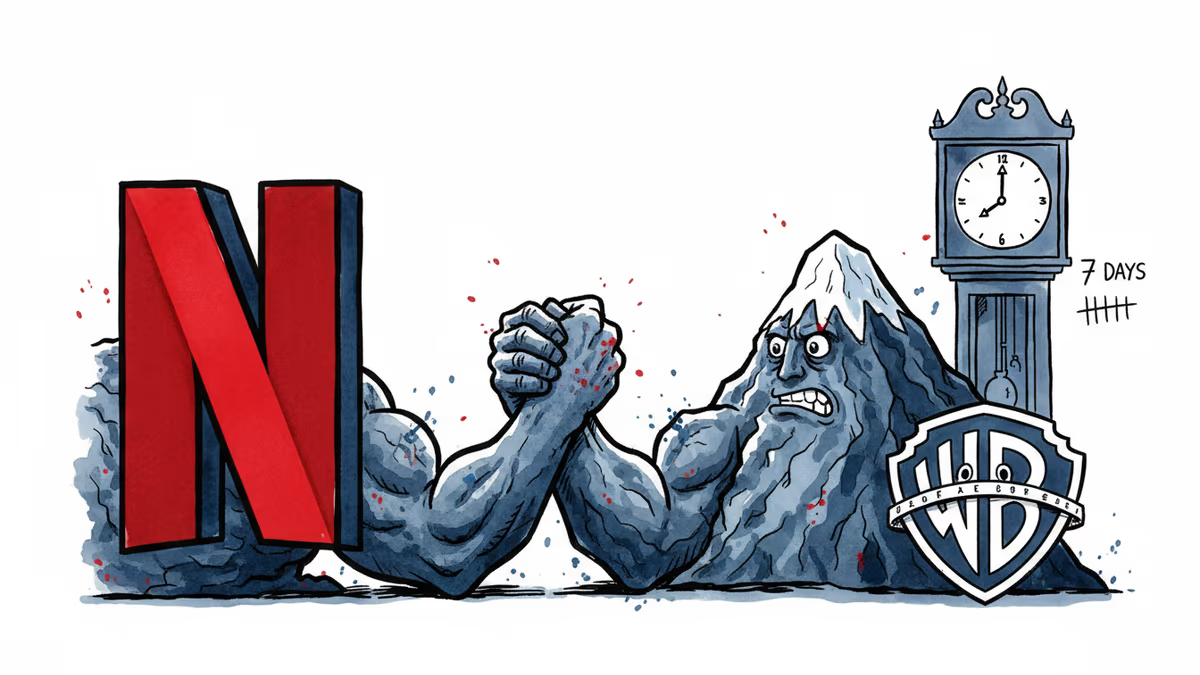
Netflix's Merger Gets a 7-Day Plot Twist From Paramount
Warner Bros Discovery opens negotiations with Paramount despite Netflix merger recommendation, as streaming giants battle for content supremacy in a $200B deal
A $200 Billion Deal Just Got Its Biggest Plot Twist Yet
Warner Bros. Discovery scheduled its Netflix merger vote for March 20th while simultaneously giving Paramount Skydance exactly 7 days to make a better offer. The deadline? February 23rd, 2026.
This isn't just corporate hedging—it's a high-stakes auction disguised as due diligence. After dismissing Paramount's previous offers as "deficient," why is WBD suddenly opening the door?
Netflix's Strategic Gamble
The answer lies in Netflix's "limited waiver." Under normal merger terms, WBD couldn't negotiate with competitors. But Netflix voluntarily lifted this restriction for one week.
This move reveals Netflix's confidence—or calculated risk. Either they believe no offer can beat theirs, or they're forcing WBD to see all options before committing. It's the equivalent of a poker player saying "go ahead, check everyone else's cards."

Three Lenses, Three Different Battles
Wall Street sees pure numbers. WBD shares jumped 3.2% on the news, suggesting investors expect a bidding war. The question isn't just who offers more cash, but who structures the deal better for shareholders.
Content creators see strategic positioning. A Netflix-WBD merger creates the ultimate streaming-to-studio pipeline—House of the Dragon episodes could launch simultaneously with Netflix's algorithm optimization. A Paramount-WBD alliance, however, builds a traditional media fortress against Big Tech's streaming dominance.
Regulators see market concentration. Either outcome creates a content giant that could squeeze out smaller competitors and limit consumer choice.
The Streaming Wars' Endgame
This isn't just about one merger—it's about who controls entertainment's future. Netflix pioneered streaming but needs premium content libraries. Traditional studios like WBD and Paramount have the content but struggle with direct-to-consumer technology and global reach.
The winner doesn't just get WBD's assets. They get HBO, CNN, Discovery Channel, Warner Bros films, and crucially, the ability to bundle content in ways that make cancellation nearly impossible for consumers.
Authors
Related Articles
From a niche experiment in 2018 to a mainstream disruption in 2026, AI-generated music is forcing the industry to rethink creativity, copyright, and compensation.
FCC Chairman supports Paramount-WBD merger while Netflix deal faced regulatory hurdles. A new regulatory playbook for streaming consolidation emerges.
Paramount-Warner merger creates streaming giant with 200M+ subscribers after Netflix abandoned WBD deal. What this mega-consolidation means for content and competition.
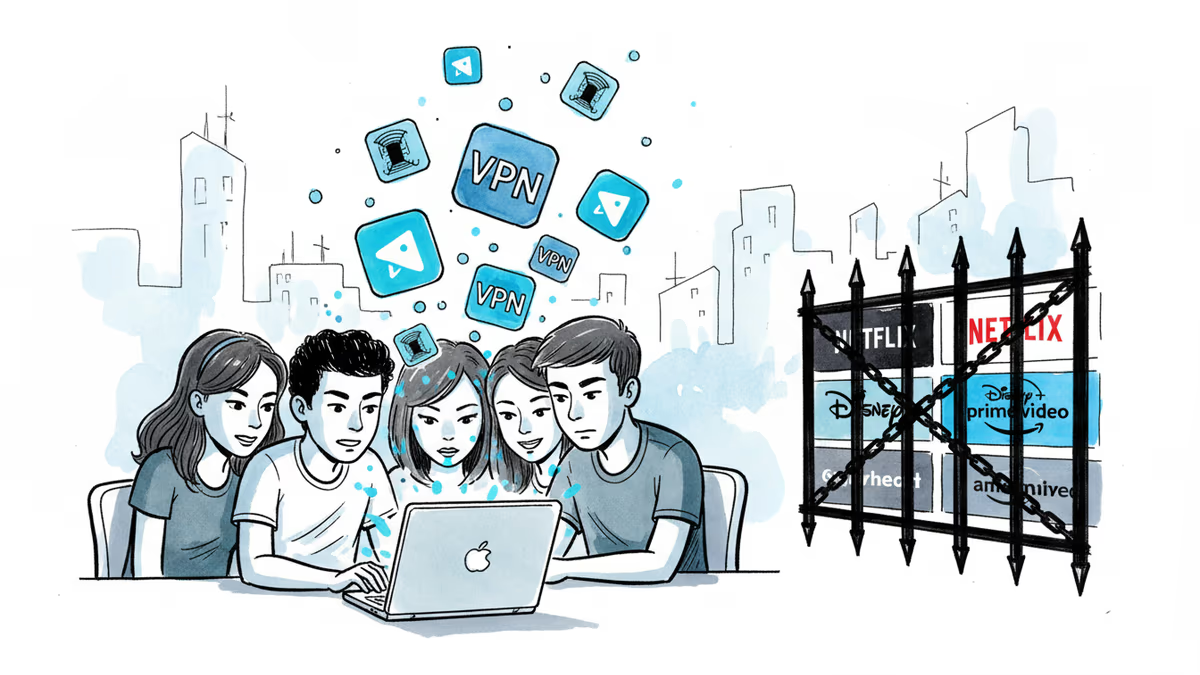
Sanctions and financial crises block streaming access across MENA, making piracy the default for young consumers. 23% rely on illegal IPTV services in a region where legal access often doesn't exist.
From a niche experiment in 2018 to a mainstream disruption in 2026, AI-generated music is forcing the industry to rethink creativity, copyright, and compensation.
FCC Chairman supports Paramount-WBD merger while Netflix deal faced regulatory hurdles. A new regulatory playbook for streaming consolidation emerges.
Paramount-Warner merger creates streaming giant with 200M+ subscribers after Netflix abandoned WBD deal. What this mega-consolidation means for content and competition.
Sanctions and financial crises block streaming access across MENA, making piracy the default for young consumers. 23% rely on illegal IPTV services in a region where legal access often doesn't exist.
Thoughts
Share your thoughts on this article
Sign in to join the conversation