
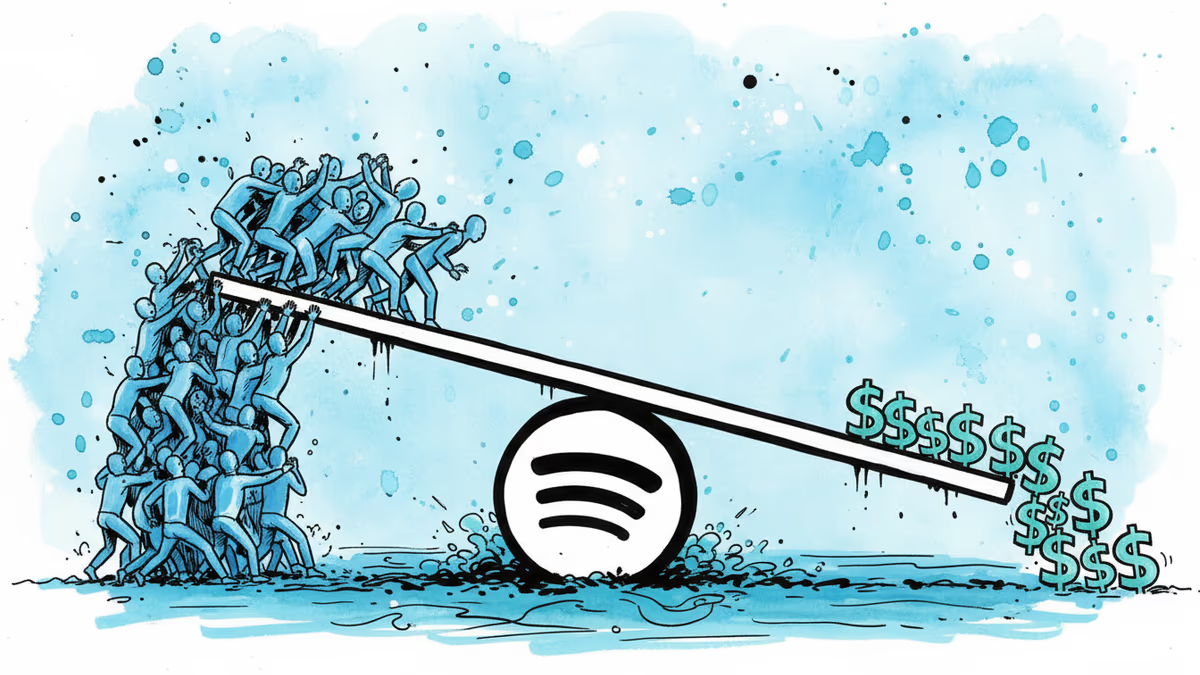
Spotify Hits 751M Users But Ad Revenue Drops – What's Really Happening?
Spotify posted record Q4 user growth reaching 751M monthly users, but ad revenue declined 4%. New co-CEOs face the challenge of balancing free features with profitability.
38 Million New Users in Three Months – But There's a Catch
Spotify just dropped its Q4 numbers, and the headline figure is stunning: 751 million monthly active users, up 11% year-over-year. The Swedish streaming giant added a record 38 million new users in just one quarter, largely thanks to its viral "Wrapped" campaign that had 300 million people engaged and generated 630 million social media shares across 56 languages.
Paying subscribers hit 290 million, growing 10%, while subscription revenue climbed 8% to drive total revenue of €4.53 billion ($5.39 billion). Gross margin reached a record 33.1% – the kind of number that makes investors smile.
But here's where it gets interesting: while Spotify was celebrating record user growth, its ad-supported business actually declined4% to €518 million ($616.6 million). That's not a typo. More users, less ad money.
The Free Tier Paradox
Spotify has been caught in a strategic bind. To compete with YouTube Music and Amazon Music, the company has been enhancing its free tier – letting users search for specific songs, adding social features like group chats, and even enabling song sharing. The goal? Keep people from jumping ship to competitors.
But there's a fundamental tension here. Make the free experience too good, and users won't upgrade to premium. Make it too restrictive, and they'll leave entirely. Meanwhile, advertisers are getting pickier about where they spend, especially as user behavior shifts and ad-blocking becomes more sophisticated.

The company has been doubling down on podcast advertising and music ads, but the overall ad market remains challenging. It's a reminder that in the attention economy, having more eyeballs doesn't automatically translate to more dollars.
Beyond Music: The Everything App Strategy
This earnings report also marks a transition moment. Co-founder Daniel Ek has stepped back from day-to-day operations, with Gustav Söderström and Alex Norström taking over as co-CEOs. They're inheriting a company that's evolved far beyond its music streaming roots.
Today's Spotify includes podcasts, audiobooks, music videos, concert ticket booking, AI-generated playlists, and even physical bookstores. It's become what tech folks call a "super app" – trying to own the entire audio experience rather than just music streaming.
The AI features alone tell a story: an AI DJ that curates personalized radio shows, AI-generated playlists based on prompts, and algorithms that learn to exclude tracks users don't want recommended. Spotify isn't just competing on catalog size anymore; it's competing on personalization and discovery.
The Profitability Question
Spotify has been on a multi-year quest for consistent profitability, raising subscription prices across the U.S. and Europe while trying to optimize its cost structure. The improved gross margins suggest this strategy is working, but the ad revenue decline shows the challenges ahead.
The company expects to reach 759 million users and 293 million paying subscribers this quarter. But the real question isn't about growth – it's about sustainable unit economics. Can Spotify maintain its competitive moat while actually making money?
Authors
Related Articles
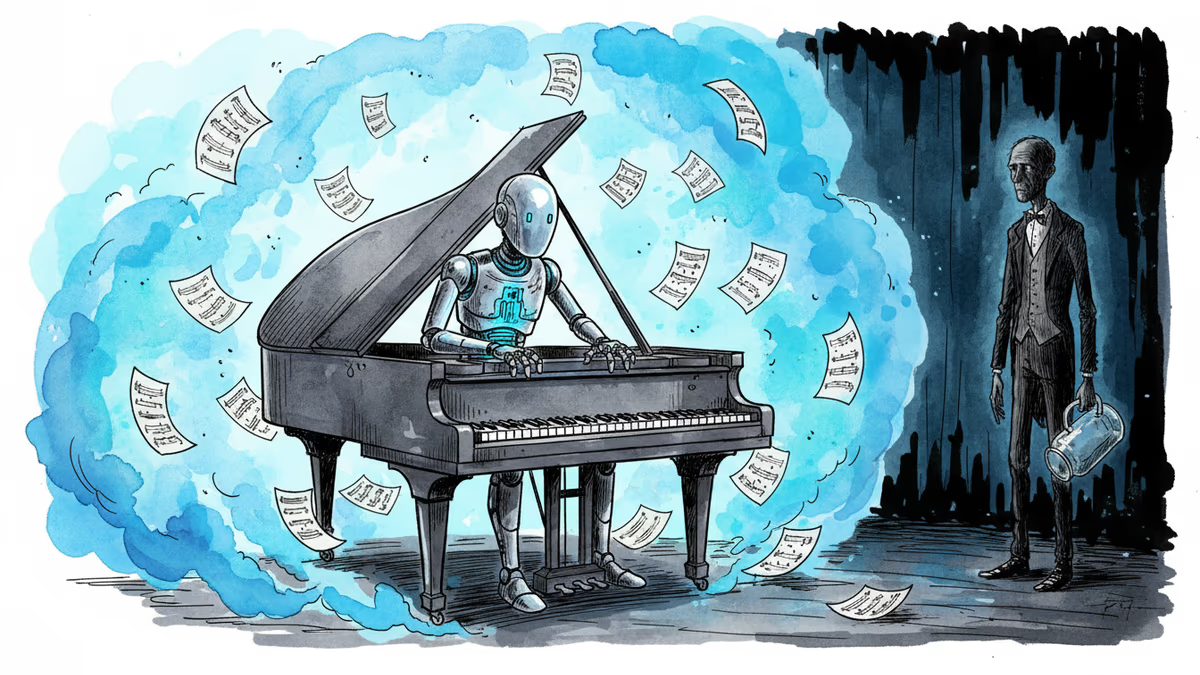
From a niche experiment in 2018 to a mainstream disruption in 2026, AI-generated music is forcing the industry to rethink creativity, copyright, and compensation.
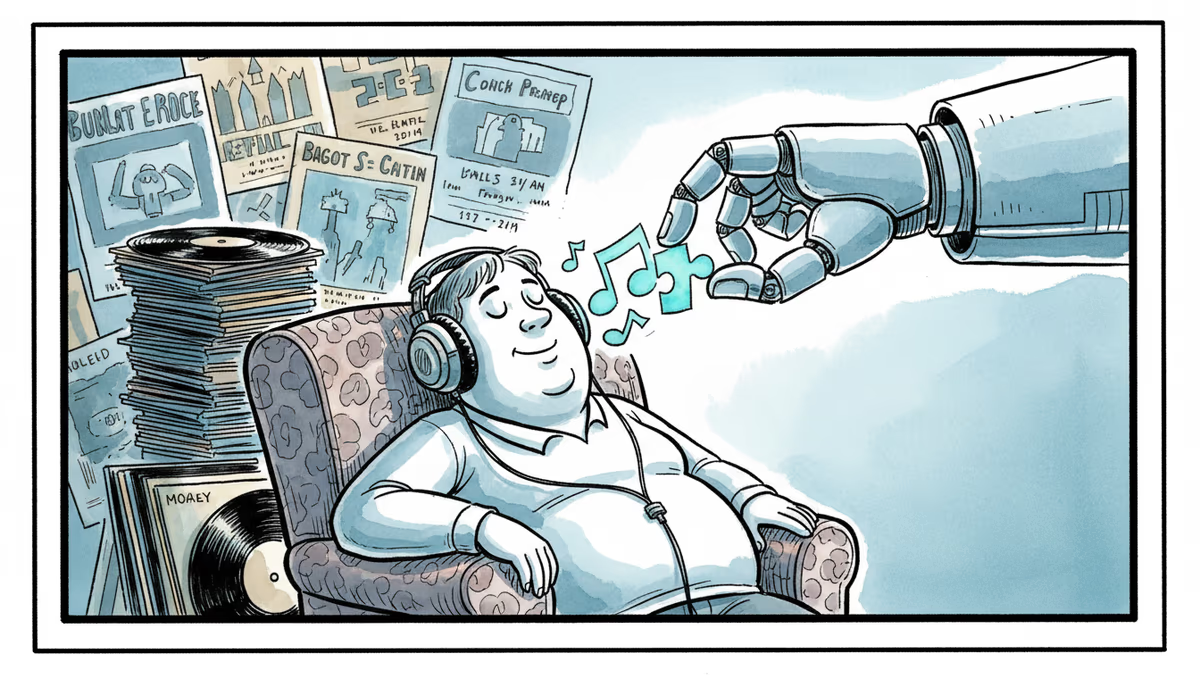
iOS 26.4 brings AI-generated playlists to Apple Music. It's convenient, but it raises real questions about taste, discovery, and who controls what you hear.

Apple Music introduces optional AI transparency tags for music content, sparking debate about self-regulation versus detection in the streaming era.
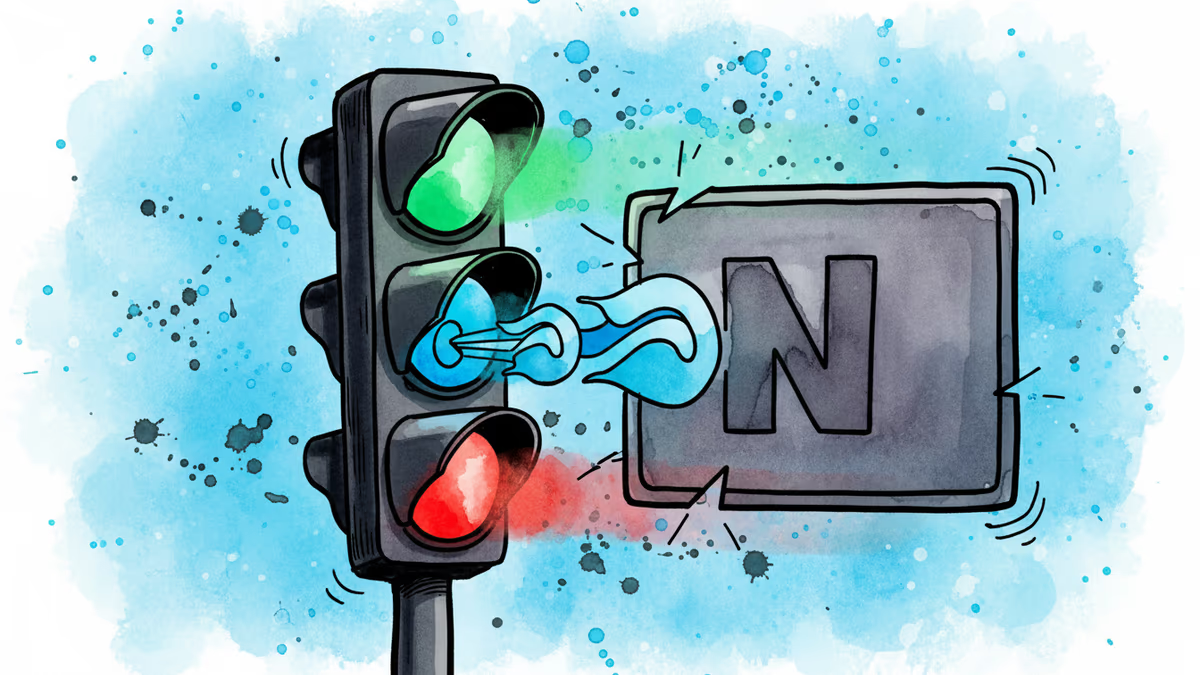
FCC Chairman supports Paramount-WBD merger while Netflix deal faced regulatory hurdles. A new regulatory playbook for streaming consolidation emerges.
From a niche experiment in 2018 to a mainstream disruption in 2026, AI-generated music is forcing the industry to rethink creativity, copyright, and compensation.
iOS 26.4 brings AI-generated playlists to Apple Music. It's convenient, but it raises real questions about taste, discovery, and who controls what you hear.
Apple Music introduces optional AI transparency tags for music content, sparking debate about self-regulation versus detection in the streaming era.
FCC Chairman supports Paramount-WBD merger while Netflix deal faced regulatory hurdles. A new regulatory playbook for streaming consolidation emerges.
Thoughts
Share your thoughts on this article
Sign in to join the conversation