
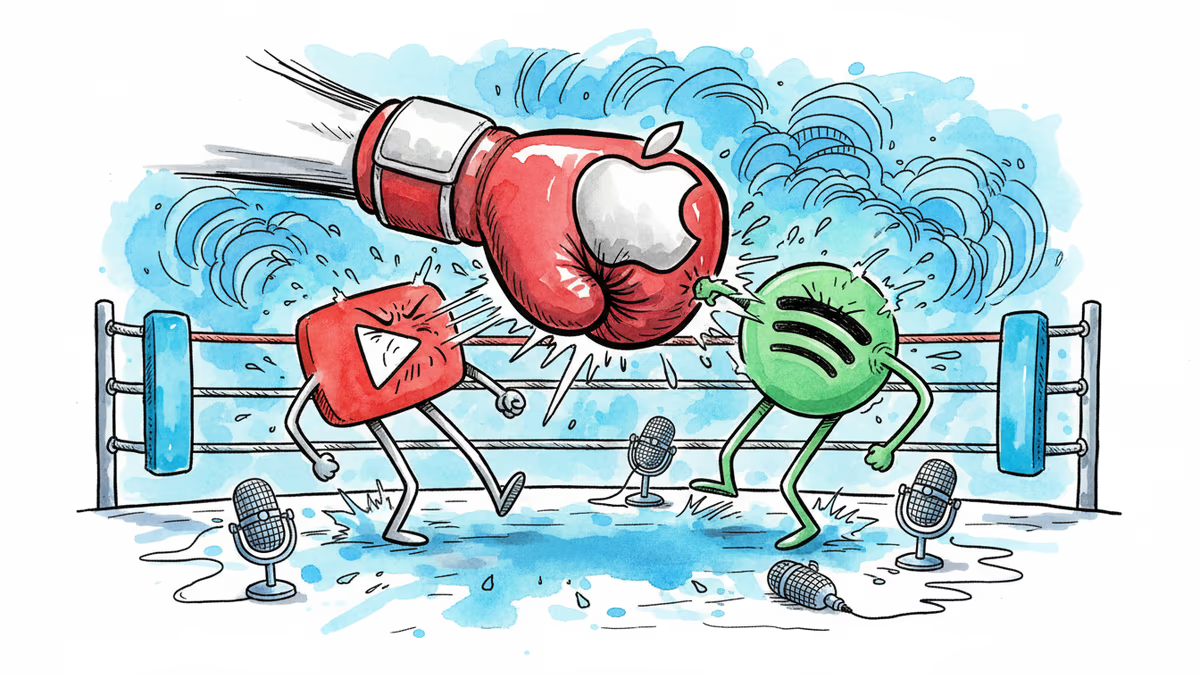
Why Apple Just Declared War on YouTube's Podcast Empire
Apple's spring video podcast launch isn't just a feature update. It's a strategic play for the **$51 billion** podcasting market that could reshape how creators monetize content.
The $51 Billion Question
Apple just announced it's adding video to Apple Podcasts this spring. Users can seamlessly switch between watching and listening, download videos for offline viewing, and enjoy horizontal viewing modes. Sounds routine, right?
Wrong. This isn't about catching up—it's about reshaping the entire podcasting landscape.
Eddy Cue, Apple's Senior VP of Services, called it "a defining milestone" comparable to when iTunes first embraced podcasts 20 years ago. That wasn't hyperbole. It was a declaration of war.
The Numbers Don't Lie
Edison Research reveals that 51% of Americans have consumed video podcasts, with 37% watching monthly. The medium has fundamentally shifted from audio-first to video-hybrid.
Meanwhile, competitors have been feasting. YouTube boasts over 1 billion monthly podcast viewers. Spotify hosts 500,000 video podcasts watched by 400 million users. Even Netflix is partnering with iHeartMedia and Spotify to bring video podcasts to streaming.
Apple? They've been conspicuously absent from the video game.
The Creator's Dilemma

Here's where it gets interesting. Popular podcasters face a brutal choice: stay audio-only and limit growth, or migrate to video platforms and surrender control.
Joe Rogan's $200 million Spotify deal exemplifies this tension. Massive payout, but platform dependency. YouTube offers broader reach but algorithmic uncertainty. Apple's pitch? "Full control of their content and how they build their businesses."
But is that genuine creator freedom or just smoother platform lock-in?
The Technical Edge
Apple's weapon of choice: HTTP Live Streaming (HLS) technology. This enables seamless audio-video switching without interruption—something competitors struggle with. You can start watching on your iPhone, switch to audio during your commute, then resume video on your iPad.
This isn't just user convenience. It's a moat. Once creators and audiences experience frictionless format switching, returning to platform-hopping becomes painful.
What Spotify and YouTube Are Really Worried About
This move threatens their business models differently. Spotify relies on subscription revenue and creator exclusivity deals. Apple's entry could fragment their podcast ecosystem and force expensive bidding wars for top talent.
YouTube faces a different threat. Their advertising-driven model depends on keeping viewers within their ecosystem. Apple's seamless experience could pull podcast audiences back to native apps, reducing YouTube's podcast ad inventory.
Netflix's recent podcast partnerships suddenly look defensive rather than innovative.
Authors
Related Articles
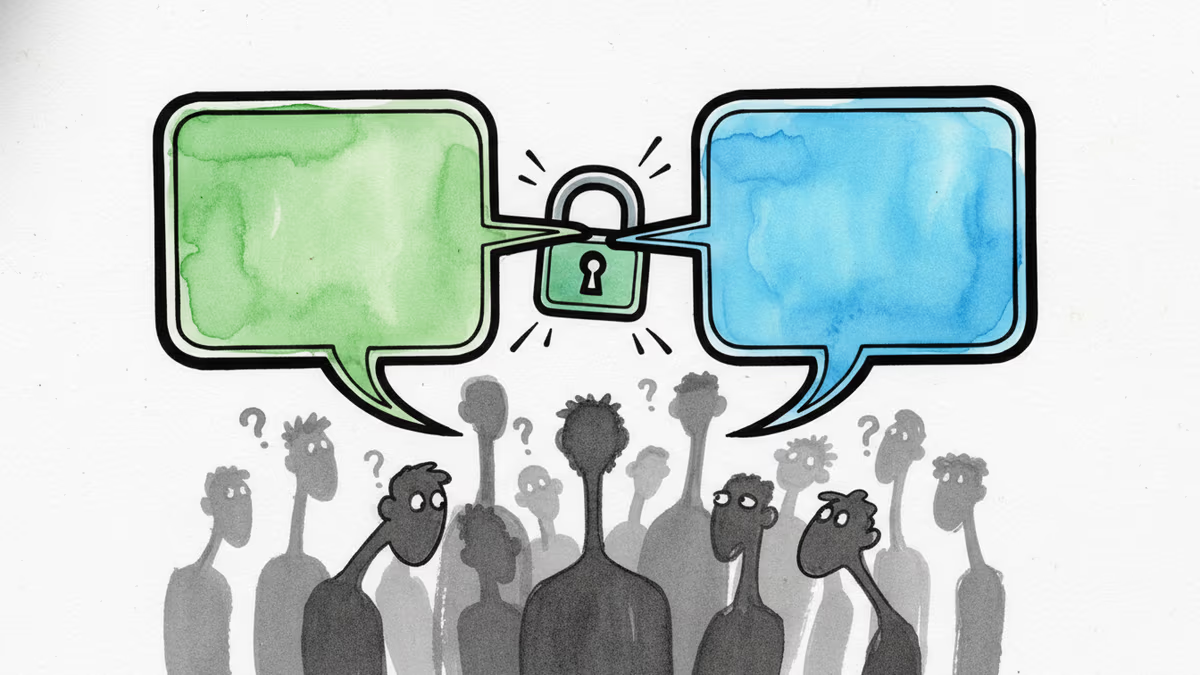
After 15 years of fragmented mobile messaging, Apple and Google are rolling out end-to-end encrypted RCS messaging between iPhones and Android devices. Here's what changed, why it took so long, and what it means for your privacy.
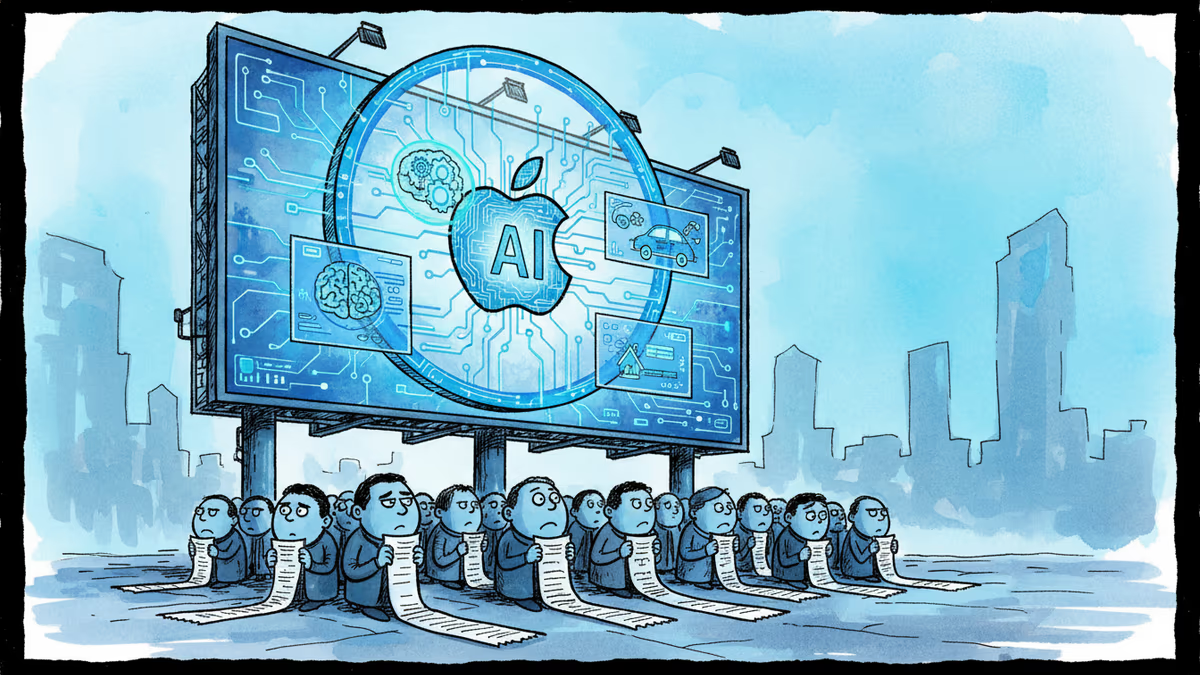
Apple agreed to pay $250 million to settle claims it misled iPhone 16 buyers about Apple Intelligence features. What this means for consumers, Big Tech marketing, and the AI industry.
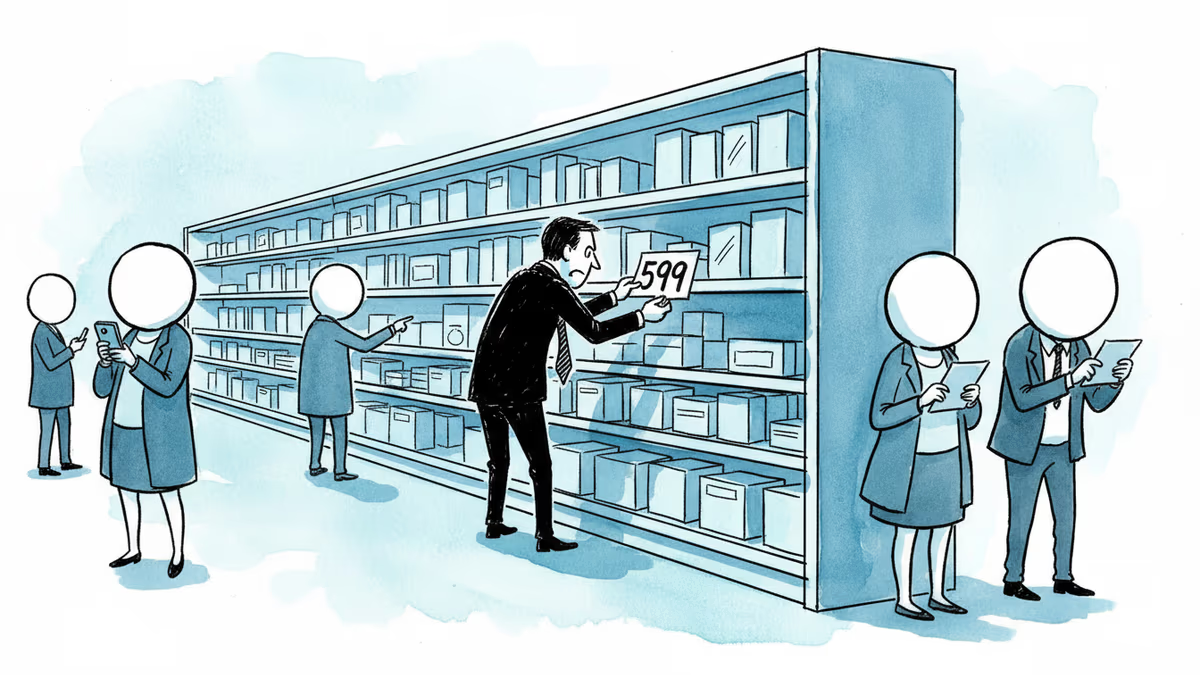
Apple quietly removed the entry-level $599 Mac Mini, raising the starting price to $799 — just one day after Tim Cook warned of chip supply constraints on the earnings call.
Apple names John Ternus, its hardware engineering chief, as the next CEO. The shift from operator to product person signals where Apple thinks its next decade of growth will come from — and raises real questions about what comes next.
After 15 years of fragmented mobile messaging, Apple and Google are rolling out end-to-end encrypted RCS messaging between iPhones and Android devices. Here's what changed, why it took so long, and what it means for your privacy.
Apple agreed to pay $250 million to settle claims it misled iPhone 16 buyers about Apple Intelligence features. What this means for consumers, Big Tech marketing, and the AI industry.
Apple quietly removed the entry-level $599 Mac Mini, raising the starting price to $799 — just one day after Tim Cook warned of chip supply constraints on the earnings call.
Apple names John Ternus, its hardware engineering chief, as the next CEO. The shift from operator to product person signals where Apple thinks its next decade of growth will come from — and raises real questions about what comes next.
Thoughts
Share your thoughts on this article
Sign in to join the conversation