
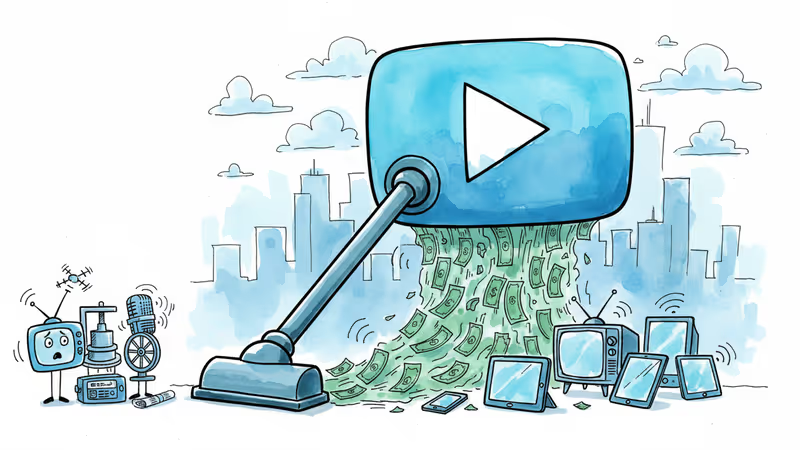
YouTube Hits $60B Revenue as Subscription Economy Reshapes Media
YouTube's $60B annual revenue milestone signals major shifts in the subscription economy, challenging traditional media and creating new market dynamics.
$60 billion. That's how much YouTube generated in revenue for 2025, marking a 17% jump from the previous year and cementing its position as a media powerhouse that rivals traditional entertainment giants.
Alphabet's quarterly earnings revealed that YouTube's ad revenue hit $11.38 billion in Q4, growing 9% but falling short of analysts' $11.84 billion expectations. However, the real story lies in what this miss might actually signal: a fundamental shift from ad-dependent to subscription-driven revenue.
The Subscription Surge That Changes Everything
The platform added 25 million paying subscribers across Google One and YouTube Premium in just three months, reaching 325 million total subscribers. At $8 per month, YouTube Premium's ad-free experience is gaining serious traction, though the company remains tight-lipped about specific numbers.
This growth trajectory puts YouTube in direct competition with established streaming services. While Netflix charges $15.49 for its standard plan and Disney+ sits at $7.99, YouTube Premium's pricing hits a sweet spot that includes not just ad-free viewing, but access to the world's largest video library.
Sundar Pichai, Alphabet's CEO, hinted at bigger moves ahead: "We'll soon launch new YouTube TV plans, bringing more choice and flexibility to subscribers with over 10 genre-specific packages." This sounds like cable TV's worst nightmare—à la carte programming that consumers have demanded for decades.
Short-Form Videos, Long-Term Revenue
YouTube Shorts maintained its massive 200 billion daily views, the same as last year. But here's the twist: in some markets, short-form ads are generating more revenue per hour than traditional in-stream ads. This challenges the conventional wisdom that longer content equals better monetization.

The implications ripple beyond YouTube. If short-form content can generate superior ad rates, it reshapes how creators approach content strategy and how advertisers allocate budgets. TikTok, Instagram Reels, and other short-form platforms suddenly face a more formidable monetization competitor.
Podcasts represent another growth vector, with users watching 700 million hours of podcast content on their TVs in October alone. This TV consumption pattern suggests YouTube is successfully positioning itself as the living room entertainment hub, not just a mobile distraction.
AI Tools Democratize Content Creation
Over 1 million channels now use YouTube's AI creation tools, while 20 million consumers tried its Gemini-powered content discovery feature in December. These aren't just impressive adoption numbers—they signal a fundamental shift in content creation barriers.
When AI tools make video production accessible to anyone with ideas, the traditional gatekeepers of media lose their advantage. Professional studios, production companies, and even individual creators with expensive equipment face new competition from AI-assisted content makers.
For advertisers, this democratization creates both opportunities and challenges. More content means more inventory, potentially driving down ad costs. But it also means more noise, making brand safety and content quality increasingly important considerations.
The Streaming Wars Get Personal
Those genre-specific YouTube TV packages that Pichai mentioned? They represent a direct assault on traditional cable bundling. Instead of paying $70-100 monthly for hundreds of channels you don't watch, imagine paying $15-20 for just sports, or just news, or just entertainment.
This unbundling threatens more than cable companies. Traditional broadcasters who've relied on bundling weak channels with strong ones face a reckoning. If consumers can cherry-pick genres, which channels survive the cut?
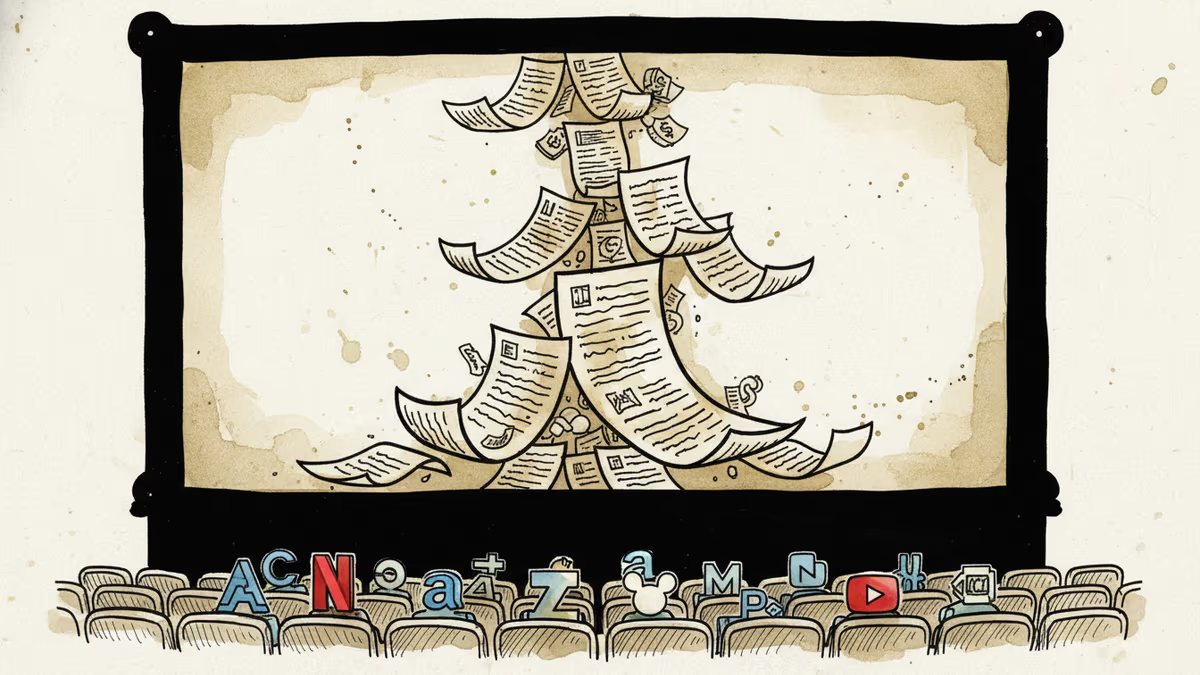
The subscription economy's maturation also raises questions about consumer spending limits. With Netflix, Disney+, Amazon Prime, Apple TV+, Spotify, and now expanding YouTube services, when does subscription fatigue set in?
Authors
Related Articles
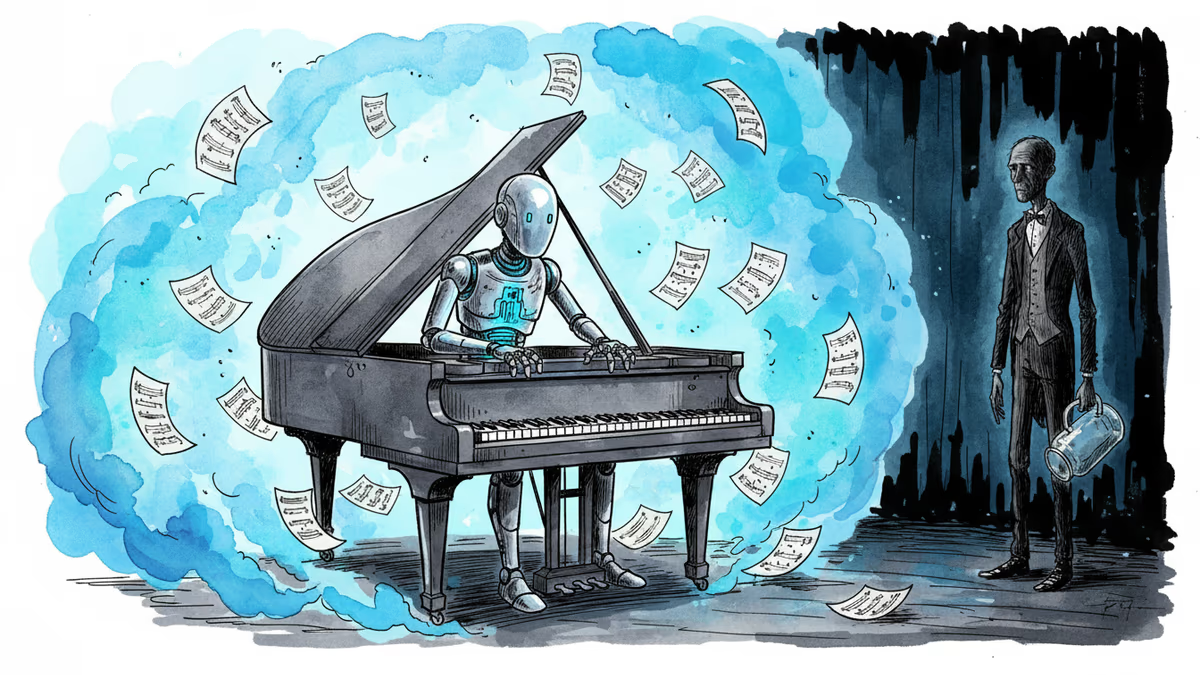
From a niche experiment in 2018 to a mainstream disruption in 2026, AI-generated music is forcing the industry to rethink creativity, copyright, and compensation.
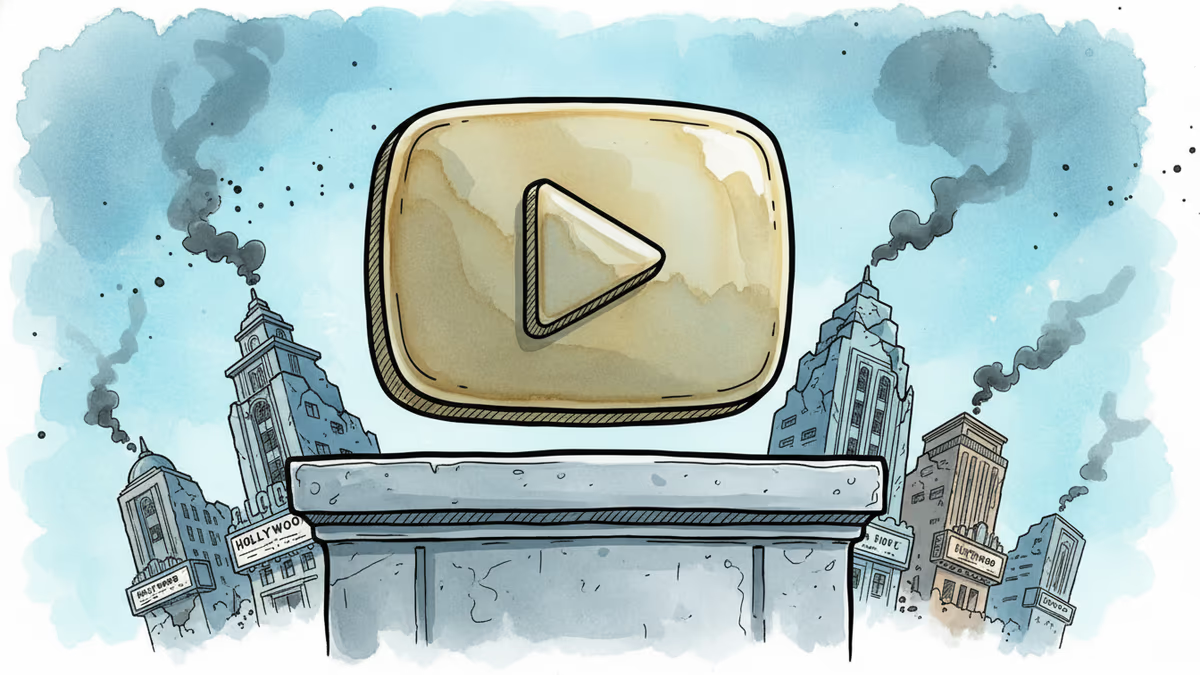
YouTube's 2025 ad revenue hit $40.4B, surpassing Disney, NBC, Paramount, and Warner Bros. Discovery combined. What this means for advertisers, creators, and the future of media.
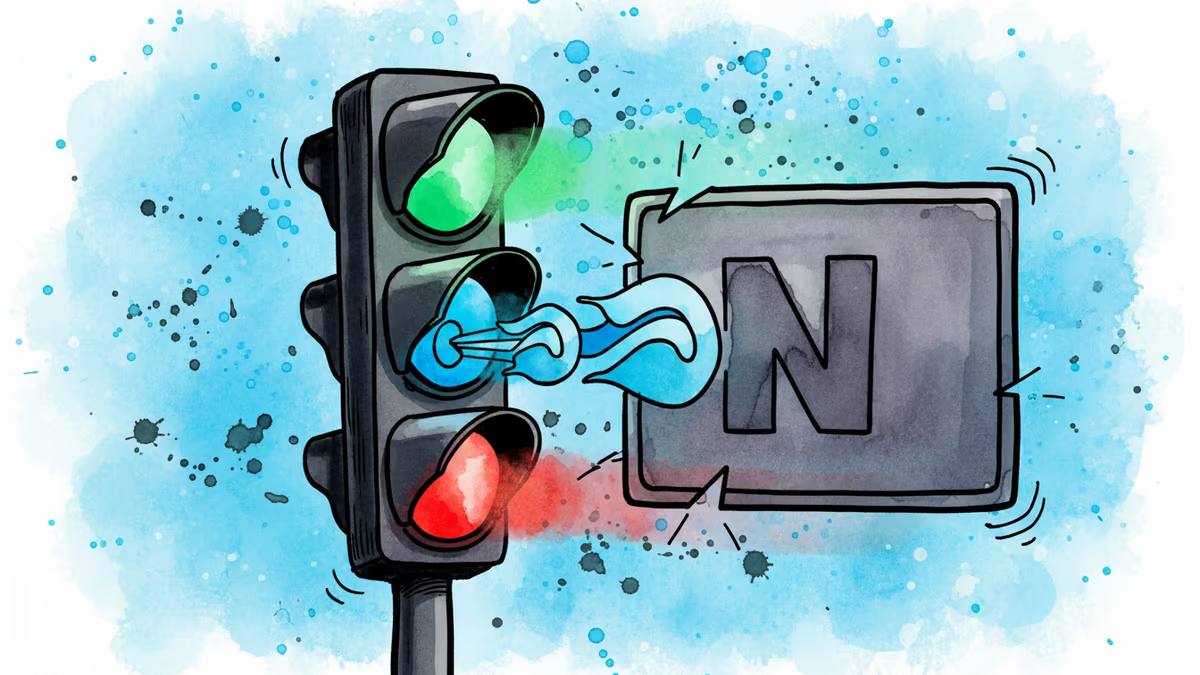
FCC Chairman supports Paramount-WBD merger while Netflix deal faced regulatory hurdles. A new regulatory playbook for streaming consolidation emerges.
Paramount-Warner merger creates streaming giant with 200M+ subscribers after Netflix abandoned WBD deal. What this mega-consolidation means for content and competition.
From a niche experiment in 2018 to a mainstream disruption in 2026, AI-generated music is forcing the industry to rethink creativity, copyright, and compensation.
YouTube's 2025 ad revenue hit $40.4B, surpassing Disney, NBC, Paramount, and Warner Bros. Discovery combined. What this means for advertisers, creators, and the future of media.
FCC Chairman supports Paramount-WBD merger while Netflix deal faced regulatory hurdles. A new regulatory playbook for streaming consolidation emerges.
Paramount-Warner merger creates streaming giant with 200M+ subscribers after Netflix abandoned WBD deal. What this mega-consolidation means for content and competition.
Thoughts
Share your thoughts on this article
Sign in to join the conversation