
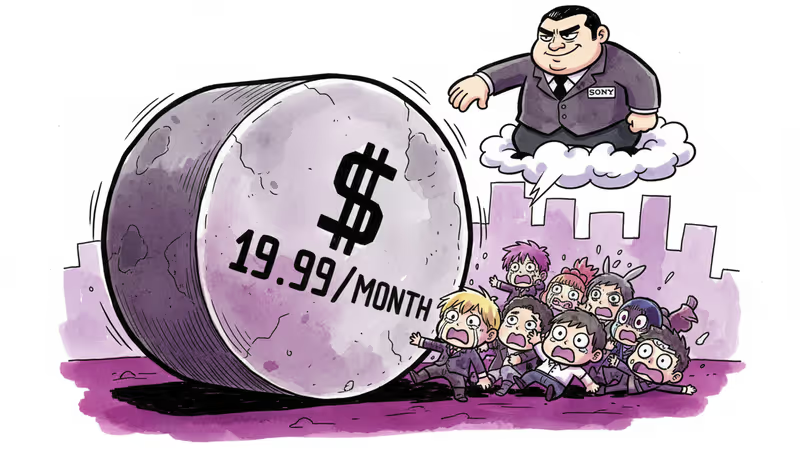
Crunchyroll Hits Fans With 20% Price Hike After Six Years of Increases
Sony-owned Crunchyroll raises subscription prices by up to 20%, continuing a pattern of annual increases since its 2020 acquisition. What this means for anime streaming.
Crunchyroll just hit anime fans with another price increase—this time up to 20%.
The world's largest anime streaming platform announced it's raising monthly subscription prices, continuing a six-year streak of annual increases that's testing fans' loyalty and wallets. For a service that once positioned itself as an affordable gateway to Japanese animation, the pattern tells a familiar story about what happens when beloved platforms get absorbed by corporate giants.
The Sony Playbook in Action
When Sony acquired Crunchyroll from AT&T in 2020, the platform served 3 million paid subscribers and 197 million free users with ad-supported access. Monthly tiers cost a reasonable $8, $10, and $15—prices that made anime accessible to a global audience of students and casual fans.
But Sony's strategy became clear quickly. The entertainment conglomerate folded rival Funimation, which it had purchased in 2017, directly into Crunchyroll before shutting it down entirely in April 2024. What looked like consolidation for efficiency was actually market capture.
With Funimation gone, Crunchyroll now operates as the de facto monopoly for anime streaming in Western markets. And monopolies, as economics textbooks remind us, tend to extract maximum value once competition disappears.
The Subscription Squeeze

Crunchyroll's pricing strategy reflects a broader shift in the streaming economy. The era of cheap subscriptions designed to build user bases is ending, replaced by steady price increases that test how much consumers will tolerate.
This isn't unique to anime. Netflix, Disney+, and virtually every major streaming service have implemented regular price hikes over the past few years. What started as cord-cutting's promise of affordable, à la carte entertainment has evolved into a collection of monthly bills that often exceed traditional cable costs.
For niche content like anime, the situation is particularly challenging. Unlike general entertainment where viewers can switch between platforms, anime fans have limited alternatives. Crunchyroll's price increases essentially function as a tax on a captive audience.
The Creator Economy Impact
Behind the subscription increases lies a more complex question about value distribution in the digital content economy. While Crunchyroll raises prices, how much of that additional revenue flows back to Japanese studios and creators who produce the content?
The anime industry operates on notoriously thin margins, with studios often struggling financially despite producing globally popular content. If platform consolidation leads to higher prices but not proportionally higher creator compensation, it represents a concerning concentration of value in distribution rather than production.
This dynamic extends beyond anime to the broader creator economy, where platform owners increasingly capture value that content creators generate.
Authors
Related Articles
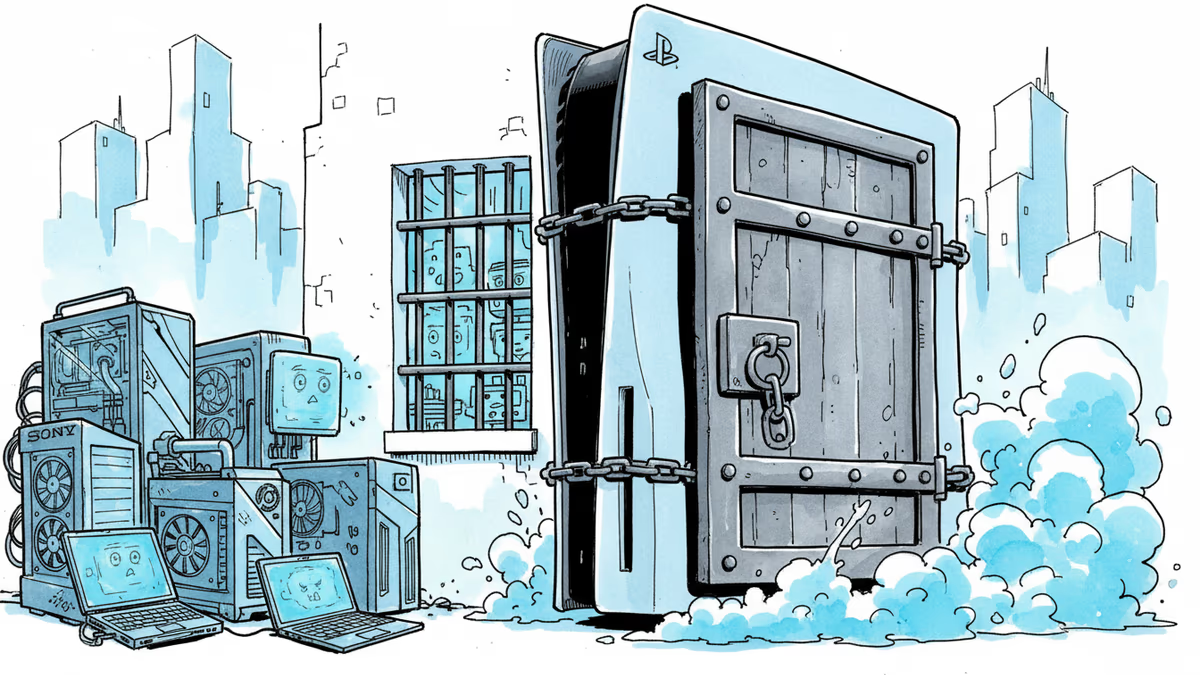
Sony is pulling its major single-player PlayStation games from PC. After six years of multiplatform expansion, the reversal raises hard questions about exclusivity, hardware sales, and who really controls gaming's future.
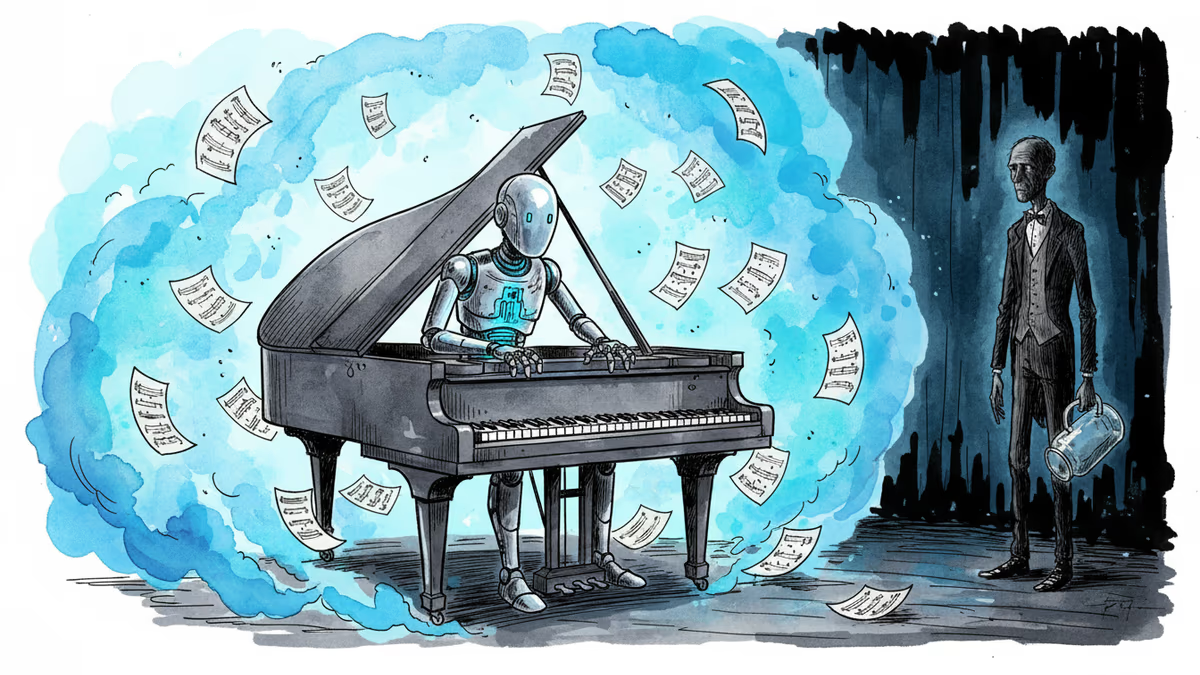
From a niche experiment in 2018 to a mainstream disruption in 2026, AI-generated music is forcing the industry to rethink creativity, copyright, and compensation.
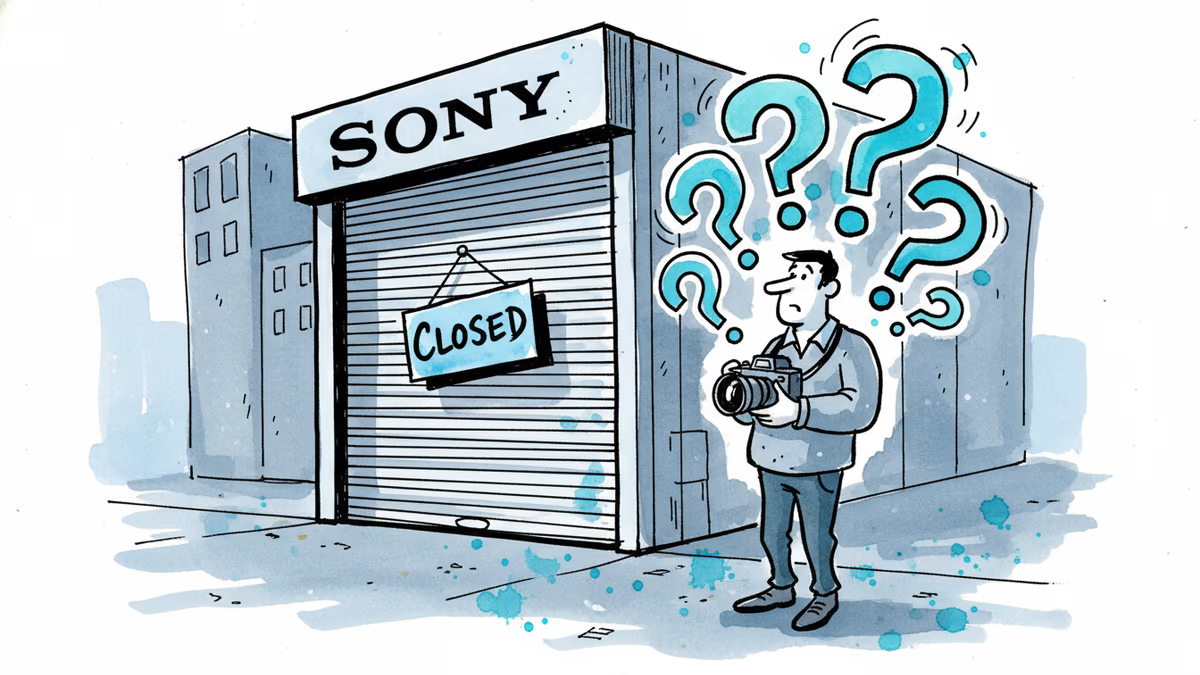
Sony halted orders for most of its CFexpress and SD card lineup on March 27, 2026 — the same day it raised PS5 prices. What does this mean for photographers, consumers, and Sony's broader strategy?
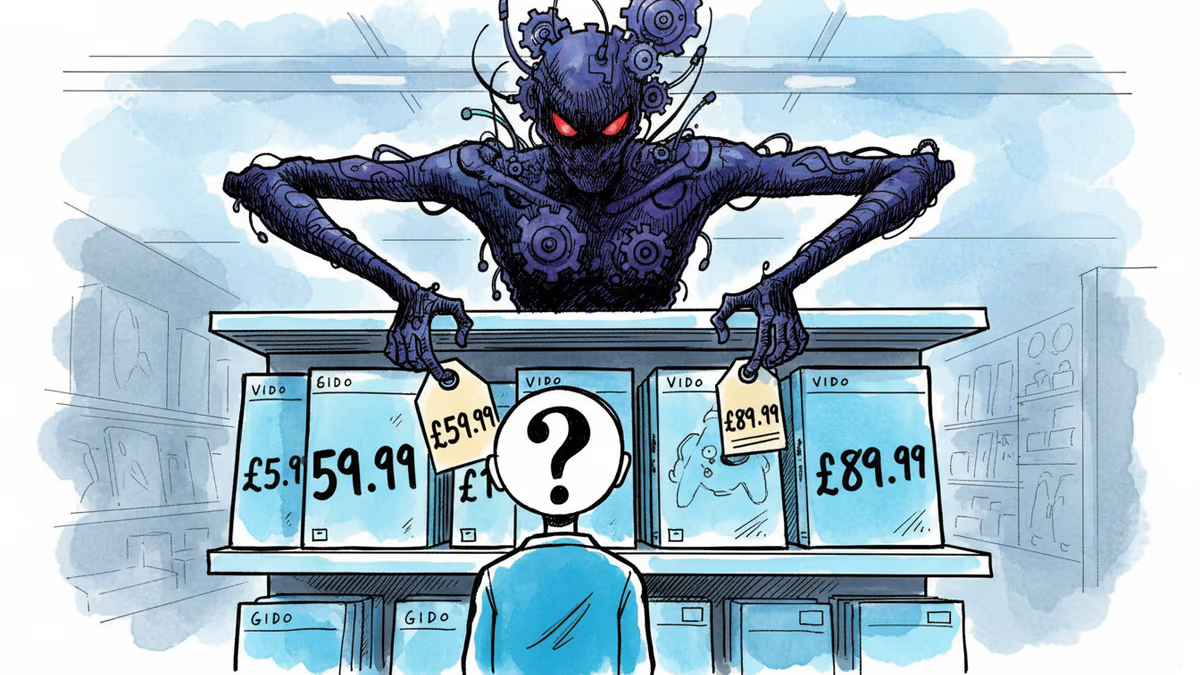
Sony's PlayStation Store has been quietly A/B testing personalized game prices across 150+ titles in 68 regions. Is dynamic pricing coming to gaming — and what does that mean for players?
Sony is pulling its major single-player PlayStation games from PC. After six years of multiplatform expansion, the reversal raises hard questions about exclusivity, hardware sales, and who really controls gaming's future.
From a niche experiment in 2018 to a mainstream disruption in 2026, AI-generated music is forcing the industry to rethink creativity, copyright, and compensation.
Sony halted orders for most of its CFexpress and SD card lineup on March 27, 2026 — the same day it raised PS5 prices. What does this mean for photographers, consumers, and Sony's broader strategy?
Sony's PlayStation Store has been quietly A/B testing personalized game prices across 150+ titles in 68 regions. Is dynamic pricing coming to gaming — and what does that mean for players?
Thoughts
Share your thoughts on this article
Sign in to join the conversation