
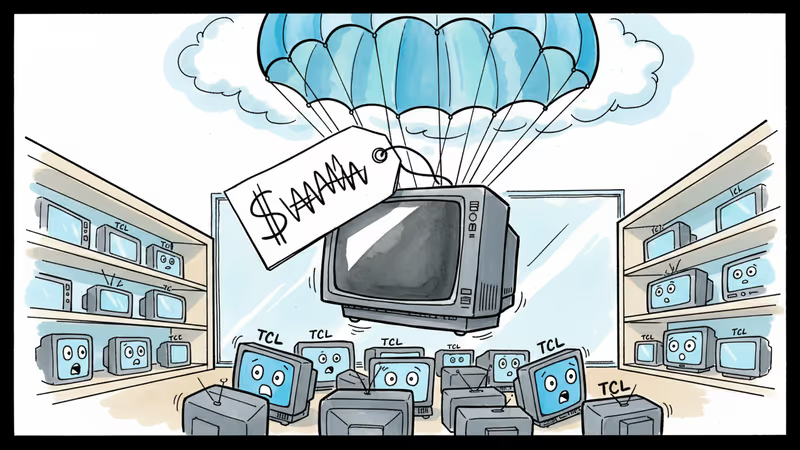
Why Sony Just Dropped a $1,000 TV Bomb on the Market
Sony's Bravia 5 QLED enters the budget mini-LED battlefield at $1,000, challenging Chinese brands with premium processing. Is this the new playbook for legacy tech giants?
$1,000 for a Sony TV? Just a few years ago, that would have been laughable. Today, it's Sony's new reality check. The Bravia 5 QLED has landed in the budget mini-LED arena, going head-to-head with TCL and Hisense models that have been dominating the sub-$1,000 space.
The Premium Brand's Budget Gambit
This isn't just about Sony cutting prices—it's about redefining what premium means in 2026. While Chinese manufacturers have been racing to the bottom on price, Sony is betting that superior image processing can justify a $200-300 premium over comparable TCL and Hisense models.
The Bravia 5 packs the same XR processing chip found in Sony's flagship models, meaning you get identical picture processing algorithms regardless of whether you spend $1,000 or $3,000. That's a significant departure from the usual practice of reserving the best tech for top-tier models.
But here's the kicker: Sony Pictures Core streaming service. Buy the TV, get five free movies in lossless 4K Blu-ray quality. It's not just hardware anymore—it's about the entire ecosystem.
The Chinese Challenge Response
For years, TCL and Hisense have been eating away at the TV market with a simple formula: decent specs at unbeatable prices. Their mini-LED TVs often outshine premium brands in brightness tests while costing half as much. Sony's response isn't to match their prices—it's to change the game entirely.

The Bravia 5 might not be as bright as its Chinese competitors, but it excels where most budget TVs fail: natural color reproduction and motion processing. When watching Alfred Hitchcock's Vertigo on 4K Blu-ray, the difference becomes apparent. Sony's processing prevents the aggressive blooming and oversaturation that plague cheaper mini-LED displays.
This strategy reveals something crucial about the current TV market: hardware commoditization has reached a tipping point. When a $500 TCL can deliver 90% of the picture quality of a $2,000 premium TV, traditional manufacturers need new ways to justify their premiums.
Gaming Changes Everything
The Bravia 5's Nvidia G-Sync support hints at another battlefield: gaming. With the PlayStation 5 Pro pushing 4K gaming at 120Hz, TV manufacturers are suddenly competing for a demographic that values different things than traditional viewers.
Gamers care about input lag, variable refresh rates, and smooth motion more than perfect color accuracy or cinema-grade processing. Sony's decision to include gaming-focused features in a mid-range TV suggests they see this as a growth market worth investing in.
The Streaming Wars Spill Over
Perhaps most intriguingly, the Bravia 5 represents how streaming wars are reshaping hardware sales. Sony Pictures Core isn't just a nice bonus—it's a competitive moat. While Netflix and Disney+ are available everywhere, Sony's lossless streaming library is exclusive to their TVs.
This bundling strategy could become the norm. Imagine Apple TVs with exclusive Apple TV+ features, or Amazon displays with enhanced Prime Video integration. The TV might become the new smartphone—a gateway device that locks you into an ecosystem.
Authors
Related Articles
Sony is pulling its major single-player PlayStation games from PC. After six years of multiplatform expansion, the reversal raises hard questions about exclusivity, hardware sales, and who really controls gaming's future.
Sony halted orders for most of its CFexpress and SD card lineup on March 27, 2026 — the same day it raised PS5 prices. What does this mean for photographers, consumers, and Sony's broader strategy?
Sony's PlayStation Store has been quietly A/B testing personalized game prices across 150+ titles in 68 regions. Is dynamic pricing coming to gaming — and what does that mean for players?
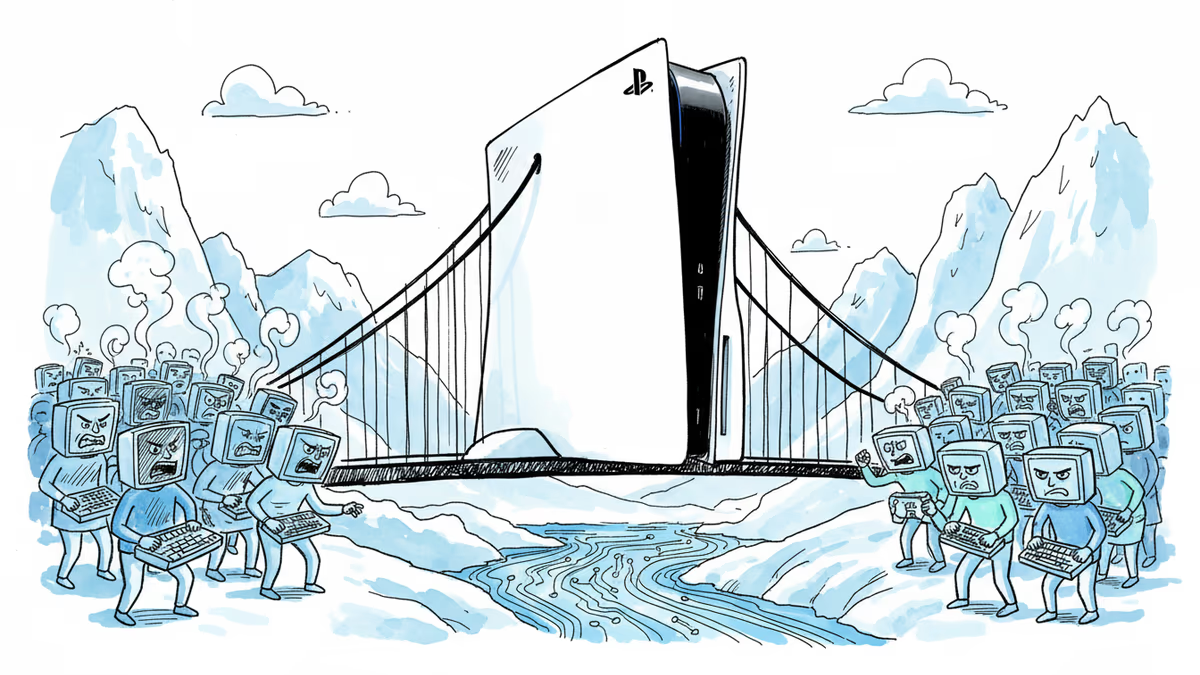
Sony cancels PC releases for future single-player games to protect PS5 sales and counter Microsoft's next Xbox strategy. A deep dive into the console wars' latest battleground.
Sony is pulling its major single-player PlayStation games from PC. After six years of multiplatform expansion, the reversal raises hard questions about exclusivity, hardware sales, and who really controls gaming's future.
Sony halted orders for most of its CFexpress and SD card lineup on March 27, 2026 — the same day it raised PS5 prices. What does this mean for photographers, consumers, and Sony's broader strategy?
Sony's PlayStation Store has been quietly A/B testing personalized game prices across 150+ titles in 68 regions. Is dynamic pricing coming to gaming — and what does that mean for players?
Sony cancels PC releases for future single-player games to protect PS5 sales and counter Microsoft's next Xbox strategy. A deep dive into the console wars' latest battleground.
Thoughts
Share your thoughts on this article
Sign in to join the conversation