
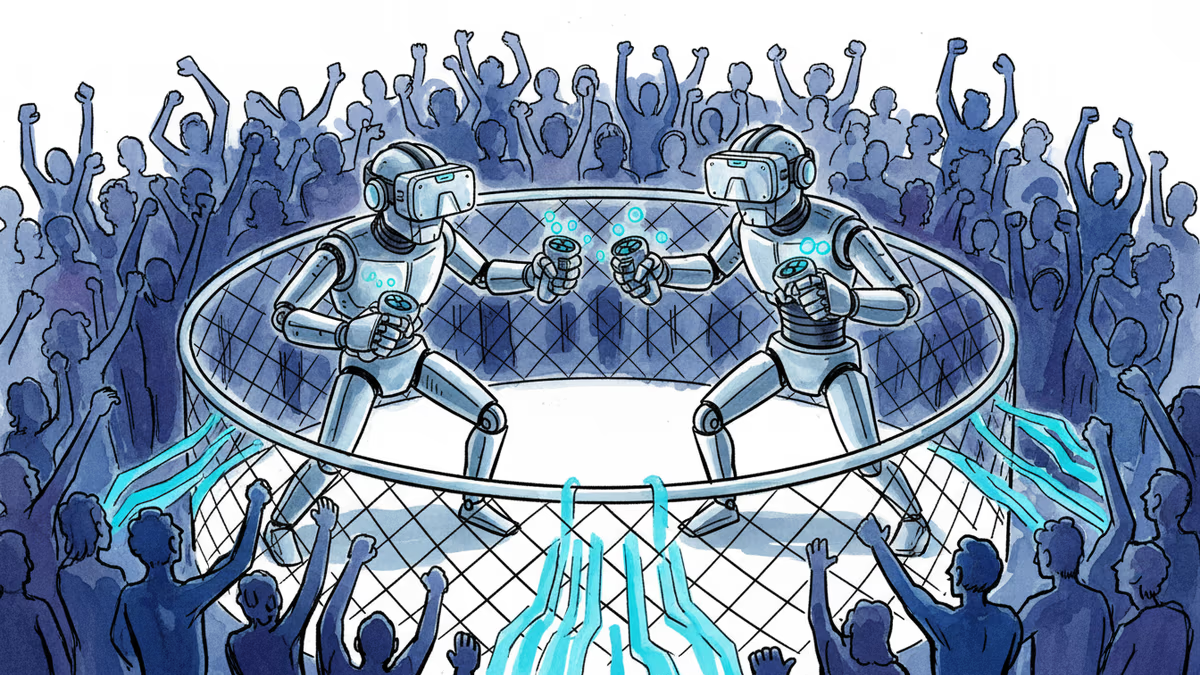
$13,000 Robots Throw Punches for Paying Crowds
Humanoid robot boxing matches in San Francisco draw hundreds of spectators, but experts question whether it's genuine AI progress or elaborate 'robot theater.
When Robots Enter the Ring
While the Super Bowl drew millions of viewers last weekend, a much smaller venue in San Francisco hosted what organizers called "the future of combat sports." Hundreds of spectators paid $60-$80 each to watch VR-controlled humanoid robots duke it out in a boxing cage.
The fighters? Modified G1 robots from Unitree, China's dominant robot maker. Weighing 80 pounds and standing 4.5 feet tall, these machines sported human-like hands and dozens of joint motors. The production value matched a real boxing match: pulsing music, multi-angle cameras, dramatic introductions, a human referee, and color commentary.
Two bouts, five rounds each, 60 seconds per round. The robots pranced around the cage, throwing jabs and hooks while the crowd erupted in cheers. When they toppled over—which happened—human handlers rushed in to get them back on their feet.
Rek, the San Francisco company behind the event, plans to expand into a full robot boxing league with 200-pound, nearly 6-foot-tall fighters. "Right now we are mainly focused on the U.S. But we will consider international matches after our next big event in a few months," founder Cix Liv told reporters.
China's Robot Dominance

This spectacle reflects a broader trend: China's stranglehold on the humanoid robot market. Nearly 90% of humanoid robots sold last year came from Chinese companies like Unitree, AgiBot, and Engine AI. A basic G1 starts at $13,000, while advanced T800 models cost over $40,000.
In China, robot combat has already gone mainstream. Boxing matches, races, and soccer games featuring humanoids regularly appear on television, reaching hundreds of millions of viewers during annual spring galas. Just days after the San Francisco match, China launched the world's first official humanoid "combat league" with a prize pool worth $1.4 million.
David Hatch, a San Francisco tech designer and sci-fi enthusiast, was among the impressed spectators. "I do see more people really getting into seeing robots fight—you can see how the crowd here got excited, and there were some rousing moments," he said. "You can do a lot of things with robots—there can be a lot of customization, it can be a lot more participatory with VR glasses."
The Reality Check
But not everyone is buying the hype. Ken Goldberg, a robotics researcher at UC Berkeley, dismisses much of what he sees as "robot theater."
"We are in the middle of the humanoid craze today; they look human-like and do some things, but they're not very sophisticated," Goldberg explained at a recent briefing. "Many of them have humans controlling them. Which is why I always tell people who are impressed with robot videos: Beware of what you see in the videos, it isn't quite real."
The disconnect between perception and reality was evident at the Rek match. When 13-year-old VR pilot Dash defeated his older competitor, the crowd erupted. Hatch jumped to his feet: "That was awesome!" But he also appreciated something distinctly non-human about the experience: "You can repair the damage more easily with robots."
Authors
Related Articles
ByteDance's Pico unveils OS 6 and Project Swan to challenge Apple Vision Pro, but analysts question the timing in an increasingly crowded XR market.
From 1925 to 2026, media has declared baseball's death countless times. Why crisis narratives persist and what they reveal about how sports evolve in the attention economy.

Meta shifts Horizon Worlds from VR to mobile after $80B losses, signaling major strategic pivot away from metaverse ambitions
Meta shifts Horizon Worlds from VR-exclusive to mobile-first, directly challenging Roblox and Fortnite. A strategic retreat or smart pivot?
ByteDance's Pico unveils OS 6 and Project Swan to challenge Apple Vision Pro, but analysts question the timing in an increasingly crowded XR market.
From 1925 to 2026, media has declared baseball's death countless times. Why crisis narratives persist and what they reveal about how sports evolve in the attention economy.
Meta shifts Horizon Worlds from VR to mobile after $80B losses, signaling major strategic pivot away from metaverse ambitions
Meta shifts Horizon Worlds from VR-exclusive to mobile-first, directly challenging Roblox and Fortnite. A strategic retreat or smart pivot?
Thoughts
Share your thoughts on this article
Sign in to join the conversation