
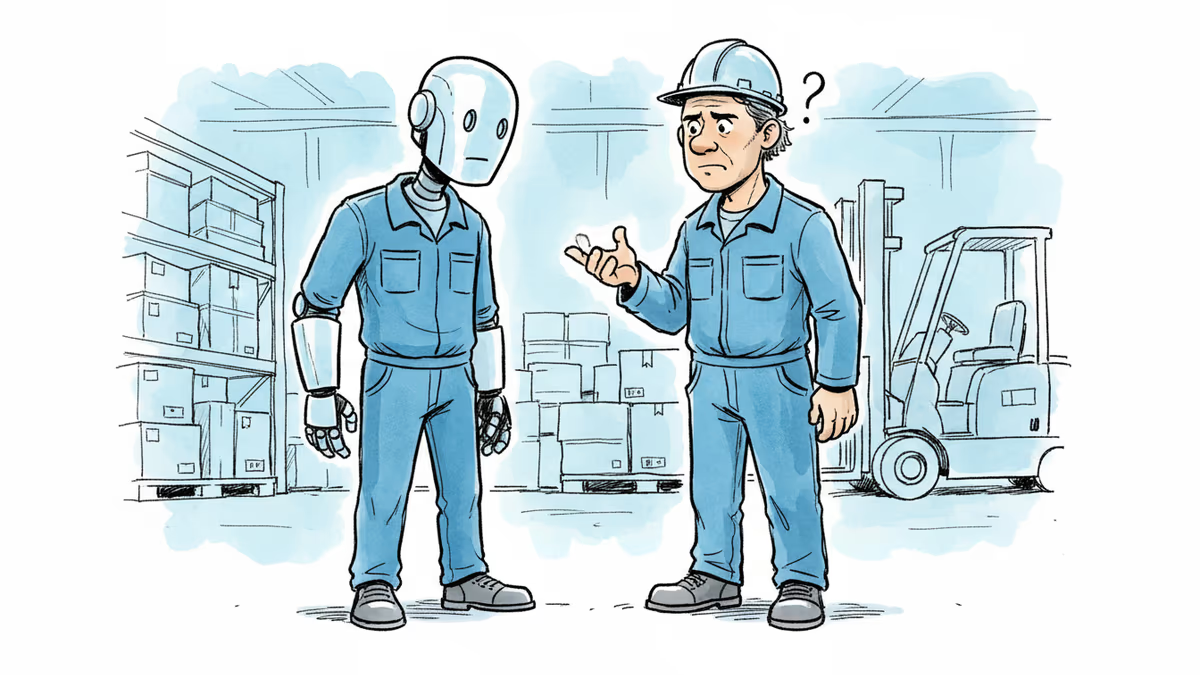
$935M in Funding, But Can Humanoids Actually Replace Humans?
Apptronik raised $935M in Series A extensions, tripling its valuation in a year. But technical limits and social acceptance remain major hurdles for humanoid robots.
$935 Million Poured In Within a Year
When University of Texas spinout Apptronik announced it had raised $935 million in its Series A round on Wednesday, it wasn't just another funding announcement. This was a startup that began with $350 million a year ago, expanded to $415 million, and now added another $520 million from the same investors willing to pay progressively higher prices.
The numbers tell a story of unprecedented demand. According to PitchBook, Apptronik's valuation jumped from roughly $1.75 billion to about $5.3 billion — nearly triple — in just 12 months. Google, Mercedes-Benz, and B Capital didn't just participate; they doubled down.
But here's the question: Is this rational exuberance or bubble territory?
The Google DeepMind Factor
What's driving investor frenzy isn't just another robot company. Apptronik has partnered with Google DeepMind to build what the industry calls "embodied AI" — robots that don't just follow programmed instructions but perceive, reason, and act in real environments.
Their humanoid robot Apollo is designed for unglamorous but critical tasks: unloading trailers, picking warehouse inventory, tending machinery. Partners like GXO and Mercedes-Benz aren't betting on sci-fi fantasies; they're addressing real labor shortages and operational challenges.

Yet competitor Figure AI has raised nearly $2 billion since 2022, with another $1 billion round last fall. The capital requirements for humanoid robotics are staggering, suggesting either enormous potential or enormous risk.
A 13-Year Journey to Overnight Success
Apptronik's "overnight" success actually began in 2013 — three years before the company officially existed. Researchers from UT's Human Centered Robotics Lab competed in the NASA-DARPA Robotics Challenge with a robot called Valkyrie. NASA has maintained that partnership ever since.
This isn't a Silicon Valley startup pivoting from a food delivery app. It's a decade-plus accumulation of deep technical expertise in one of engineering's hardest problems: making machines move and think like humans.
The Reality Check
Despite the funding euphoria, fundamental questions remain unanswered. Current humanoid robots still struggle with basic tasks that any warehouse worker handles effortlessly. Battery life, dexterity, and real-world adaptability remain significant challenges.
Moreover, the economic equation isn't clear. If a humanoid robot costs $100,000+ annually (including maintenance, updates, and supervision), does it actually save money compared to human workers earning $35,000-50,000 per year?
Then there's the social dimension. Labor unions, policymakers, and communities are already questioning the implications of widespread automation. The technical challenge might be easier than the societal one.
The answer might determine whether this funding surge marks the dawn of the robot age or just another expensive lesson in technological hubris.
Authors
Related Articles

Chinese humanoid robot companies shipped 36 times more units than US rivals last year. Behind the numbers lies a strategic advantage that could reshape the global robotics landscape.
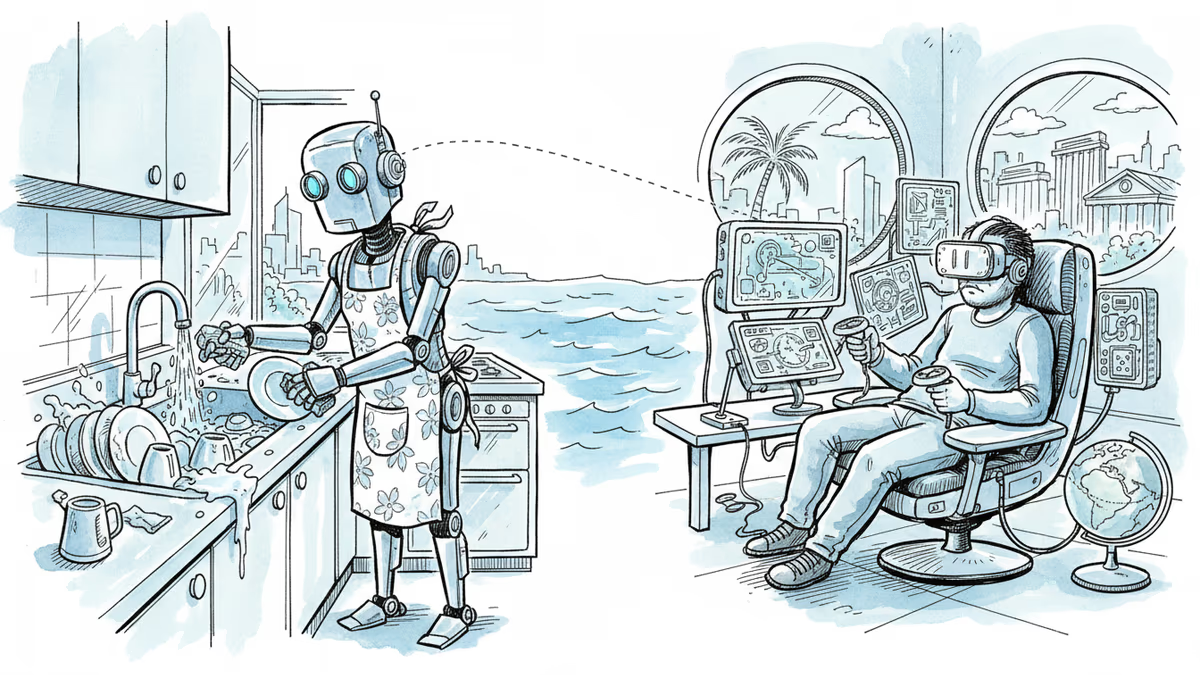
Behind the flashy demos of humanoid robots lie hidden human workers. Exploring new forms of labor and privacy concerns in the age of physical AI.
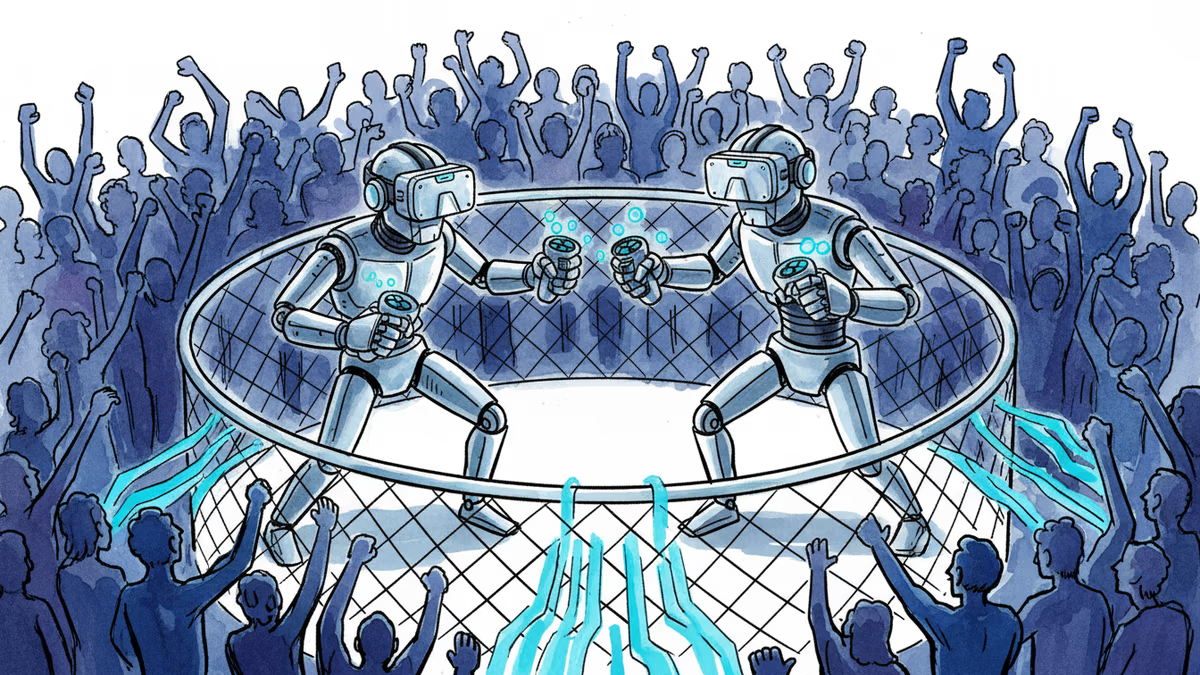
Humanoid robot boxing matches in San Francisco draw hundreds of spectators, but experts question whether it's genuine AI progress or elaborate 'robot theater.
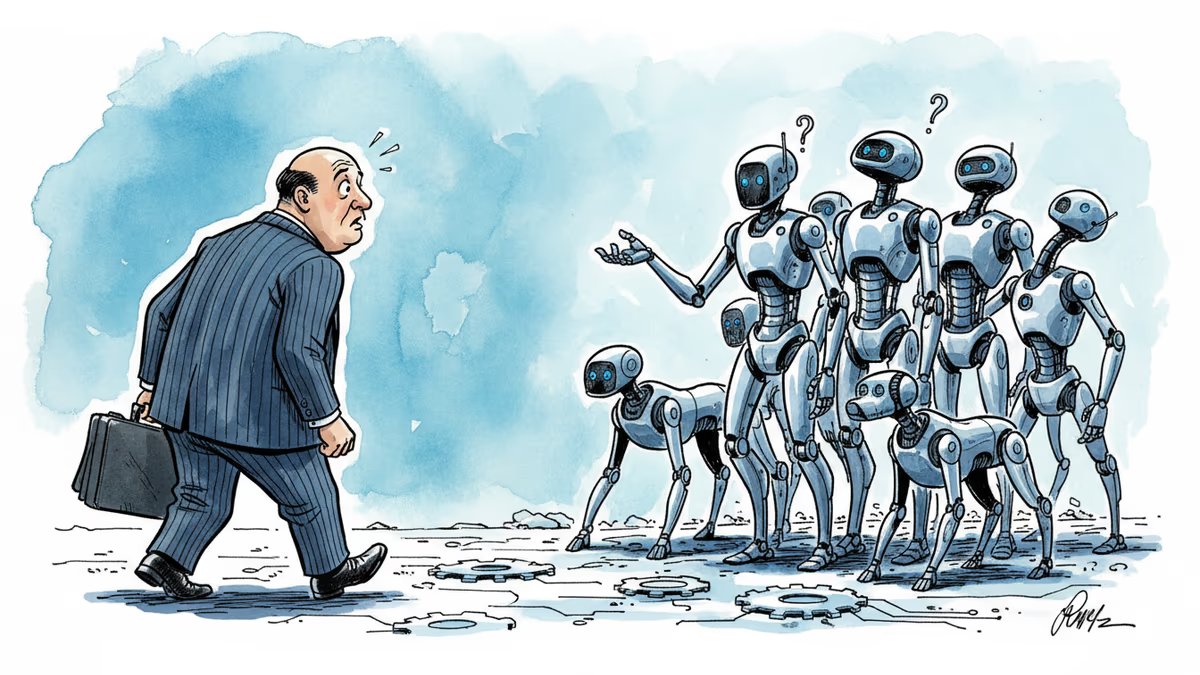
Robert Playter steps down as Boston Dynamics CEO just as robots go commercial. What does this leadership change signal for the robotics industry?
Chinese humanoid robot companies shipped 36 times more units than US rivals last year. Behind the numbers lies a strategic advantage that could reshape the global robotics landscape.
Behind the flashy demos of humanoid robots lie hidden human workers. Exploring new forms of labor and privacy concerns in the age of physical AI.
Humanoid robot boxing matches in San Francisco draw hundreds of spectators, but experts question whether it's genuine AI progress or elaborate 'robot theater.
Robert Playter steps down as Boston Dynamics CEO just as robots go commercial. What does this leadership change signal for the robotics industry?
Thoughts
Share your thoughts on this article
Sign in to join the conversation