
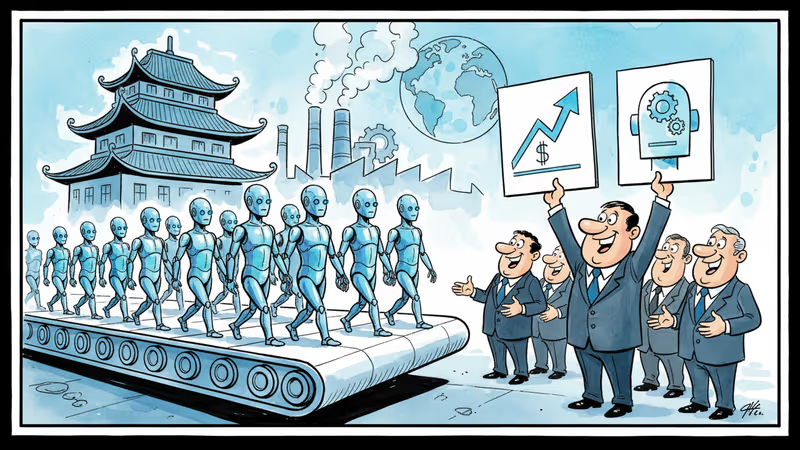
China Captures 90% of Humanoid Robot Market While Silicon Valley Talks
Chinese companies dominated 2025 humanoid robot sales with 90% market share. Unitree and Agibot outsold Tesla's entire production target, signaling a new industrial shift.
While Silicon Valley polished PowerPoints about the humanoid future, China was busy shipping actual robots. In 2025, 90% of all humanoid robots sold globally were Chinese-made, with six of the top-selling companies hailing from the East Asian powerhouse.
The Numbers Don't Lie
Unitree, China's largest humanoid robot company, sold 5,500 units last year—making it the world's top seller. Shanghai-based Agibot followed closely with 5,168 units. To put this in perspective, both Chinese companies individually outsold Tesla's entire 2025 production target of 5,000 humanoid robots, which the company failed to meet.
American companies barely registered on the scoreboard. Figure AI, Agility Robotics, and Tesla each sold only around 150 robots. The gap isn't just wide—it's a chasm.
The overall market remains small, with 13,000 to 18,000 humanoid robots sold globally in 2025. But Morgan Stanley projects mass adoption by the late 2030s, with the market reaching $38 billion by 2035 and $5 trillion by 2050.
The EV Playbook, Robotics Edition
China's dominance follows a familiar script. Just as with electric vehicles, early state support created the foundation for private sector success. The humanoid robot industry was designated as a key technological breakthrough area in China's 14th Five-Year Plan in 2021, triggering coordinated policy support and public investment.
"Chinese humanoid robotics vendors are using more and more local components in their robotics design, which helps with cost efficiency, supply chain security, and driving local innovation," explains Lian Jye Su, a tech analyst at consultancy Omdia.

This localization strategy mirrors how Chinese EV makers like BYD built cost advantages that eventually challenged Tesla's global leadership. The combination of government backing, mature supply chains, and AI advancements created an ecosystem where dozens of new entrants could rapidly scale.
Even Musk Acknowledges the Challenge
Elon Musk himself recently conceded China's strength at the World Economic Forum: "China is very good at AI, very good at manufacturing, and will definitely be the toughest competition for Tesla. To the best of our knowledge, we don't see any significant competitors outside of China."
Yet Musk remains confident that Tesla's Optimus robots will ultimately outperform Chinese alternatives. The company has been developing Optimus for over five years, and the robots now perform "simple tasks" in Tesla factories. Musk says Tesla could start selling to consumers by late 2027.
The West's Counter-Strategy
Despite China's current dominance, analysts don't expect a repeat of solar panel dependency scenarios. "Western humanoid companies can compete by focusing on superior AI, software, and autonomy rather than sheer hardware volume," Su notes.
This software-first approach reflects broader Western strategies in tech competition—leveraging advantages in algorithms, user experience, and ecosystem integration rather than manufacturing scale. Companies like Boston Dynamics, acquired by Hyundai, exemplify this approach with advanced mobility and AI capabilities.
Investment and Industry Implications
For investors, the humanoid robot sector presents both opportunity and risk. Chinese companies have proven they can scale manufacturing quickly, but questions remain about long-term profitability and technological differentiation. Western companies may command premium pricing for superior software, but they'll need to prove their value proposition in real-world applications.
The supply chain implications extend beyond robotics. Success in humanoid robots requires advances in batteries, sensors, AI chips, and actuators—creating ripple effects across multiple industries.
Authors
Related Articles
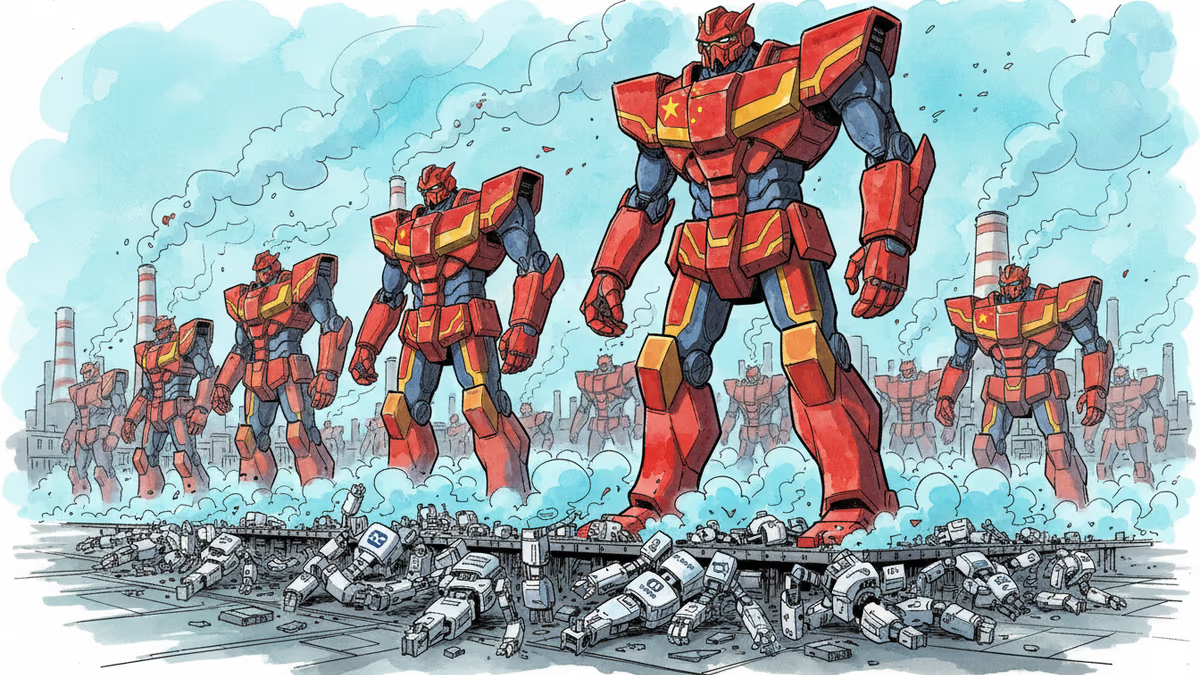
Chinese humanoid robot companies shipped 36 times more units than US rivals last year. Behind the numbers lies a strategic advantage that could reshape the global robotics landscape.
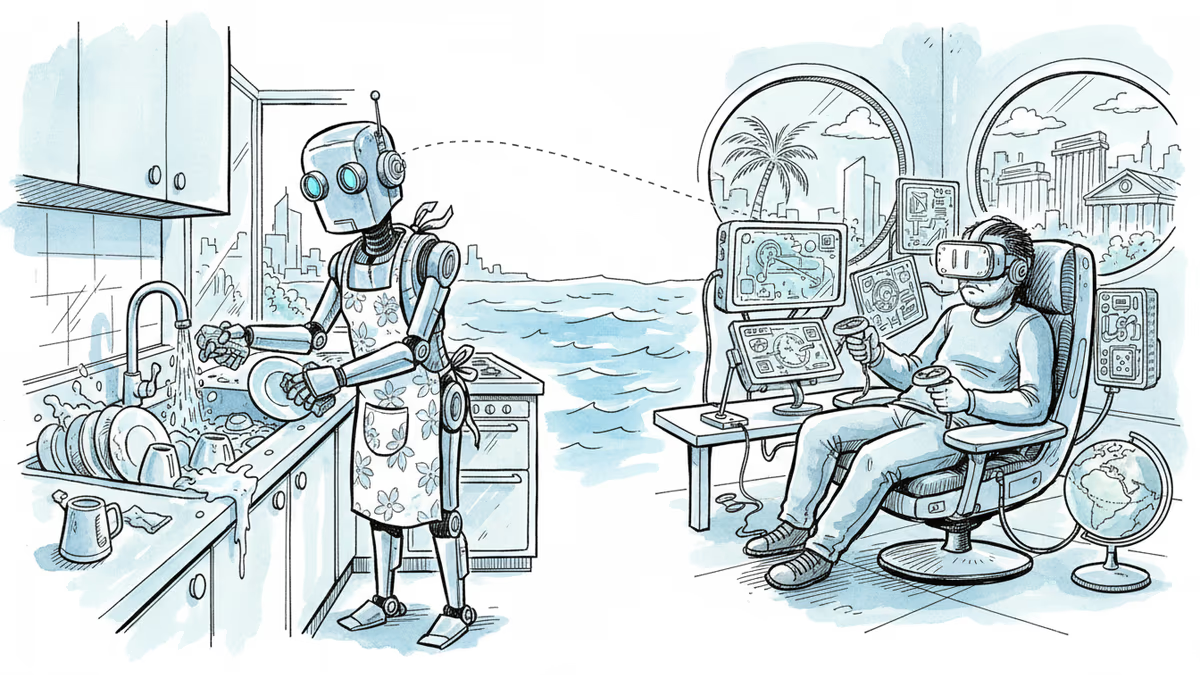
Behind the flashy demos of humanoid robots lie hidden human workers. Exploring new forms of labor and privacy concerns in the age of physical AI.
Apptronik raised $935M in Series A extensions, tripling its valuation in a year. But technical limits and social acceptance remain major hurdles for humanoid robots.
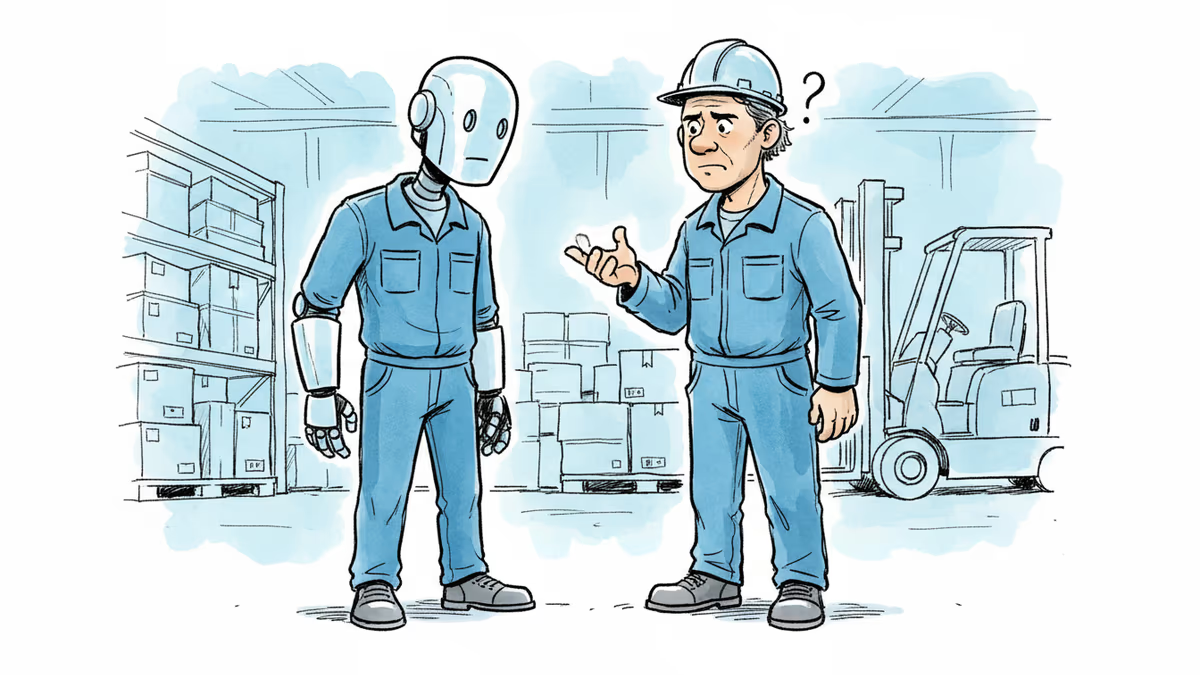
Siemens CEO Roland Busch outlines a vision for fully automated manufacturing powered by AI agents and digital twins. But in a world where machines make decisions, what happens to human workers?
Chinese humanoid robot companies shipped 36 times more units than US rivals last year. Behind the numbers lies a strategic advantage that could reshape the global robotics landscape.
Behind the flashy demos of humanoid robots lie hidden human workers. Exploring new forms of labor and privacy concerns in the age of physical AI.
Apptronik raised $935M in Series A extensions, tripling its valuation in a year. But technical limits and social acceptance remain major hurdles for humanoid robots.
Siemens CEO Roland Busch outlines a vision for fully automated manufacturing powered by AI agents and digital twins. But in a world where machines make decisions, what happens to human workers?
Thoughts
Share your thoughts on this article
Sign in to join the conversation