
Can a 3.5-Foot Robot Actually Help Around the House?
Fauna Robotics unveils Sprout, a compact humanoid robot inspired by Baymax. But can its cute design overcome the practical limitations of its size?
What if the future of home robotics isn't about building bigger, stronger machines, but smaller, friendlier ones? Fauna Robotics just unveiled Sprout, a 3.5-foot-tall humanoid robot that's been two years in the making, and it's challenging everything we think we know about domestic automation.
The Baymax Approach to Robotics
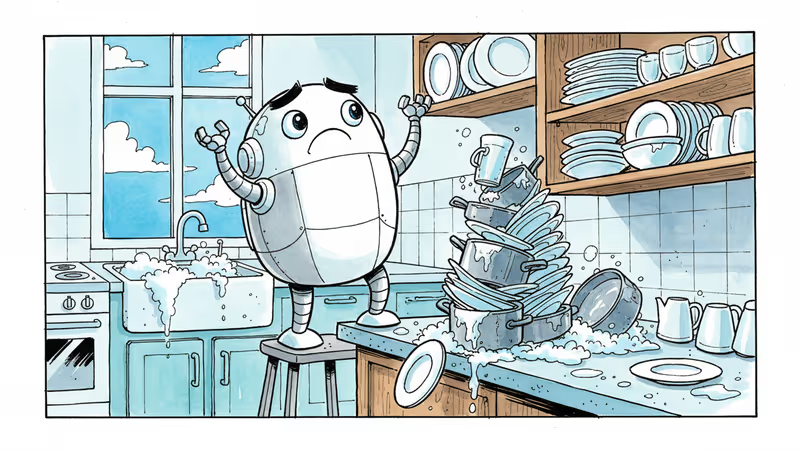
Sprout doesn't look like your typical industrial robot. With its soft padded exterior, wide head, and expressive mechanical eyebrows, it's clearly designed to be approachable rather than intimidating. Co-founder and CEO Rob Cochran says the design was inspired by science fiction's friendlier robots like Baymax and Rosie Jetson.
The robot features articulated limbs and gripper hands, positioning it to handle household tasks like dishes and tidying up, or even join factory assembly lines alongside competitors like Tesla's Optimus and Boston Dynamics' Atlas. But here's the catch: can something so small actually be useful?
Size Matters in Unexpected Ways
At 3.5 feet tall, Sprout is roughly half the height of an average adult. This immediately raises practical questions. Can it reach kitchen counters? What about high shelves? How much weight can those small arms actually handle?

Yet the compact size might be Sprout's secret weapon. It's light enough for one person to carry, won't intimidate children or elderly users, and can navigate tight spaces that larger robots would struggle with. In an era where consumers are increasingly concerned about surveillance and privacy, a less imposing robot might find easier acceptance in homes.
The Reality Check
The humanoid robotics industry has a pattern: impressive demos followed by years of delayed launches and unmet promises. Tesla has been promising Optimus robots for under $20,000, but commercial availability remains elusive. Boston Dynamics' Atlas can do backflips, but it's not coming to your living room anytime soon.
Fauna Robotics hasn't revealed Sprout's pricing, capabilities, or launch timeline. Without these details, it's hard to assess whether this represents genuine progress or another case of robotics hype outpacing reality.
The Bigger Picture
What's interesting about Sprout isn't just its design, but what it represents: a potential shift in robotics philosophy. Instead of trying to build the ultimate multipurpose android, maybe the answer is specialized, approachable machines that excel at specific tasks.
This approach could reshape the entire domestic robotics market. Rather than waiting for the perfect humanoid butler, consumers might embrace a ecosystem of smaller, task-specific robots that work together.
Authors
Related Articles

Chinese humanoid robot companies shipped 36 times more units than US rivals last year. Behind the numbers lies a strategic advantage that could reshape the global robotics landscape.
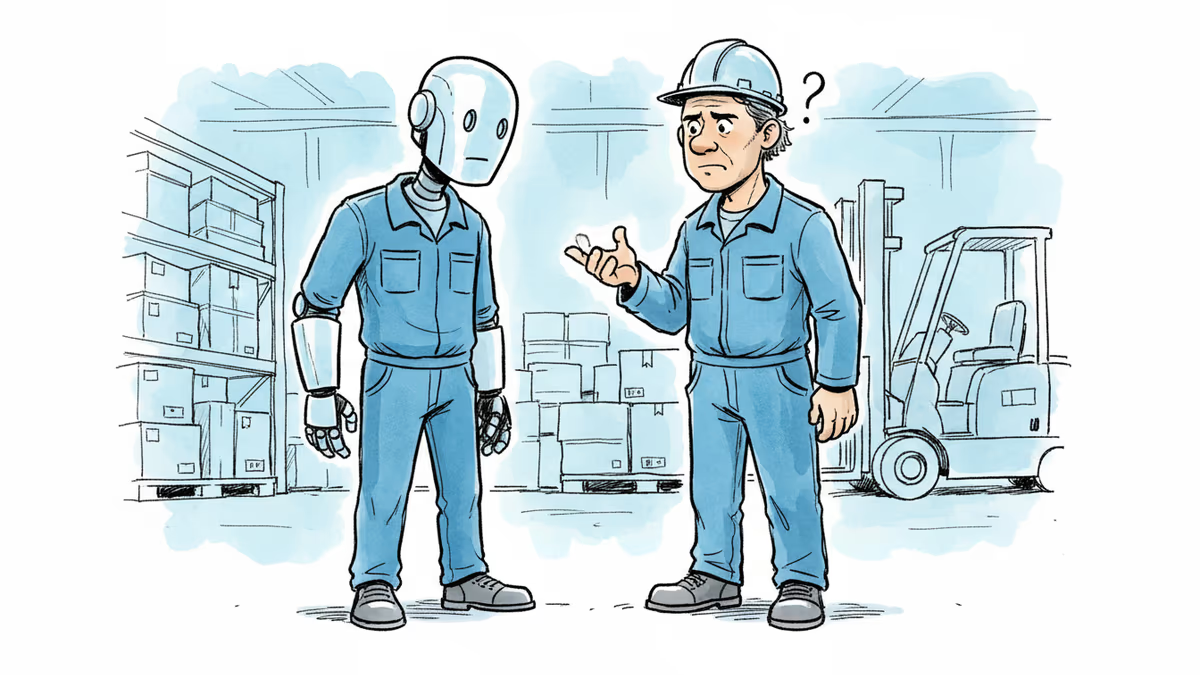
Apptronik raised $935M in Series A extensions, tripling its valuation in a year. But technical limits and social acceptance remain major hurdles for humanoid robots.

A pandemic hobby becomes assistive technology as Home Assistant users recreate Star Trek's LCARS interface while managing executive dysfunction. Exploring the deeper implications of customizable smart homes.
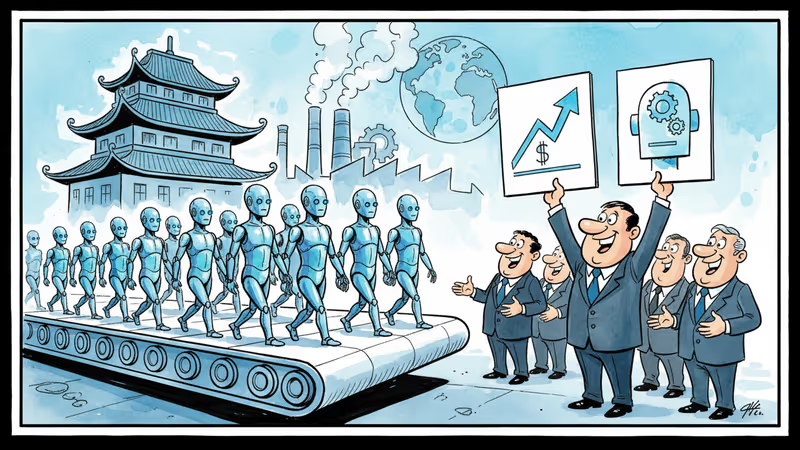
Chinese companies dominated 2025 humanoid robot sales with 90% market share. Unitree and Agibot outsold Tesla's entire production target, signaling a new industrial shift.
Chinese humanoid robot companies shipped 36 times more units than US rivals last year. Behind the numbers lies a strategic advantage that could reshape the global robotics landscape.
Apptronik raised $935M in Series A extensions, tripling its valuation in a year. But technical limits and social acceptance remain major hurdles for humanoid robots.
A pandemic hobby becomes assistive technology as Home Assistant users recreate Star Trek's LCARS interface while managing executive dysfunction. Exploring the deeper implications of customizable smart homes.
Chinese companies dominated 2025 humanoid robot sales with 90% market share. Unitree and Agibot outsold Tesla's entire production target, signaling a new industrial shift.
Thoughts
Share your thoughts on this article
Sign in to join the conversation