
The $50K Robot Revolution Starts in Your Hotel Lobby
Fauna's Sprout humanoid robot launches at $50,000, targeting hospitality and retail over manufacturing. A new approach to robotics that prioritizes human interaction over industrial automation.
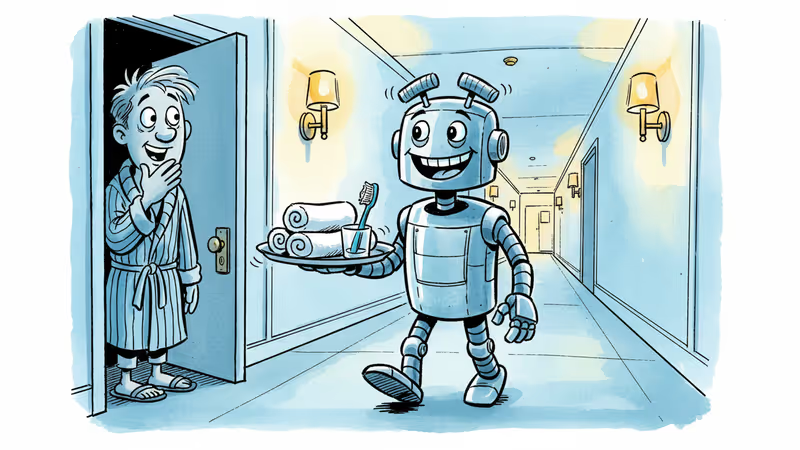
A robot the size of a 9-year-old walks through a hotel lobby, carrying a toothbrush to a guest's room. This isn't science fiction—it's the daily reality for Sprout, a humanoid robot available for purchase starting today at $50,000.
Sprout, developed by startup Fauna, is charting a different course from most humanoid robots. Instead of carrying boxes in factories or stacking shelves in warehouses, it's designed to help customers in hotels, shops, and restaurants. "We said, 'What if we could build something lightweight, engaging, and safe to be around, and capable enough to do some exciting things?'" explains Robert Cochran, Fauna's cofounder and CEO.
Service Industry: The New Frontier
While most humanoid robot companies target manufacturing, Fauna believes entertainment and service industries will be the first real market for robots. Disney, already using robots at some theme parks, has become one of Fauna's first customers, alongside Boston Dynamics.
Sprout's differentiator lies in its human-centric design. It features mechanical eyebrows that express interest, surprise, or confusion, and uses conversational AI for natural interaction. During a demo, when Cochran asked Sprout to check what was in the fridge, the robot interpreted the command using an LLM, walked over "not unlike a truculent 9-year-old," peered through the glass door, and returned to report several sodas inside.
The humanoid business is booming despite lingering questions about practicality. Over a dozen US companies are developing humanoids, including Boston Dynamics (recently partnering with Google's AI), Tesla (developing Optimus), and startups like Agility Robotics, Figure AI, and 1X. Chinese manufacturer Unitree has found success selling humanoids for under $20,000, though fully equipped versions cost similar to Sprout.

Programming for Everyone
Sprout's key advantage is accessibility. It comes with software libraries for environmental scanning, autonomous walking, language model access, and more. The robot can also be teleoperated out of the box, making it valuable for research. Scientists at New York University are already using Sprout to research robotic manipulation and human-robot interaction techniques.
Cochran's team, with backgrounds at Meta and Google, believes AI systems developed for smart glasses will prove useful for robots navigating human environments. "You can kind of get a 'Hello World' example of a robot where you can talk to and autonomously map and navigate its environment effectively," he says. "And from there, the world's your oyster."
The Bigger Picture
Sprout's launch reflects a broader shift in robotics thinking. Rather than replacing human workers in dangerous or repetitive tasks, these robots aim to enhance human experiences. Hotels can use Sprout as a butler, freeing staff for more complex guest interactions. Restaurants might deploy them for basic customer service, allowing human servers to focus on hospitality.
This approach sidesteps some traditional concerns about job displacement while creating new opportunities. Programming Sprout requires technical skills, potentially creating demand for robot operators and trainers. The entertainment value alone—imagine children's reactions to a robot server—could justify the investment for many businesses.
Authors
Related Articles

Chinese humanoid robot companies shipped 36 times more units than US rivals last year. Behind the numbers lies a strategic advantage that could reshape the global robotics landscape.
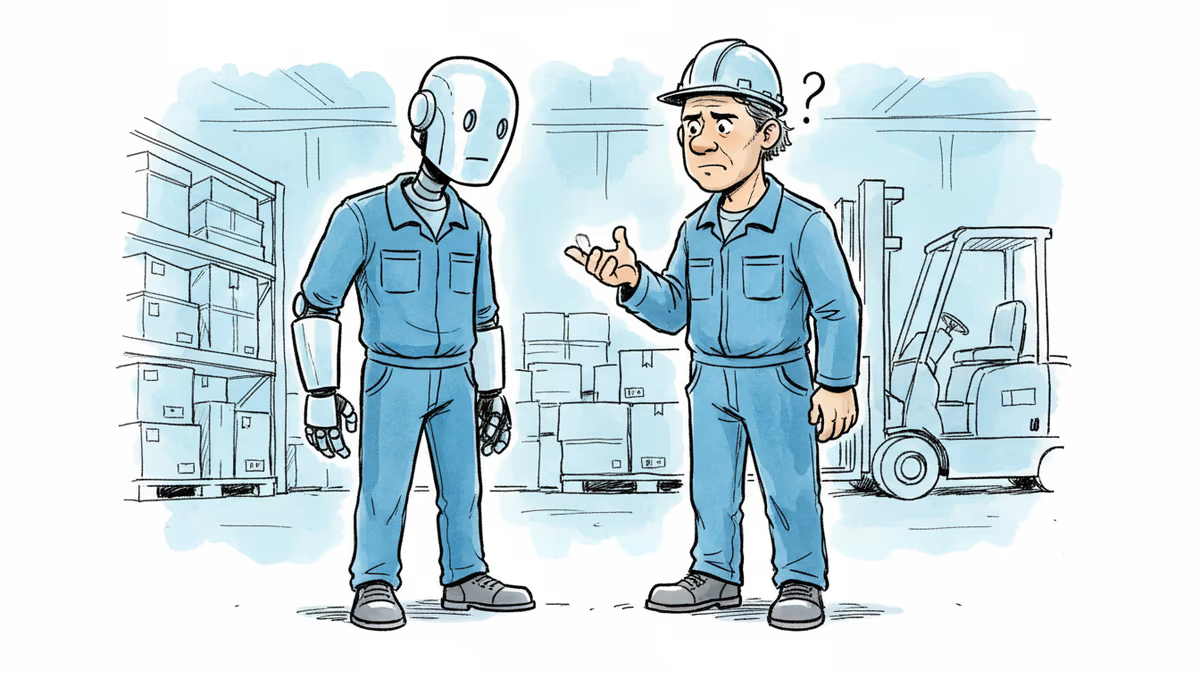
Apptronik raised $935M in Series A extensions, tripling its valuation in a year. But technical limits and social acceptance remain major hurdles for humanoid robots.
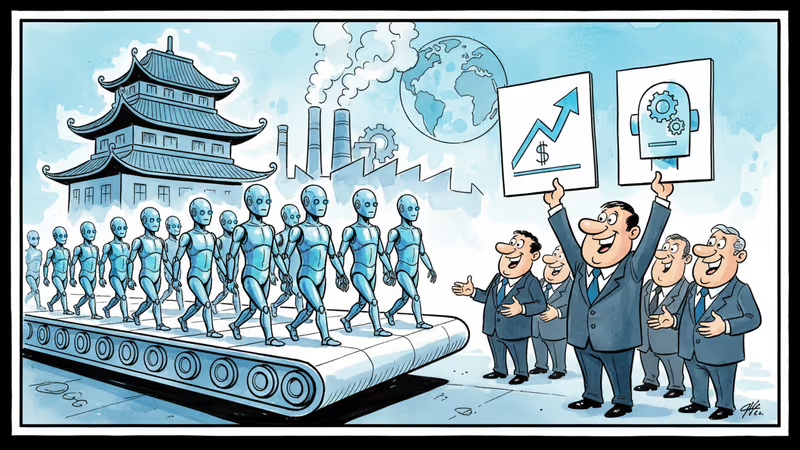
Chinese companies dominated 2025 humanoid robot sales with 90% market share. Unitree and Agibot outsold Tesla's entire production target, signaling a new industrial shift.
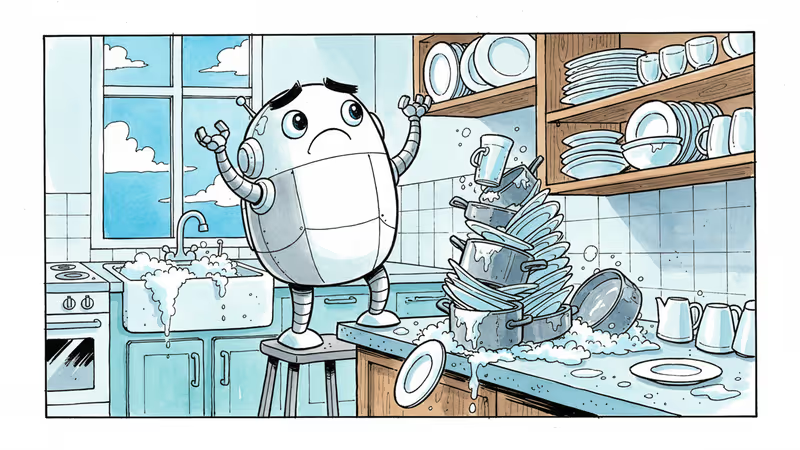
Fauna Robotics unveils Sprout, a compact humanoid robot inspired by Baymax. But can its cute design overcome the practical limitations of its size?
Chinese humanoid robot companies shipped 36 times more units than US rivals last year. Behind the numbers lies a strategic advantage that could reshape the global robotics landscape.
Apptronik raised $935M in Series A extensions, tripling its valuation in a year. But technical limits and social acceptance remain major hurdles for humanoid robots.
Chinese companies dominated 2025 humanoid robot sales with 90% market share. Unitree and Agibot outsold Tesla's entire production target, signaling a new industrial shift.
Fauna Robotics unveils Sprout, a compact humanoid robot inspired by Baymax. But can its cute design overcome the practical limitations of its size?
Thoughts
Share your thoughts on this article
Sign in to join the conversation