

The Shop Tool That Became a Home Appliance
Bambu Lab's P1S 3D printer changes everything about home manufacturing - but what happens when making things becomes this easy?
For over a decade, 3D printers have been the domain of tinkerers and engineers—tools that demanded patience, expertise, and a high tolerance for failure. You'd spend weekends calibrating beds, unclogging nozzles, and watching half-finished prints collapse into plastic spaghetti.
The Bambu Lab P1S changes that equation entirely. Within 20 minutes of setup, it produced a near-perfect test print. Within days, users report starting complex jobs remotely with complete confidence they'll finish successfully. This isn't just an incremental improvement—it's the moment 3D printing crosses from workshop tool to household appliance.
When Machines Think for Themselves
The P1S performs a small ritual before every print that addresses the most common causes of failure. The nozzle moves to a waste chute, purges excess material, cleans itself on a wire bar, and triggers a trap door. It sweeps and levels the print bed automatically, warning users of any obstructions. The result? Users report not touching their printer's settings for weeks at a time.
This automation comes with trade-offs. The waste disposal system is functional but inelegant—excess plastic simply falls out the back onto whatever surface sits behind the printer. Many users end up 3D printing a "poop chute" to manage the mess, creating an oddly recursive solution where your first project is fixing your printer's design flaw.
The bundled Automatic Material System (AMS) handles up to four different filament colors or materials simultaneously. While multi-color printing generates significant waste and requires careful optimization, the real value lies in eliminating manual filament changes. Users can queue projects in logical assembly order rather than batching by color, fundamentally changing how they approach manufacturing workflows.
The Friction-Free Factory

Speed matters more than the raw 200mm/s printing capability suggests. When setup time drops from hours to minutes, when prints rarely fail, when material changes happen automatically, the entire relationship between maker and machine transforms. Users report shifting from defensive printing—carefully managing each job—to confident, continuous manufacturing.
This reliability enables new behaviors. Remote job initiation becomes practical when failure rates plummet. Complex multi-part assemblies become feasible when you're not wrestling with calibration between components. The printer becomes less like a temperamental workshop tool and more like a reliable appliance.
But appliance-level reliability creates appliance-level expectations. Software inconsistencies when using non-Bambu filaments feel jarring in an otherwise seamless experience. The AMS occasionally confuses filament identification, requiring manual intervention that breaks the "set and forget" promise.
Beyond the Enthusiast Market
The P1S represents something larger than product improvement—it's manufacturing democratization reaching a tipping point. When 3D printing requires no specialized knowledge, when it works as reliably as a dishwasher, who starts using these tools?
Small businesses could prototype and produce custom parts without industrial equipment. Parents might print replacement toy components instead of buying new ones. Students could iterate on engineering projects without lab access. The barrier between consumer and producer continues to blur.
Yet this accessibility raises questions about waste, sustainability, and economic impact. If everyone can manufacture small plastic goods at home, what happens to traditional supply chains? How do we handle the environmental cost of widespread plastic production? The P1S's waste disposal issues hint at larger challenges ahead.
The printer's reliance on proprietary filament chips for optimal performance also signals potential lock-in strategies. While third-party materials work, they require more manual oversight, subtly encouraging users toward Bambu's ecosystem.
Authors
Related Articles
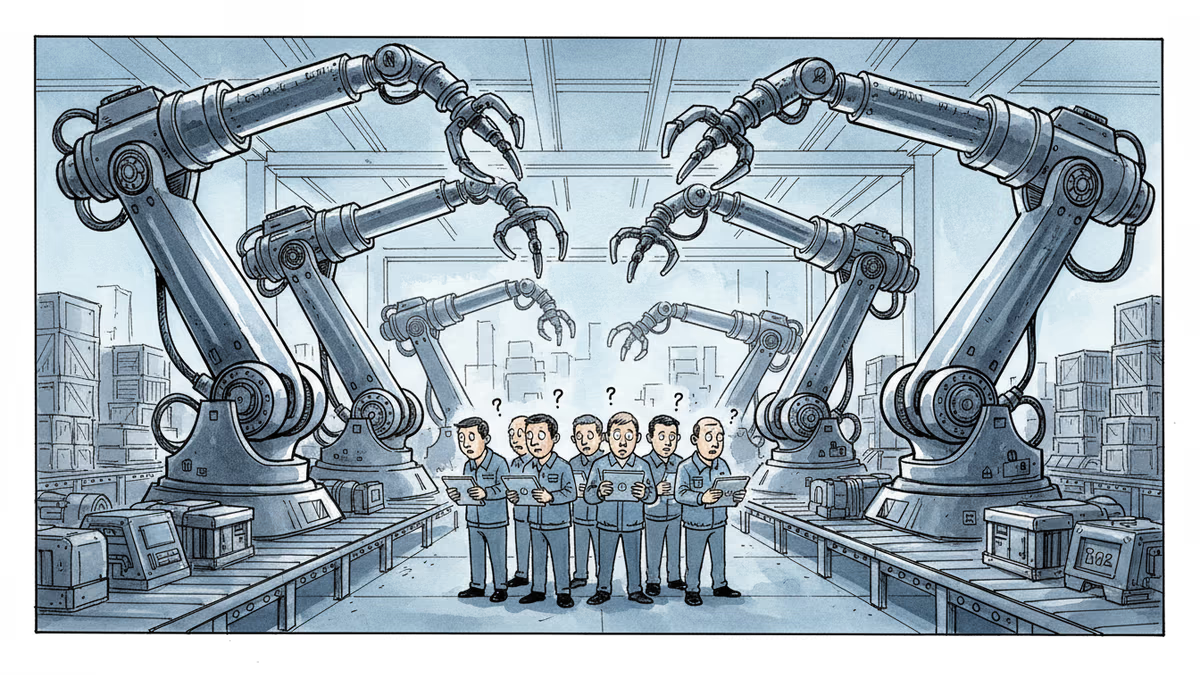
Siemens CEO Roland Busch outlines a vision for fully automated manufacturing powered by AI agents and digital twins. But in a world where machines make decisions, what happens to human workers?
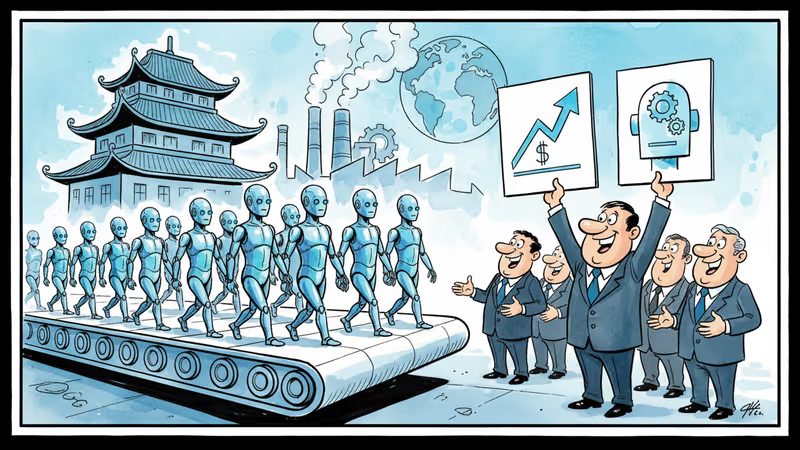
Chinese companies dominated 2025 humanoid robot sales with 90% market share. Unitree and Agibot outsold Tesla's entire production target, signaling a new industrial shift.

Behind Apple AirPods discounts and Lego roses lies a deeper strategy. How weekend deals shape consumer behavior and ecosystem lock-in tactics.
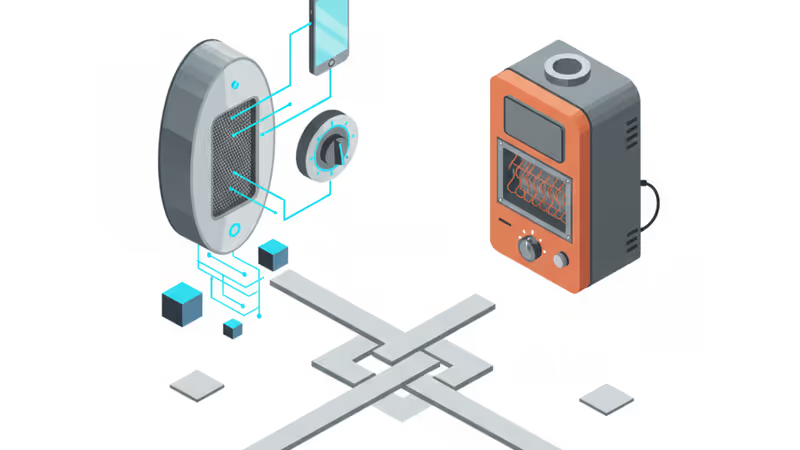
A simple space heater review reveals a major tech trend: the battle for the intelligent home. Learn why this 'dumb' appliance matters for the future of tech.
Siemens CEO Roland Busch outlines a vision for fully automated manufacturing powered by AI agents and digital twins. But in a world where machines make decisions, what happens to human workers?
Chinese companies dominated 2025 humanoid robot sales with 90% market share. Unitree and Agibot outsold Tesla's entire production target, signaling a new industrial shift.
Behind Apple AirPods discounts and Lego roses lies a deeper strategy. How weekend deals shape consumer behavior and ecosystem lock-in tactics.
A simple space heater review reveals a major tech trend: the battle for the intelligent home. Learn why this 'dumb' appliance matters for the future of tech.
Thoughts
Share your thoughts on this article
Sign in to join the conversation