
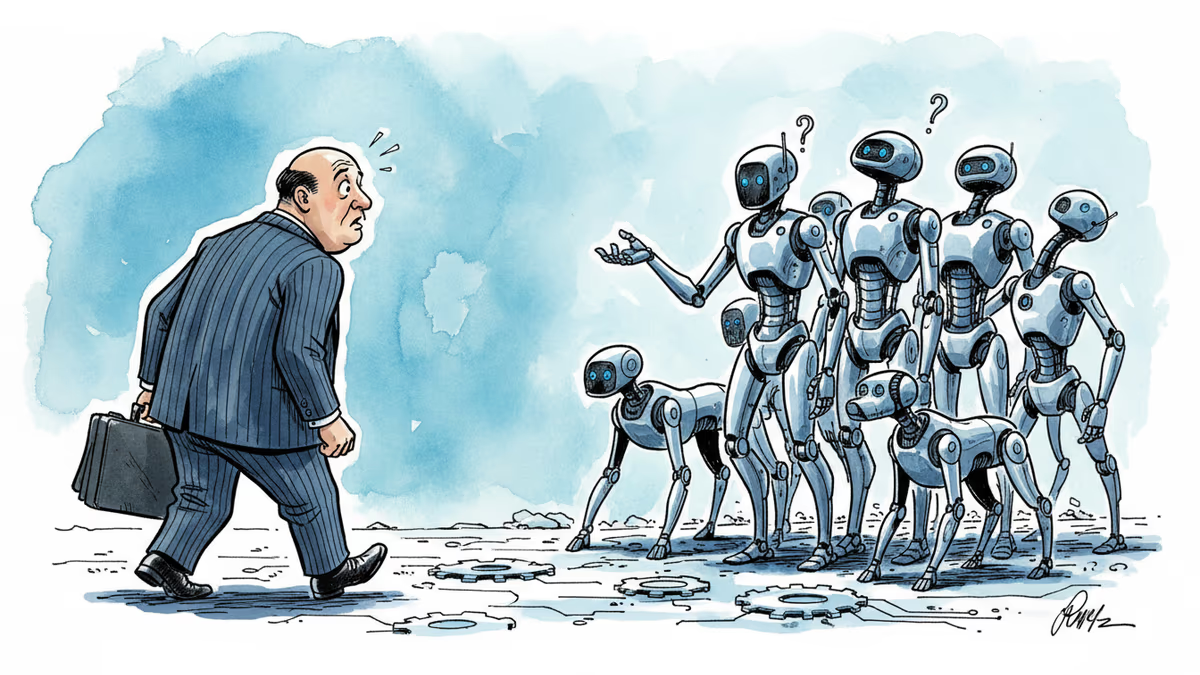
Why Boston Dynamics' CEO Just Walked Away After 30 Years
Robert Playter steps down as Boston Dynamics CEO just as robots go commercial. What does this leadership change signal for the robotics industry?
The $1.1 Billion Question Nobody's Asking
When you've spent 30 years building the world's most famous robots, why would you walk away just as they're finally making money? That's exactly what Robert Playter did Tuesday, announcing his departure as CEO of Boston Dynamics in an internal memo that sent ripples through the robotics industry.
Playter took over from founder Marc Raibert in 2020, right as the company was commercializing its four-legged Spot robot. Under his leadership, Boston Dynamics went from viral YouTube sensation to actual business, with Spot deployed in factories, construction sites, and even bomb disposal units. The company recently unveiled Atlas, its next-generation humanoid robot that can parkour better than most humans.
CFO Amanda McMaster will serve as interim CEO while the company searches for a replacement. But the timing raises uncomfortable questions about what's really happening behind those dancing robot videos.
Four Owners, Same Problem
Boston Dynamics has had more owners than a used car. Founded in 1992 as an MIT spinoff, it was acquired by Google in 2013, sold to SoftBank in 2017, and finally purchased by Hyundai for $1.1 billion in 2021.
Each sale tells the same story: amazing technology, unclear business model. Google dumped it because it wasn't profitable enough. SoftBank followed suit. Now Hyundai owns what might be the most technically impressive robotics company that still struggles to justify its valuation.

The pattern is telling. In an industry obsessed with "disruption," Boston Dynamics has been consistently disruptive to its own owners' balance sheets.
The Tesla Problem
Here's what should worry Boston Dynamics investors: Tesla's Optimus robot gets more buzz despite being technically inferior. Elon Musk promises $20,000 humanoids while Boston Dynamics' Spot costs over $70,000.
The market doesn't always reward the best technology—it rewards the most accessible technology. Tesla understands this. Boston Dynamics, despite its engineering brilliance, seems to be learning it the hard way.
Chinese competitors like Unitree are already selling quadruped robots for under $3,000. They're not as sophisticated as Spot, but they're good enough for most applications. That's the innovator's dilemma in action.
The Hyundai Bet
Hyundai didn't buy Boston Dynamics to sell robots—it bought the company to transform itself from automaker to "mobility solution provider." The vision: robots that can navigate factories, assist in manufacturing, and eventually integrate with autonomous vehicles.
But visions don't pay bills. With automotive margins under pressure from EV competition, Hyundai needs Boston Dynamics to generate actual revenue, not just impressive demos.
The robotics revolution is here. The question is whether its pioneers will lead it or be disrupted by it.
Authors
Related Articles
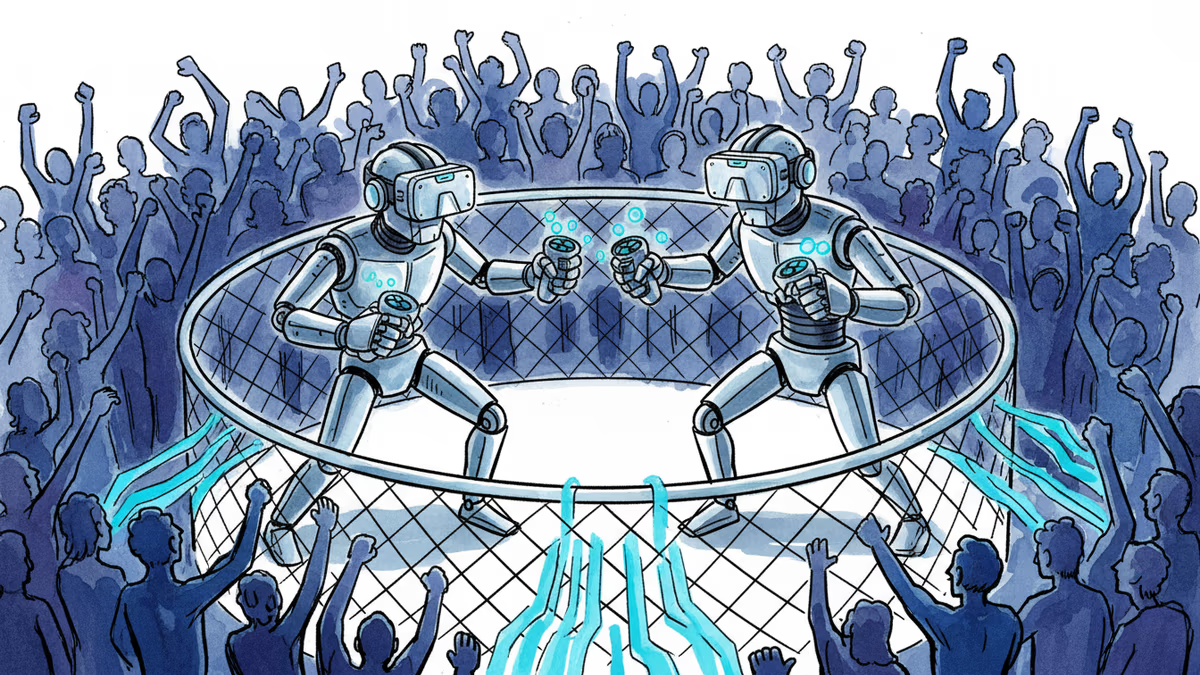
Humanoid robot boxing matches in San Francisco draw hundreds of spectators, but experts question whether it's genuine AI progress or elaborate 'robot theater.
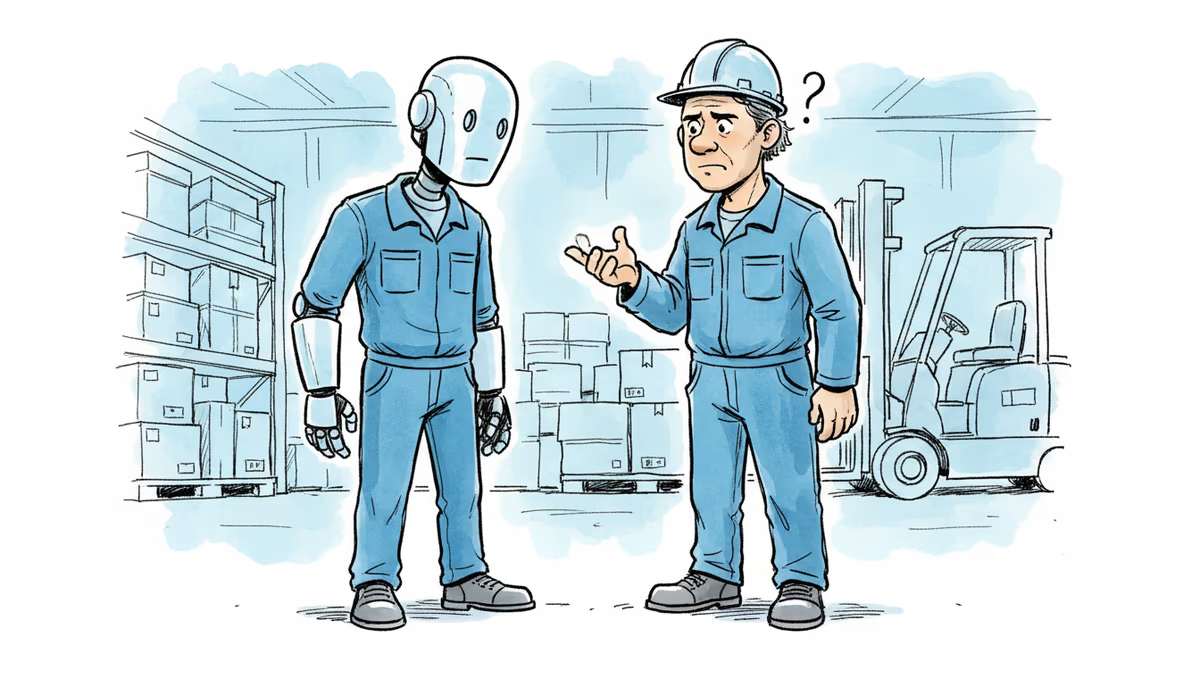
Apptronik raised $935M in Series A extensions, tripling its valuation in a year. But technical limits and social acceptance remain major hurdles for humanoid robots.
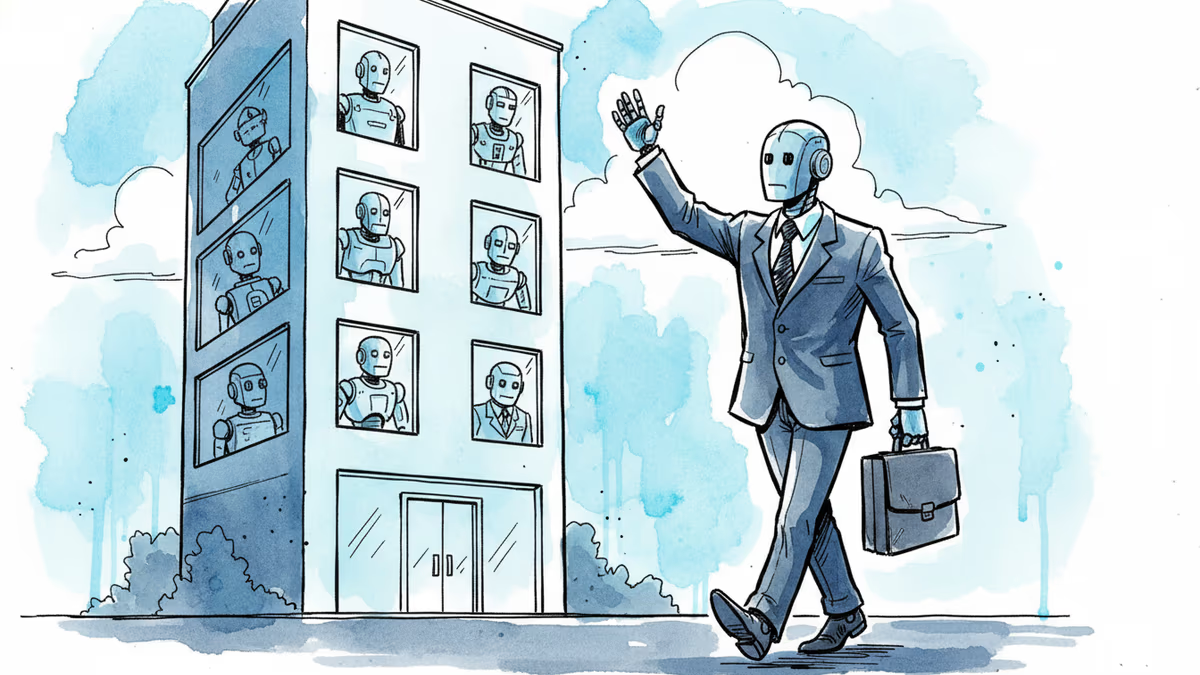
Robert Playter's sudden departure as CEO of Boston Dynamics raises questions about the company's future direction amid rapid humanoid robot development and enterprise expansion.
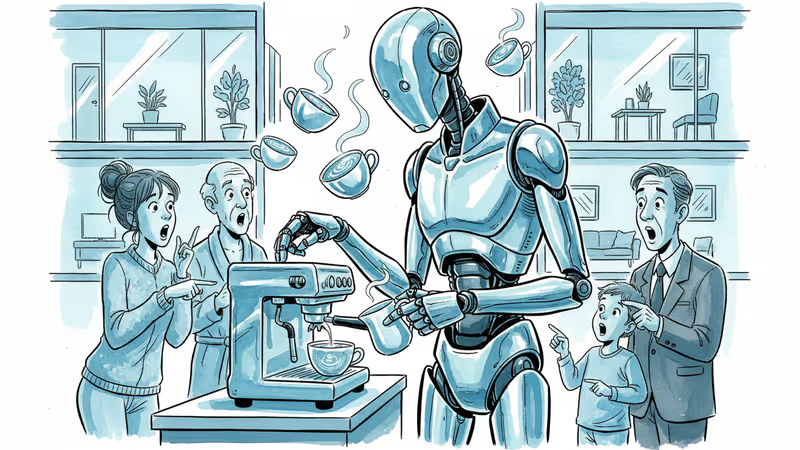
A robot barista named Jarvis at a Seattle luxury apartment complex creates personalized lattes with latte art, showcasing the real-world potential of service automation.
Humanoid robot boxing matches in San Francisco draw hundreds of spectators, but experts question whether it's genuine AI progress or elaborate 'robot theater.
Apptronik raised $935M in Series A extensions, tripling its valuation in a year. But technical limits and social acceptance remain major hurdles for humanoid robots.
Robert Playter's sudden departure as CEO of Boston Dynamics raises questions about the company's future direction amid rapid humanoid robot development and enterprise expansion.
A robot barista named Jarvis at a Seattle luxury apartment complex creates personalized lattes with latte art, showcasing the real-world potential of service automation.
Thoughts
Share your thoughts on this article
Sign in to join the conversation