
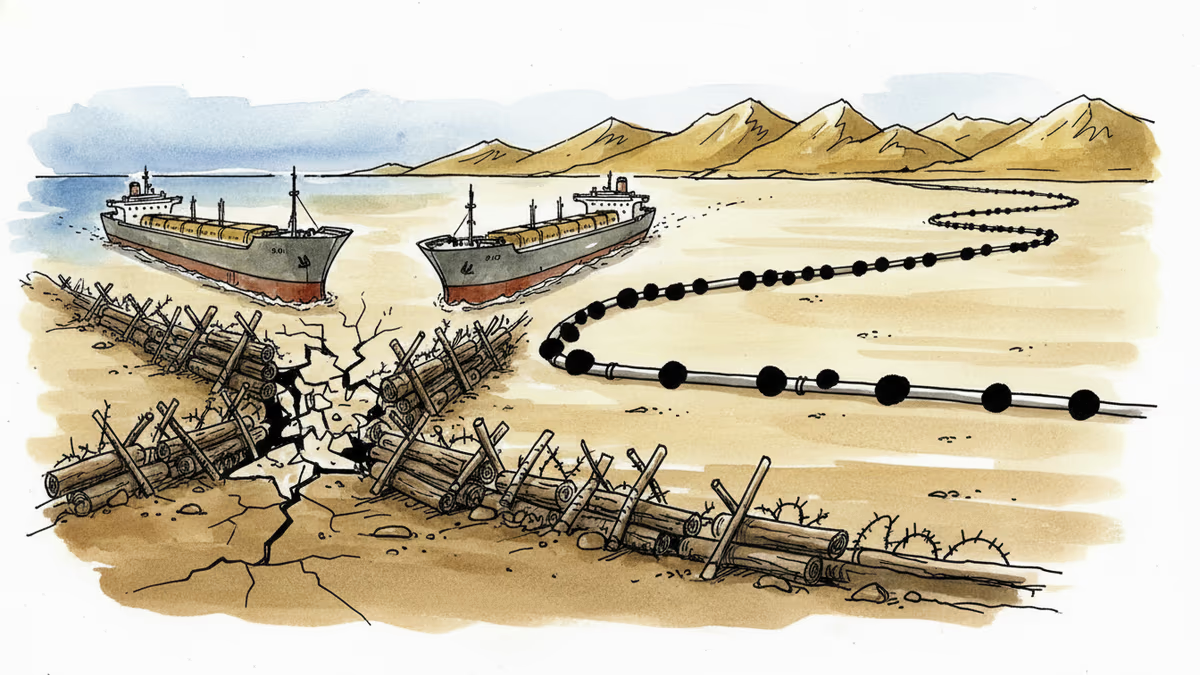
The Map Redraws Itself: Syria as the New Oil Corridor
With the Strait of Hormuz effectively blocked by the Iran conflict, Syria is emerging as an alternative energy corridor. What this means for global energy markets and Middle East geopolitics.
One waterway carries one-fifth of the world's oil. When it closes, the world doesn't stop needing energy — it starts drawing new maps.
That is precisely what is happening now. As the conflict with Iran has rendered the Strait of Hormuz effectively impassable, energy markets are scrambling for overland alternatives. The country suddenly at the center of that scramble is Syria — a nation that, until recently, the world had largely written off.
A Corridor Nobody Wanted Until Now
The idea of routing Gulf oil overland through Syria to Mediterranean ports is not new. Pipeline proposals connecting Iraq and Syria to Lebanon or Turkey date back decades. They were shelved not because of geography — which remains favorable — but because the Hormuz route was cheaper, safer, and uncontested.
That calculus has changed. With Iran threatening or actively enforcing Hormuz restrictions, Gulf producers including Saudi Arabia and the UAE are confronting the structural fragility of sea-only export dependency. An overland corridor through Syria suddenly looks less like a contingency plan and more like a strategic necessity.
The obstacles are formidable. Syria's pipeline infrastructure was badly damaged during more than a decade of civil war. Governance remains fragile following the collapse of the Assad regime. Rebuilding the necessary capacity would require billions of dollars and years of work. And yet Gulf capital and Western energy firms have quietly begun inserting themselves into Syria reconstruction conversations. That timing is not coincidental.
Energy Routes Are Never Just Pipes

Whoever controls a transit corridor gains leverage — over suppliers, consumers, and the geopolitical players in between. Turkey has spent years cultivating exactly this kind of influence through TurkStream and TANAP. If Syria becomes a conduit for Gulf crude, the competition to shape Syria's political future — already contested between Turkey, Israel, the United States, and Gulf states — will intensify further.
There is a deeper irony in Iran's position. Hormuz has long been Tehran's ultimate coercive card: the implicit threat that it could strangle global energy supply. But every time that card is played, it accelerates the world's search for routes that bypass Iran entirely. In the short term, a blockade drives up oil prices and may benefit Iran financially. In the long term, it erodes the very leverage the blockade was meant to demonstrate.
For energy-importing nations in Asia — Japan, South Korea, India — the disruption is immediate and painful. These countries depend heavily on Middle Eastern crude transiting Hormuz. Their governments are releasing strategic reserves and diversifying sourcing, but those are stopgap measures. A functioning Syria corridor, if it materializes, could permanently reduce Hormuz's chokehold on Asian energy security.
The Wider Picture: A Region of Simultaneous Crises
The Syria energy story does not exist in isolation. Across the region, multiple crises are unfolding at once. Israel is expanding what it calls the "orange line" — a network of enforced no-go zones across Gaza — as its military operation deepens. Southern Lebanon continues to see destruction despite a nominal ceasefire. A flotilla of aid activists was detained by Israel at sea, prompting Spain's Prime Minister Sánchez to demand the immediate release of a detained Spanish national and drawing sharp diplomatic rebukes from across Europe.
What connects these developments is not a single actor or a single cause, but a region in which the rules governing conflict, commerce, and diplomacy are being renegotiated simultaneously. The humanitarian crisis in Gaza and Lebanon, the energy rerouting through Syria, the diplomatic fallout over the flotilla — these are not separate stories. They are different facets of the same structural disruption.
For policymakers in Washington, Brussels, and Beijing, the challenge is that each crisis demands a response calibrated not just to itself, but to how it interacts with the others. A deal that stabilizes Syria's governance enough to enable pipeline investment may cut across other diplomatic priorities. A harder line on Gaza may complicate Gulf energy cooperation. The variables are entangled.
This content is AI-generated based on source articles. While we strive for accuracy, errors may occur. We recommend verifying with the original source.
Related Articles
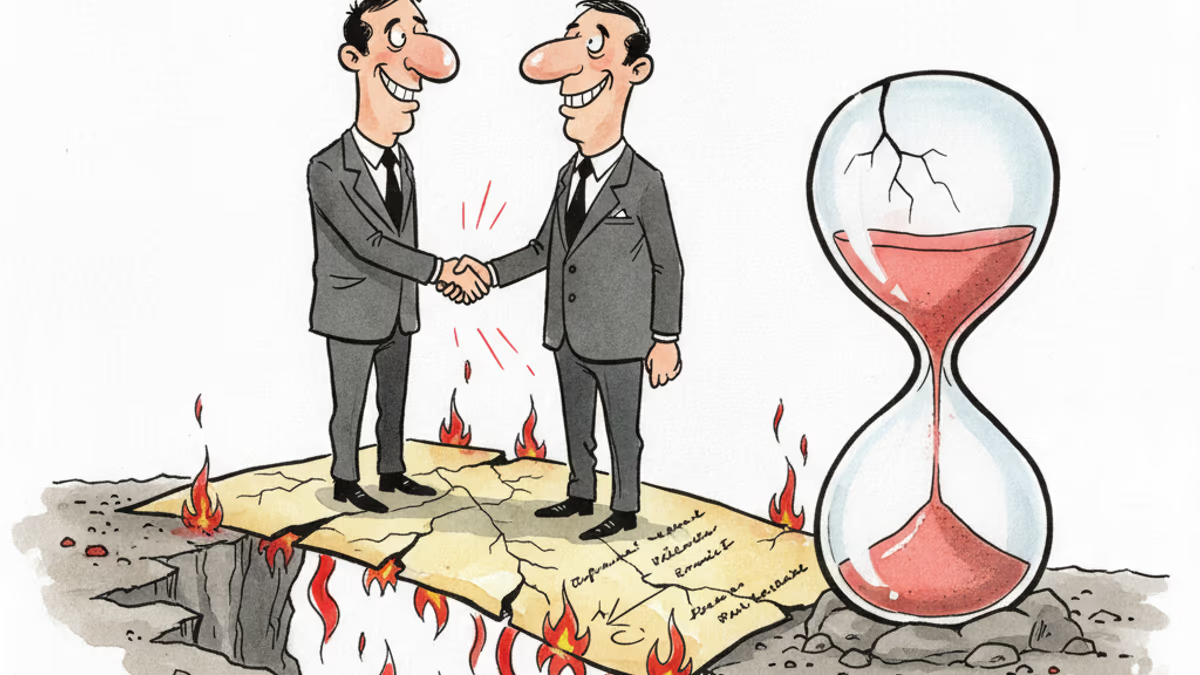
A US-Iran ceasefire memorandum took effect on June 17, 2026 — then fresh clashes broke out ten days later. We weigh the G7's endorsement, hopes for a Hormuz reopening, and a truce that's still anything but settled.

Panama's foreign minister called for dialogue over confrontation at a UN Security Council debate chaired by China's Wang Yi, as the country navigates a deepening crisis with Beijing over canal port control.
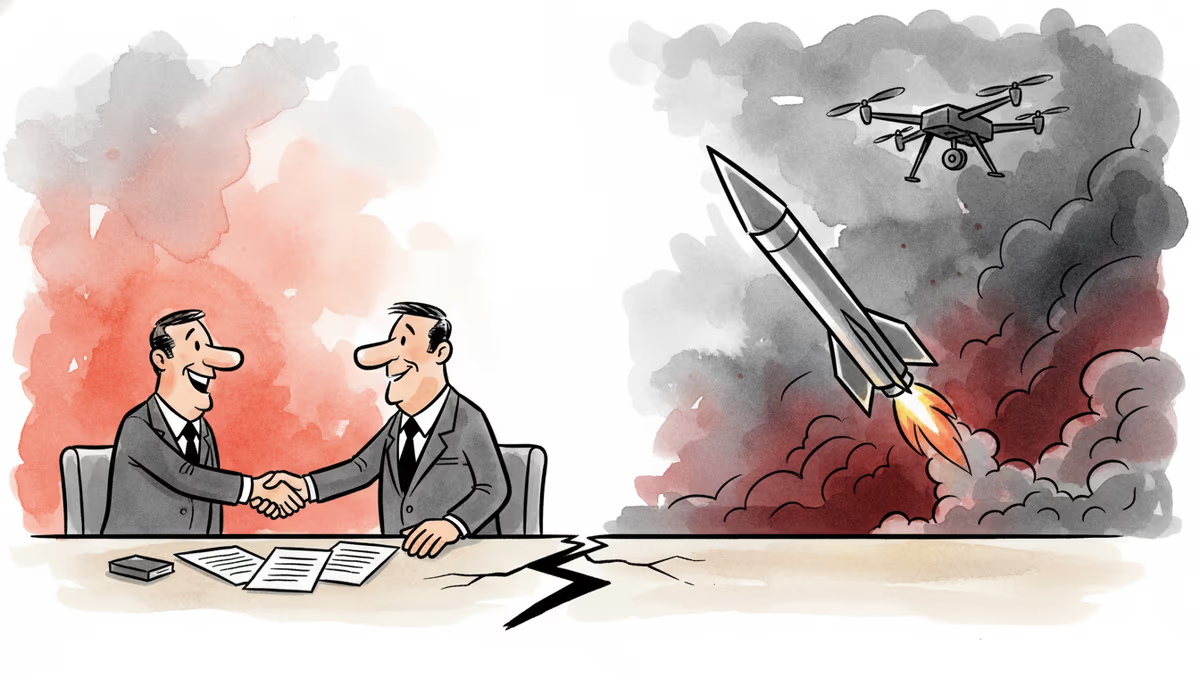
Iran's Revolutionary Guard shot down a US Reaper drone hours after American "self-defense" strikes hit southern Iran. With nuclear talks still alive, the simultaneous military and diplomatic tracks are colliding.

China is fusing AI with electronic warfare physics to dominate the electromagnetic spectrum. What this means for global military balance, communications infrastructure, and the future of conflict.
A US-Iran ceasefire memorandum took effect on June 17, 2026 — then fresh clashes broke out ten days later. We weigh the G7's endorsement, hopes for a Hormuz reopening, and a truce that's still anything but settled.
Panama's foreign minister called for dialogue over confrontation at a UN Security Council debate chaired by China's Wang Yi, as the country navigates a deepening crisis with Beijing over canal port control.
Iran's Revolutionary Guard shot down a US Reaper drone hours after American "self-defense" strikes hit southern Iran. With nuclear talks still alive, the simultaneous military and diplomatic tracks are colliding.
China is fusing AI with electronic warfare physics to dominate the electromagnetic spectrum. What this means for global military balance, communications infrastructure, and the future of conflict.
Thoughts
Share your thoughts on this article
Sign in to join the conversation