
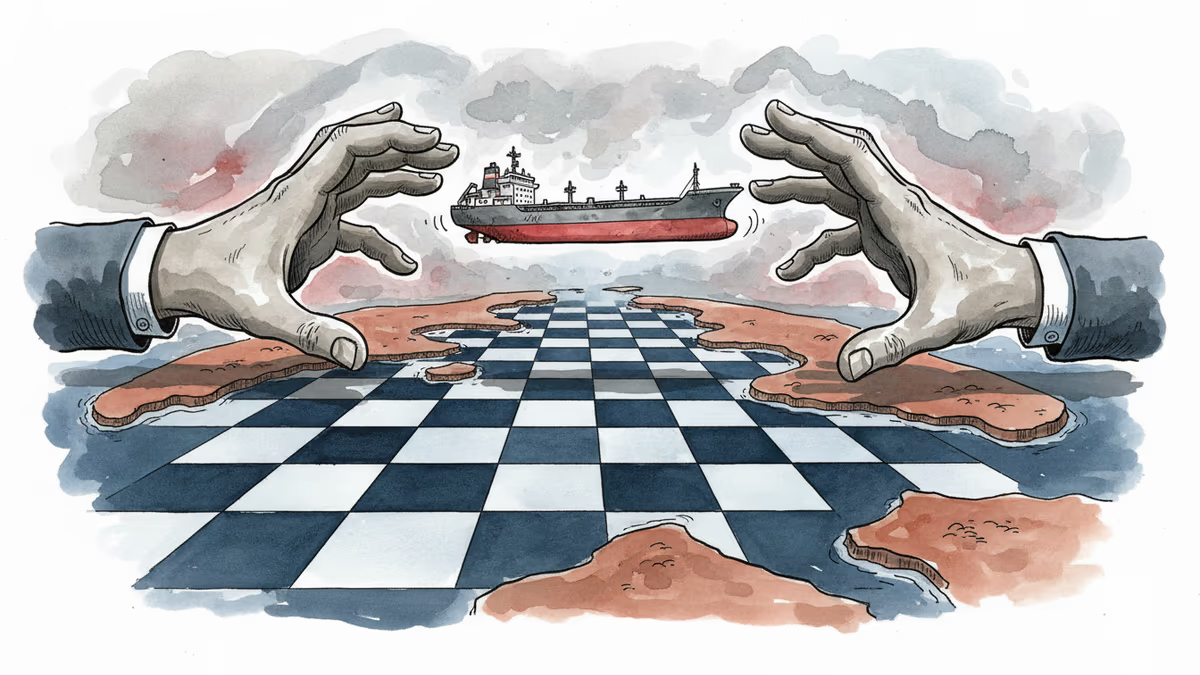
Iran's Hormuz Gambit: A Deal Without the Nuclear Question
Iran has formally proposed reopening the Strait of Hormuz while deferring nuclear talks. Trump says he's unsatisfied but prefers no military action. Here's what's actually at stake.
"Do we want to go and just blast the hell out of them and finish them forever? Or do we want to try and make a deal?"
Trump posed that question to reporters at the White House on Friday. It wasn't rhetorical. With 20% of the world's oil and gas supply bottled up in the Strait of Hormuz for over two months, and U.S. gasoline prices climbing ahead of November midterms, the question has a very real answer attached to it—one Washington has yet to give.
What Iran Actually Proposed
Tehran has now formalized what had been circulating as rumor for weeks. A senior Iranian official, speaking anonymously to Reuters, confirmed that a written proposal has been conveyed to Washington through mediators. The framework is sequenced deliberately: end the war first, reopen the strait, lift the U.S. blockade of Iranian ports, and secure guarantees that neither the United States nor Israel will strike again. Nuclear negotiations—the stated reason the U.S. launched strikes in February—come later.
"Under this framework, negotiations over the more complicated nuclear issue have been moved to the final stage to create a more conducive atmosphere," the official said.
Iran frames this as a significant concession. Decoupling the strait from the nuclear file is, in Tehran's telling, a gesture of flexibility. The implicit message: we're willing to give you the economic relief you need before we've resolved the harder question.
Trump's response was unambiguous. He said he was not satisfied with the proposal. He also said, in a Florida speech on Friday evening, that the U.S. would not end its confrontation with Iran early "and then have the problem arise in three more years."
How This War Started—and Why It Matters Now
The context matters enormously here. Trump launched military strikes against Iran in February 2026, in the middle of ongoing nuclear talks, citing the need to prevent Iran from ever obtaining a nuclear weapon. The strikes targeted nuclear infrastructure and military assets. Iran retaliated by closing the Strait of Hormuz to nearly all non-Iranian shipping—the most significant disruption to global energy supplies in recorded history.

Four weeks ago, the U.S. and Israel suspended their bombing campaign. A ceasefire of sorts. But the strait remained closed, and Washington responded with its own blockade of Iranian ports. Neither side has moved meaningfully since.
The economic toll has been substantial. Energy markets have been in turmoil. Global supply chains have absorbed the shock unevenly. And Trump's Republican Party is staring down midterm elections in November with voters already feeling the pinch at the pump. The political clock is running.
On Friday, Trump also told congressional leaders he didn't need their permission to extend military operations beyond a statutory deadline—because the ceasefire had already "terminated" hostilities. Whether that legal interpretation holds is a separate question. What it signals is that Trump is keeping options open while publicly preferring to close them.
Three Ways to Read This Standoff
Tehran's calculus is not difficult to follow. The strait is Iran's most powerful remaining lever. Keeping it closed inflicts continuous economic pain on the global economy and, crucially, on the United States. Offering to reopen it in exchange for a security guarantee—without surrendering the nuclear file—is a way to bank a win while preserving future negotiating capital. Iran's foreign minister added that Tehran is "ready for diplomacy if the United States changes its approach." The framing puts the onus on Washington.
Washington's bind is structural. If Trump accepts a deal that defers nuclear talks, he ends a war without achieving the goal he cited when he started it. The political narrative becomes difficult: thousands of deaths, global energy disruption, and Iran's nuclear program still intact. If he rejects the deal and resumes military pressure, energy markets absorb another shock and domestic prices rise further. Neither option is clean.
Markets and allies are watching a different variable: duration. The longer the strait stays closed, the more permanent the rerouting of global energy trade becomes. Shipping companies, insurers, and importers are already adapting. Some of that adaptation may not reverse easily even if the strait reopens tomorrow. The disruption has already restructured incentives.
The Gap That a Strait Deal Doesn't Close
Iran's proposal contains a significant blank. Deferring nuclear talks answers the question of sequencing, not substance. Iran has said it wants Washington to recognize its right to enrich uranium for peaceful purposes—even if it agrees to suspend enrichment temporarily. The U.S. position, stated repeatedly, is that Iran can never have a nuclear weapon. These are not positions that a strait-opening agreement resolves.
It's worth remembering what the JCPOA—the 2015 nuclear deal—actually did. It constrained Iran's enrichment program through verified limits in exchange for sanctions relief. Trump withdrew from it in 2018. In the years since, Iran's uranium enrichment has advanced significantly. The current negotiation is happening in the shadow of that withdrawal, with Iran's nuclear program in a more advanced state than it was when the original deal was struck.
Trump spent Saturday on Florida golf courses—Mar-a-Lago, Trump National Jupiter, and Trump National Doral, which was hosting the PGA Cadillac Championship. Iran's mediators were presumably not idle. The ceasefire is holding. The strait is not open. And the gap between what each side says it needs has not narrowed.
This content is AI-generated based on source articles. While we strive for accuracy, errors may occur. We recommend verifying with the original source.
Related Articles
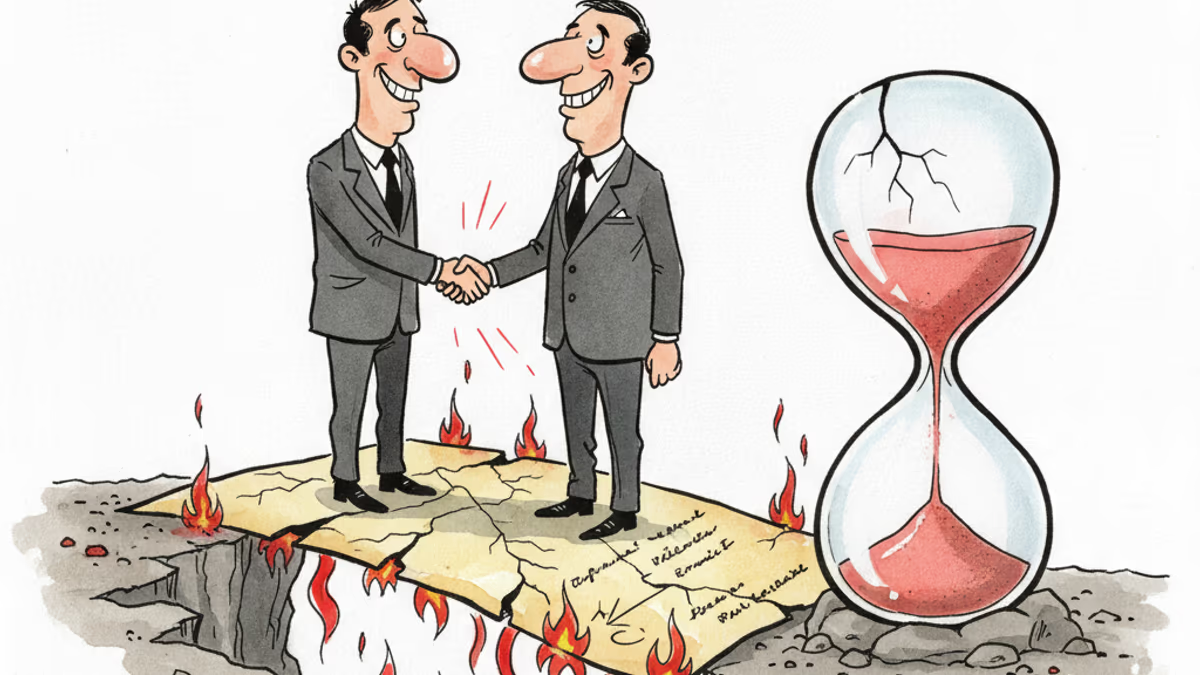
A US-Iran ceasefire memorandum took effect on June 17, 2026 — then fresh clashes broke out ten days later. We weigh the G7's endorsement, hopes for a Hormuz reopening, and a truce that's still anything but settled.
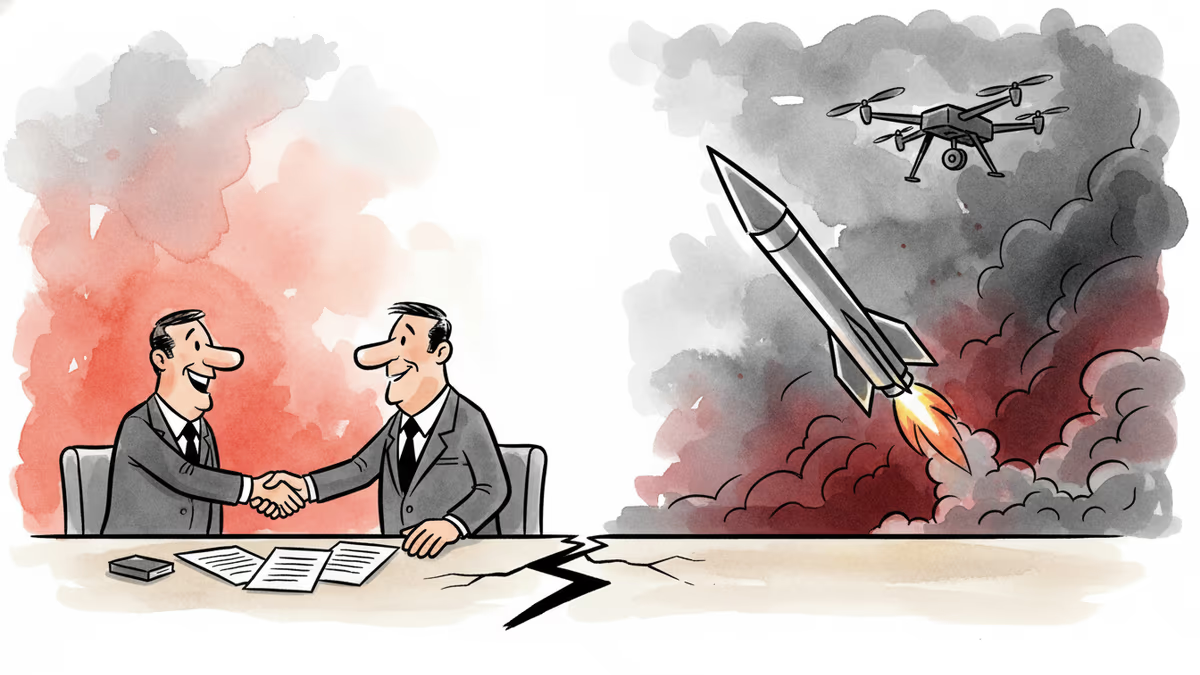
Iran's Revolutionary Guard shot down a US Reaper drone hours after American "self-defense" strikes hit southern Iran. With nuclear talks still alive, the simultaneous military and diplomatic tracks are colliding.

Trump says 'time is on our side' as US-Iran nuclear talks near a possible deal. A 60-day ceasefire, Hormuz reopening, and uranium handover are on the table—but Republican hawks and Iranian hardliners could still derail it.
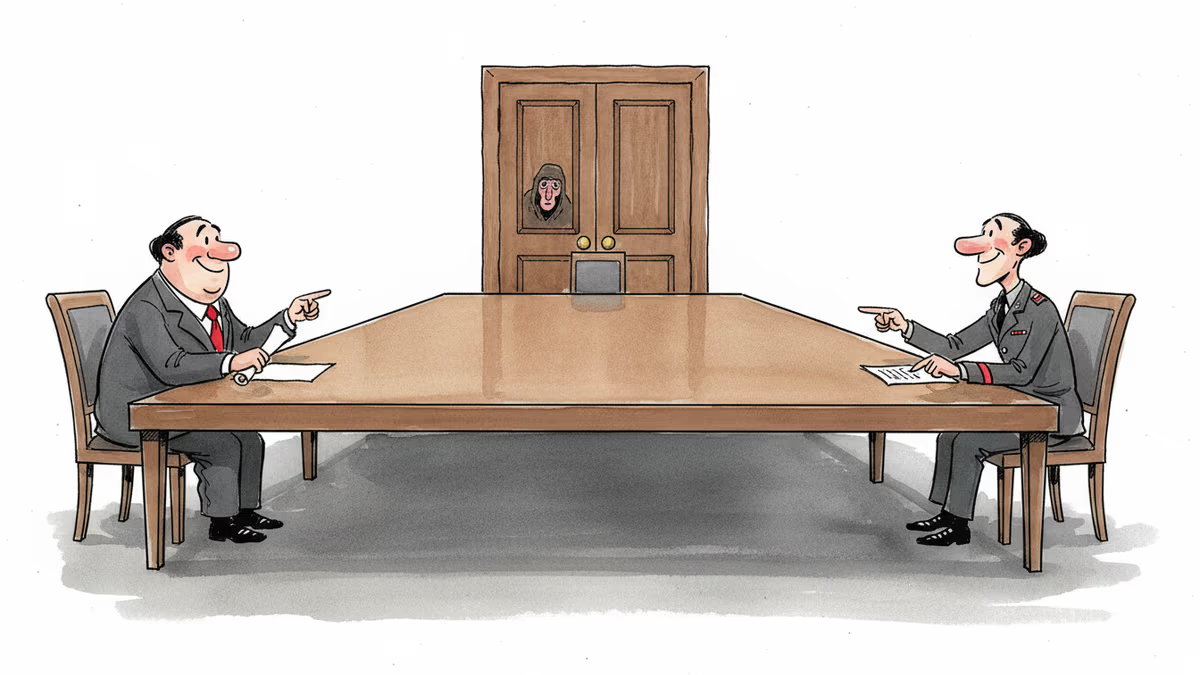
Trump says a US-Iran nuclear deal is 'largely negotiated.' Iran calls it a 'Persian-style peace.' Both sides claim victory. Here's what's actually at stake.
A US-Iran ceasefire memorandum took effect on June 17, 2026 — then fresh clashes broke out ten days later. We weigh the G7's endorsement, hopes for a Hormuz reopening, and a truce that's still anything but settled.
Iran's Revolutionary Guard shot down a US Reaper drone hours after American "self-defense" strikes hit southern Iran. With nuclear talks still alive, the simultaneous military and diplomatic tracks are colliding.
Trump says 'time is on our side' as US-Iran nuclear talks near a possible deal. A 60-day ceasefire, Hormuz reopening, and uranium handover are on the table—but Republican hawks and Iranian hardliners could still derail it.
Trump says a US-Iran nuclear deal is 'largely negotiated.' Iran calls it a 'Persian-style peace.' Both sides claim victory. Here's what's actually at stake.
Thoughts
Share your thoughts on this article
Sign in to join the conversation