
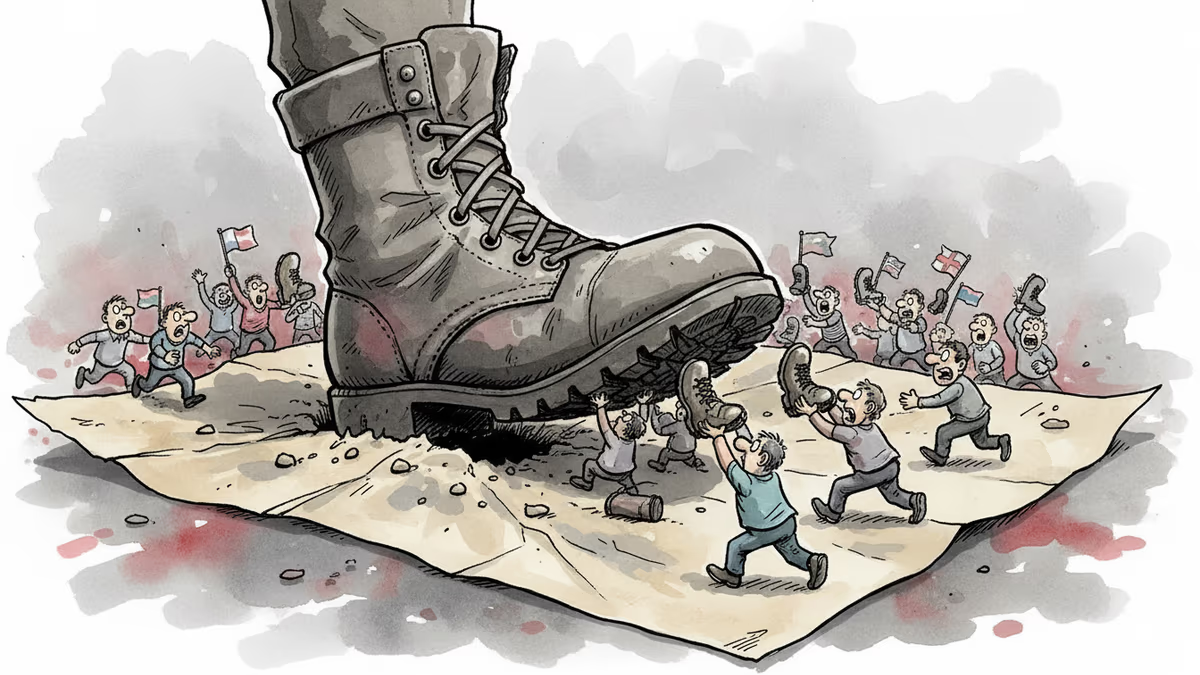
Trump Pulls Troops from Germany. NATO Is Asking Why.
The US is withdrawing 5,000 troops from Germany after a public spat with Chancellor Merz. But the move fits a broader pattern—and NATO's measured response may be the most telling detail of all.
German Defence Minister Boris Pistorius called it "foreseeable." That single word may be the most damning assessment of the transatlantic relationship in years.
The United States has announced the withdrawal of 5,000 troops from Germany—a move Pentagon spokesman Sean Parnell confirmed came directly from Defence Secretary Pete Hegseth. The drawdown is expected to be completed within six to twelve months. Germany currently hosts more than 36,000 active-duty US personnel, by far the largest American military presence in Europe.
How It Started—and Why That Matters Less Than You Think
The immediate trigger was a speech. German Chancellor Friedrich Merz, speaking to university students last week, said the US "clearly has no strategy" on Iran. He described Iranian negotiators as skilled at running out the clock—letting American envoys fly to Islamabad only to leave empty-handed—and said the entire nation was being "humiliated" by Tehran.
Donald Trump responded on Truth Social, accusing Merz of thinking it was "OK for Iran to have a Nuclear Weapon" and dismissing him as someone who "doesn't know what he's talking about." Days later, the troop withdrawal was announced.
It reads like a diplomatic feud. But Pistorius's "foreseeable" framing suggests Berlin wasn't surprised—because the direction of US policy has been consistent. Last year, Washington reduced its troop presence in Romania. Trump has floated similar cuts in Italy and Spain. The stated rationale is a strategic pivot: shifting US military focus from Europe toward the Indo-Pacific.
The spat with Merz may have accelerated the announcement. It almost certainly didn't cause it.
The Alliance Is Asking Questions It Hasn't Had to Ask Before
NATO spokeswoman Allison Hart said the alliance is "working with the US to understand the details of their decision." That's diplomatically careful language for: we weren't fully briefed. She added that the move "underscores the need for Europe to continue to invest more in defence"—a framing that accepts the withdrawal as a given rather than contesting it.
Polish Prime Minister Donald Tusk was less measured. "The greatest threat to the transatlantic community are not its external enemies, but the ongoing disintegration of our alliance," he said Saturday. "We must all do what it takes to reverse this disastrous trend."

What's notable is where other dissent came from: inside Trump's own party. Senators Roger Wicker and Mike Rogers—chairs of the Senate and House armed services committees, respectively—said they were "very concerned" and argued that "it is in the US interest to maintain a strong deterrent in Europe." Republican pushback on a Trump defence decision, stated publicly, is not routine.
Germany Is Spending More. Does That Change Anything?
For years, Trump accused Germany of being a NATO "delinquent"—chronically underspending on defence while sheltering under the American umbrella. That criticism had real substance. Germany spent well below the alliance's 2% of GDP target for most of the past decade.
That has changed. Under the Merz government, Germany is projected to spend €105.8 billion on defence in 2027—roughly 3.1% of GDP when Ukraine aid and other defence funds are included. It's a number that would have seemed implausible five years ago.
Pistorius pointed to this directly, saying Germany is "on the right track" and that Europe must take greater responsibility for its own security. The framing is deliberate: this is not capitulation to American pressure, but strategic maturity.
NATO itself noted that allies had agreed to a 5% of GDP investment target at last year's Hague summit—a figure that would have been unthinkable in the pre-2022 alliance. Europe is, measurably, spending more.
And yet: the troops are still being withdrawn.
What This Reveals About the New Rules of Alliance
The deeper question isn't whether Germany deserved this, or whether Merz's comments were undiplomatic. It's what the episode reveals about how the US now operates within NATO.
Traditionally, alliance commitments functioned as long-term guarantees, insulated from short-term political friction. Troop deployments weren't levers to be pulled in response to a chancellor's speech. The fact that they now appear to be—or can at least be announced that way—changes the calculus for every NATO member.
For smaller or more exposed members, particularly those on NATO's eastern flank, the message is stark: American presence is conditional in ways it wasn't before. That uncertainty has a cost, even if no troops move.
For the US, the argument is that Europe has long relied on American security guarantees as a subsidy, and that rebalancing this is both fiscally and strategically rational. There are serious analysts who agree. The Indo-Pacific does represent a more pressing long-term challenge. European NATO members have, historically, underinvested.
But the manner of these decisions—reactive, publicly announced in the context of a personal dispute, without apparent prior coordination with NATO—is itself a variable. Deterrence depends not just on capability but on credibility and predictability. Both are harder to maintain when the rules keep changing.
This content is AI-generated based on source articles. While we strive for accuracy, errors may occur. We recommend verifying with the original source.
Related Articles

Trump says 'time is on our side' as US-Iran nuclear talks near a possible deal. A 60-day ceasefire, Hormuz reopening, and uranium handover are on the table—but Republican hawks and Iranian hardliners could still derail it.
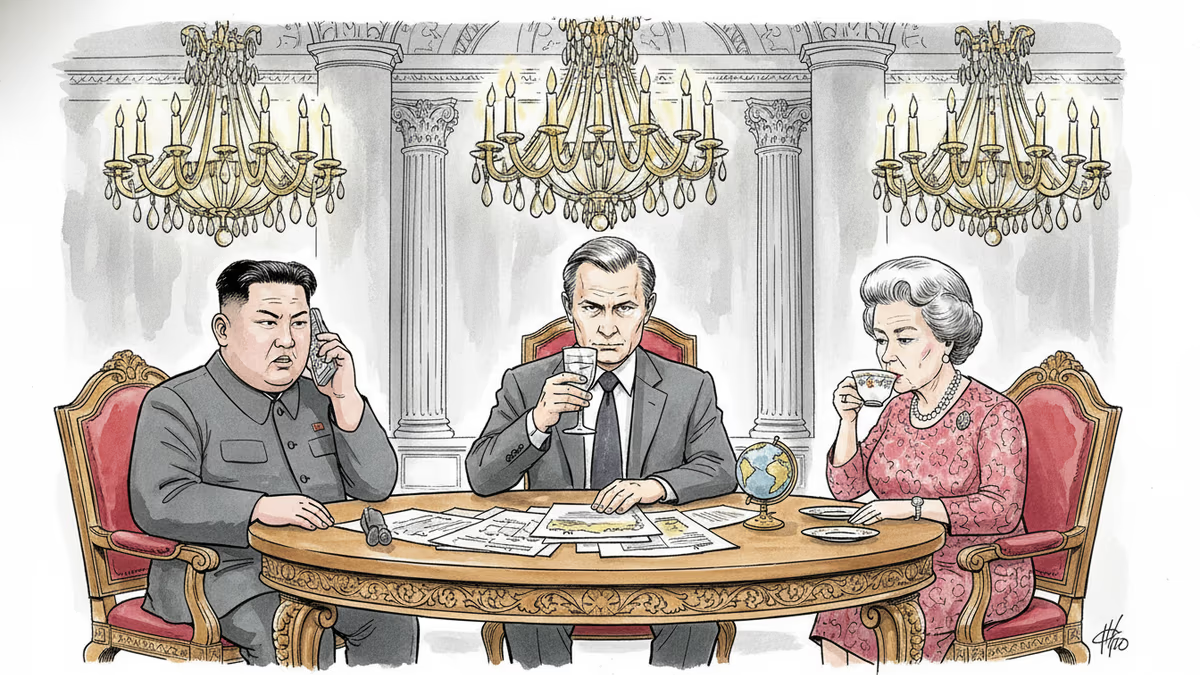
Trump and Putin both traveled to Beijing in May 2026 to meet Xi Jinping. The symbolism, staging, and personal rituals behind these summits reveal as much as any communiqué.
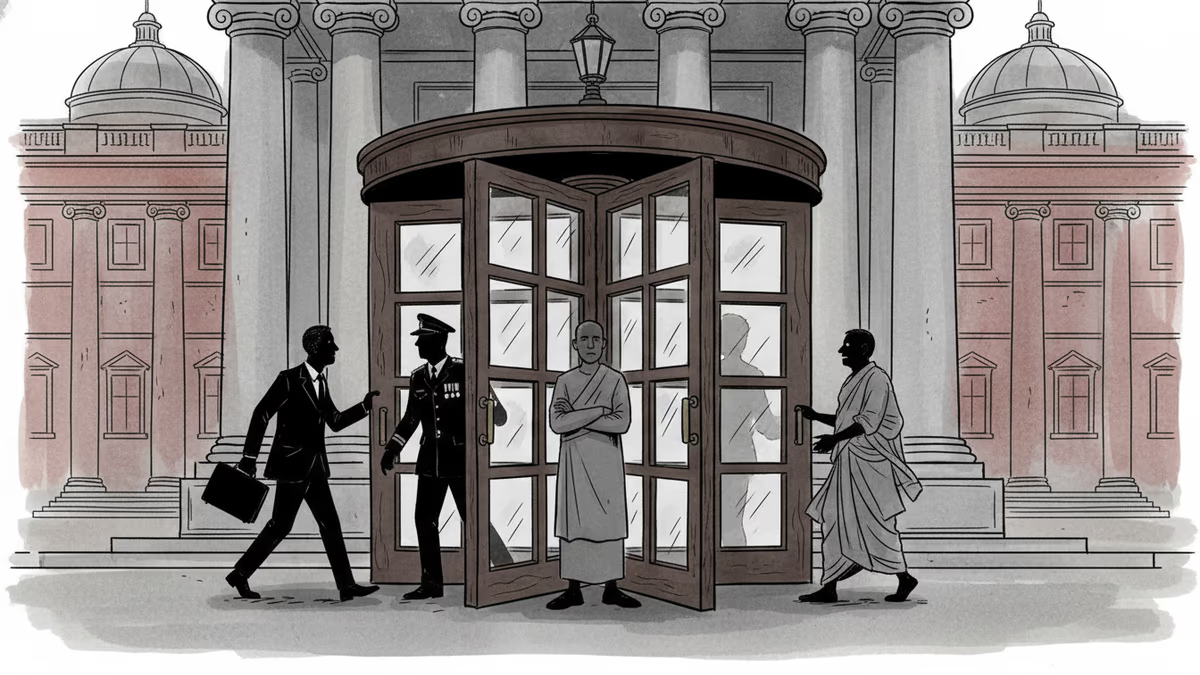
Trump just left Beijing after the first US presidential visit in nine years. Putin arrives Wednesday. Pakistan's PM follows. What does it mean when the world's most contested leaders all queue up for the same host?
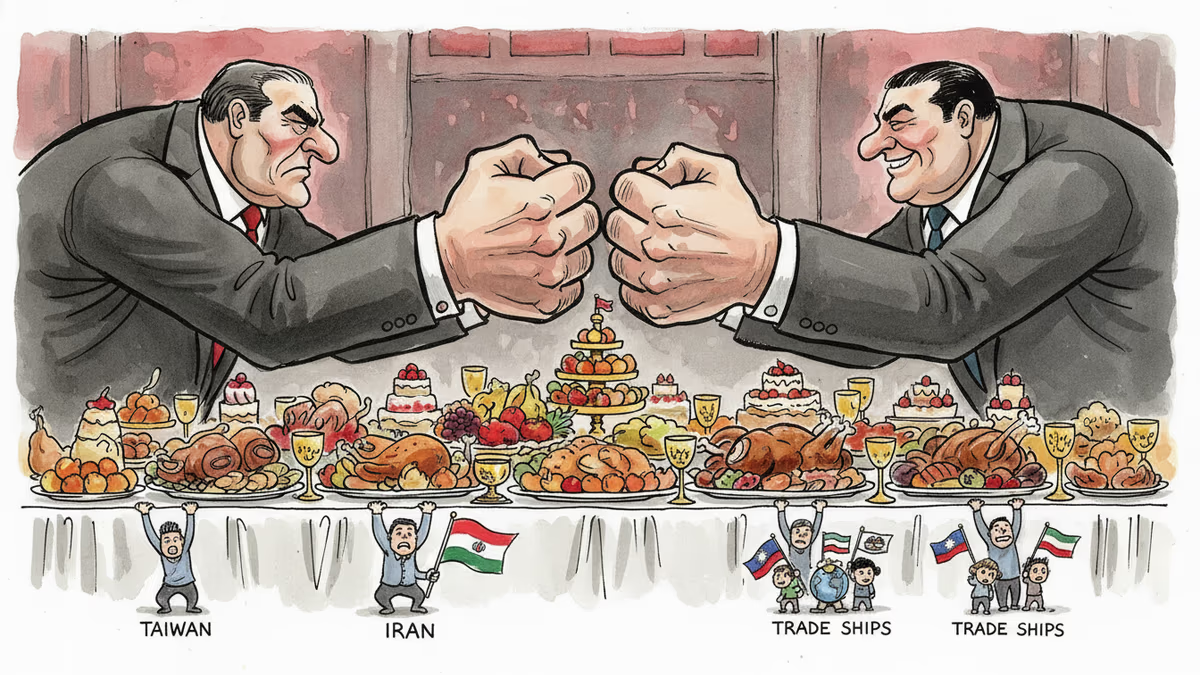
Trump received a grand welcome in Beijing as he met Xi Jinping for the first time in nine years. Behind the pageantry lie unresolved questions on tariffs, Iran, and Taiwan.
Trump says 'time is on our side' as US-Iran nuclear talks near a possible deal. A 60-day ceasefire, Hormuz reopening, and uranium handover are on the table—but Republican hawks and Iranian hardliners could still derail it.
Trump and Putin both traveled to Beijing in May 2026 to meet Xi Jinping. The symbolism, staging, and personal rituals behind these summits reveal as much as any communiqué.
Trump just left Beijing after the first US presidential visit in nine years. Putin arrives Wednesday. Pakistan's PM follows. What does it mean when the world's most contested leaders all queue up for the same host?
Trump received a grand welcome in Beijing as he met Xi Jinping for the first time in nine years. Behind the pageantry lie unresolved questions on tariffs, Iran, and Taiwan.
Thoughts
Share your thoughts on this article
Sign in to join the conversation