
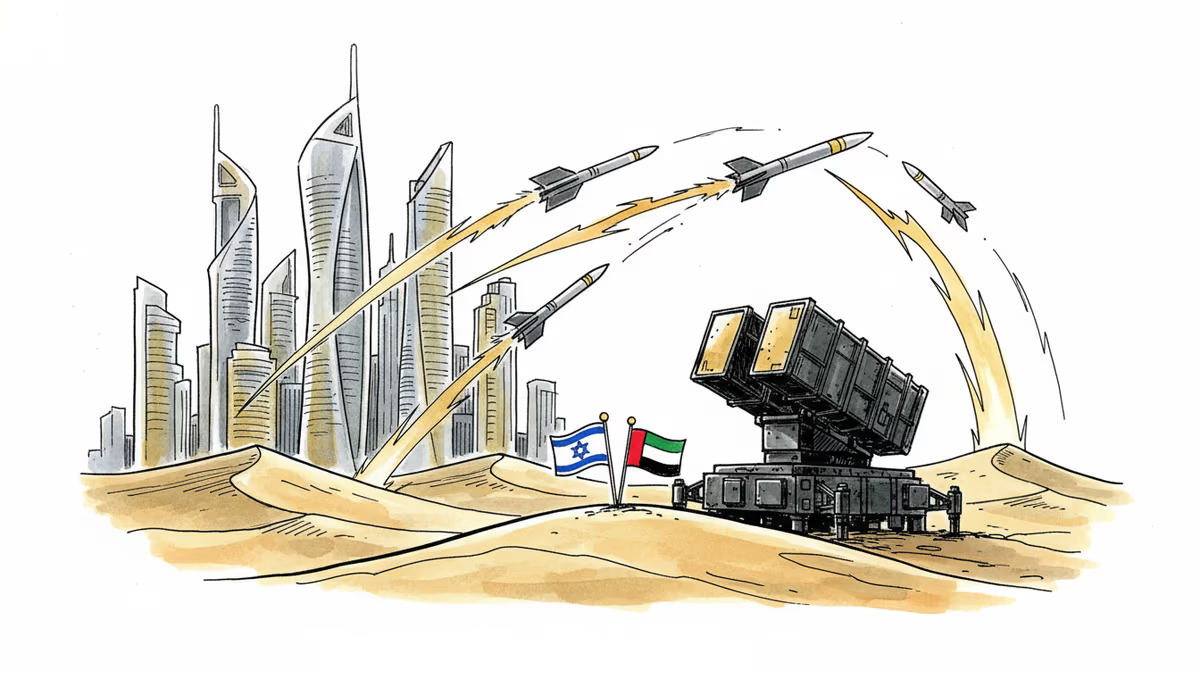
Iron Dome Over the Gulf: A New Middle East Is Taking Shape
Israel's reported deployment of Iron Dome to the UAE marks a turning point in Middle Eastern security. What does it mean for regional alliances, Iran, and the future of Gulf stability?
No press conference. No joint communiqué. Just troops and a missile defense battery quietly crossing into another country's airspace — and a region that will never look quite the same.
Axios reported this week, citing two unnamed Israeli officials and one American counterpart, that Israel deployed an Iron Dome air-defense system to the United Arab Emirates early in its war with Iran. The move was not announced publicly. But the silence itself speaks volumes about how the Middle East's security architecture is being rebuilt — not through grand declarations, but through operational facts on the ground.
Analysts are calling it a "watershed moment."
What Iron Dome Is — and Why the UAE Wanted It
Iron Dome is Israel's short-range air defense system, designed to intercept rockets, artillery shells, and low-flying threats. Battle-tested across multiple conflicts — Gaza, Lebanon, and most recently Iran's direct missile and drone barrages — it has become the most operationally proven system of its kind. Its 90%-plus interception rate under live fire conditions is the figure that keeps defense ministries up at night, both in admiration and envy.
For the UAE, the need is not theoretical. Separated from Iran by just the width of the Persian Gulf, Abu Dhabi and Dubai sit within easy range of Iranian ballistic missiles and the drone swarms that Tehran's proxy network, the Houthis, demonstrated in January 2022 when they struck UAE territory directly. A single successful strike on Dubai's financial district or Abu Dhabi's energy infrastructure could reverberate through global markets within hours.
For Israel, the calculus is equally clear. Deploying Iron Dome to the UAE is not charity — it's strategic depth. Every Gulf capital that Israel can credibly defend becomes a node in a security network that complicates Iran's regional playbook. Israel isn't just selling a product; it's embedding itself as the Gulf's indispensable security provider.
The Abraham Accords Grow Teeth
To understand how we got here, you have to go back to 2020. The Abraham Accords, brokered by the Trump administration, normalized relations between Israel and the UAE, Bahrain, Morocco, and Sudan. At the time, skeptics dismissed it as a diplomatic photo opportunity — warm words that wouldn't survive contact with the region's deep-seated conflicts.
What we're watching now is the accords acquiring hard military content. Deploying troops and weapons systems to another country's soil is categorically different from signing a trade agreement or opening an embassy. It implies a level of mutual trust — and mutual vulnerability — that takes years to build and carries enormous political risk for both sides.
The speed of this deepening is striking. In less than six years, Israel and the UAE moved from no official relations to quietly stationing Israeli soldiers on Emirati soil. That trajectory suggests the Abraham Accords were not the endpoint of normalization, but the starting line.

Iran has long warned that this convergence was coming. The irony, as several analysts note, is that Iran's own escalatory behavior — its direct missile strikes on Israel, its support for Houthi attacks on Gulf shipping — has done more to accelerate Israeli-Arab security cooperation than any American diplomatic initiative could have achieved on its own.
A Story With No Clean Heroes
How you read this deployment depends almost entirely on where you stand.
For the UAE leadership, this is pragmatism in its purest form. When the threat is existential and immediate, ideology becomes a luxury. The Abraham Accords were always premised on this logic: the Iranian threat is more urgent than the Palestinian cause. That calculation has become harder to defend publicly as the Gaza war drags on, but the UAE's security imperatives haven't changed.
For Israel, the deployment is a demonstration that its technology and military expertise have made it a net security exporter in a region that once sought to erase it. That's a geopolitical transformation of considerable magnitude.
For Palestinian leaders and much of Arab civil society, however, this is a painful rupture. An Arab government hosting Israeli troops while Gaza burns is not a nuance — it's a symbol of what they see as abandonment. The Arab street's reaction, muted by authoritarian governance in many Gulf states, nonetheless represents a legitimacy cost that UAE leaders are consciously choosing to absorb.
Iran will use this deployment as propaganda fuel domestically, and as justification for deepening its support for proxy forces across the region. Whether it changes Tehran's strategic calculus in any meaningful way is a separate, harder question.
For Washington and Western capitals, the deployment aligns with their stated goal of building an integrated regional air defense architecture — a concept the Biden administration had floated and the Trump administration has inherited. But there's a tension here: tighter security blocs can also mean fewer off-ramps for de-escalation.
What the Markets and Policymakers Should Watch
For defense analysts and investors, a few threads are worth pulling.
First, the defense industry implications. Iron Dome is manufactured by Rafael Advanced Defense Systems and Raytheon Technologies. Every operational deployment in a high-visibility conflict is, effectively, the world's most expensive product demonstration. Competing systems — including South Korea's Cheongung-II, which the UAE has also purchased — will face renewed scrutiny about how they measure up.
Second, energy market stability. The Gulf's oil infrastructure remains the world's most consequential single point of failure for energy supply. Any development that either raises or lowers the probability of a strike on UAE energy assets moves markets. A credible Israeli-backed air defense umbrella over the UAE is, in theory, a stabilizing factor for oil prices — though it also raises the stakes if deterrence fails.
Third, the precedent for alliance architecture. The Israel-UAE security relationship has now demonstrated that meaningful military cooperation can be built without a formal treaty, without decades of relationship-building, and without public political consensus. That's a template — for better or worse — that other regional actors will study.
This content is AI-generated based on source articles. While we strive for accuracy, errors may occur. We recommend verifying with the original source.
Related Articles
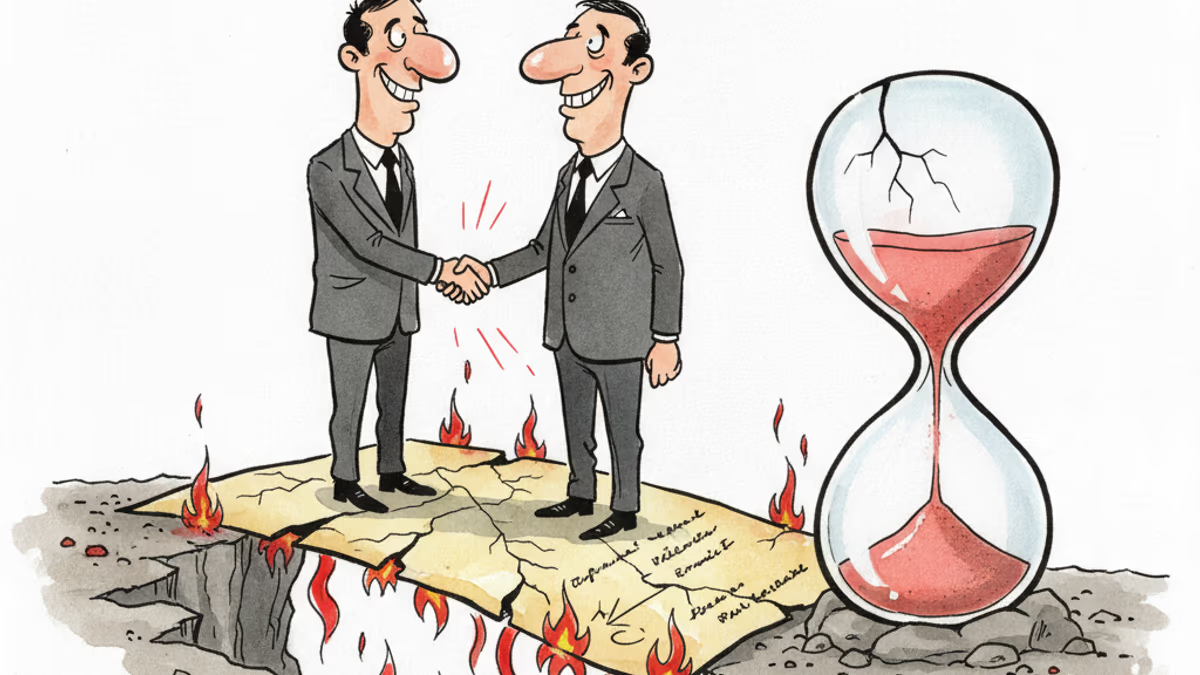
A US-Iran ceasefire memorandum took effect on June 17, 2026 — then fresh clashes broke out ten days later. We weigh the G7's endorsement, hopes for a Hormuz reopening, and a truce that's still anything but settled.
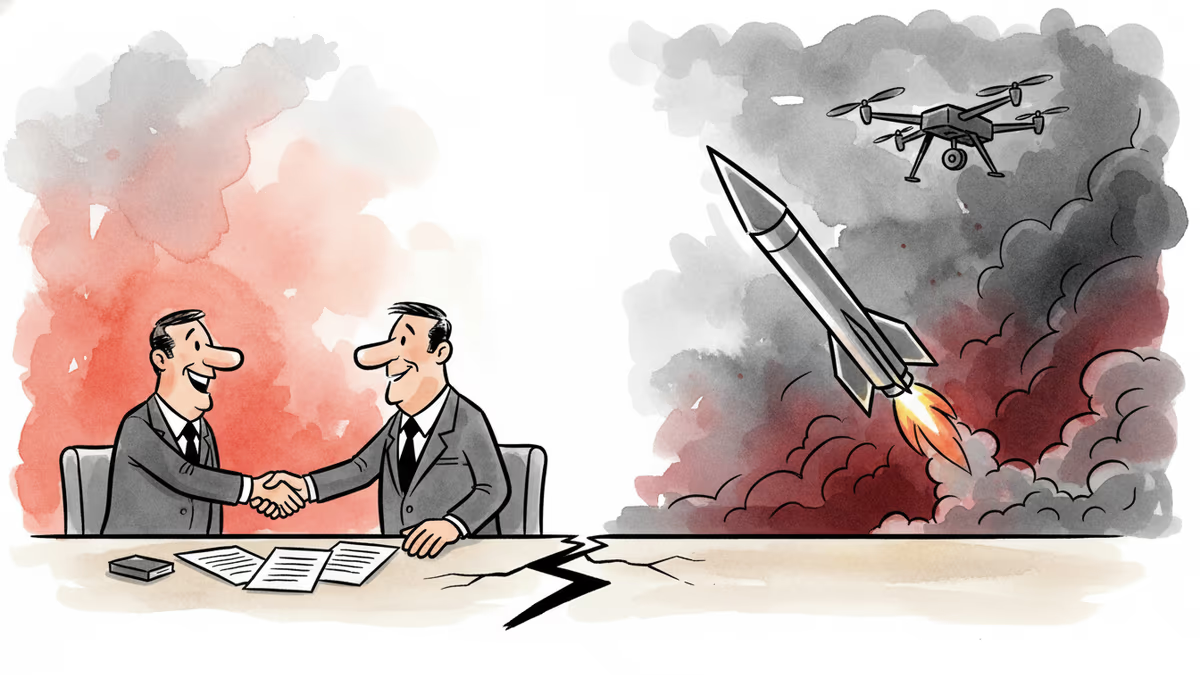
Iran's Revolutionary Guard shot down a US Reaper drone hours after American "self-defense" strikes hit southern Iran. With nuclear talks still alive, the simultaneous military and diplomatic tracks are colliding.

Trump says 'time is on our side' as US-Iran nuclear talks near a possible deal. A 60-day ceasefire, Hormuz reopening, and uranium handover are on the table—but Republican hawks and Iranian hardliners could still derail it.
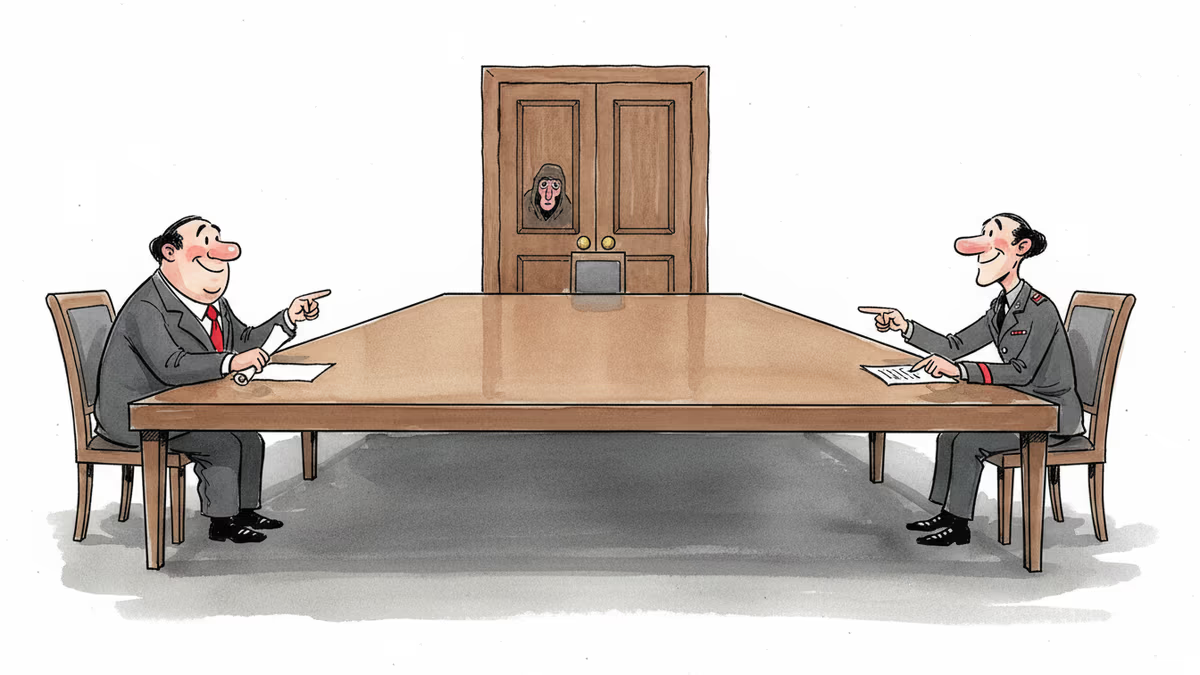
Trump says a US-Iran nuclear deal is 'largely negotiated.' Iran calls it a 'Persian-style peace.' Both sides claim victory. Here's what's actually at stake.
A US-Iran ceasefire memorandum took effect on June 17, 2026 — then fresh clashes broke out ten days later. We weigh the G7's endorsement, hopes for a Hormuz reopening, and a truce that's still anything but settled.
Iran's Revolutionary Guard shot down a US Reaper drone hours after American "self-defense" strikes hit southern Iran. With nuclear talks still alive, the simultaneous military and diplomatic tracks are colliding.
Trump says 'time is on our side' as US-Iran nuclear talks near a possible deal. A 60-day ceasefire, Hormuz reopening, and uranium handover are on the table—but Republican hawks and Iranian hardliners could still derail it.
Trump says a US-Iran nuclear deal is 'largely negotiated.' Iran calls it a 'Persian-style peace.' Both sides claim victory. Here's what's actually at stake.
Thoughts
Share your thoughts on this article
Sign in to join the conversation