
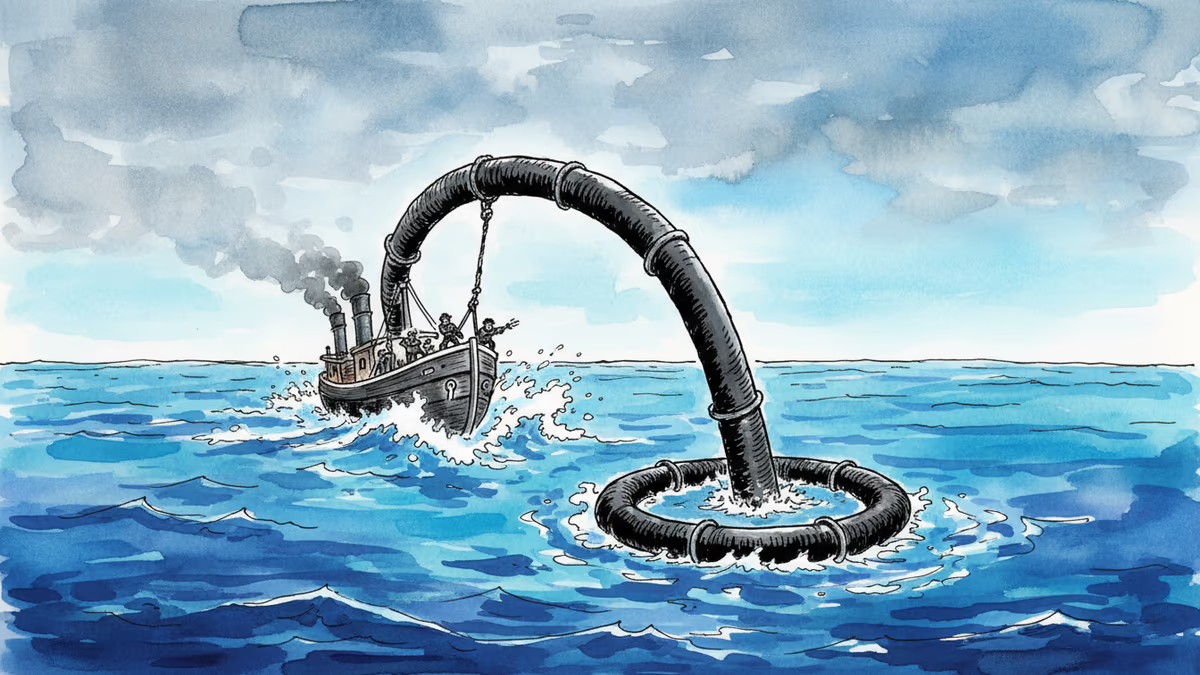
The 2-Million-Kilometer Secret Beneath Our Seas
Behind the shark-biting internet cables myth lies the real story of TAT-8's recovery after 36 years underwater and the humans who keep our digital world connected.
Sharks Are Innocent
2 million kilometers. That's how much fiber-optic cable lies on our ocean floors right now, carrying nearly every swipe, tap, Zoom call, and doomscroll across continents. Yet the question everyone asks isn't about capacity or latency—it's about sharks.
"Sharks are collectively not guilty," says Peter Appleby, operations manager at Subsea Environmental Services, one of only three companies worldwide that makes cable recovery their entire business. "For a shark to actually bite a cable, you'd have to wrap it in fish—like hiding a pill in cheese for your dog."
The myth has persisted for 40 years, ever since TAT-8 practically invented the concept of an internet cable. Now that this pioneering cable is ready for retirement, I spent time with the offshore workers pulling it from the seabed. That's the real story—not sabotage or sharks, but humans keeping our digital communication flowing.
When the Future Came Through Glass
Midnight in Portugal's Leixões port. The MV Maasvliet docks two weeks overdue, having dodged hurricanes Dexter and Erin. On board: 1,012 kilometers of TAT-8 cable, finally surfacing after 36 years underwater.
TAT-8 wasn't just another cable. When it went live on December 14, 1988, it was the first fiber-optic system spanning the Atlantic. Science fiction writer Isaac Asimov spoke via video link from New York to audiences in Paris and London: "Welcome everyone to this historic transatlantic crossing, this maiden voyage across the sea on a beam of light."
AT&T's TV ad promised a "worldwide intelligent network" where people could send information "in any format to anyone they want." The montage of telephone operators—"You have a call booked for Poland?" "What city in Cuba are you calling?"—wasn't selling the internet (too niche then) but the end of the Cold War.
The Humans Behind the Network

Captain Alex Ivanov has been at sea for 30 years and still takes sunset photos. He scrolls through his phone showing blazing red skies, then pictures of dorado he caught. "When cable ship people aren't fishing for cable, some go fishing for fish."
The 14-person crew represents Ukraine, Russia, Poland, Nigeria, and Kenya. Cook Misha heard one crew member missing Georgian soup dumplings (khinkali) and served them the next Sunday. "The most important people are the captain and the cook," Peter explains. "All good captains know the cook is more valuable."
They hadn't seen a stranger in two and a half months.
Why Satellites Can't Replace This
Nothing irritates cable professionals more than suggestions that low-Earth-orbit satellites will replace subsea cables. Satellites are unreliable in bad weather, harder to repair, and need replacing every five years. They haven't competed on capacity since the 1990s.
Meanwhile, nearly 600 subsea cables carry almost all intercontinental traffic. That Instagram story from Tokyo, that Teams meeting with London, that TikTok from São Paulo—all traveled through glass thinner than human hair, pulsing with light across ocean floors.
The Business of Digital Archaeology
Most retired cables—most of those 2 million kilometers—remain where their owners left them. The seabed is busier than you'd think, so recovery operations clear space for new cables along proven routes rather than disturbing fresh ocean floor.
There's good money in old cables if you know what you're doing. TAT-8 witnessed the fall of the Berlin Wall, birth of the World Wide Web, end of the Soviet Union, dotcom boom and crash, and dawn of social media. Rather than being the last cable ever needed (as originally believed), it reached capacity within 18 months.
The Invisible Infrastructure Problem
We've normalized instantaneous global communication so completely that most people don't think about the physical reality enabling it. Those who remember booking international calls in advance understand the magic better.
"Billions of people walk around not noticing this infrastructure because of the daily work of a few thousand people," one industry veteran tells me. "Sometimes at sea, other times buried under piles of permits and purchase orders for thousands of kilometers of cables."
Authors
Related Articles
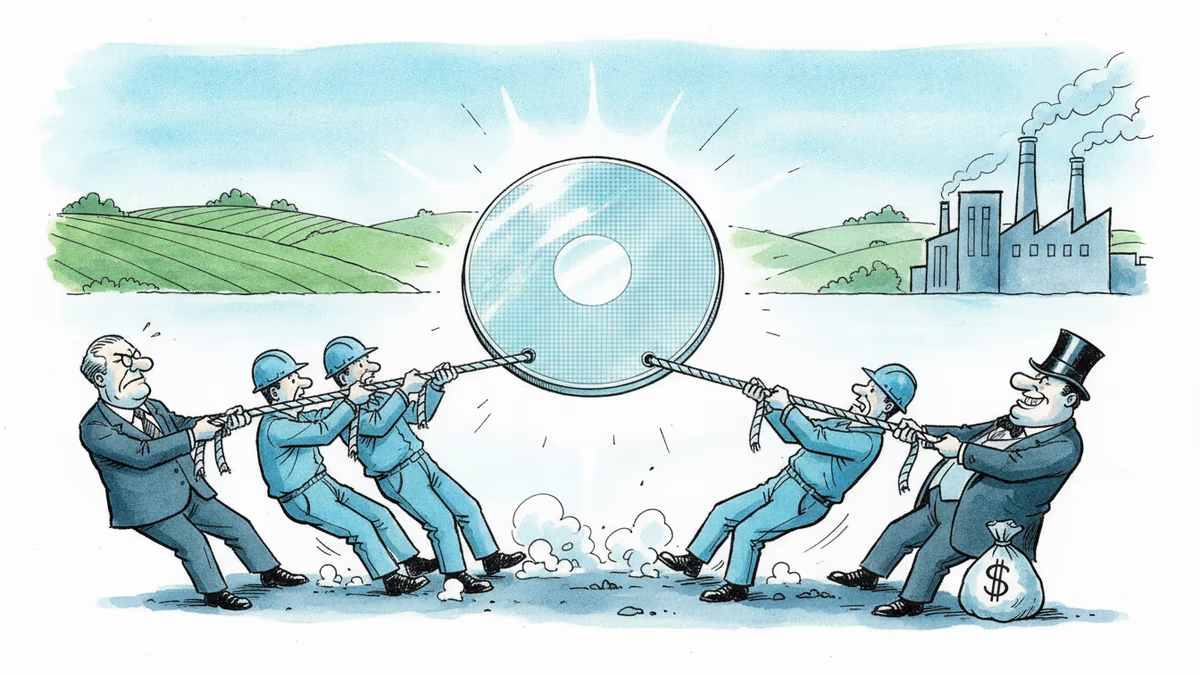
Samsung Electronics' union branch revealed that 84% of survey respondents oppose the government's roughly $290 billion (₩400 trillion) semiconductor megaproject in Gwangju. Government, management, the union and shareholders are all reading the same national project in sharply different ways.
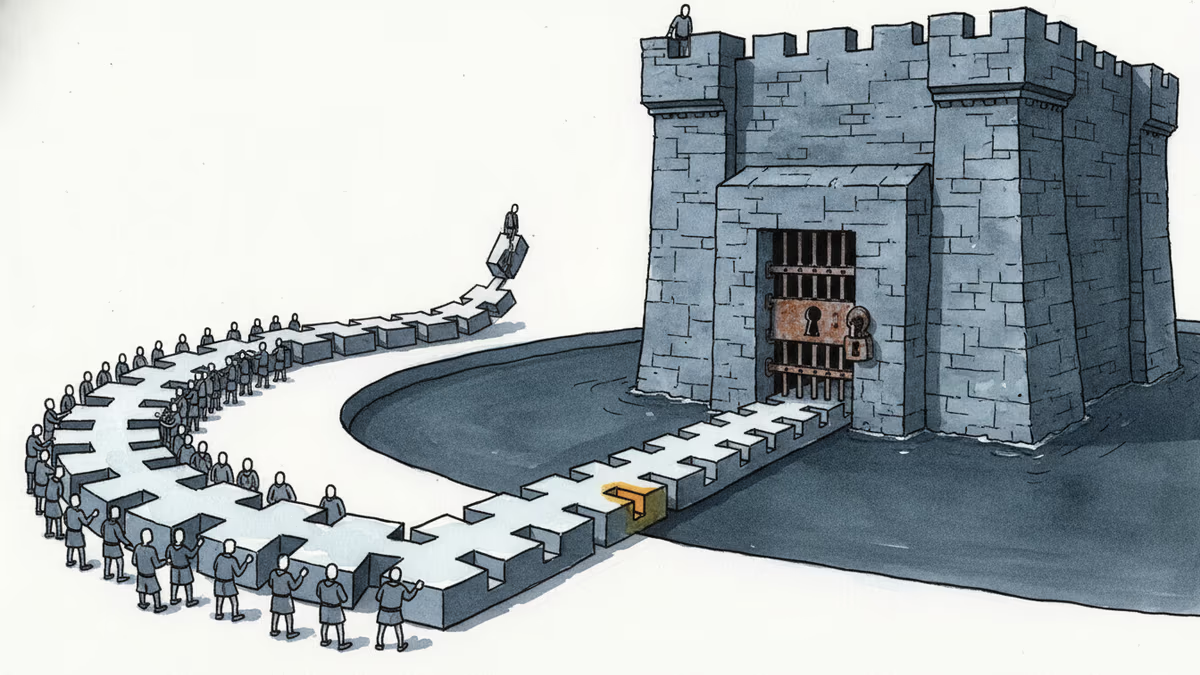
Nvidia shipped roughly a billion RISC-V cores in 2024, then announced it would run CUDA on the open standard. We break down how royalty-free instruction sets and open software stacks are trying to route around CUDA's lock-in. Part 2 of the Semiconductor Sovereignty series.
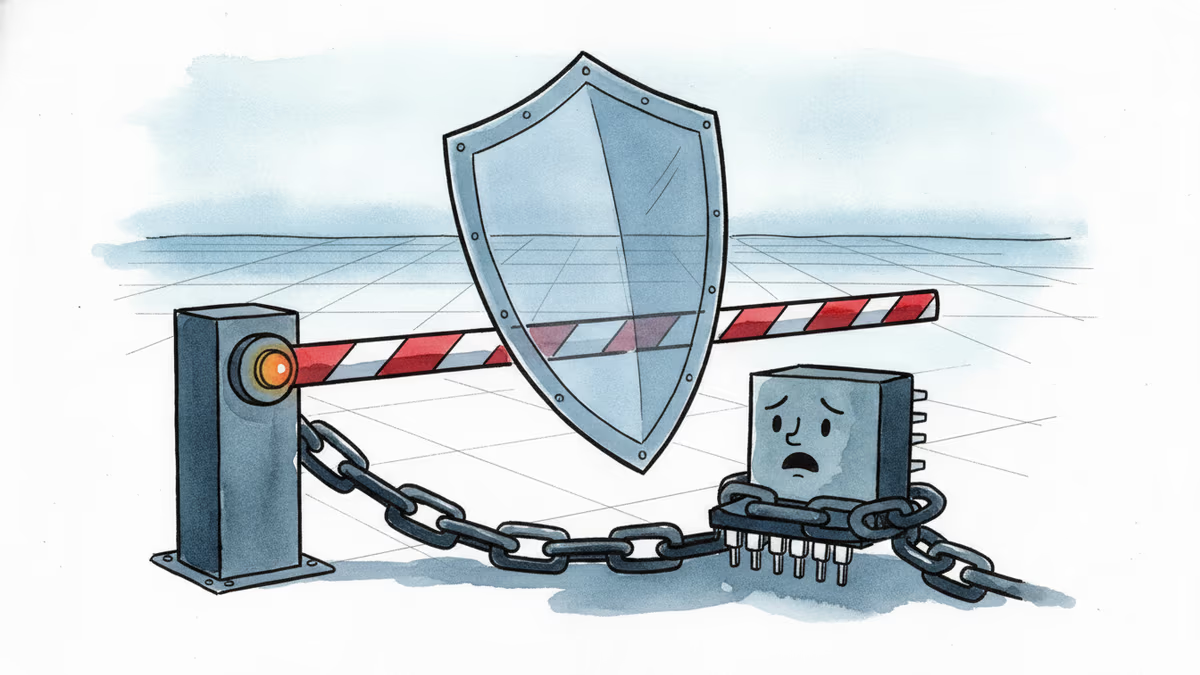
US AI-chip export controls split into three layers in the first half of 2026 — January easing, a May crackdown on circumvention, and a pending bill. Nvidia erased China from its guidance and still posted a record $81.6 billion quarter. A look at the export policy that both shields and cages it.
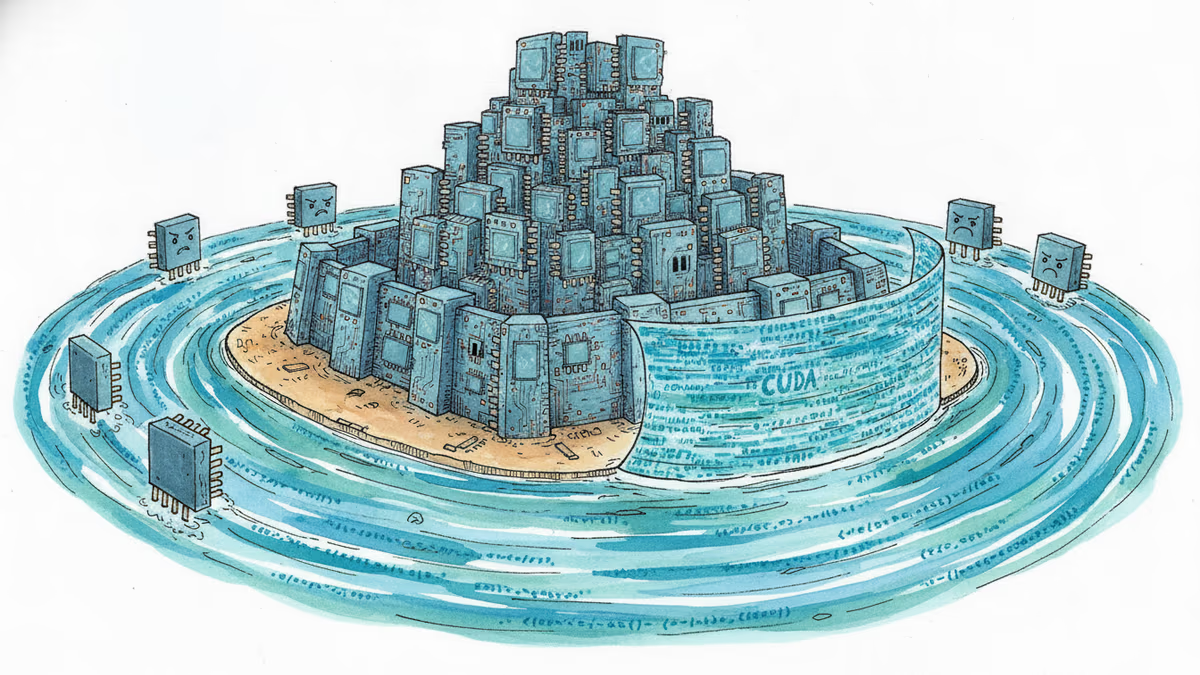
AMD's MI325X matches or beats Nvidia on memory and bandwidth — yet Nvidia's 86-92% share holds. The real moat is CUDA, 20 years in the making. Part 1 of 4.
Samsung Electronics' union branch revealed that 84% of survey respondents oppose the government's roughly $290 billion (₩400 trillion) semiconductor megaproject in Gwangju. Government, management, the union and shareholders are all reading the same national project in sharply different ways.
Nvidia shipped roughly a billion RISC-V cores in 2024, then announced it would run CUDA on the open standard. We break down how royalty-free instruction sets and open software stacks are trying to route around CUDA's lock-in. Part 2 of the Semiconductor Sovereignty series.
US AI-chip export controls split into three layers in the first half of 2026 — January easing, a May crackdown on circumvention, and a pending bill. Nvidia erased China from its guidance and still posted a record $81.6 billion quarter. A look at the export policy that both shields and cages it.
AMD's MI325X matches or beats Nvidia on memory and bandwidth — yet Nvidia's 86-92% share holds. The real moat is CUDA, 20 years in the making. Part 1 of 4.
Thoughts
Share your thoughts on this article
Sign in to join the conversation