
US Military Shoots Down Its Own Drone at Border - Defense Paradox
US military mistakenly shot down CBP drone at Texas border, revealing limits of automated defense systems and complexity of modern warfare
Second Time This Month Texas Airspace Shuts Down
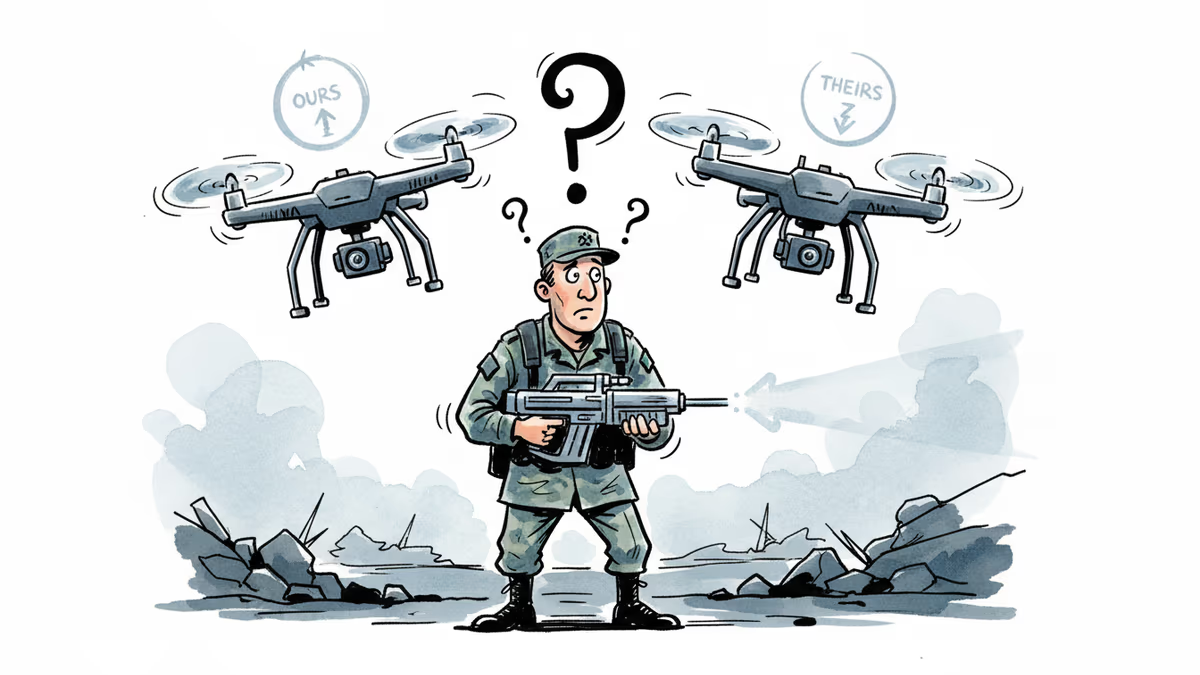
The incident at Fort Hancock, Texas, perfectly captures the complexity of modern warfare. The US military used a laser weapon to shoot down a drone—only to discover it belonged to Customs and Border Protection (CBP). The Federal Aviation Administration immediately closed the airspace.
This marks the second time in February that airspace near the US-Mexico border was shut down due to anti-drone laser incidents. On February 11th, CBP fired an anti-drone laser near El Paso International Airport without coordinating with the FAA, forcing hours-long airspace closure.
When AI Can't Tell Friend from Foe
The core issue lies in the limitations of automated defense systems. Laser weapons are designed to detect and immediately respond to approaching drones, but their ability to distinguish between friendly and hostile aircraft remains imperfect.
Multiple agencies operate drones along the border: CBP, Department of Defense, and local law enforcement. Each uses different identification signals and flight patterns, making confusion inevitable without integrated command systems.
The paradox is stark: the more advanced our technology becomes, the more critical human judgment becomes.

Stakeholders See Different Battles
Military officials argue that automated defense systems are essential for border security. Drug cartels and smuggling organizations increasingly use drones for surveillance and cargo transport, requiring 24/7 response capabilities that human operators can't sustain.
Aviation safety experts view this differently. With civilian aircraft and legitimate drone operations increasing, automated shoot-down systems could create greater risks than they solve. The airspace closure disrupted commercial flights and emergency services.
Defense contractors see opportunity. Companies like Raytheon, Northrop Grumman, and Israel's Rafael are racing to develop better drone identification systems and integrated command platforms. The market for counter-drone technology is projected to reach $5.6 billion by 2025.
Border communities face the daily reality of this technological arms race, with their airspace becoming an unintended testing ground.
The Bigger Defense Dilemma
This incident reflects a broader challenge facing modern militaries worldwide. As drone technology democratizes, the line between military and civilian airspace blurs. South Korea faces similar challenges with North Korean drone incursions near the DMZ. European nations grapple with drone threats to critical infrastructure.
The fundamental question isn't technological—it's strategic. How do you balance rapid response with accurate identification? How do you defend against drone swarms without creating chaos in civilian airspace?
Authors
Related Articles

Middle East conflict reveals AI weapons reality. Claude AI selects targets, drones attack autonomously. 90% accuracy, zero regulation. The gap between deployment and governance widens.
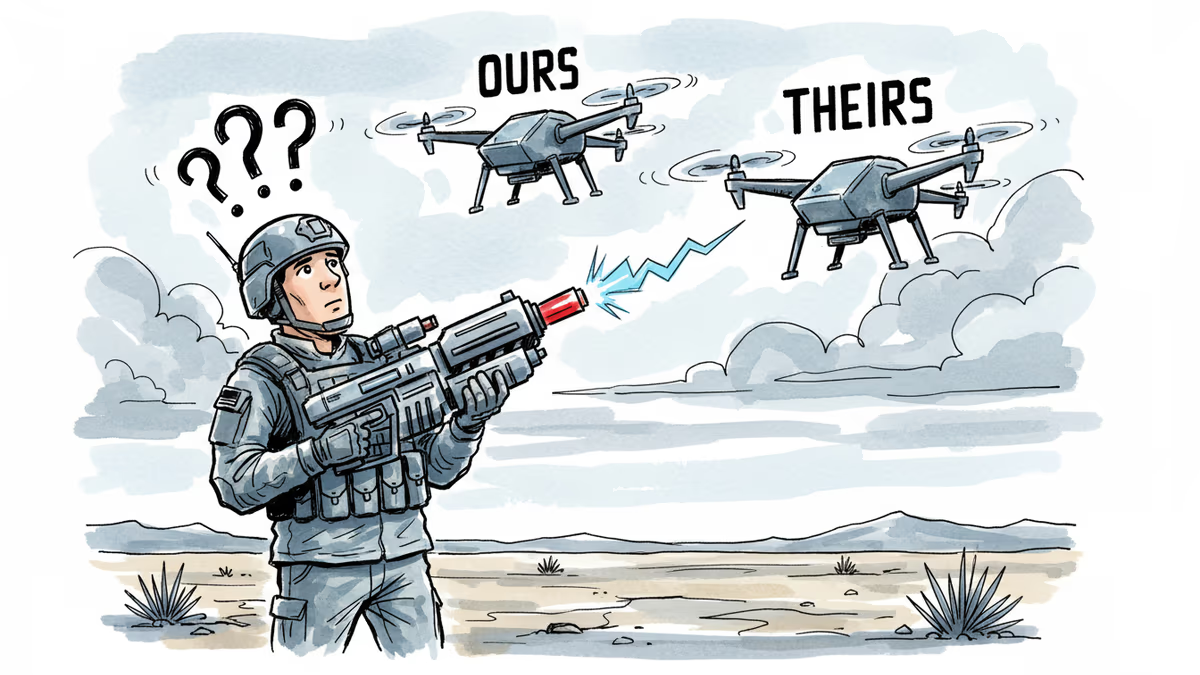
A US military laser system mistakenly destroyed a Border Patrol drone near Mexico, revealing the complex reality of modern border security technology

Antigravity's A1 360-degree drone drops to $1,359 from $1,599, marking the first discount on this innovative flying camera that combines 8K recording with immersive VR goggles.

Samsung Electronics' union branch revealed that 84% of survey respondents oppose the government's roughly $290 billion (₩400 trillion) semiconductor megaproject in Gwangju. Government, management, the union and shareholders are all reading the same national project in sharply different ways.
Middle East conflict reveals AI weapons reality. Claude AI selects targets, drones attack autonomously. 90% accuracy, zero regulation. The gap between deployment and governance widens.
A US military laser system mistakenly destroyed a Border Patrol drone near Mexico, revealing the complex reality of modern border security technology
Antigravity's A1 360-degree drone drops to $1,359 from $1,599, marking the first discount on this innovative flying camera that combines 8K recording with immersive VR goggles.
Samsung Electronics' union branch revealed that 84% of survey respondents oppose the government's roughly $290 billion (₩400 trillion) semiconductor megaproject in Gwangju. Government, management, the union and shareholders are all reading the same national project in sharply different ways.
Thoughts
Share your thoughts on this article
Sign in to join the conversation