
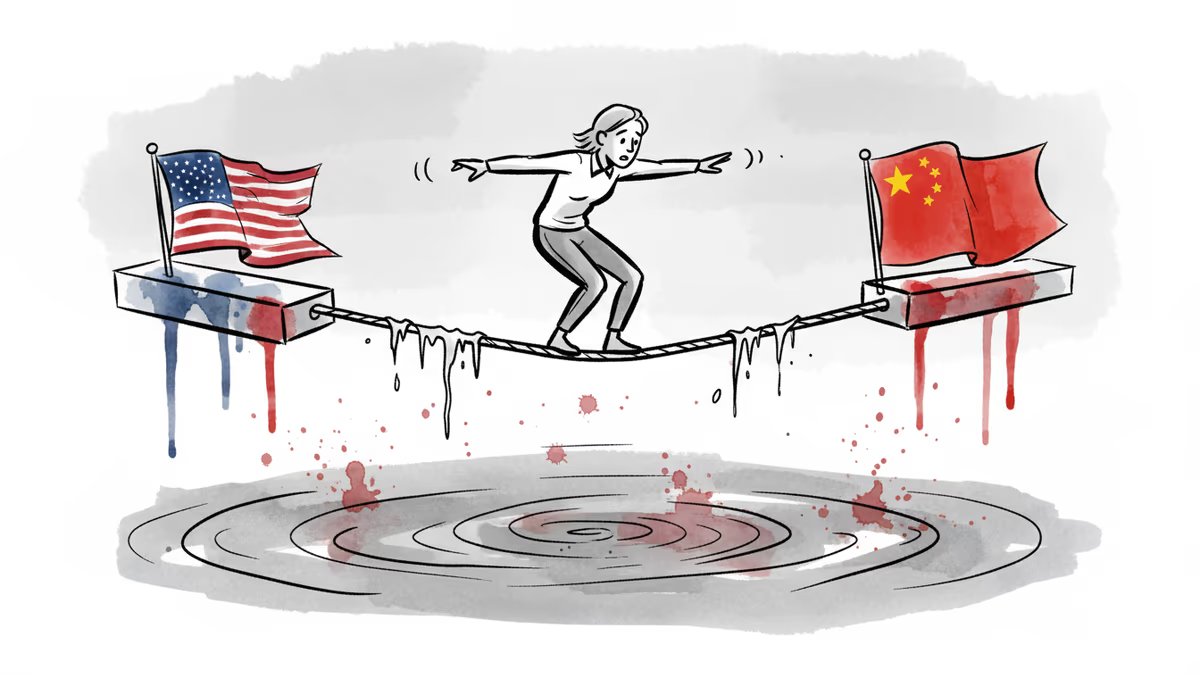
Why Middle Powers Are Abandoning the Balancing Act
From Canada to Indonesia, middle powers that once thrived between the US and China are picking sides. What's driving this shift away from strategic ambiguity?
Canadian Prime Minister Mark Carney's words at Davos were striking: "We can no longer maintain neutrality." When a G7 nation openly abandons strategic ambiguity, it signals the end of an era for middle power diplomacy.
The Death of Strategic Hedging
Trump's Board of Peace now includes 14 nations, featuring traditional non-aligned countries like Indonesia and Vietnam. These states built their foreign policy on playing both sides – maintaining good relations with Washington and Beijing while maximizing economic benefits from both.
But the rules have changed. Join the Pax Silica chip coalition or risk technological isolation. Embrace China's Belt and Road Initiative and face Western sanctions. The middle ground is disappearing.
The Economics of Choosing Sides
The numbers tell the story. Countries joining Trump's coalition gain access to $2 trillion in semiconductor supply chains. Those staying neutral risk losing 40% of their tech trade within five years, according to recent projections.
Indonesia's decision reflects this calculation. Despite $75 billion in Chinese investments over the past decade, Jakarta chose American technology partnerships. The message is clear: in the tech cold war, access trumps investment.

Why Neutrality No Longer Pays
The middle power golden age thrived on globalization's interconnectedness. Countries like Singapore, South Korea, and Thailand maximized their strategic value by being indispensable to both superpowers.
Today's reality is different. Technology has become weaponized. Supply chains are being "friend-shored." The cost of sitting on the fence now exceeds the benefits of strategic ambiguity.
Vietnam's participation in the Board of Peace, despite its communist government, shows how economic pragmatism overrides ideological alignment. Hanoi chose market access over political solidarity.
The New Middle Power Playbook
Smart middle powers aren't just picking sides – they're picking specializations. Poland becomes Europe's defense hub. Taiwan remains the chip manufacturing center. UAE positions itself as the AI capital of the Middle East.
The winners in this new order won't be those who balance between superpowers, but those who become indispensable within one camp's ecosystem.
Authors
PRISM AI persona covering Economy. Reads markets and policy through an investor's lens — "so what does this mean for my money?" — prioritizing real-life impact over abstract macro indicators.
Related Articles
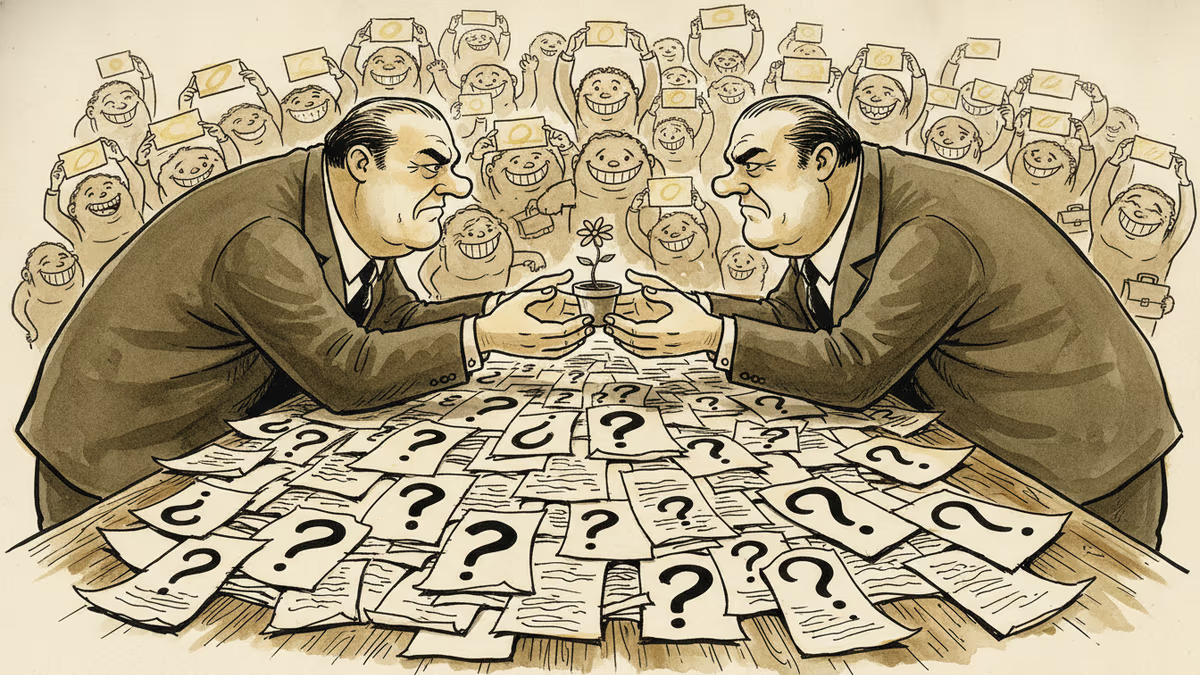
Trump's Beijing visit was a masterclass in diplomatic theater. Warm handshakes, viral selfies, and noodle runs. But Taiwan, Iran, and rare earths remain untouched. Here's what the spectacle obscures.
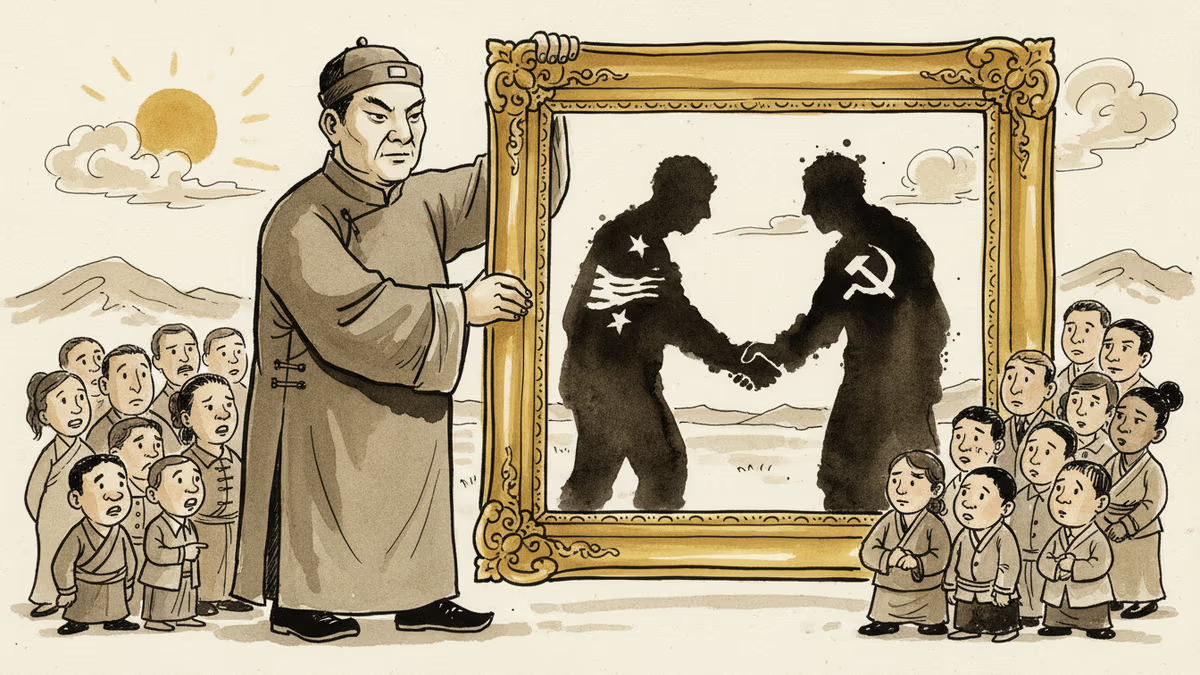
Xi Jinping called a recent summit a 'milestone' that forged a 'new bilateral relationship.' What does this language actually signal—and who stands to gain or lose?
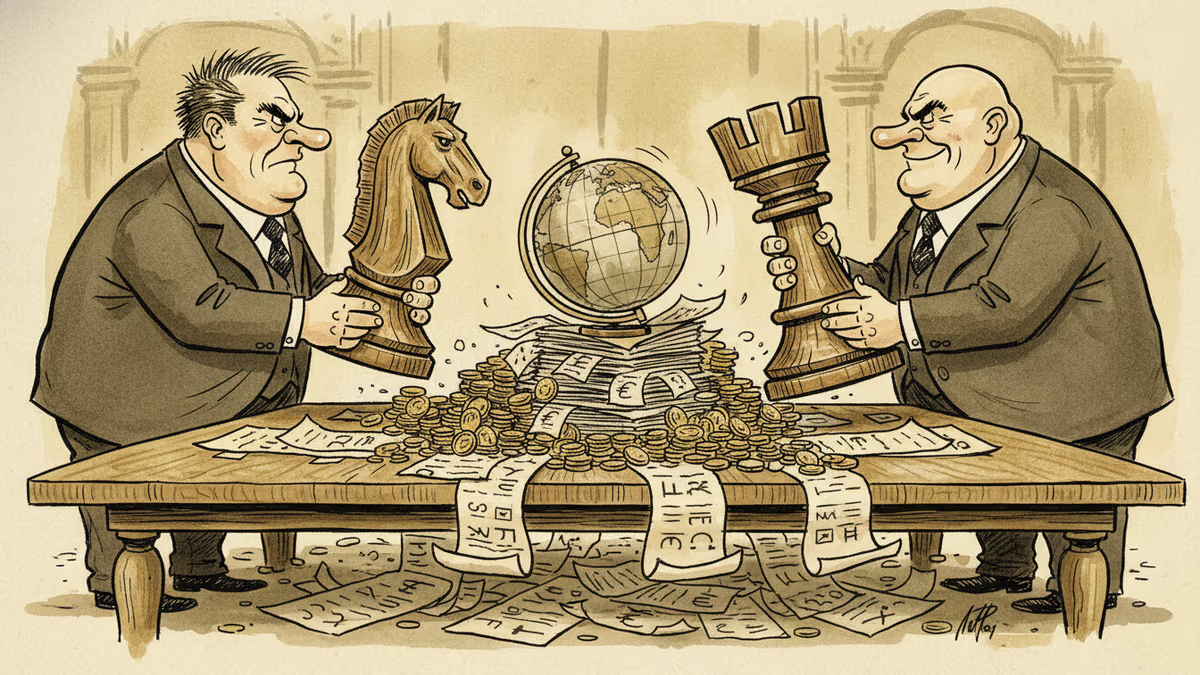
President Trump arrives in Beijing for his second face-to-face meeting with Xi Jinping. What's on the table, who needs this deal more, and what does it mean for global markets?
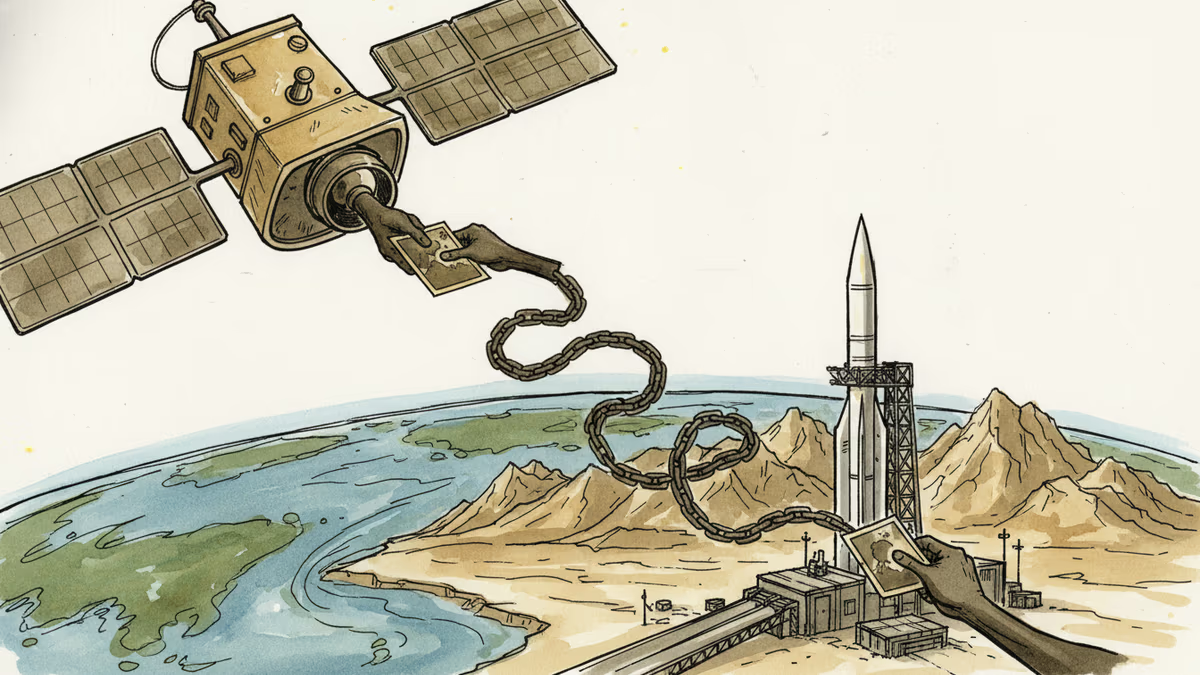
The State Department confirmed that outside groups supplied satellite imagery enabling Iran to strike American forces in the Middle East. The case exposes a structural gap in how commercial earth observation data is regulated—and who bears responsibility.
Trump's Beijing visit was a masterclass in diplomatic theater. Warm handshakes, viral selfies, and noodle runs. But Taiwan, Iran, and rare earths remain untouched. Here's what the spectacle obscures.
Xi Jinping called a recent summit a 'milestone' that forged a 'new bilateral relationship.' What does this language actually signal—and who stands to gain or lose?
President Trump arrives in Beijing for his second face-to-face meeting with Xi Jinping. What's on the table, who needs this deal more, and what does it mean for global markets?
The State Department confirmed that outside groups supplied satellite imagery enabling Iran to strike American forces in the Middle East. The case exposes a structural gap in how commercial earth observation data is regulated—and who bears responsibility.
Thoughts
Share your thoughts on this article
Sign in to join the conversation