

Microsoft's Q3 Surge Masks a PC Market in Transition
Microsoft posts strong Q3 results with $81.3B revenue, but Windows growth lags amid RAM shortage and Windows 10 end-of-life. What's driving the disconnect?
Microsoft's latest earnings tell two stories: one of corporate success, another of market uncertainty. The tech giant reported $81.3 billion in revenue for Q3 2026, up 17% year-over-year, with net income jumping 23% to $30.9 billion. Yet beneath these impressive numbers lies a curious disconnect—while the company thrives, its Windows business barely moved the needle.
The Numbers Behind the Growth
Microsoft's holiday quarter performance exceeded expectations across most divisions. The $81.3 billion revenue figure represents the company's strongest Q3 showing in recent years, driven primarily by cloud services and productivity software. Net income growth of 23% significantly outpaced revenue growth, suggesting improved operational efficiency and pricing power.
However, the Windows OEM and devices segment painted a different picture. Revenue grew just 1% during what should have been a banner quarter for PC sales. This sluggish performance stands in stark contrast to unexpected PC shipment growth reported by industry analysts, creating a puzzle that reveals deeper market dynamics at play.
The Perfect Storm: Shortages, Support, and Strategy

Three forces converged to create this quarter's unique market conditions. First, the ongoing global RAM shortage has created supply chain headaches for PC manufacturers, forcing them to pull forward inventory aggressively. Second, Microsoft's decision to end Windows 10 support has pushed consumers toward hardware upgrades. Third, looming tariff concerns have prompted manufacturers to stockpile components and finished goods.
IDC's recent analysis confirms this inventory acceleration, with PC makers building buffer stock to navigate potential trade disruptions and memory constraints. This explains why PC shipments rose while Microsoft's Windows revenue remained flat—manufacturers are selling existing inventory rather than licensing new Windows installations at the same rate.
Beyond the Surface: What's Really Happening
The disconnect between PC shipment growth and Windows revenue growth reveals something important about the current market transition. Many of these "new" PC sales likely represent channel stuffing and inventory repositioning rather than genuine end-user demand. When distributors and retailers stock up on existing inventory, Microsoft doesn't see additional Windows licensing revenue.
Meanwhile, the Windows 10 end-of-life deadline creates an artificial demand spike that may not reflect sustainable market health. Consumers upgrading reluctantly due to support termination behave differently than those upgrading for performance or features. This dynamic could lead to a post-deadline sales cliff once the forced upgrade cycle completes.
The RAM shortage adds another layer of complexity. Higher memory costs push up PC prices, potentially dampening consumer enthusiasm even as businesses complete necessary upgrades. This creates a market where unit sales grow but average selling prices and margins face pressure.
Authors
Related Articles
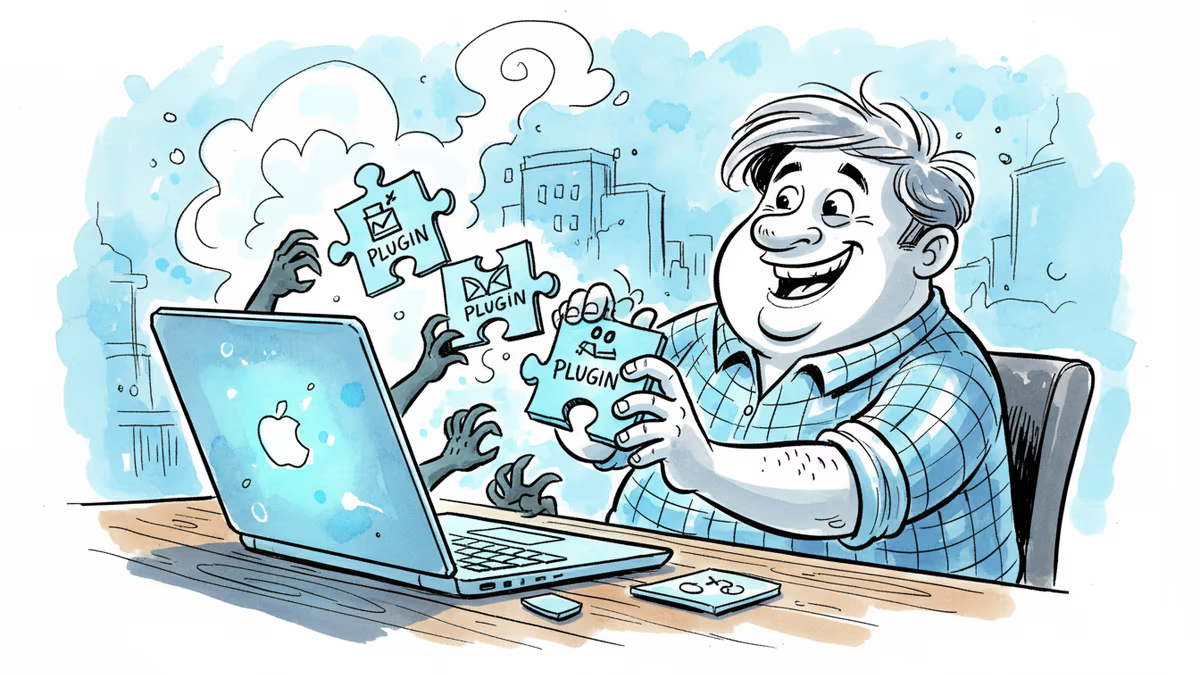
GitHub confirmed hackers stole data from 3,800 internal repositories via a poisoned VS Code extension. Here's why developer tools are now the most dangerous attack surface in tech.
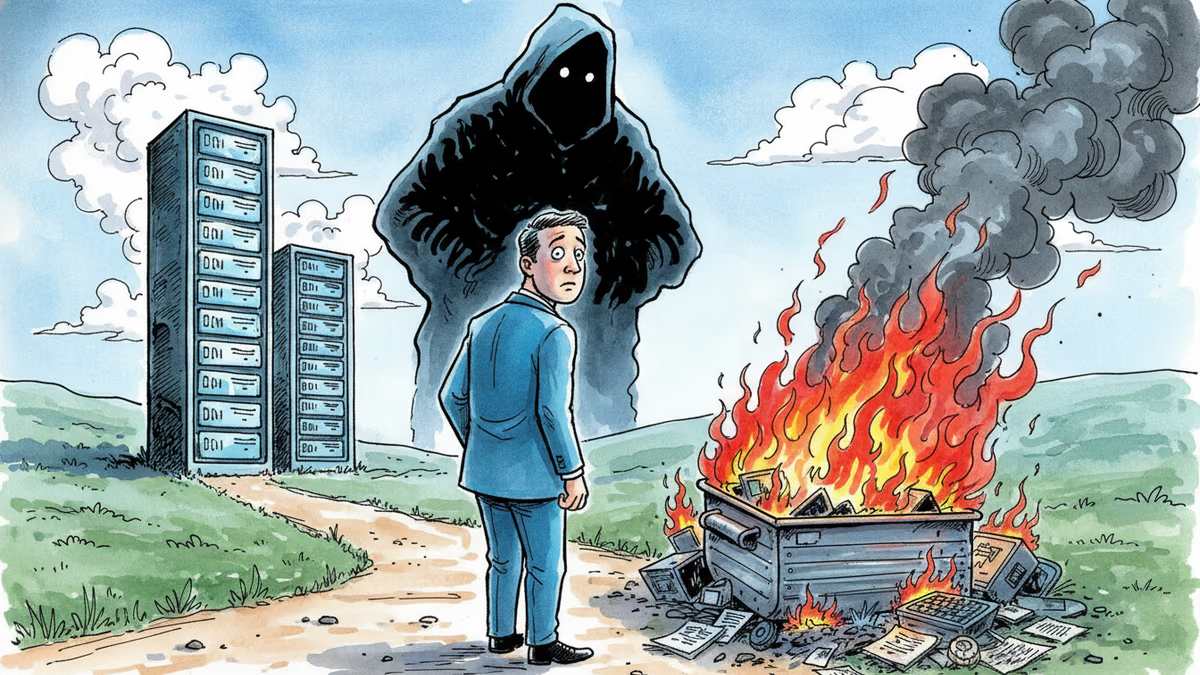
Emails revealed in the Musk v. Altman trial show Microsoft executives were deeply skeptical of OpenAI in 2017–2018. What actually changed their minds?
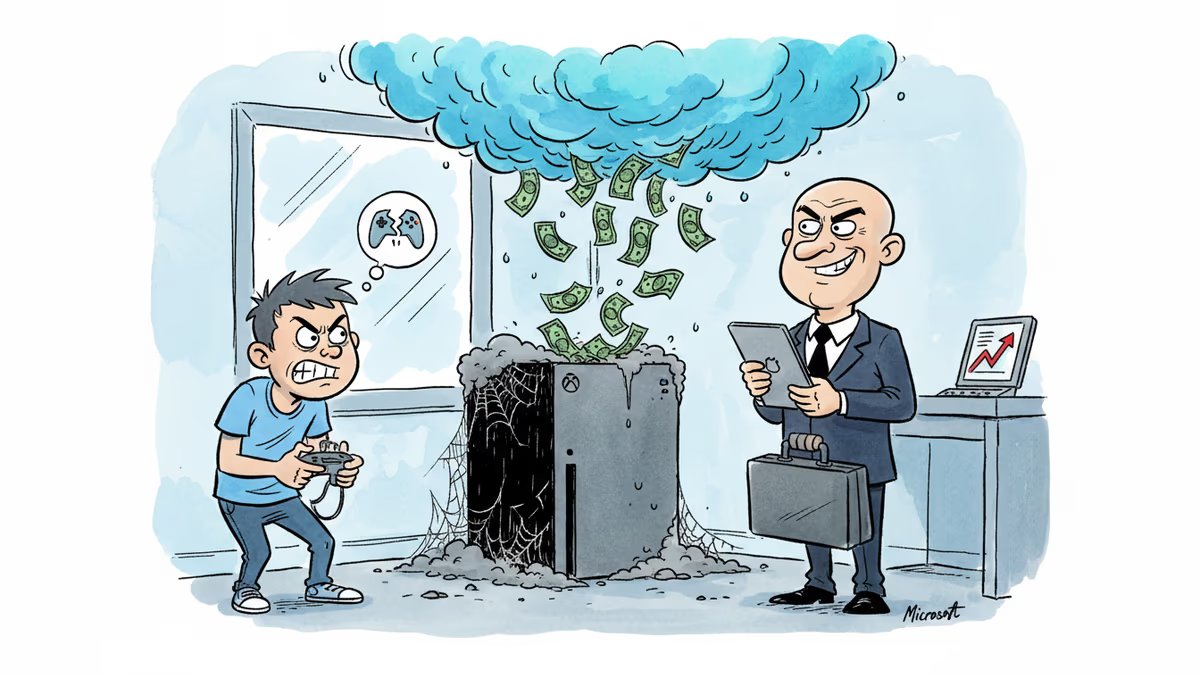
Xbox hardware revenue dropped 33% in Q1 2026, yet Microsoft posted $82.9B in total revenue. What this tells us about the future of gaming—and who actually loses.

Microsoft is letting Windows users delay updates indefinitely — 35 days at a time, as many times as they want. A long-overdue fix, or a security risk hiding in plain sight?
GitHub confirmed hackers stole data from 3,800 internal repositories via a poisoned VS Code extension. Here's why developer tools are now the most dangerous attack surface in tech.
Emails revealed in the Musk v. Altman trial show Microsoft executives were deeply skeptical of OpenAI in 2017–2018. What actually changed their minds?
Xbox hardware revenue dropped 33% in Q1 2026, yet Microsoft posted $82.9B in total revenue. What this tells us about the future of gaming—and who actually loses.
Microsoft is letting Windows users delay updates indefinitely — 35 days at a time, as many times as they want. A long-overdue fix, or a security risk hiding in plain sight?
Thoughts
Share your thoughts on this article
Sign in to join the conversation