
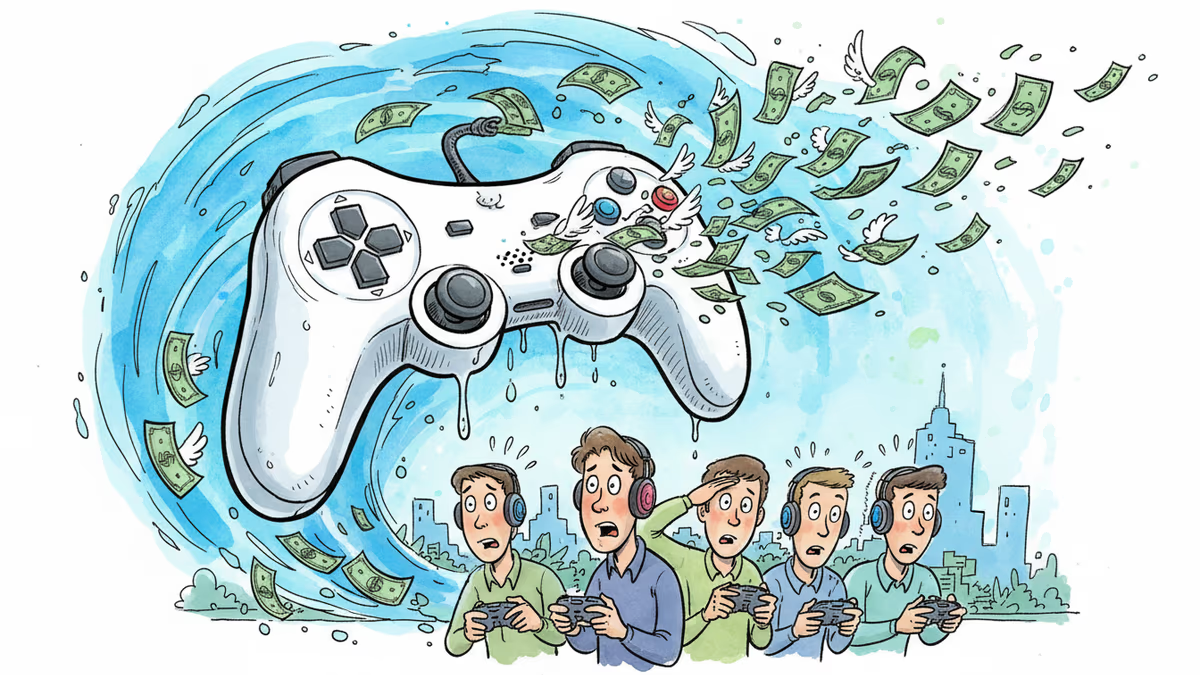
Phil Spencer's Exit Signals Xbox's Netflix Dream May Be Over
Microsoft Xbox chief Phil Spencer announces retirement after years of billion-dollar spending, mass layoffs, and confused messaging around Game Pass strategy
The $70 Billion Gamble That Changed Everything
When Phil Spencer announced his retirement last week, he left behind one of gaming's most expensive experiments. Over his tenure as Xbox chief, Microsoft spent billions trying to turn gaming into something resembling Netflix. The result? Game Pass subscribers, sure, but also mass layoffs, studio closures, and a brand identity crisis that's left everyone asking: what exactly is Xbox anymore?
The numbers tell a story of ambitious spending and mixed results. The $68.7 billionActivision Blizzard acquisition was supposed to be the ace in the hole. Instead, it's become a symbol of how throwing money at content doesn't automatically create a sustainable subscription business.
The Netflix Dream vs. Gaming Reality
Spencer's vision seemed logical: why sell consoles when you can sell subscriptions? While Sony doubled down on exclusive blockbusters to move PlayStation hardware, Xbox pivoted to "gaming everywhere" – phones, PCs, even rival consoles.
But here's where the Netflix analogy breaks down. Netflix succeeded because it created must-watch originals that kept subscribers hooked. Xbox's first-party studios, despite massive investment, haven't delivered consistent hits. Halo Infinite disappointed. Redfall flopped spectacularly. Even with Call of Duty now in the stable, the service feels more like a game rental shop than a destination.
Investors are taking notice. Microsoft's gaming revenue growth has slowed, and the company's been notably quiet about Game Pass subscriber numbers lately – never a good sign for a subscription business.

What Gamers Actually Think
The gaming community's reaction to Spencer's departure reveals deep ambivalence. On Reddit and gaming forums, opinions split between "finally, new leadership" and "at least he understood gamers." Many credit Spencer with making Xbox more consumer-friendly after the disastrous Xbox One launch, but question whether his subscription-first strategy actually served players.
Game Pass pricing has crept up significantly. The service that once felt like a steal now costs nearly as much as buying a few games outright. Meanwhile, day-one exclusives – the service's main selling point – have become increasingly rare as Microsoft focuses on multiplatform releases.
Developers paint a more troubling picture. Multiple studio sources describe an environment where subscription metrics matter more than game quality, leading to rushed releases and projects canceled mid-development to chase Game Pass engagement numbers.
The New Leadership's Impossible Task
Spencer's successor inherits a mess that goes beyond numbers. Xbox needs to answer fundamental questions: Is it a console maker, a service company, or a game publisher? The current strategy tries to be all three and succeeds at none.
The subscription model's unit economics remain questionable. While Microsoft won't share specifics, industry analysts estimate Game Pass needs to roughly triple its subscriber base to become truly profitable. That's a tall order when growth has already plateaued in key markets.
Then there's the talent retention problem. The recent wave of layoffs – affecting thousands across Microsoft's gaming divisions – has damaged morale and sparked an exodus of experienced developers to competitors.
Authors
Related Articles

GitHub confirmed hackers stole data from 3,800 internal repositories via a poisoned VS Code extension. Here's why developer tools are now the most dangerous attack surface in tech.
Emails revealed in the Musk v. Altman trial show Microsoft executives were deeply skeptical of OpenAI in 2017–2018. What actually changed their minds?
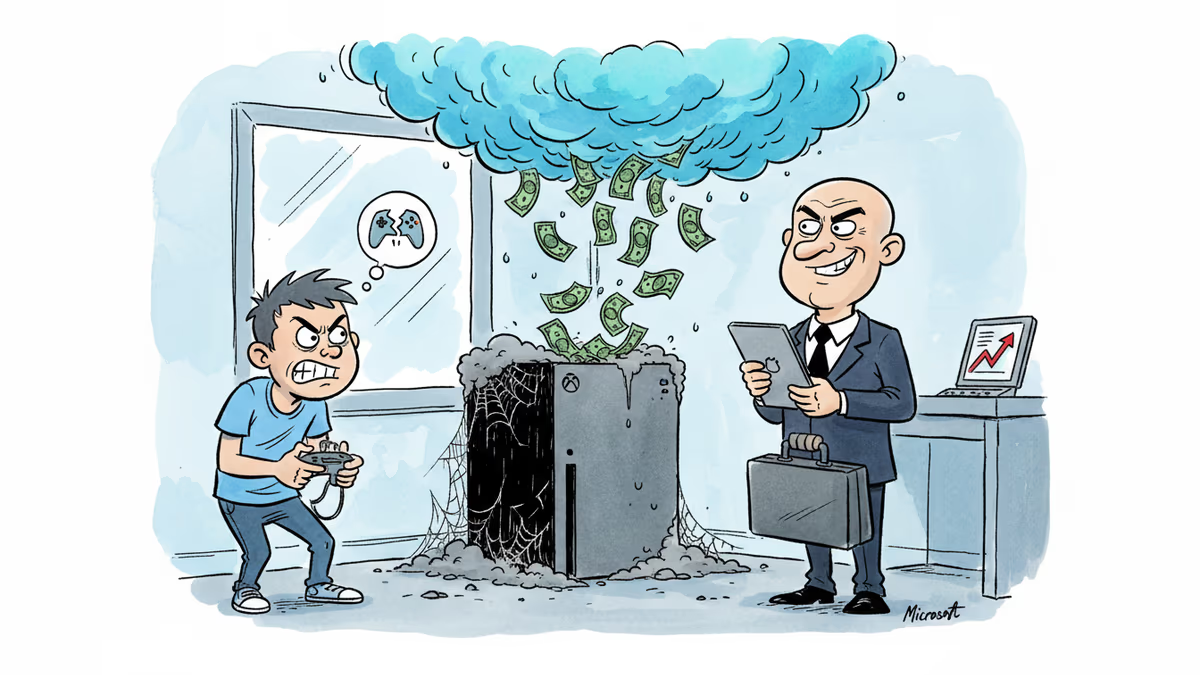
Xbox hardware revenue dropped 33% in Q1 2026, yet Microsoft posted $82.9B in total revenue. What this tells us about the future of gaming—and who actually loses.
Microsoft is letting Windows users delay updates indefinitely — 35 days at a time, as many times as they want. A long-overdue fix, or a security risk hiding in plain sight?
GitHub confirmed hackers stole data from 3,800 internal repositories via a poisoned VS Code extension. Here's why developer tools are now the most dangerous attack surface in tech.
Emails revealed in the Musk v. Altman trial show Microsoft executives were deeply skeptical of OpenAI in 2017–2018. What actually changed their minds?
Xbox hardware revenue dropped 33% in Q1 2026, yet Microsoft posted $82.9B in total revenue. What this tells us about the future of gaming—and who actually loses.
Microsoft is letting Windows users delay updates indefinitely — 35 days at a time, as many times as they want. A long-overdue fix, or a security risk hiding in plain sight?
Thoughts
Share your thoughts on this article
Sign in to join the conversation