

Microsoft Data Center Electricity Rates 2026: Tech Giant Vows to Pay More to End Local Pushback
Microsoft pledges to ask for higher electricity rates for its data centers by 2026 to ease local community concerns and respond to political pressure from the Trump administration.
Microsoft is volunteering to pay a higher price for its massive energy appetite. On January 13, 2026, the company announced it'll take a series of steps to become a "good neighbor" in regions where it builds data centers, including a startling promise to ask public utilities to set higher electricity rates for these facilities.
Microsoft Data Center Electricity Rates 2026: Facing the Political Heat
Speaking at an event in Great Falls, Virginia, Microsoft vice chair and president Brad Smith didn't shy away from the growing national resistance. "We are at a moment in time when we need to listen," Smith said, acknowledging that residents worry about rising utility bills and water shortages. This pivot comes just a day after President Donald Trump posted on Truth Social, demanding that major tech companies "pay their own way" so they don't inflate costs for everyday Americans.

The stakes are high for the AI boom. While the administration is pushing to expedite data center construction, local communities have been slamming the brakes. In October, Microsoft had to cancel a Wisconsin project after locals warned of a potential 5-15% rate hike. Another project in Michigan was put on hold in December following similar protests. Opposition has turned bipartisan, with even MAGA influencers like Steve Bannon questioning the environmental and economic toll of these massive server farms.
Commitments Beyond the Grid
Beyond the Microsoft data center electricity rates 2026 adjustment, the company pledged to replenish more water than it consumes. Interestingly, this move contrasts with the White House AI czar David Sacks, who recently labeled claims about AI water consumption as a "hoax." Microsoft is also promising to bypass local tax abatements and invest in local AI training, aiming to prove that their presence is an economic win, not a drain on local resources.
Authors
Related Articles

Snowflake's new $6 billion AWS contract is about more than cloud spending. It signals a shift in AI infrastructure—away from Nvidia GPUs and toward cheaper, homegrown chips for the agent era.
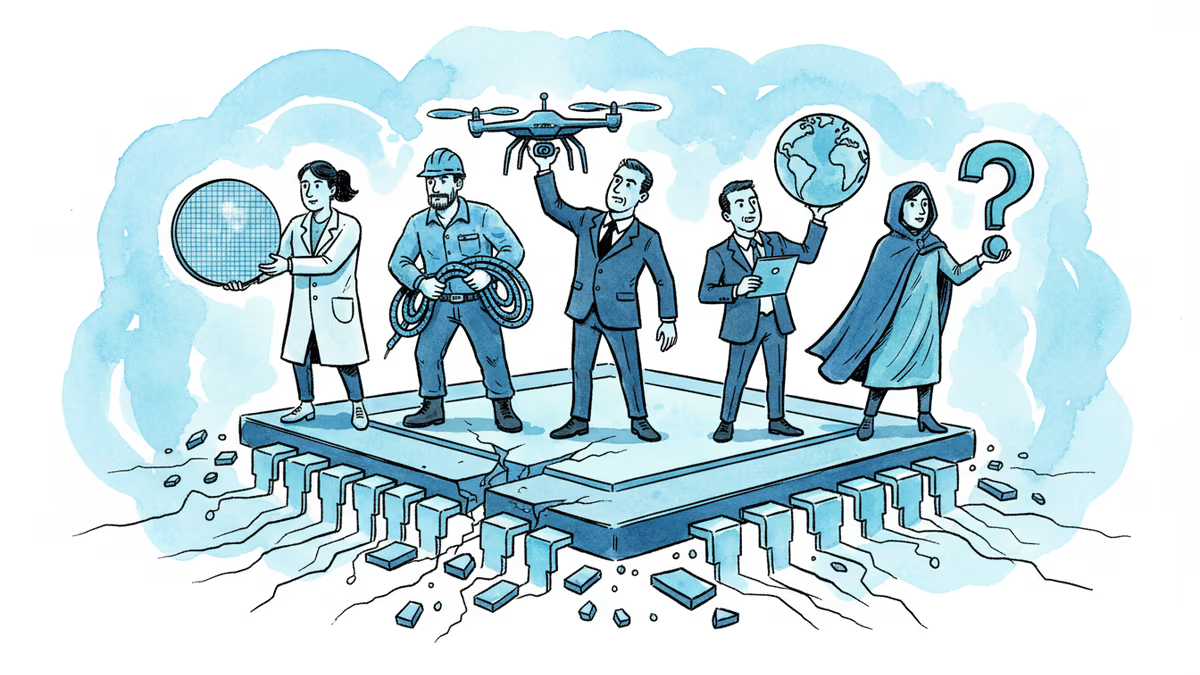
At Milken 2026, five AI insiders—from the CEO of ASML to a quantum physicist challenging LLMs—laid out the physical, energy, and geopolitical limits the AI boom is running into.
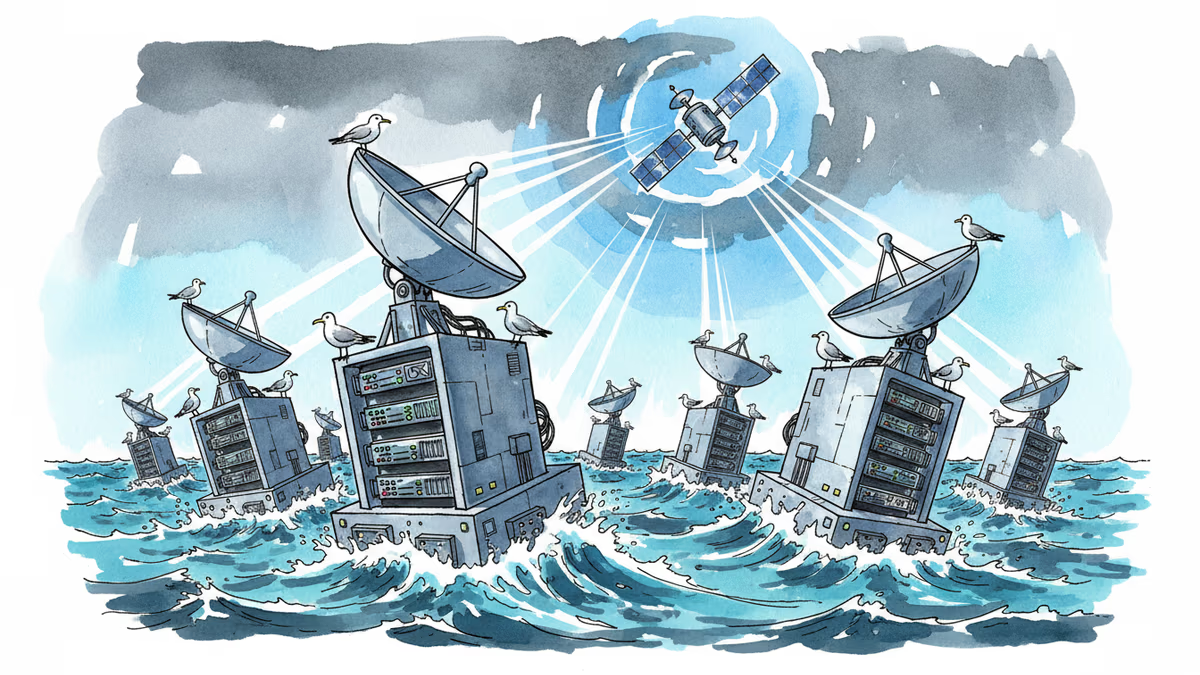
Palantir co-founder Peter Thiel and other Silicon Valley investors have poured $140 million into Panthalassa, a startup building wave-powered floating AI data centers in the open ocean. Here's what that actually means.
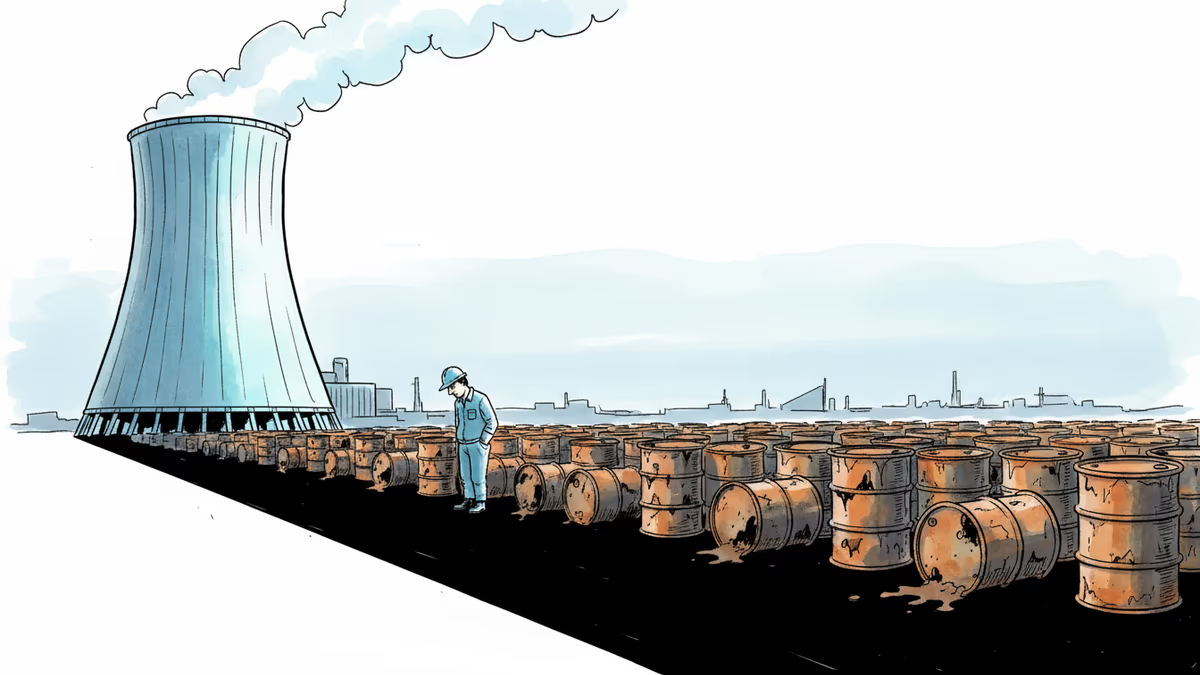
Nuclear power is winning fans across the political spectrum—and Big Tech is pouring billions in. But America still has no permanent home for the 2,000 metric tons of high-level waste its reactors produce every single year.
Snowflake's new $6 billion AWS contract is about more than cloud spending. It signals a shift in AI infrastructure—away from Nvidia GPUs and toward cheaper, homegrown chips for the agent era.
At Milken 2026, five AI insiders—from the CEO of ASML to a quantum physicist challenging LLMs—laid out the physical, energy, and geopolitical limits the AI boom is running into.
Palantir co-founder Peter Thiel and other Silicon Valley investors have poured $140 million into Panthalassa, a startup building wave-powered floating AI data centers in the open ocean. Here's what that actually means.
Nuclear power is winning fans across the political spectrum—and Big Tech is pouring billions in. But America still has no permanent home for the 2,000 metric tons of high-level waste its reactors produce every single year.
Thoughts
Share your thoughts on this article
Sign in to join the conversation