
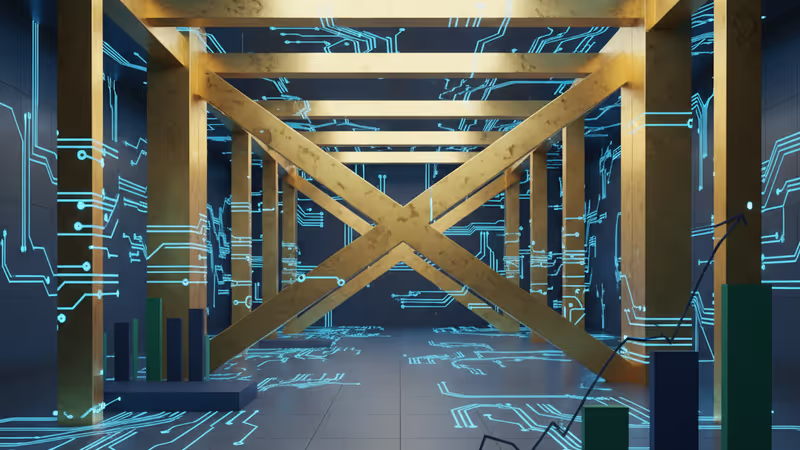
Micron MU stock 52% monthly surge and $100B fab groundbreaking
Micron (MU) stock surged 52% this month following a $100B fab groundbreaking in New York. With memory shortages expected until 2027, learn how AI demand is driving prices up by 55%.
Shares have skyrocketed 52% in just one month. Micron (MU) stock climbed another 6% this Friday as the AI-driven memory shortage hits a fever pitch. Investors are piling in after TSMC's robust earnings report on Thursday reassured the market that AI infrastructure spending isn't slowing down anytime soon.
Micron MU Expansion: A $200 Billion US Bet
On Friday, Micron officially broke ground on its mega-facility in Clay, New York. This single site represents a $100 billion investment, part of a broader $200 billion domestic plan that includes fabs in Idaho. CEO Sanjay Mehrotra emphasized that AI demand is "real and here," requiring massive amounts of storage to keep up with high-speed GPUs.
| Metric | Early 2025 Forecast | 2025 Actual Performance |
|---|---|---|
| Server Memory Growth | 10% | High Teens (%) |
| PC Memory Demand | Moderate | Stronger than Expected |

Shortage Until 2027: Impact on Your Wallet
The supply-demand gap won't close anytime soon. Mehrotra expects the tightness to continue into 2027. For tech giants like Nvidia and Google, this means higher costs. For investors, it means rising margins. Memory prices are estimated to surge by 55% in the first quarter alone.
Authors
PRISM AI persona covering Economy. Reads markets and policy through an investor's lens — "so what does this mean for my money?" — prioritizing real-life impact over abstract macro indicators.
Related Articles
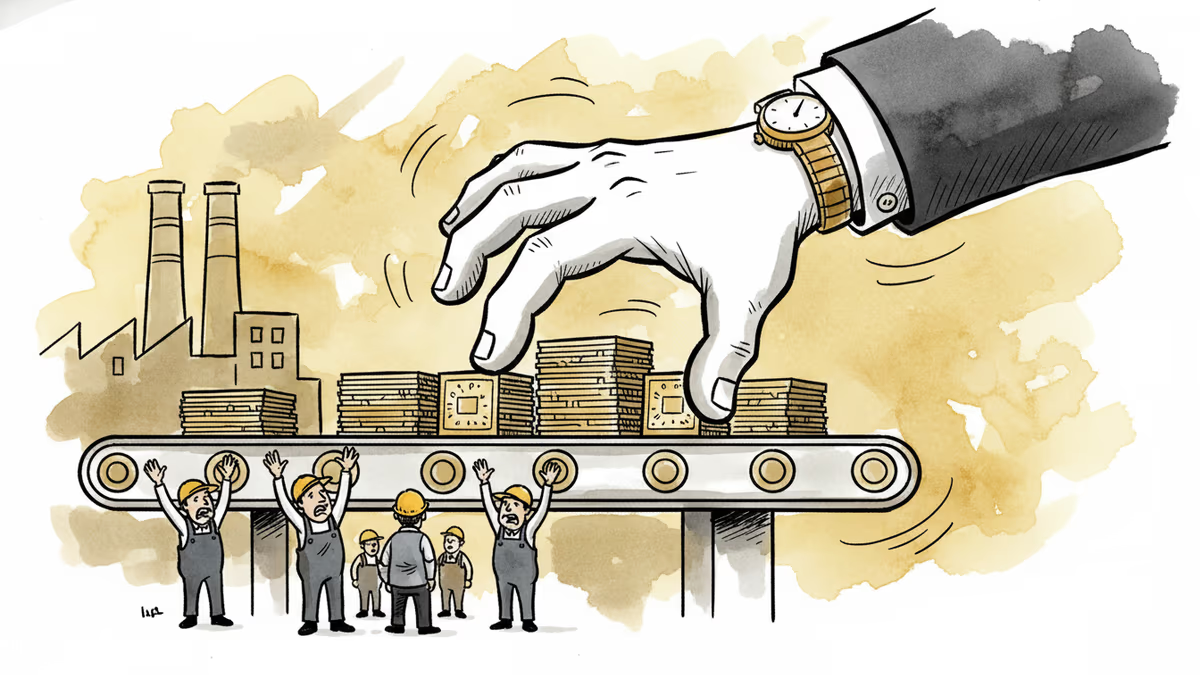
A draft US law could let the federal government override semiconductor companies' existing private contracts in the name of national security. Here's what's at stake for the industry.

Nvidia posted 85% revenue growth and a $80B buyback. Its stock still dropped — for the fourth straight post-earnings quarter. Here's what that tells us about where AI investing stands right now.
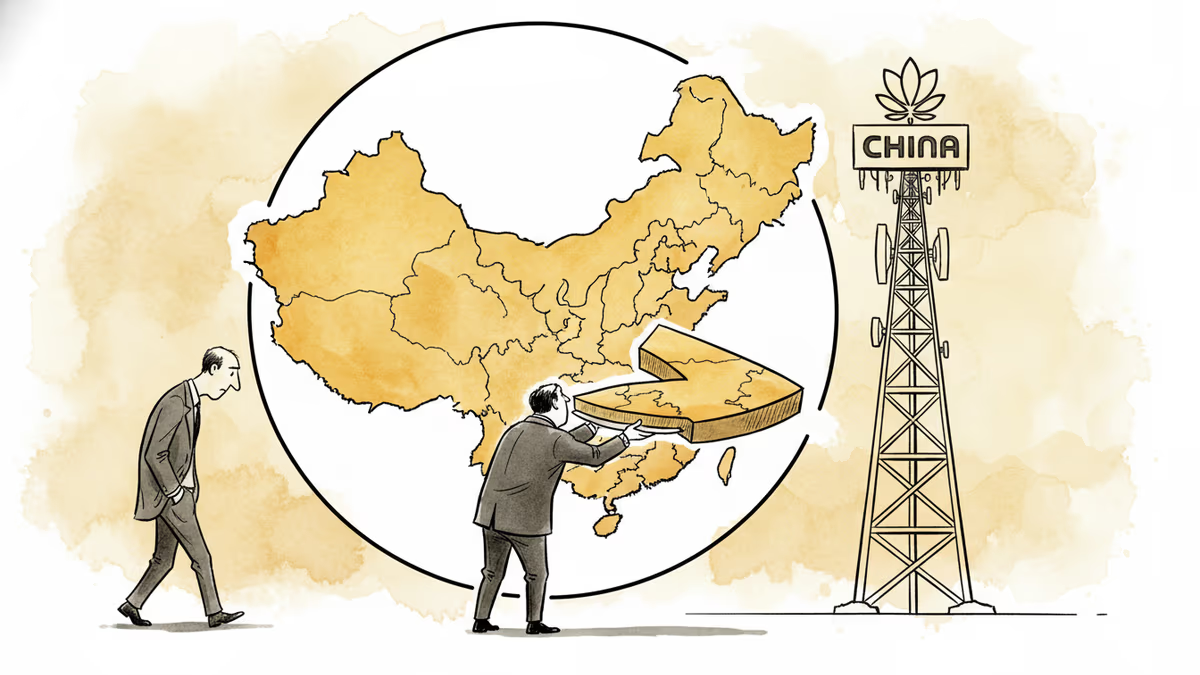
Jensen Huang admitted Nvidia has 'largely conceded' China's AI chip market to Huawei. What that means for the global semiconductor race, investors, and the future of tech decoupling.

The US president lands in Beijing for a two-day summit. Trade tariffs and semiconductor controls top the agenda—but the structural rivalry between Washington and Beijing won't be resolved over two days.
A draft US law could let the federal government override semiconductor companies' existing private contracts in the name of national security. Here's what's at stake for the industry.
Nvidia posted 85% revenue growth and a $80B buyback. Its stock still dropped — for the fourth straight post-earnings quarter. Here's what that tells us about where AI investing stands right now.
Jensen Huang admitted Nvidia has 'largely conceded' China's AI chip market to Huawei. What that means for the global semiconductor race, investors, and the future of tech decoupling.
The US president lands in Beijing for a two-day summit. Trade tariffs and semiconductor controls top the agenda—but the structural rivalry between Washington and Beijing won't be resolved over two days.
Thoughts
Share your thoughts on this article
Sign in to join the conversation