

Mexico City Built a Chatbot for the World Cup. Will It Last?
Mexico City launched Xoli, a WhatsApp chatbot guiding visitors through 3,000+ daily events ahead of the 2026 FIFA World Cup. Here's what it does, who it's for, and what it might miss.
3,000 events. Every single day. That's how much is happening in Mexico City on an average afternoon — museums, street markets, concerts, food festivals, guided tours. On peak days, that number hits 5,000. For a tourist who just landed and speaks no Spanish, navigating that is close to impossible.
Mexico City's government thinks a WhatsApp chatbot can fix that.
Meet Xoli (Pronounced Sho-Lee)
Xoli launched this month as the city's official AI-powered information assistant, accessible entirely through WhatsApp. The setup is frictionless: save the number 55 6565 9395, send "Hola," and the bot immediately asks whether you'd like to continue in English or Spanish. From there, users can browse categories — culture, tourism, food, transit — or just type a free-form question.
It runs 24/7, every day of the week, with no app download required.
The chatbot was built in-house by the city's Digital Agency for Public Innovation (ADIP), in collaboration with the local Ministries of Tourism and Culture. Mexico City Mayor Clara Brugada described Xoli as "the technological instrument that will allow us to link culture, tourism, recreation, and entertainment with the population." The emphasis on in-house development wasn't accidental — the city is positioning this as a public infrastructure project, not a product handed off to a tech vendor.
For the 2026 FIFA World Cup, Xoli will include a dedicated section covering match schedules, public viewing locations, special events, and ticket purchasing options.
Why the World Cup Changes Everything
The 2026 tournament is unlike anything that's come before. For the first time in over 90 years, three countries — the US, Canada, and Mexico — are co-hosting. The field expands to 48 teams, and the match count jumps to 104 games, roughly 40 more than previous editions. Mexico City is expecting an unprecedented wave of international visitors, many of whom will arrive with no prior knowledge of the city, no local contacts, and a phone full of apps they already use at home.

WhatsApp is the right call here. In Mexico, it functions the way iMessage does in the US or KakaoTalk does in South Korea — it's the default messaging layer for nearly everyone. Building Xoli on top of that removes the single biggest barrier to adoption: getting people to download something new.
The federal government is running parallel initiatives. President Claudia Sheinbaum unveiled the Mexico 2026 Social World Cup plan late last year, which includes more than 177 festivals, 5,000 tournament-linked activities, 74 soccer competitions for students and workers, and the rehabilitation of 4,200 public sports facilities. A separate app, Conoce México, is being developed by the federal digital agency to cover matches, venues, transit routes, and cultural programming.
On the consumer protection side, Mexico's Profeco struck a deal with FIFA to create a Spanish-language ticket platform that displays prices in Mexican pesos — and includes an official resale system designed to undercut scalpers.
Three Ways to Read This
For tourists, Xoli is straightforwardly useful. A reliable, bilingual, always-on information service that lives in an app you're already using is a genuine convenience upgrade over hunting through TripAdvisor reviews or asking your hotel concierge.
For the city government, this is about more than the World Cup. Officials have been explicit: Xoli will remain active after the tournament ends, with the stated goal of promoting economic activity and improving access to public services. Whether that ambition survives the post-event drop in political attention is a different question.
For smaller, informal businesses, the picture is murkier. A city-run chatbot draws from official databases. The taco stand that's been on the same corner for 30 years but has never registered with the tourism ministry won't appear in Xoli's recommendations. The underground art show, the pop-up mezcal bar, the neighborhood festival that the locals actually go to — these are precisely the experiences that make Mexico City worth visiting, and they're the hardest to digitize.
The Part the Government Isn't Talking About
Several independent studies have flagged a concern that's notably absent from Mexico's World Cup planning materials: environmental impact. A 104-game tournament spread across three countries, drawing tens of millions of visitors, carries a significant carbon and resource footprint. Pressure on water and electricity infrastructure in host cities — including Mexico City, which already faces chronic water supply challenges — hasn't been formally incorporated into the government's preparation strategy.
Xoli can tell you where to find the best churros. It can't tell you whether the city's grid will hold up when 80,000 fans are simultaneously charging their phones after a quarterfinal.
Authors
Related Articles

Alphabet's X moonshot factory has spun out Anori, a $26M-funded platform targeting the costly pre-development phase of real estate. But can tech actually fix permitting?
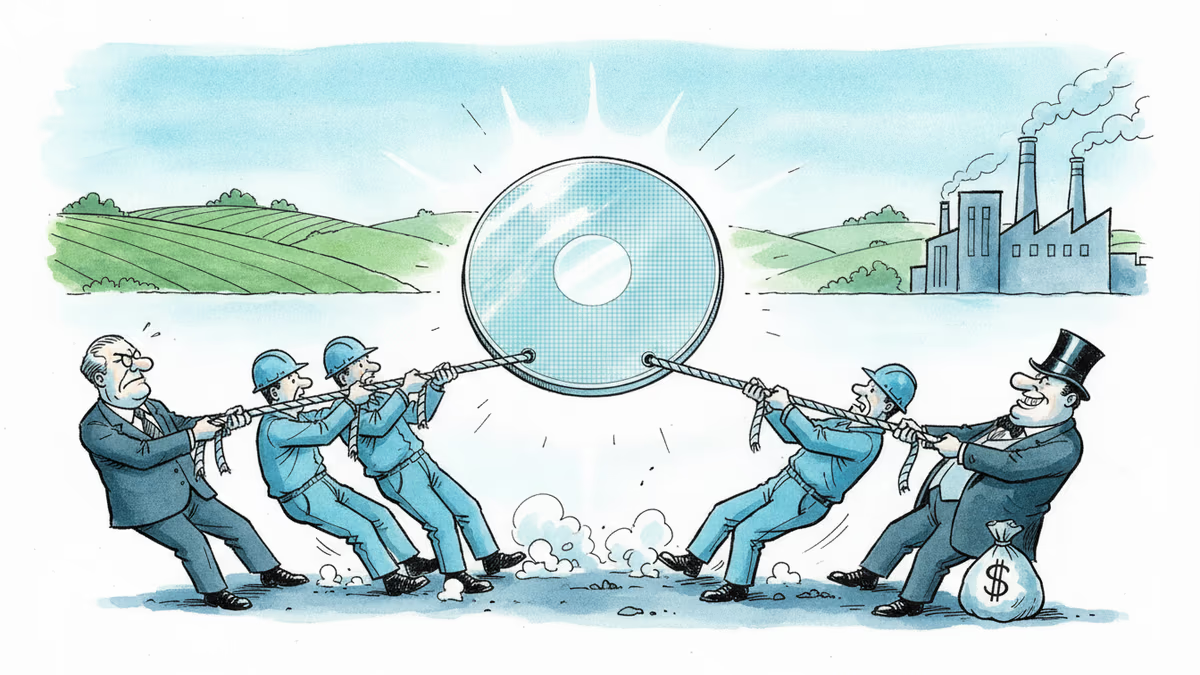
Samsung Electronics' union branch revealed that 84% of survey respondents oppose the government's roughly $290 billion (₩400 trillion) semiconductor megaproject in Gwangju. Government, management, the union and shareholders are all reading the same national project in sharply different ways.
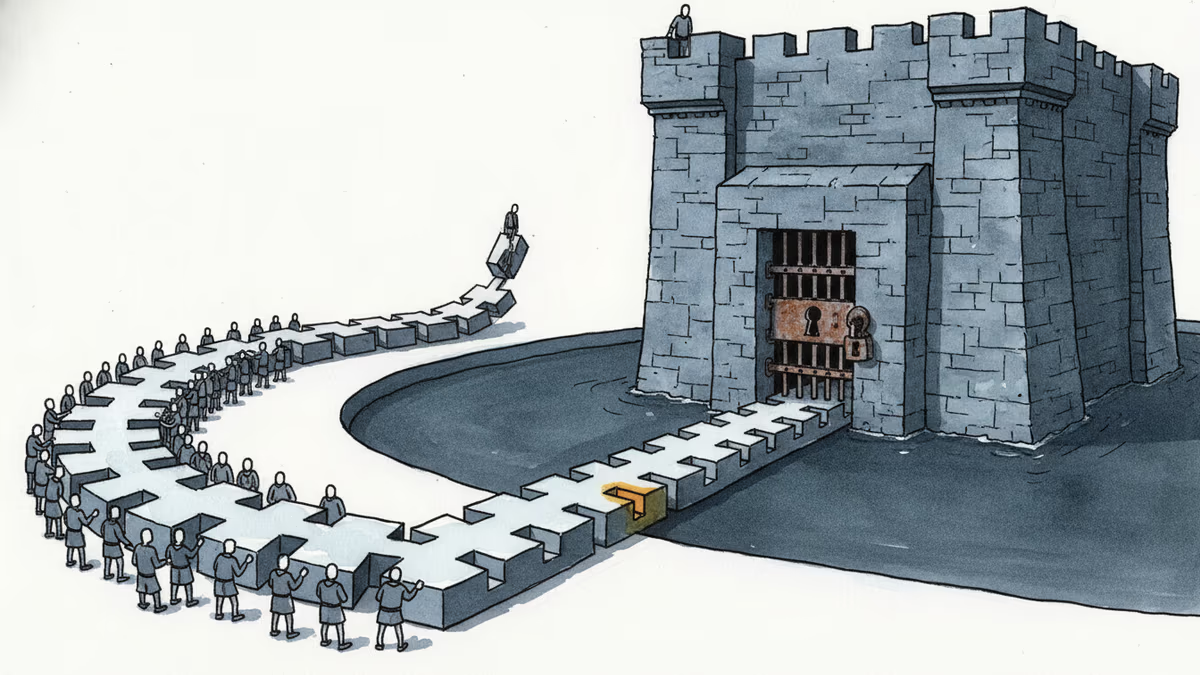
Nvidia shipped roughly a billion RISC-V cores in 2024, then announced it would run CUDA on the open standard. We break down how royalty-free instruction sets and open software stacks are trying to route around CUDA's lock-in. Part 2 of the Semiconductor Sovereignty series.
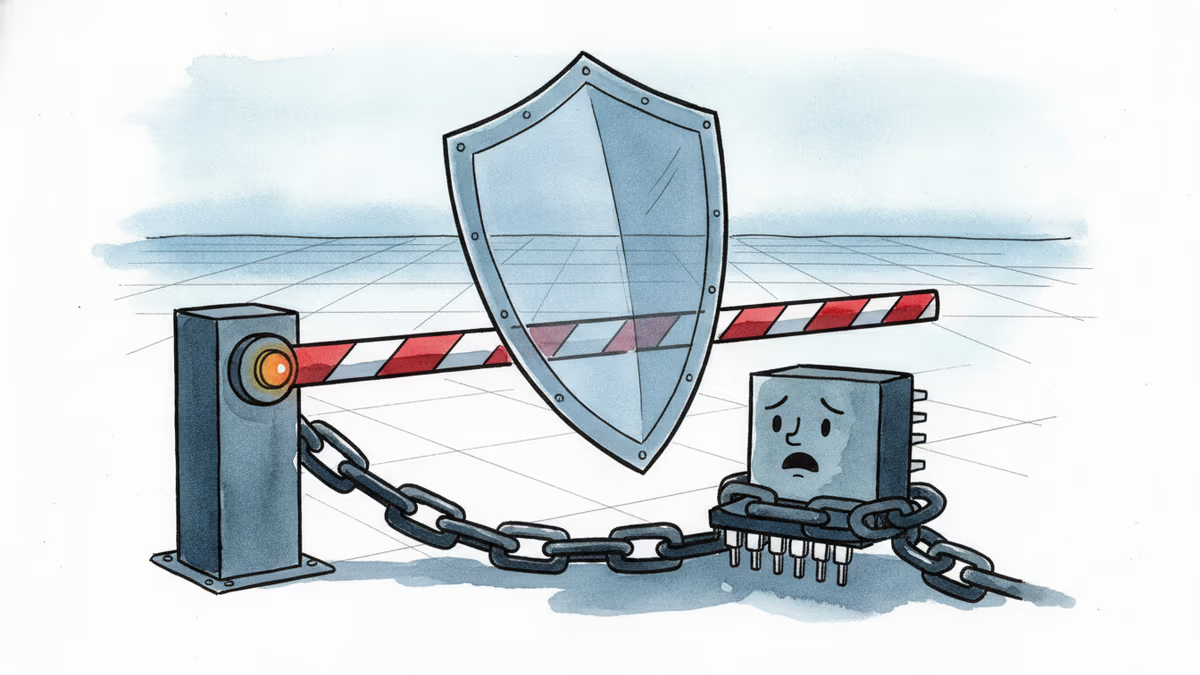
US AI-chip export controls split into three layers in the first half of 2026 — January easing, a May crackdown on circumvention, and a pending bill. Nvidia erased China from its guidance and still posted a record $81.6 billion quarter. A look at the export policy that both shields and cages it.
Alphabet's X moonshot factory has spun out Anori, a $26M-funded platform targeting the costly pre-development phase of real estate. But can tech actually fix permitting?
Samsung Electronics' union branch revealed that 84% of survey respondents oppose the government's roughly $290 billion (₩400 trillion) semiconductor megaproject in Gwangju. Government, management, the union and shareholders are all reading the same national project in sharply different ways.
Nvidia shipped roughly a billion RISC-V cores in 2024, then announced it would run CUDA on the open standard. We break down how royalty-free instruction sets and open software stacks are trying to route around CUDA's lock-in. Part 2 of the Semiconductor Sovereignty series.
US AI-chip export controls split into three layers in the first half of 2026 — January easing, a May crackdown on circumvention, and a pending bill. Nvidia erased China from its guidance and still posted a record $81.6 billion quarter. A look at the export policy that both shields and cages it.
Thoughts
Share your thoughts on this article
Sign in to join the conversation