

Meta Ray-Ban Smart Glasses Production Set to Double Amid AI Surge
Meta is reportedly planning to double its Ray-Ban smart glasses production by the end of 2026. Explore why demand is surging and what it means for the AI wearable market.
Meta's wearable bet is paying off big time. According to Bloomberg News, Meta is mulling a plan to double the production output of its Ray-Ban Meta smart glasses by the end of 2026. The tech giant is currently in talks with its manufacturing partner, EssilorLuxottica, to scale up supply chain capacity.
The Logic Behind Meta Ray-Ban Smart Glasses Production Boost
The demand for the glasses has significantly outpaced internal projections. While the first generation was a niche curiosity, the current iteration's integration with Meta AI—capable of real-time translation and visual analysis—has turned it into a surprise hit. Consumers are increasingly viewing them as the most friction-less way to interact with a personal AI agent.

Bridging the Gap to True AR
By doubling production, Meta isn't just selling hardware; they're training their AI models on massive amounts of real-world data shared by users. This aggressive expansion serves as a strategic bridge to their upcoming Orion AR glasses, establishing a dominant market share before competitors can catch up.
Authors
Related Articles

A law firm marketing itself on AI-powered legal success submitted fake citations in a federal appeal. Now its lawyers face sanctions — and the broader AI legal industry faces a credibility crisis.
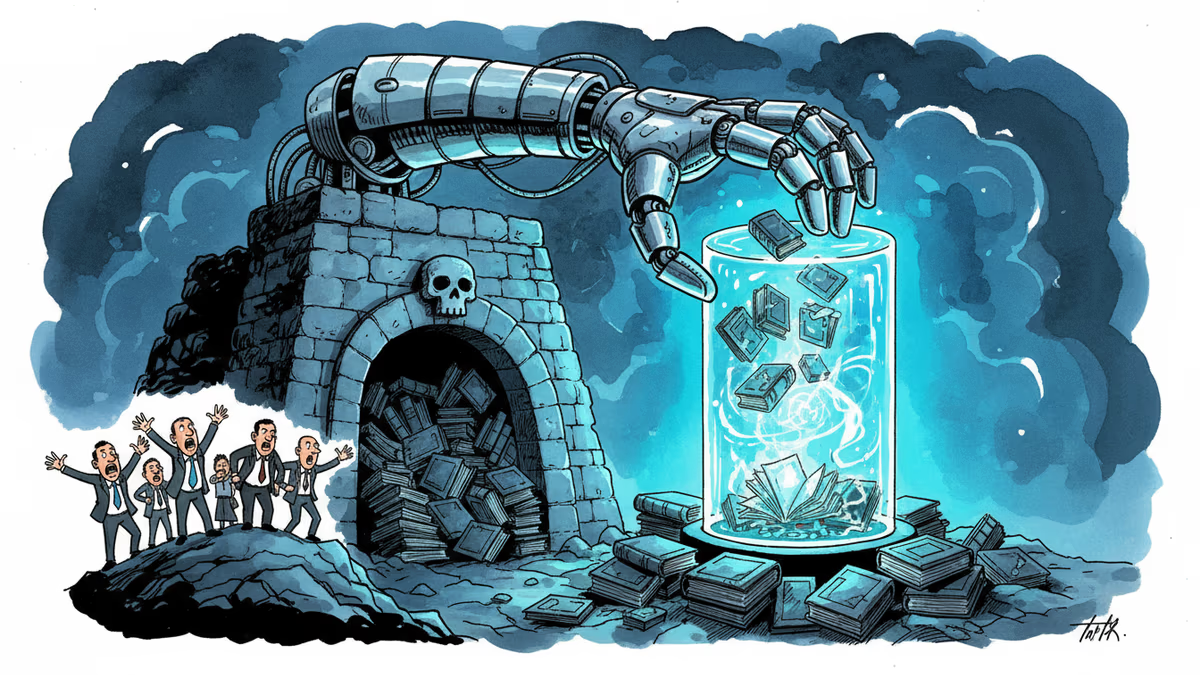
Five major publishers and author Scott Turow have filed a class action lawsuit against Meta, alleging the company used illegal pirate sites like LibGen to train its Llama AI models without permission.

New Mexico already won $375 million from Meta. Now it wants something harder to give: a court order forcing Facebook, Instagram, and WhatsApp to redesign themselves. A three-week trial starts Monday.

Meta acquired humanoid robotics startup ARI, adding to a Big Tech arms race in physical AI. The real prize isn't a robot product — it's a new way to train intelligence.
A law firm marketing itself on AI-powered legal success submitted fake citations in a federal appeal. Now its lawyers face sanctions — and the broader AI legal industry faces a credibility crisis.
Five major publishers and author Scott Turow have filed a class action lawsuit against Meta, alleging the company used illegal pirate sites like LibGen to train its Llama AI models without permission.
New Mexico already won $375 million from Meta. Now it wants something harder to give: a court order forcing Facebook, Instagram, and WhatsApp to redesign themselves. A three-week trial starts Monday.
Meta acquired humanoid robotics startup ARI, adding to a Big Tech arms race in physical AI. The real prize isn't a robot product — it's a new way to train intelligence.
Thoughts
Share your thoughts on this article
Sign in to join the conversation