
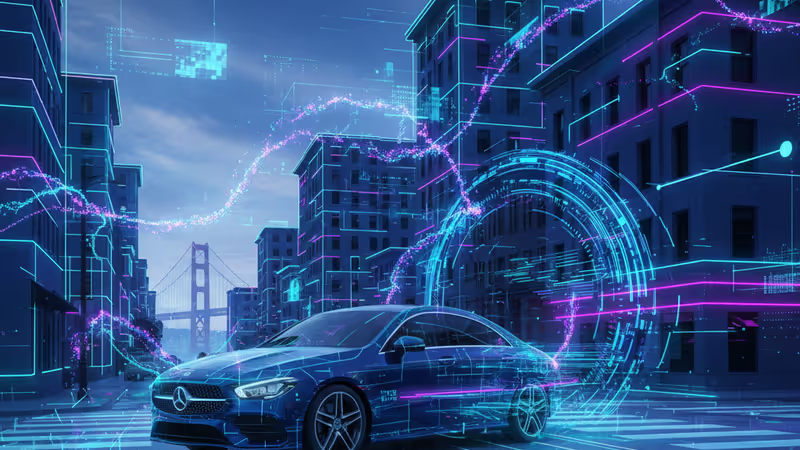
Mercedes-Benz CLA Drive Assist Pro 2026: S-Class Tech for the $50k Entry-Level EV
Mercedes-Benz brings S-Class autonomy to the masses. The new CLA EV, priced under $50,000, features the advanced Drive Assist Pro for city streets.
High-end autonomy is no longer reserved for the elite. Mercedes-Benz is flipping the script by bringing its most advanced 'Drive Assist Pro' suite to the new entry-level CLA EV, bridging the gap between luxury and accessibility.
Mercedes-Benz CLA Drive Assist Pro 2026: From Radar to Reality
The journey began in 1999 with the S-Class, which introduced radar-enabled adaptive cruise control. Since then, we've moved from simple speed maintenance to complex lane-keeping and GPS-geofenced systems. Now, the goal is shifting from highway cruising to tackling the unpredictability of lower-speed surface streets.

Conquering the Concrete Jungle
Recent demos in San Francisco reveal that the new CLA isn't just a budget EV—it's a tech powerhouse. Priced under $50,000, it features a sophisticated version of the Drive Assist suite that handles braking and deceleration with newfound grace. One standout feature is the ability to use the brake while Adaptive Cruise Control is active without canceling the system, allowing for a more seamless 'collaboration' between human and machine.
Authors
Related Articles
Auto China 2026 set records with 1,451 vehicles and 181 world premieres. But the real story isn't the size—it's how Chinese automakers stopped competing on price and started competing on brains.
Elon Musk confirmed on Tesla's Q1 2026 earnings call that Hardware 3 vehicles will never receive unsupervised Full Self-Driving — locking out millions who paid for the feature.
CATL's third-gen Shenxing LFP battery claims charging speeds nearly 5x faster than Hyundai or Porsche's best 800V systems. Here's what that really means.
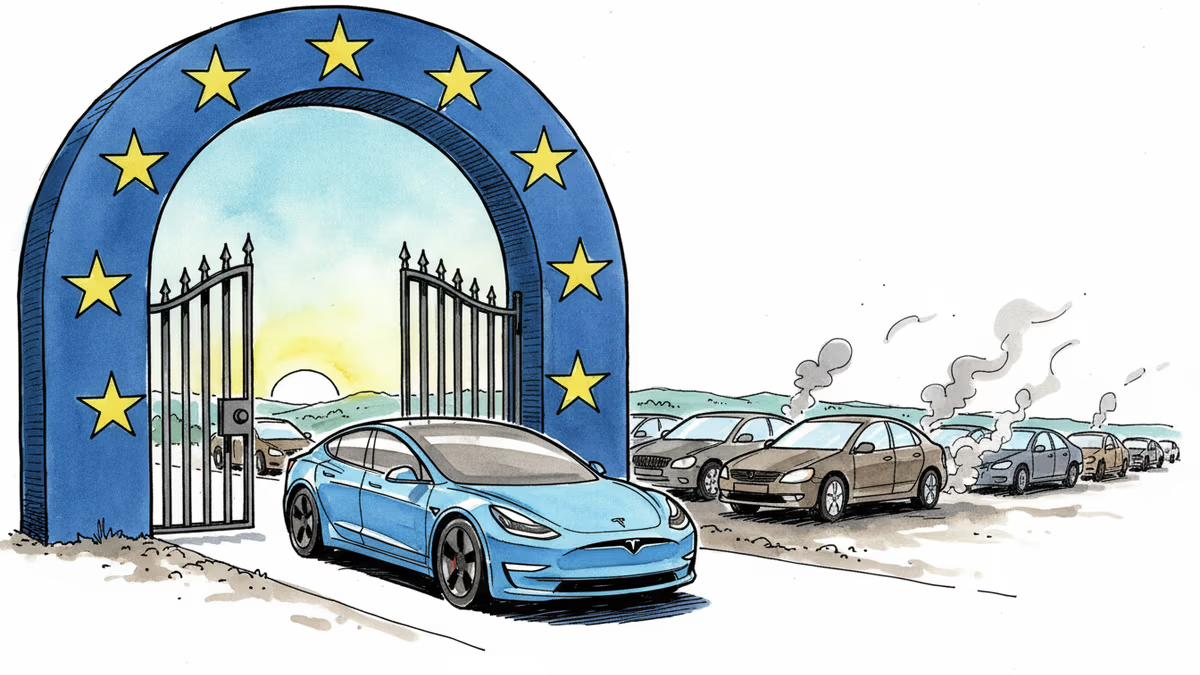
The Netherlands became the first European country to officially approve Tesla's FSD Supervised. With EU's type-approval framework, this could ripple across 27 member states fast.
Auto China 2026 set records with 1,451 vehicles and 181 world premieres. But the real story isn't the size—it's how Chinese automakers stopped competing on price and started competing on brains.
Elon Musk confirmed on Tesla's Q1 2026 earnings call that Hardware 3 vehicles will never receive unsupervised Full Self-Driving — locking out millions who paid for the feature.
CATL's third-gen Shenxing LFP battery claims charging speeds nearly 5x faster than Hyundai or Porsche's best 800V systems. Here's what that really means.
The Netherlands became the first European country to officially approve Tesla's FSD Supervised. With EU's type-approval framework, this could ripple across 27 member states fast.
Thoughts
Share your thoughts on this article
Sign in to join the conversation