
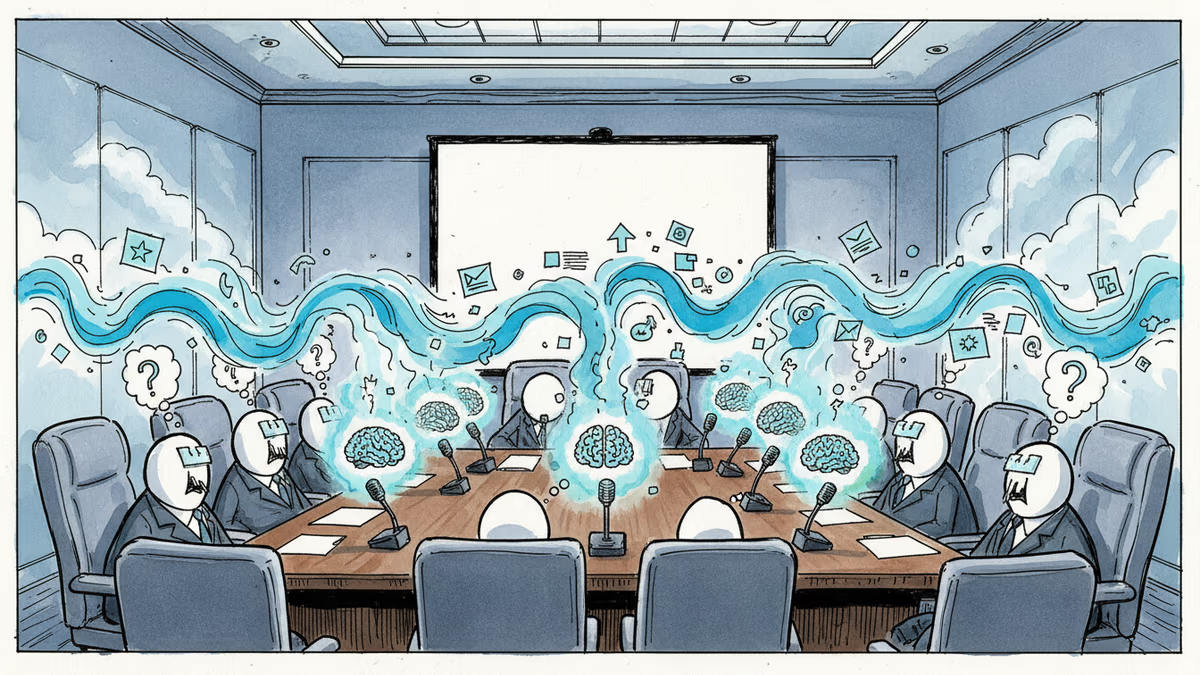
When Meetings Started Thinking for Themselves
Three years post-pandemic, video conferencing has evolved from basic connection tools to AI-powered collaboration platforms. From voice recognition to automated summaries, here's how audio AI is reshaping work.
300 Million Users Changed Everything
March 2020: The world went home, and the sound of business changed forever. What started as a desperate scramble to make kitchen table meetings work has become something far more sophisticated. Zoom's daily users exploded from 10 million to 300 million almost overnight.
But three years later, we're not just connecting anymore. We're collaborating with AI that listens, understands, and sometimes speaks for us.
"The pandemic accelerated years of innovation in months," says Sam Sabet, CTO at Shure. What began as necessity has evolved into a $3 trillion transformation of how we work, learn, and communicate.
Why Audio Beats Video Every Time
Here's something counterintuitive: while we obsess over how we look on camera, how we sound matters more. Yale University research shows poor audio quality significantly impacts comprehension and information retention. You can tolerate a frozen screen, but choppy audio kills a meeting.
This insight drove a wave of AI-powered audio innovation. Shure's IntelliMix Room software uses machine learning to analyze and optimize sound in real-time. Whether you're in a lecture hall or your living room, algorithms "read" the space and self-adjust.
"It's about amplifying the audio that's needed and diminishing unwanted sounds," Sabet explains. AI now handles real-time noise suppression, adaptive beamforming, and spatial audio that tunes itself to room acoustics.
Beyond Connection: The Intelligence Layer
Zoom's Chief Ecosystem Officer Brendan Ittelson puts it bluntly: "Audio and video just working is a baseline now." User expectations have shifted from connection to productivity, from communication to collaboration.
The evidence? Zoom AI Companion 3.0 doesn't just record and summarize meetings—it prepares you for the next one, intelligently schedules across time zones, and suggests which meetings you can skip while staying informed. Ask "@Zoomie, what's the latest project update?" and get instant answers.
This represents a fundamental shift: from reactive to proactive technology. AI systems now understand intent, context, and even emotion.

The Education Revolution Nobody Saw Coming
Higher education became an unexpected testing ground for these technologies. The pandemic forced a hybrid classroom model that's here to stay. Shure's ceiling microphone arrays and wireless systems now seamlessly connect professors to both in-person and remote students.
Sabet, who moonlights as an adjunct professor, has experienced this firsthand: "There's a night and day difference in lecture effectiveness compared to five years ago. The technology just makes the job seamless."
The implications extend beyond convenience. These tools are democratizing access to education, allowing students to participate regardless of location or physical limitations.
The Trust Challenge
With great capability comes great responsibility. When developing AI Companion, Zoom made two non-negotiables: customer data wouldn't train their models, and AI outputs must be grounded in actual meeting context, not generic responses.
"People need to know their conversations are private and secure," Ittelson emphasizes. This trust foundation becomes crucial as AI agents become more autonomous.
Shure positions its products as "the eyes and ears in the room" for AI companions. Without pristine audio input, even the most sophisticated AI produces unreliable results. It's a symbiotic relationship: better hardware enables better AI, which demands even better hardware.
What's Next: Agentic AI Takes Over
The next five years promise another inflection point: agentic AI. These systems won't just assist—they'll act on your behalf. Walk into a conference room and say "Hey Zoomie" to check in, adjust lighting, control temperature, or share your screen.
Zoom's Zoomie Group Assistant is already in beta testing. It's like having Iron Man's JARVIS for meetings. Meanwhile, Shure is developing next-generation wireless systems with dramatically improved reliability and range, covering everything from massive events to personal home offices.
Both companies are exploring integration with third-party platforms—Google, Microsoft, ServiceNow, Cisco—creating an ecosystem where AI agents work across all your tools.
The Competitive Landscape Shifts
This evolution is reshaping entire industries. Traditional audio equipment companies now compete with software algorithms. Video conferencing platforms are becoming AI-first work environments. The lines between hardware, software, and services are blurring.
For businesses, the implications are profound. Companies that adapt to AI-enhanced collaboration will have significant advantages in talent acquisition, productivity, and global reach. Those that don't risk being left behind in an increasingly hybrid world.
Authors
Related Articles

Samsung and SK unveiled a chip and AI investment package worth thousands of trillions of won on June 29. The headline number swings wildly by outlet, but the real contest isn't capital — it's water and power.

Viral videos show 2026 graduates jeering executives who praise AI at commencement ceremonies. It's not just rudeness — it's a signal about who pays for technological optimism.

Filipino virtual assistants using AI to ghost-manage LinkedIn profiles for executives is now a structured industry. 30 comments a day, fake engagement rings, and a platform struggling to tell real from fabricated.
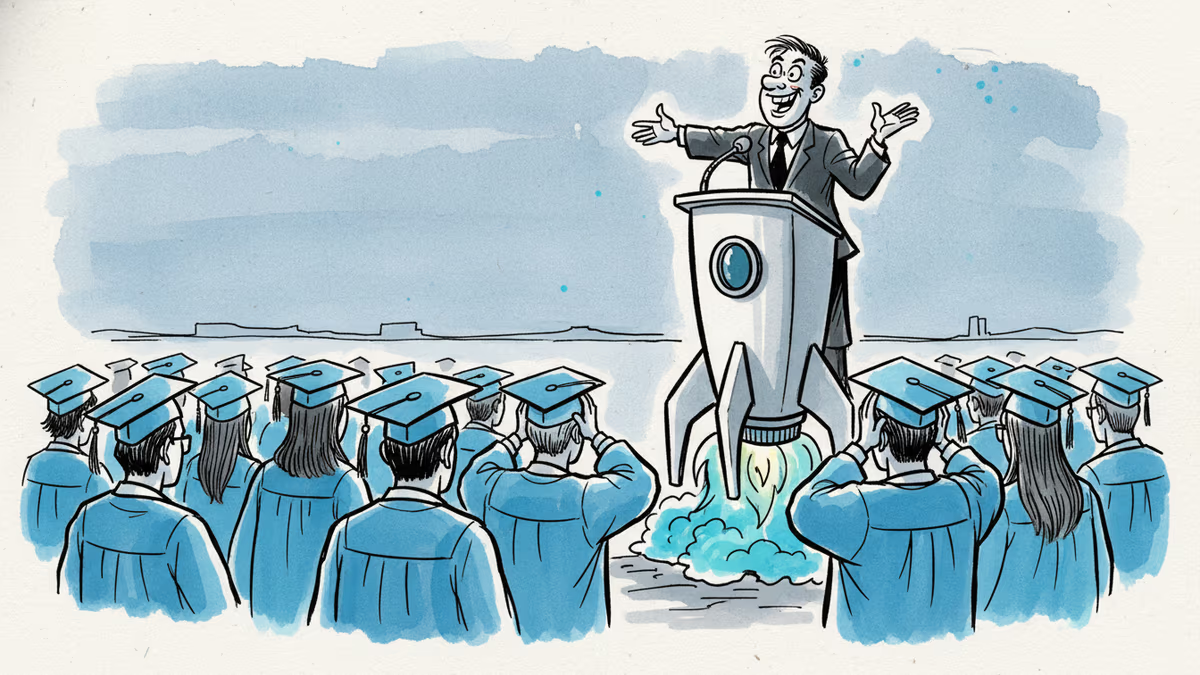
Two commencement speakers learned the hard way that AI enthusiasm doesn't land well with today's graduates. The backlash reveals a widening gap between tech optimism and Gen Z's economic reality.
Samsung and SK unveiled a chip and AI investment package worth thousands of trillions of won on June 29. The headline number swings wildly by outlet, but the real contest isn't capital — it's water and power.
Viral videos show 2026 graduates jeering executives who praise AI at commencement ceremonies. It's not just rudeness — it's a signal about who pays for technological optimism.
Filipino virtual assistants using AI to ghost-manage LinkedIn profiles for executives is now a structured industry. 30 comments a day, fake engagement rings, and a platform struggling to tell real from fabricated.
Two commencement speakers learned the hard way that AI enthusiasm doesn't land well with today's graduates. The backlash reveals a widening gap between tech optimism and Gen Z's economic reality.
Thoughts
Share your thoughts on this article
Sign in to join the conversation