
The 30% Markup Revolution: How Stripe Just Solved AI Startups' Biggest Problem
Stripe launches automatic markup billing for AI token costs, letting startups charge 30% above model provider fees. A game-changer for AI business models?
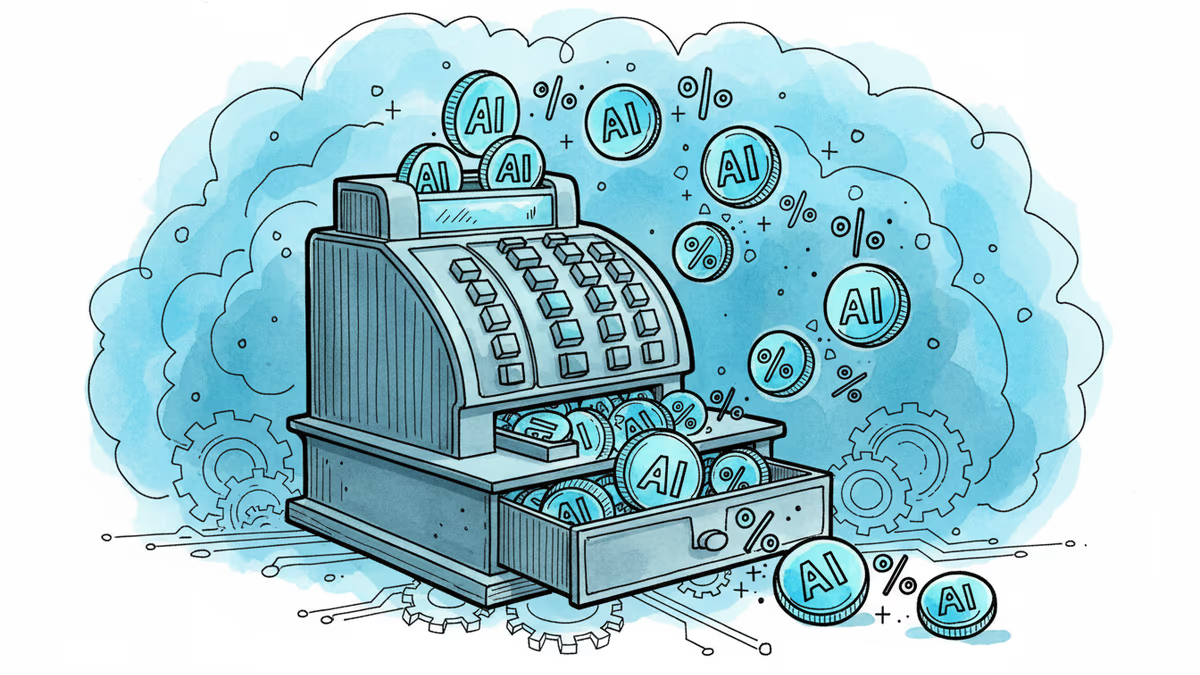
30%. That's the automatic markup Stripe now lets AI startups charge on top of their token costs. For months, AI companies have wrestled with a brutal paradox: the more successful they become, the more money they lose to OpenAI, Google, and Anthropic.
Monday's announcement could change everything.
The Red Ink Problem
The math was killing them. Cursor had to abandon unlimited usage plans last year, switching to rate-limited tiers with overage fees. Why? Every power user was pushing the startup deeper into the red.
For agentic AI companies, it's even worse. The more customers use their agents, the more tokens get consumed. Success literally costs money. OpenAI gets richer while the startup building on top struggles to break even.
Most companies have been playing defense—monthly subscription caps, usage limits, overage charges. Band-aids on a bleeding business model.
Stripe's Solution: Automated Profit Margins
The new billing feature works like a smart middleman:
- Track everything: Monitor API prices across OpenAI, Google Gemini, Anthropic, and others
- Calculate automatically: Record customer token usage in real-time
- Apply markup: Add your chosen percentage (say, 30%) on top of raw costs

"Say you're building an AI app: you want a consistent 30% margin over raw LLM token costs across providers. Billing automates the process," Stripe explained.
The feature integrates with existing gateways like Vercel and OpenRouter—or works with Stripe's own AI gateway. Currently, Stripe isn't charging its own markup, unlike OpenRouter's 5.5% fee.
Market Reactions: Optimism Meets Skepticism
Startup founders: "Finally, we can turn our biggest cost center into a profit center."
Enterprise customers: "Great, another layer of markup we'll be paying for."
Investors: "This could fix the unit economics problem plaguing AI startups."
Competitors: Gateway providers like OpenRouter (serving 300+ models) are watching closely. Stripe's payment ecosystem advantage could reshape the competitive landscape.
The Bigger Picture
This isn't just about billing—it's about business model evolution. AI startups have been caught between two forces: venture capital demanding growth and model providers demanding payment. Stripe's solution creates a third path: making AI consumption directly profitable.
But questions remain. Will this encourage startups to optimize for usage rather than efficiency? How will enterprise customers react to transparent markup pricing? And what happens when every AI company starts charging 30% margins?
The feature is currently in waitlist mode, with no general availability date announced.
Authors
Related Articles

Samsung and SK unveiled a chip and AI investment package worth thousands of trillions of won on June 29. The headline number swings wildly by outlet, but the real contest isn't capital — it's water and power.

Lucra Sports CEO Dylan Robbins landed Cathie Wood's ARK Invest as a Series B lead without building AI. The story behind his unconventional fundraising playbook.

Viral videos show 2026 graduates jeering executives who praise AI at commencement ceremonies. It's not just rudeness — it's a signal about who pays for technological optimism.
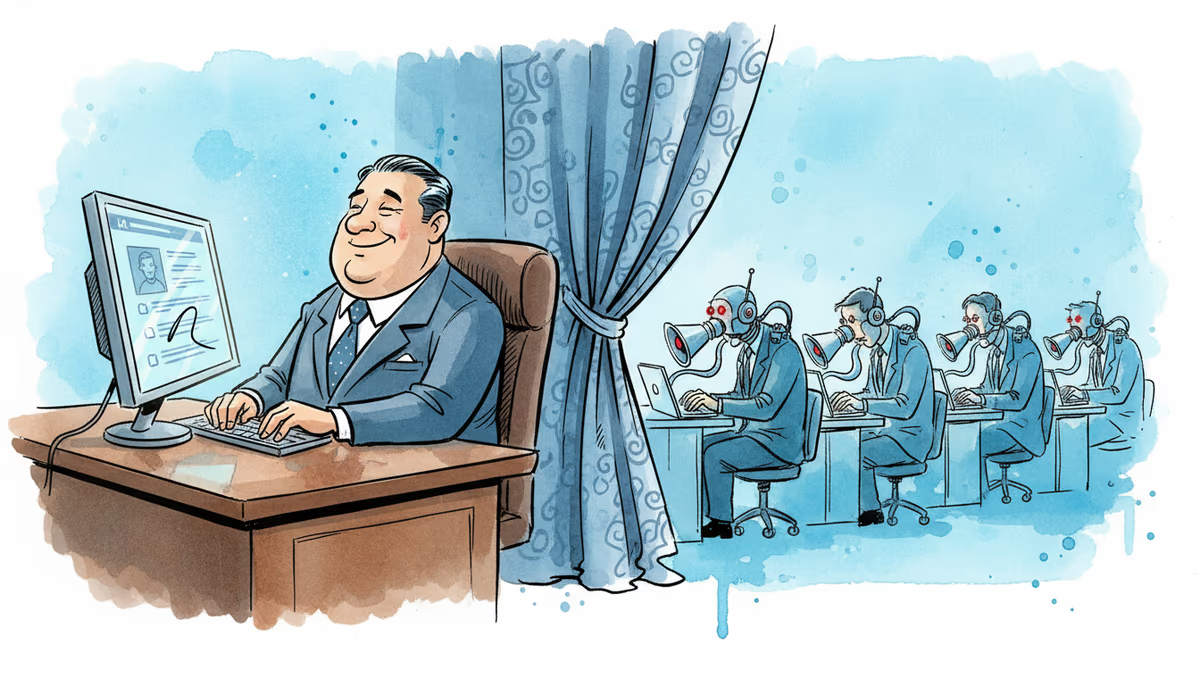
Filipino virtual assistants using AI to ghost-manage LinkedIn profiles for executives is now a structured industry. 30 comments a day, fake engagement rings, and a platform struggling to tell real from fabricated.
Samsung and SK unveiled a chip and AI investment package worth thousands of trillions of won on June 29. The headline number swings wildly by outlet, but the real contest isn't capital — it's water and power.
Lucra Sports CEO Dylan Robbins landed Cathie Wood's ARK Invest as a Series B lead without building AI. The story behind his unconventional fundraising playbook.
Viral videos show 2026 graduates jeering executives who praise AI at commencement ceremonies. It's not just rudeness — it's a signal about who pays for technological optimism.
Filipino virtual assistants using AI to ghost-manage LinkedIn profiles for executives is now a structured industry. 30 comments a day, fake engagement rings, and a platform struggling to tell real from fabricated.
Thoughts
Share your thoughts on this article
Sign in to join the conversation