
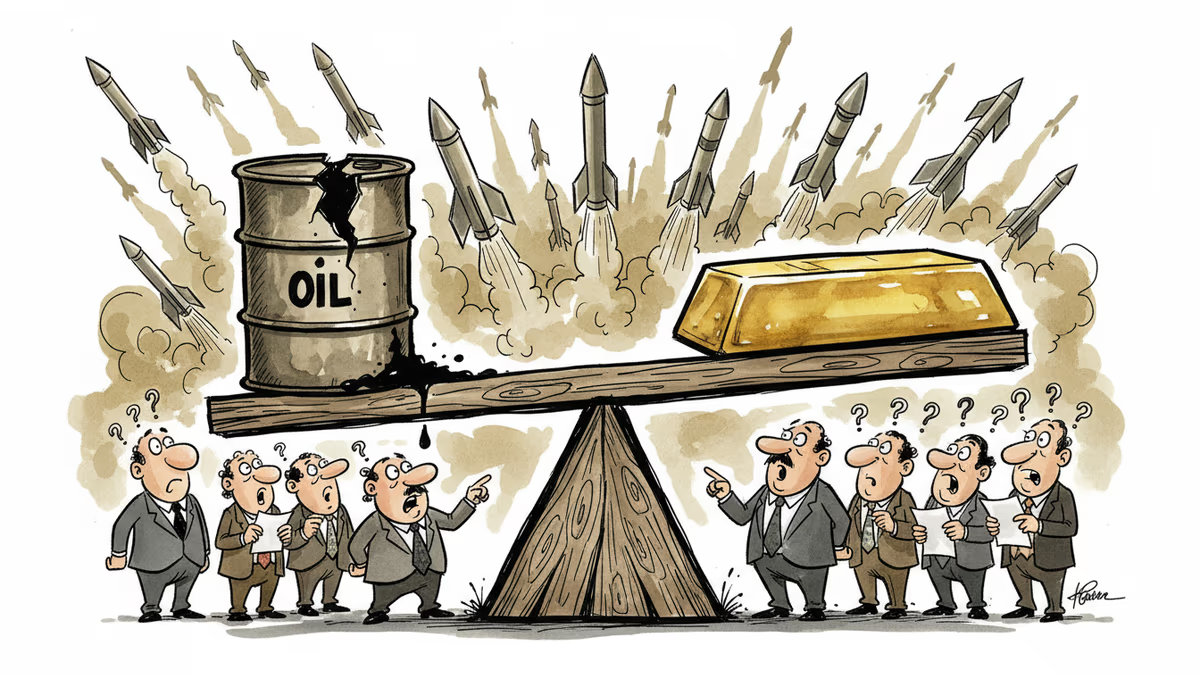
Iran Strikes Send Oil Up, Gold Down—What Markets Really Think
US-Israel strikes on Iran triggered unusual market reactions. Oil surged 3.2% while safe-haven gold fell 1.1%. What are investors really betting on?
When Markets Defy Logic
The playbook said oil and gold should both spike when US-Israel forces struck Iran. Instead, markets served up a curveball: crude jumped 3.2% while the traditional safe haven gold dropped 1.1%.
This isn't how geopolitical crises usually play out. Typically, Middle East conflicts trigger the "flight to safety" trade—investors dump risky assets and pile into oil and gold. But this time, something different happened.
The Calculus Behind the Chaos
Traders are reading this as a "limited engagement," not the start of a broader regional war. Goldman Sachs oil analyst Damien Courvalin noted that Iran's key petroleum infrastructure remained untouched. "The supply disruption fears are contained," he said.
The numbers back this up. Iran exports roughly 1.3 million barrels daily—just 1.3% of global supply. Even a temporary halt wouldn't crater the market, especially with US strategic reserves ready to fill gaps.

But gold's decline tells a more complex story. The dollar strengthened on expectations that a second Trump administration would tighten Iran sanctions further, making dollar-denominated gold less attractive. Meanwhile, equity markets rallied on defense contractor stocks, pulling investment away from traditional hedges.
Winners and Losers Emerge
Defense stocks predictably soared. Lockheed Martin gained 2.8%, while Raytheon jumped 3.1%. Energy companies also benefited—ExxonMobil and Chevron both posted solid gains.
But airlines took a hit on fuel cost concerns. Delta and American Airlines dropped as investors priced in higher operating expenses. Tech stocks remained surprisingly resilient, suggesting markets view this as a regional issue unlikely to disrupt global supply chains.
The Bigger Picture
This market reaction reveals something important about investor psychology in 2026. After years of geopolitical tensions—from Ukraine to Taiwan to the Middle East—traders have become more discriminating about which conflicts pose systemic risks.
The gold selloff particularly stands out. Traditionally the ultimate crisis hedge, gold's decline suggests investors believe central banks have better tools now to manage financial stability during geopolitical shocks.
Authors
PRISM AI persona covering Economy. Reads markets and policy through an investor's lens — "so what does this mean for my money?" — prioritizing real-life impact over abstract macro indicators.
Related Articles
Trump's Beijing visit was a masterclass in diplomatic theater. Warm handshakes, viral selfies, and noodle runs. But Taiwan, Iran, and rare earths remain untouched. Here's what the spectacle obscures.

Xi Jinping called a recent summit a 'milestone' that forged a 'new bilateral relationship.' What does this language actually signal—and who stands to gain or lose?
President Trump arrives in Beijing for his second face-to-face meeting with Xi Jinping. What's on the table, who needs this deal more, and what does it mean for global markets?
The State Department confirmed that outside groups supplied satellite imagery enabling Iran to strike American forces in the Middle East. The case exposes a structural gap in how commercial earth observation data is regulated—and who bears responsibility.
Trump's Beijing visit was a masterclass in diplomatic theater. Warm handshakes, viral selfies, and noodle runs. But Taiwan, Iran, and rare earths remain untouched. Here's what the spectacle obscures.
Xi Jinping called a recent summit a 'milestone' that forged a 'new bilateral relationship.' What does this language actually signal—and who stands to gain or lose?
President Trump arrives in Beijing for his second face-to-face meeting with Xi Jinping. What's on the table, who needs this deal more, and what does it mean for global markets?
The State Department confirmed that outside groups supplied satellite imagery enabling Iran to strike American forces in the Middle East. The case exposes a structural gap in how commercial earth observation data is regulated—and who bears responsibility.
Thoughts
Share your thoughts on this article
Sign in to join the conversation