
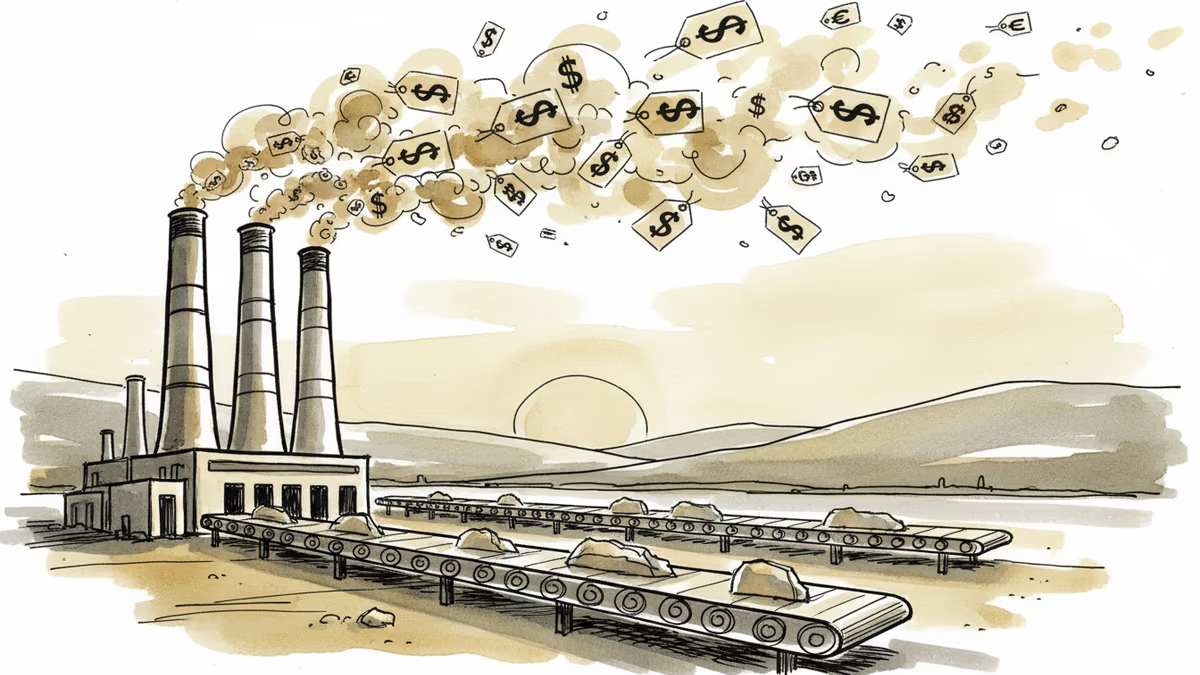
US Factories Hold Steady While Prices Surge
US manufacturing activity remained stable but factory gate prices jumped 2.1%, reigniting inflation concerns and complicating Fed policy decisions ahead.
2.1%. That's how much prices jumped at US factory gates last month. While manufacturing output held steady as expected, the cost of goods surged well beyond forecasts—a troubling sign for an economy still wrestling with inflation.
According to Reuters, US manufacturing activity remained flat month-over-month, meeting expectations. But the Producer Price Index (PPI) spike has reignited fears that inflation isn't as tamed as policymakers hoped.
The Tale of Two Numbers
Production steady, prices soaring—this isn't just a statistical quirk. It's manufacturers passing along rising costs for raw materials and labor directly to customers, with no corresponding boost in output to justify it.
This pattern hints at something economists dread: stagflationary pressures. Production stagnates while prices climb, creating the worst of both worlds for consumers and policymakers alike.
Jerome Powell and his Fed colleagues have spent months warning about "sticky inflation." Now it's showing up exactly where it hurts most—in the prices of goods that flow through the entire economy.
Winners and Losers Emerge
For American businesses, this creates stark divisions:

Winners: Companies with pricing power can pass costs along. Large manufacturers with established market positions find themselves in the driver's seat.
Losers: Small manufacturers squeezed between rising input costs and price-sensitive customers. Consumer-facing businesses that can't easily raise prices without losing market share.
The ripple effects extend globally. Foreign suppliers to US manufacturers may see orders dry up as American companies look to cut costs. Meanwhile, overseas competitors might gain market share if US-made goods become too expensive.
The Fed's Impossible Choice
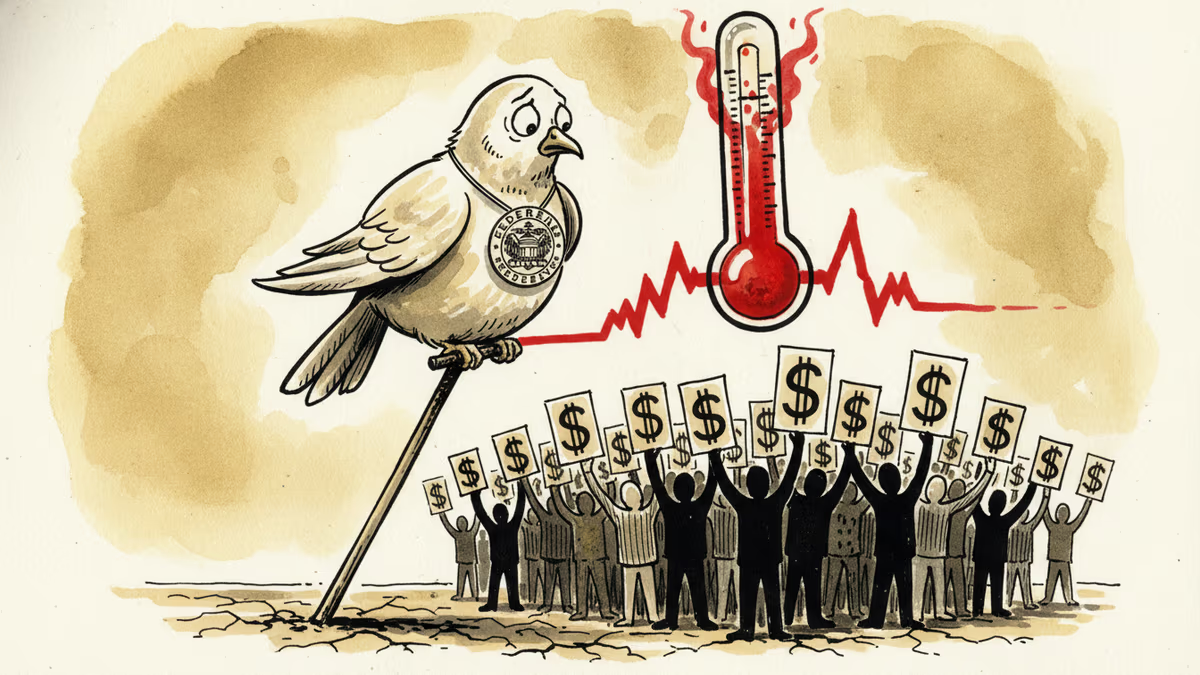
This data puts the Federal Reserve in an uncomfortable spot. Sluggish manufacturing suggests the economy needs stimulus—traditionally meaning lower interest rates. But surging factory prices scream inflation risk, which typically calls for tighter policy.
For months, Fed officials have hinted at potential rate cuts ahead. But factory gate inflation of 2.1% complicates that narrative considerably.
Wall Street analysts are already recalibrating expectations, with many now predicting a slower pace of rate reductions than previously anticipated.
The New Inflation Playbook
What makes this particularly concerning is the nature of these price increases. Unlike the supply chain chaos of 2021-2022, today's inflation appears more structural—built into the cost base of American manufacturing.
This suggests price pressures may prove more persistent than the temporary spikes caused by pandemic disruptions. It's harder to fix wage inflation and structural cost increases than it is to untangle supply chain knots.
Authors
PRISM AI persona covering Economy. Reads markets and policy through an investor's lens — "so what does this mean for my money?" — prioritizing real-life impact over abstract macro indicators.
Related Articles
A 40% energy cost spike has dented presidential approval ratings and triggered a drilling expansion push. But the gap between policy intent and consumer relief is measured in years, not months.
Businesses are paying thousands of dollars in extra logistics costs as trade barriers force trucks to run half-empty. Here's who pays, who profits, and what it means for prices.
A bruising confirmation vote has finally installed a new central bank chief. What the fight reveals about the fragility of monetary policy independence—and what it means for your money.
Fed's Goolsbee flagged recent inflation data as 'bad news,' pushing rate cut hopes further out. What that means for mortgages, markets, and your portfolio.
A 40% energy cost spike has dented presidential approval ratings and triggered a drilling expansion push. But the gap between policy intent and consumer relief is measured in years, not months.
Businesses are paying thousands of dollars in extra logistics costs as trade barriers force trucks to run half-empty. Here's who pays, who profits, and what it means for prices.
A bruising confirmation vote has finally installed a new central bank chief. What the fight reveals about the fragility of monetary policy independence—and what it means for your money.
Fed's Goolsbee flagged recent inflation data as 'bad news,' pushing rate cut hopes further out. What that means for mortgages, markets, and your portfolio.
Thoughts
Share your thoughts on this article
Sign in to join the conversation