
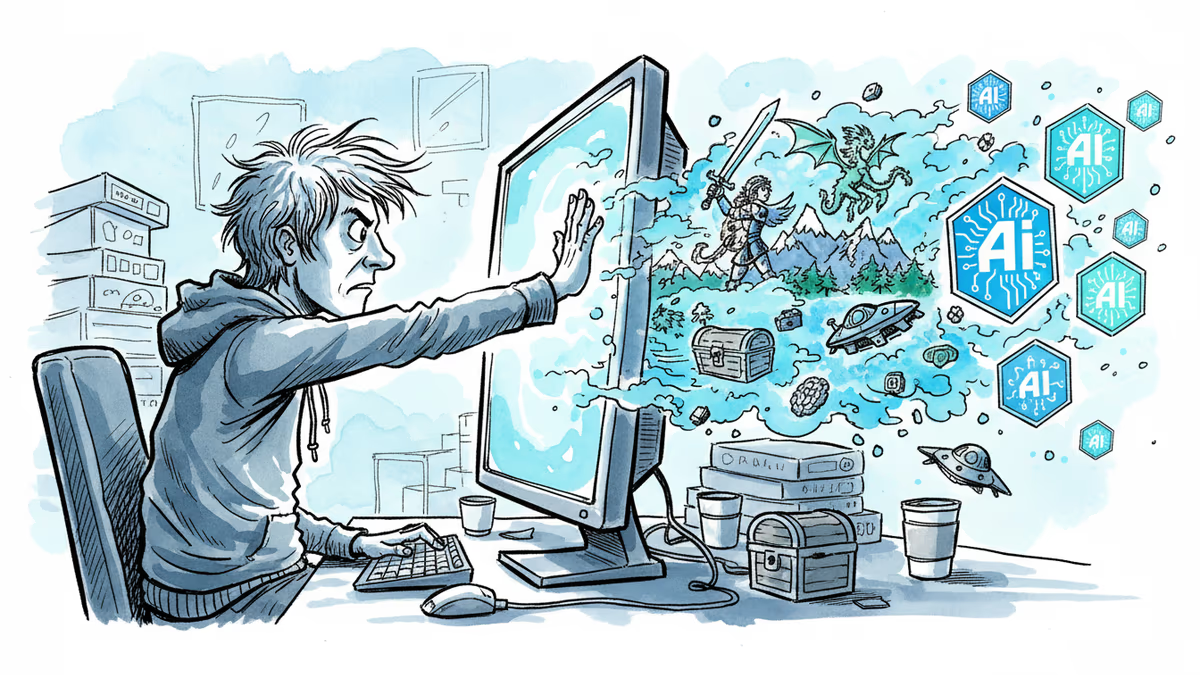
Why Game Developers Are Saying No to AI
The gaming industry is pumping the brakes on generative AI adoption. What's behind developers' resistance to the technology?
Thirty years ago, roguelike games were already generating infinite worlds. From the original Rogue in 1980 to Minecraft's endless landscapes, game developers have been the quiet pioneers of generative technology. Yet now, as ChatGPT and Midjourney dominate headlines, the gaming industry is surprisingly hesitant to embrace the AI revolution.
Why are the original masters of procedural generation stepping back from generative AI?
The Creator's Dilemma: Tool or Replacement?
Game development is fundamentally creative work. Every character design, narrative arc, and musical score requires human imagination and intention. Generative AI promises to automate these processes, but developers who've spent decades crafting experiences aren't convinced.
The key difference lies in control. Traditional procedural generation—like Diablo's random dungeons or Civilization's map creation—operates within developer-defined parameters. You set the rules, the algorithm creates variations. Generative AI, however, is a black box. You input a prompt and hope for the best.
Nintendo exemplifies this cautious approach. The company has built its reputation on meticulous craft and quality control. Introducing unpredictable AI-generated content into their development pipeline feels antithetical to their philosophy.
The Quality vs. Speed Equation

AAA game development is a $100 million gamble that takes 3-5 years to pay off. A single copyright dispute or unexpected bug from AI-generated content could derail an entire project. For major studios, the risk-reward calculation doesn't add up—yet.
But indie developers face a different reality. Solo creators juggling art, programming, music, and marketing see AI as a potential lifesaver. Why spend weeks on character sprites when AI can generate them in minutes?
This divide is creating two distinct paths in game development: large studios doubling down on human expertise, while independent creators experiment with AI assistance.
Players Push Back
Gamers themselves are sending mixed signals. While some embrace efficiency and novelty, others prize the "human touch" in their entertainment. Story-driven games face particular scrutiny—players can sense when dialogue feels algorithmic rather than authored.
The backlash against AI-generated art in gaming communities has been swift and vocal. Players want to know their favorite characters were designed by humans who understood their emotional significance, not generated by algorithms trained on existing work.
The Copyright Conundrum
Beyond creative concerns lies a legal minefield. Who owns the rights to AI-generated game assets? If an AI creates a character design similar to existing intellectual property, who's liable? These questions remain largely unanswered, making risk-averse publishers even more cautious.
Epic Games and Unity are watching these developments closely, as their engines power thousands of games. Their stance on AI integration could influence the entire industry's direction.
Authors
Related Articles

Samsung and SK unveiled a chip and AI investment package worth thousands of trillions of won on June 29. The headline number swings wildly by outlet, but the real contest isn't capital — it's water and power.

Viral videos show 2026 graduates jeering executives who praise AI at commencement ceremonies. It's not just rudeness — it's a signal about who pays for technological optimism.

Filipino virtual assistants using AI to ghost-manage LinkedIn profiles for executives is now a structured industry. 30 comments a day, fake engagement rings, and a platform struggling to tell real from fabricated.

Two commencement speakers learned the hard way that AI enthusiasm doesn't land well with today's graduates. The backlash reveals a widening gap between tech optimism and Gen Z's economic reality.
Samsung and SK unveiled a chip and AI investment package worth thousands of trillions of won on June 29. The headline number swings wildly by outlet, but the real contest isn't capital — it's water and power.
Viral videos show 2026 graduates jeering executives who praise AI at commencement ceremonies. It's not just rudeness — it's a signal about who pays for technological optimism.
Filipino virtual assistants using AI to ghost-manage LinkedIn profiles for executives is now a structured industry. 30 comments a day, fake engagement rings, and a platform struggling to tell real from fabricated.
Two commencement speakers learned the hard way that AI enthusiasm doesn't land well with today's graduates. The backlash reveals a widening gap between tech optimism and Gen Z's economic reality.
Thoughts
Share your thoughts on this article
Sign in to join the conversation